Why there are Amazon links here: Brave Review is paid a commission for qualifying Amazon purchases made through the links below. Your price does not change, and using our links is entirely optional. How this works
Best WiFi Extender for a House with a Conservatory: 5 Picks That Kill Dead Zones
A conservatory is a classic WiFi black spot: glass walls, a garden gap between it and the router, and often no phone line or cable run to the back of the house. This guide covers five extenders that can bridge that gap, from a sub-$25 mesh-compatible unit to high-coverage models aimed at large properties. Budget buyers should look at the TP-Link pick, while anyone with a sprawling layout will want one of the 15,000–18,000 sq ft models. The overview table below puts all five side by side before the full reviews.
The Picks at a Glance
| Product | Key Spec | Best Use | Price Tier |
|---|---|---|---|
| TP-Link AC1200 WiFi Extender (RE315) | 1.2Gbps dual band, 1600 sq ft, 32 devices | Budget pick, mesh-compatible homes | Budget |
| 2026 Upgraded WiFi Extender (18,000 sq ft) | 18,000 sq ft, 15X signal amplifier | Very large homes with long garden runs | Premium |
| 2026 WiFi Extender Signal Booster (15,000 sq ft) | 15,000 sq ft, 1-tap setup | Big layouts that want simple setup | Premium |
| WiFi Extender Signal Booster (18,000 sq ft, 65+ devices) | 18,000 sq ft, 65+ devices | Busy households with many gadgets | Premium |
| 5.8GHz/2.4GHz WiFi Extender (18,999 sq ft) | 1200Mbps dual band, 115+ devices | High device count at a mid price | Mid-range |
1. TP-Link AC1200 WiFi Extender (RE315) — Best Budget Pick

Brand: TP-Link
Speed Class: AC1200 / 1.2Gbps
Bands: Dual band 5GHz and 2.4GHz
Coverage: Up to 1600 sq ft
Device Load: Up to 32 devices
Ports: One Ethernet port
Mesh Support: EasyMesh compatible
The RE315 is the sensible starting point for a conservatory dead zone. It is a compact plug-in unit with a single Ethernet port, so a wired device in the conservatory — a TV, a console, a desktop — can sit right next to it. EasyMesh compatibility means it can join an existing mesh network rather than fighting it, which matters in homes that already run a mesh system.
A conservatory is a small space, and 1600 sq ft of claimed coverage is more than enough for one room plus the hallway behind it. The 32-device load is fine for a typical family. Buyers with a mesh router should confirm brand support before pairing, since EasyMesh is a standard rather than a universal guarantee.
Trade-off: The single Ethernet port limits wired expansion, and the compact body means the internal antennas cannot match the reach of the big-coverage models below.
2. 2026 Upgraded WiFi Extender for Home — Best for Very Large Properties

Type: Long-range WiFi repeater
Coverage: Up to 18,000 sq ft
Amplification: 15X signal amplifier
Ports: Ethernet port
Compatibility: Works with 99% of routers
This is the biggest-coverage pick in the lineup, aimed at homes where the conservatory sits a long way from the router. The 18,000 sq ft claim reflects a high-power amplifier design rather than a compact plug-in, and the Ethernet port allows a wired connection at the far end of the run. It is a repeater, so it rebroadcasts the existing network rather than creating a new one.
The 15X amplifier language points to a high-gain antenna setup, which is exactly what a garden-facing conservatory needs. Placement still matters: the unit has to sit where the router signal is still usable, not inside the dead zone itself. Homes with thick walls between router and conservatory should plan the halfway position carefully.
Trade-off: A repeater halves throughput on the extended band, so expect lower speeds in the conservatory than next to the router — fine for browsing and streaming, less so for heavy transfers.
3. 2026 WiFi Extender Signal Booster for Home — Easiest Setup
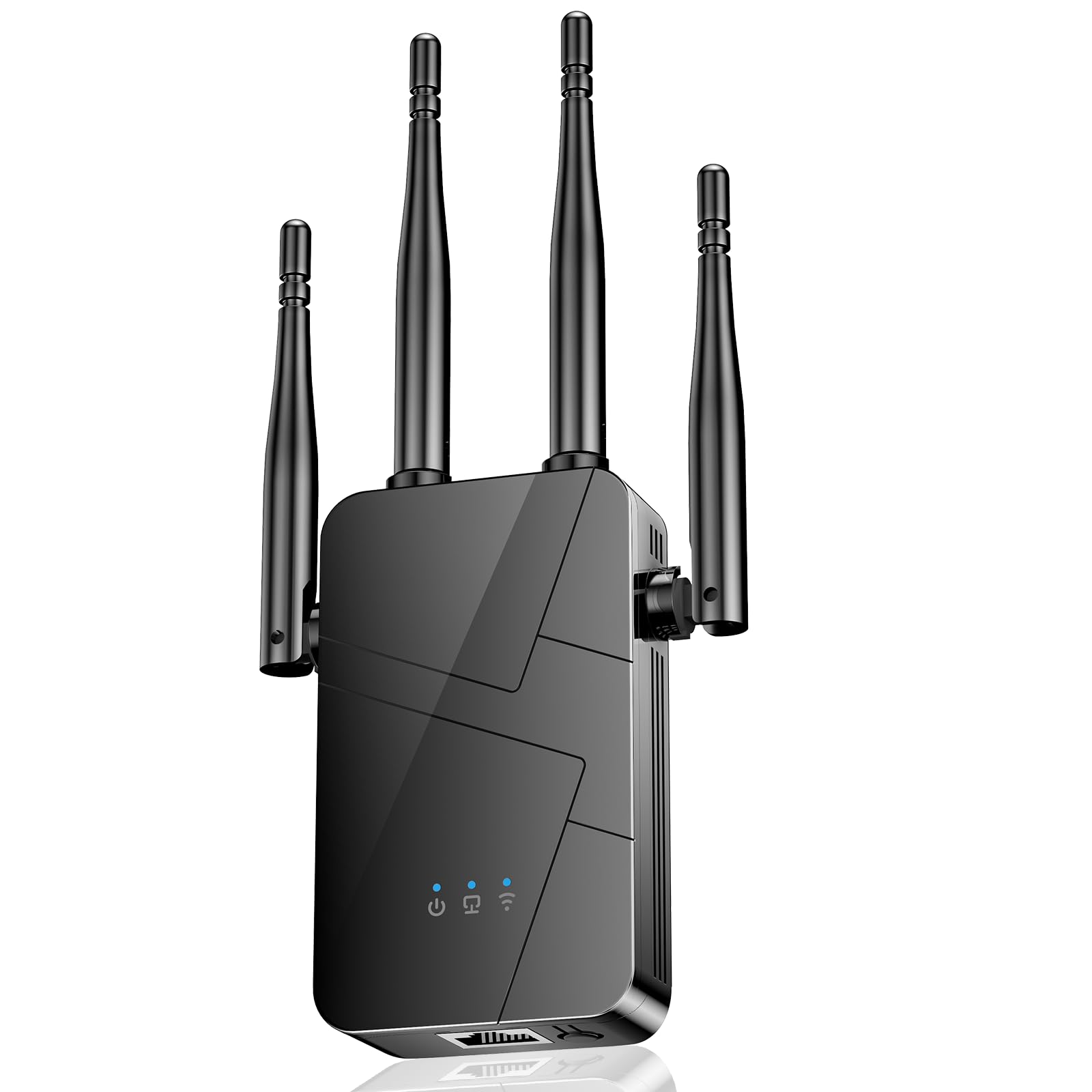
Type: Wireless internet repeater
Coverage: Up to 15,000 sq ft
Setup: 1-tap setup
Ports: Ethernet port
Compatibility: Supports 99% of devices
The headline feature here is the 1-tap setup, which matters for buyers who do not want to wrestle with a browser-based admin panel. Coverage is rated to 15,000 sq ft, slightly below the two 18,000 sq ft models but still far beyond what most single-family homes need. The Ethernet port gives a wired option at the extender end.
For a conservatory install, the simple pairing flow means the unit can be moved around the house and re-paired quickly until the sweet spot is found. That trial-and-error process is normal for repeaters, and a one-tap method shortens it considerably. The 99% device compatibility claim covers phones, tablets, laptops and most smart home gear.
Trade-off: One-tap setup can hide the finer controls — buyers who want to tune channels or band steering manually may find the app shallow.
4. WiFi Extender Signal Booster for Home (18,000 Sq Ft, 65+ Devices) — Best for Busy Households
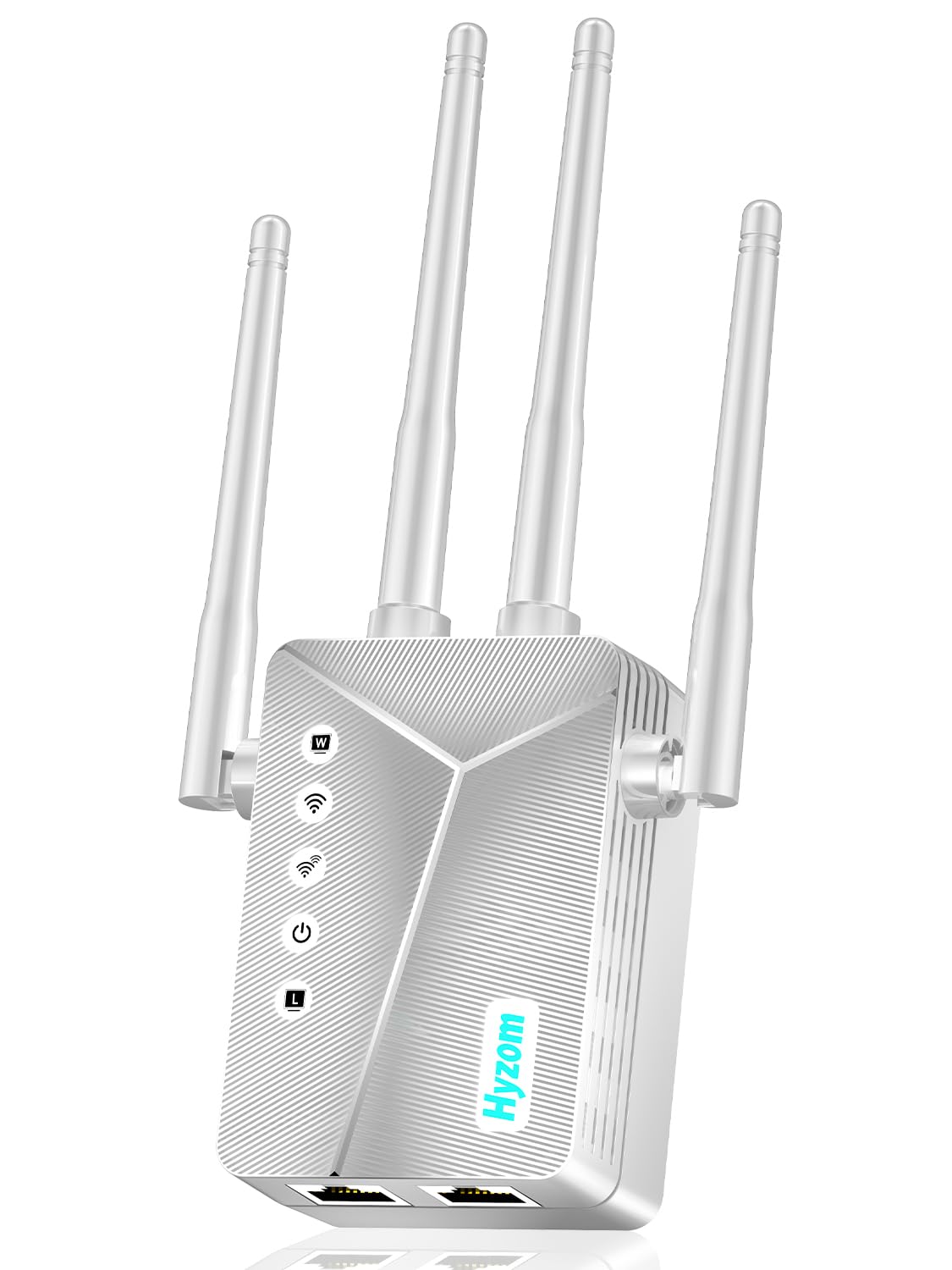
Type: Long-range wireless repeater
Coverage: Up to 18,000 sq ft
Device Load: 65+ devices
Ports: Ethernet port
Setup: 1-tap setup
This model pairs the 18,000 sq ft coverage class with a 65+ device rating, which is the highest device count among the 18,000 sq ft units here. That matters in homes where the conservatory doubles as a home office or a teenager’s hangout, with laptops, consoles, phones and smart speakers all competing for airtime. The Ethernet port supports a wired backhaul option where cabling allows.
The 1-tap setup keeps installation simple, and the buffering-reduction framing points at video streaming in the extended room. For a conservatory used as a lounge or garden room, that is the realistic workload: streaming, video calls, and light browsing rather than heavy file transfers.
Trade-off: The high device count and wide coverage claims come with a premium price, and a repeater still cannot beat a properly wired access point for latency-sensitive work.
5. 5.8GHz/2.4GHz WiFi Extender (18,999 Sq Ft, 115+ Devices) — Best Mid-Range Value
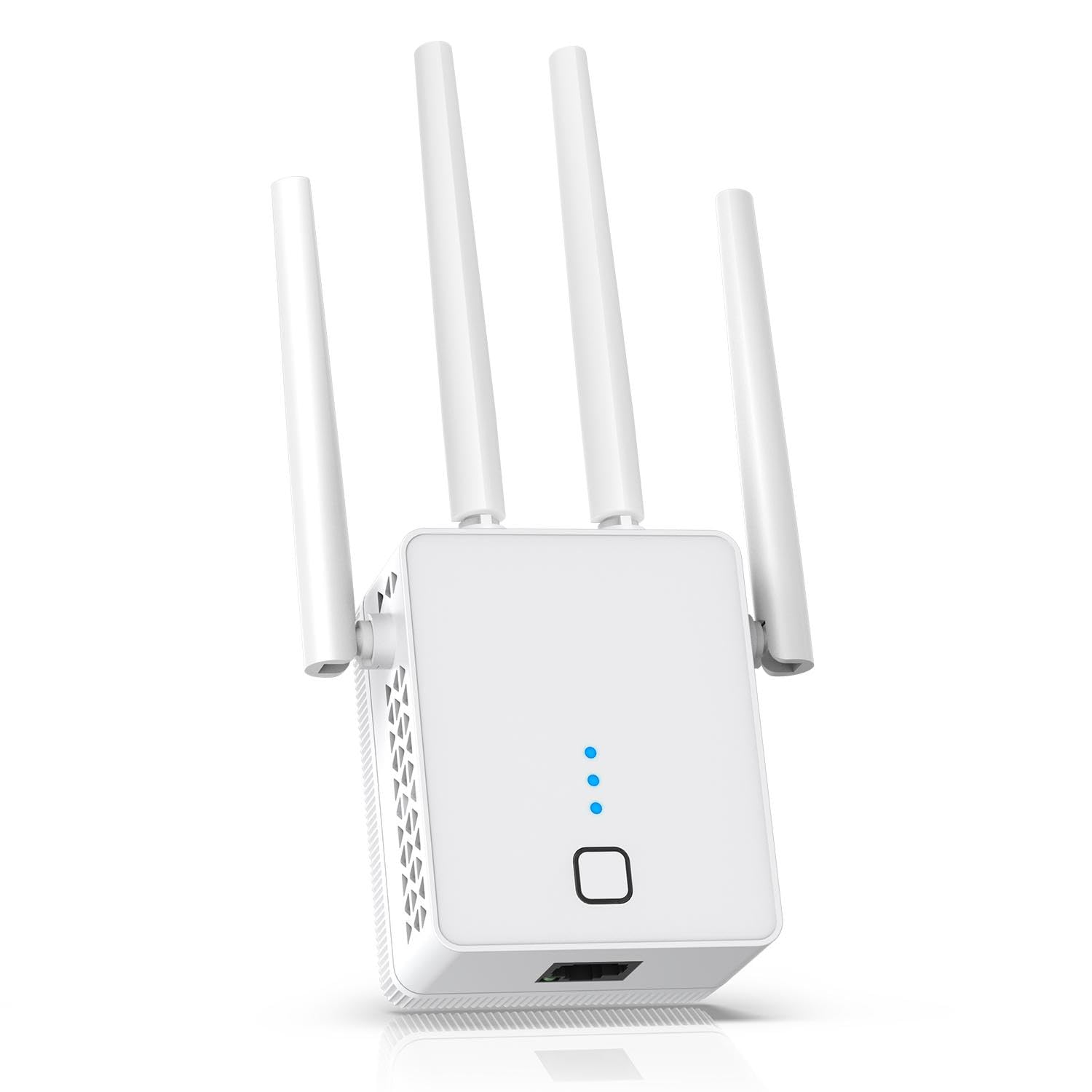
Speed Class: 1200Mbps dual band
Bands: 5.8GHz and 2.4GHz
Coverage: Up to 18,999 sq ft
Device Load: 115+ devices
Ports: Ethernet port
Color: White
This unit claims the largest coverage figure in the lineup and the highest device count, at a price well below the other big-coverage models. The 1200Mbps dual-band rating matches the TP-Link pick’s speed class, while the 5.8GHz band is a variation on the standard 5GHz channel set. The white housing blends into a conservatory wall better than a black box.
The 115+ device figure suits smart-home-heavy properties where lights, plugs, cameras and speakers all sit on the network. Buyers should read the coverage claim as a best-case open-plan figure — a conservatory with foil-backed insulation or a metal-framed roof will cut real-world range. The Ethernet port still gives a wired escape hatch for the most demanding device in the room.
Trade-off: Very high coverage and device claims at a mid-range price usually mean the build is lighter than premium rivals, and the white shell shows garden dirt if the unit sits near a door.
Before You Buy
- Coverage claims: Treat sq ft figures as best-case open-plan numbers; a conservatory with glass and metal framing will reduce real range, so buy one tier above the room size.
- Placement: A repeater must sit where the router signal is still strong — roughly halfway between router and conservatory — not inside the dead zone.
- Compatibility: EasyMesh support only helps if the existing router uses the same standard; check the router brand before pairing.
- Speed loss: Repeaters halve throughput on the extended band, so latency-sensitive work such as gaming or video calls is better served by the Ethernet port.
- Device load: Count smart plugs, cameras and speakers as devices, not just phones and laptops; busy homes need the 65+ or 115+ ratings.
- Build and placement practicalities: A plug-in unit needs a free socket near the conservatory door, while larger models need shelf or wall space and a power point.
- Security: Confirm the extender supports the same encryption as the main network (WPA2 or WPA3) so the extended signal is not an open door.
Frequently Asked Questions
-
Will a WiFi extender work through conservatory glass?
Yes — glass is far less obstructive than brick or foil-backed insulation, so a conservatory is usually one of the easier rooms to cover. The bigger challenge is distance from the router, not the glass itself. -
Where should the extender be placed for a conservatory?
Roughly halfway between the router and the conservatory, in a spot where the phone still shows a usable signal. Placing it inside the dead zone simply repeats a weak signal. -
Does a mesh-compatible extender need a mesh router?
No — EasyMesh-compatible units such as the TP-Link pick work as standalone repeaters too. Mesh pairing only adds seamless roaming when the main router supports the same standard. -
Will an extender slow down the connection?
A wireless repeater typically halves throughput on the extended band because it receives and retransmits on the same radio. The Ethernet port on each pick here avoids that penalty for wired devices. -
How many devices can one extender handle?
The picks here range from 32 devices on the budget TP-Link to 115+ on the mid-range model. Count smart home gear as well as phones and laptops when choosing. -
Is a more expensive extender always better?
Not necessarily — price tracks coverage claims and device load, not build quality alone. A smaller home with a single dead room is well served by the budget pick.
Bottom Line
For most homes with a conservatory, the TP-Link AC1200 WiFi Extender (RE315) is the pick: it is cheap, mesh-compatible, has an Ethernet port for a wired device in the garden room, and 1600 sq ft is plenty for one conservatory plus the hall behind it. Buyers with a large property and a long run to the back of the house should step up to one of the 18,000 sq ft models instead.
