Why there are Amazon links here: Brave Review is paid a commission for qualifying Amazon purchases made through the links below. Your price does not change, and using our links is entirely optional. How this works
Best Battery Powered Sensor for a Listed Building: 5 Picks That Leave the Fabric Alone
Listed buildings punish anything that needs chasing into plaster, lifting floorboards or screwing into old oak. That is why the picks here are all battery powered and surface-mounted: a moisture meter for checking damp before it spreads, two thermal cameras for finding cold bridges and hidden leaks, and two motion sensors for security without new cable runs. The roundup suits owners of period homes, builders working on heritage consent jobs, and facilities managers maintaining a listed site. The overview table below puts all five side by side so a decision can be made in under a minute.
The Picks at a Glance
| Product | Key Spec | Best Use | Price Tier |
|---|---|---|---|
| Klein Tools ET140 Pinless Moisture Meter | Pinless, detects up to 3/4-inch deep | Checking drywall, wood and masonry for damp | Budget |
| 25 Hz Infrared Camera H128 | 240 x 240 TISR resolution, 24H battery life | All-day building inspection surveys | Mid-range |
| TP-Link Tapo Motion Sensor T100 | Sub-1G low-power wireless, requires Tapo Hub | Smart security and automation | Budget |
| Honeywell Intrusion 5800PIR-RES | Wireless PIR, residential grade | Alarm system integration | Budget |
| HF96 Thermal Camera | 240 x 240 super resolution, 11h runtime, laser pointer | Detailed fault-finding in tight spaces | Mid-range |
1. Klein Tools ET140 Pinless Moisture Meter — Best for Damp Checks
Type: Pinless moisture meter
Intended use: Non-destructive detection in drywall, wood and masonry
Detection depth: Up to 3/4-inch
Power source: Battery
Brand: Klein Tools

Klein Tools ET140 Pinless Moisture Meter
The ET140 is the first tool to reach for when a patch of plaster starts looking tired. It reads moisture through the surface without driving pins into historic fabric, which is exactly what a listed building cannot tolerate. The sensing field reaches up to 3/4-inch deep, so it covers skimmed plaster, plasterboard and most decorative timber. Klein Tools builds it as a handheld tradesman’s instrument with a straightforward display, and it runs on battery with no mains lead to trip over. It suits surveyors, decorators and owners who want a quick yes-or-no read before calling in a damp specialist.
Best use: Early damp screening on walls, ceilings and joinery before any invasive work is authorised. Why it earned its place: it is the cheapest way to answer the question every listed-building owner eventually asks — is this stain active or historic? Trade-off: a pinless meter reads relative moisture near the surface, so it flags a problem rather than diagnosing its cause, and deep or trapped damp in thick solid masonry can sit outside its reach.
2. 25 Hz Infrared Camera H128 — Best for Full-Day Surveys
Type: Thermal imaging camera
Resolution: 240 x 240 TISR
Frame rate: 25 Hz
Battery life: 24 hours
Features: Smart temperature alarm, drop-proof body
Intended use: HVAC, electrical and building inspection

The H128 is the survey camera in this group, and its headline figure is battery life measured in days rather than hours. A full day walking a listed property — roof space, cellars, every external wall — is comfortably covered without hunting for a socket, which matters when the building has few of them. The 240 x 240 TISR resolution and 25 Hz frame rate give a steady, readable thermal image rather than a laggy one, and the smart temperature alarm can flag a threshold without constant watching. A drop-proof housing makes sense for anyone climbing into roof voids and onto scaffolding. It suits building surveyors, energy assessors and serious DIY owners.
Best use: Whole-property thermal surveys where the camera has to keep working from morning to dusk. Why it earned its place: the combination of 24-hour battery life and a rugged body removes the two most common reasons a survey gets cut short. Trade-off: it is the priciest pick here, and buyers who only need a one-off check of a single cold wall are paying for endurance and toughness they will never use.
3. TP-Link Tapo Motion Sensor T100 — Best for Smart Automation
Type: Smart motion sensor
Wireless protocol: Sub-1G low-power
Power source: Battery
Compatibility: Requires Tapo Hub
Features: Wide range detection, adjustable sensitivity, real-time notification, smart actions

The Tapo T100 is the pick for owners who want a listed building to feel modern without a single new cable. Its Sub-1G low-power radio is chosen for battery endurance rather than bandwidth, so the cell lasts far longer than a Wi-Fi sensor would manage. Adjustable sensitivity matters in old buildings, where a radiator, a curtain or a pet can set off a fixed sensor; dialling it back keeps false alerts down. Real-time notifications and smart actions let it trigger lights, plugs or a hub siren, and the wide detection range covers a hallway or landing comfortably. It suits tech-comfortable owners and anyone already running a Tapo setup.
Best use: Hallway, landing and cellar monitoring where the sensor can trigger lighting or an alert. Why it earned its place: it is the cheapest route to a smart, cable-free security layer in a building that will not accept new wiring. Trade-off: it is useless without the Tapo Hub, so the real entry cost is higher than the sensor alone, and a cloud-dependent smart ecosystem may not appeal to owners who want a self-contained alarm.
4. Honeywell Intrusion 5800PIR-RES — Best for Alarm Panel Integration
Type: Wireless passive infrared (PIR) sensor
Intended use: Residential intrusion detection
Power source: Battery
Brand: Honeywell
Compatibility: Honeywell intrusion systems
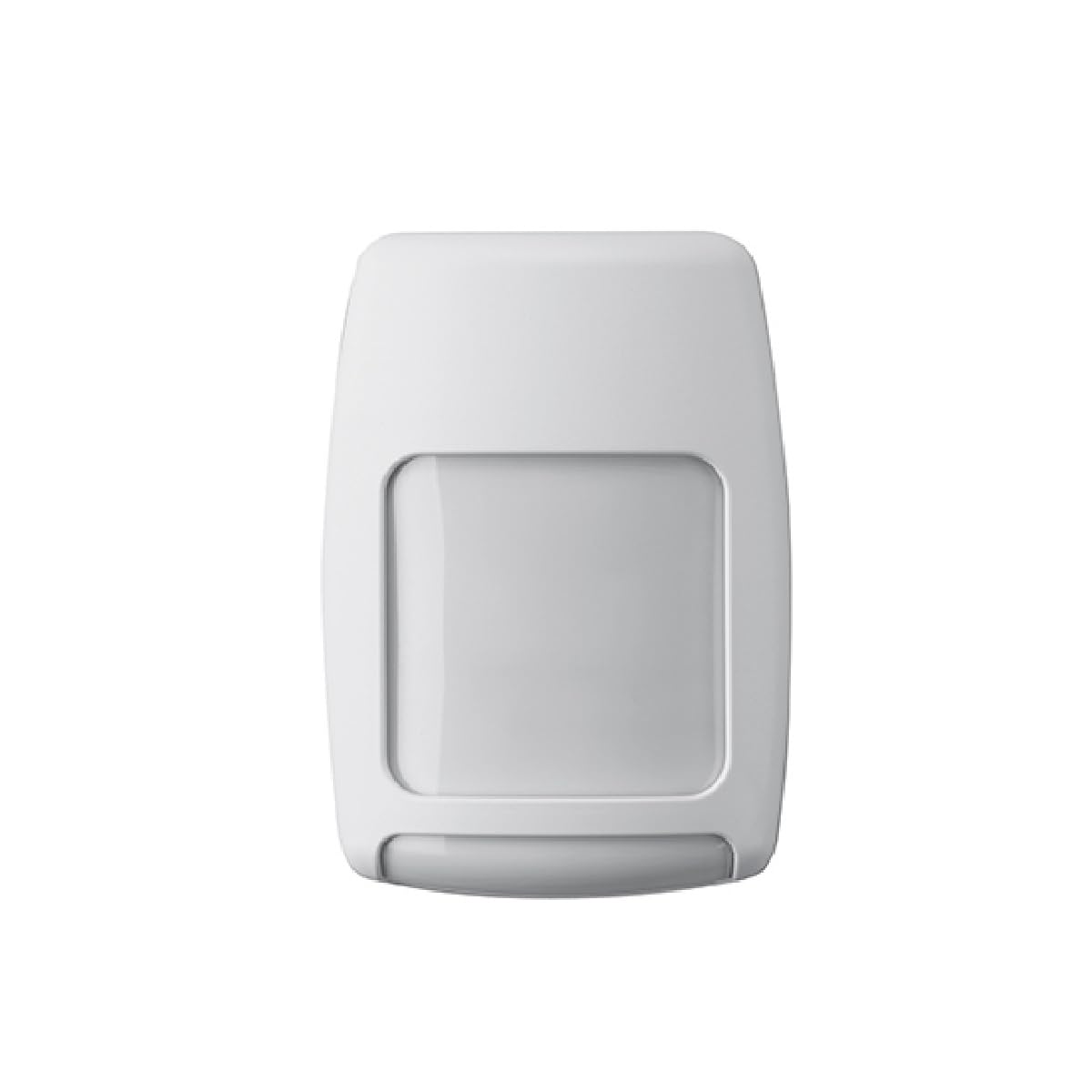
Honeywell Intrusion 5800PIR-RES WIRLESS PIR, Residential
The 5800PIR-RES is the traditionalist’s choice: a wireless PIR designed to join an existing Honeywell intrusion panel rather than a smartphone app. For a listed building that already has a monitored alarm, adding a battery-powered detector in a newly used room is far less disruptive than pulling cable through historic plaster. It is a residential-grade unit, so it is built for domestic coverage rather than commercial perimeter work. There is no hub, no subscription and no app — the panel does the thinking. It suits owners with an existing Honeywell system and installers who want a straightforward drop-in detector.
Best use: Extending an existing Honeywell alarm into a room that has no detector and no easy cable route. Why it earned its place: it integrates with professional alarm panels, which is what heritage insurers and monitoring companies tend to expect. Trade-off: it only makes sense inside a Honeywell ecosystem — on its own it does nothing — and it offers none of the app-based automation of a modern smart sensor.
5. HF96 Thermal Camera — Best for Detailed Fault-Finding
Type: Thermal imaging camera
Resolution: 240 x 240 super resolution
Frame rate: 25 Hz
Runtime: 11 hours
Features: AI scene detection, laser pointer
Temperature range: -4°F to 1022°F
Intended use: HVAC, electrical and building inspection
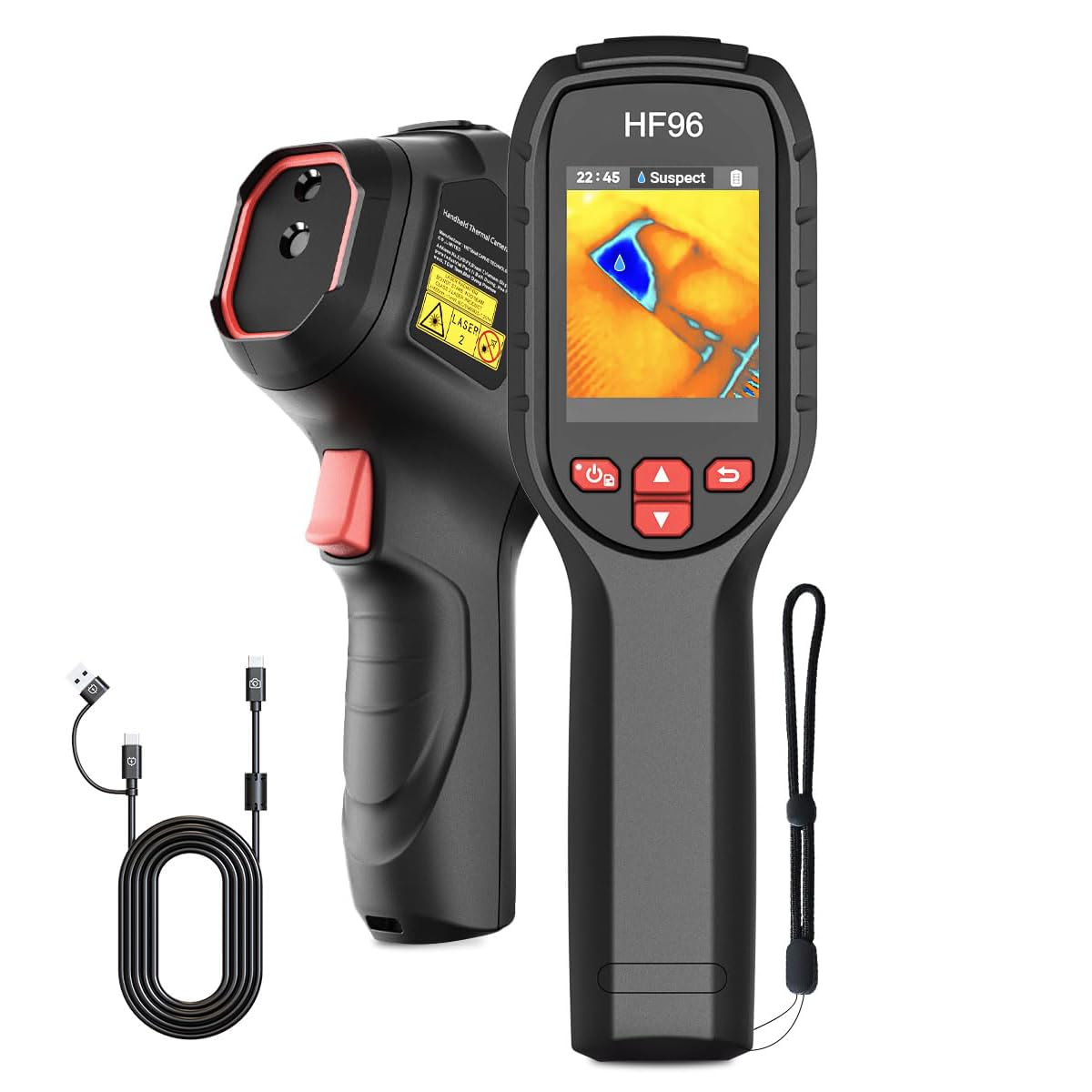
The HF96 trades the H128’s marathon battery for a wider temperature range and a laser pointer that pins the exact spot being measured. That range from -4°F to 1022°F covers everything from a cold bridge on a north-facing wall to an overheating electrical joint in an old fuse board. AI scene detection helps pick out the relevant subject in a cluttered cellar or roof space, and 240 x 240 super resolution sharpens the image beyond the raw sensor grid. Eleven hours of runtime is still a full working day for most inspections. It suits electricians, heating engineers and surveyors chasing a specific fault rather than sweeping a whole property.
Best use: Pinpointing a single problem — a hot circuit, a cold patch, a leaking pipe run — with the laser showing exactly where. Why it earned its place: the laser pointer and high-temperature ceiling make it the better diagnostic tool for electrical and HVAC work. Trade-off: the shorter runtime and the absence of a ruggedised body mean it is less suited to long days on site than the H128, so buyers who survey all day should weigh endurance over the extra range.
Before You Buy
- Detection method: a pinless moisture meter reads through the surface, while a thermal camera reads surface temperature — the two answer different questions and neither replaces a proper damp diagnosis.
- Compatibility: the Tapo T100 needs the Tapo Hub, and the Honeywell PIR needs a Honeywell intrusion panel; check what is already installed before buying either.
- Battery life: quoted runtime varies enormously across these picks, from days on the H128 to a standard sensor cell on the PIRs — match it to how often the device will actually be used.
- Mounting: all five are surface-mounted and battery powered, but listed building consent may still be needed for anything fixed to historic fabric, so confirm before drilling.
- Environment: old buildings are dusty, damp and cold; a drop-proof housing and a wide operating temperature range matter more here than on a modern new-build.
- Ecosystem lock-in: smart sensors and alarm detectors only work inside their own brand’s system, so the hub or panel is part of the purchase decision.
- Accessories: factor in the hub, panel or mounting hardware where required — the sensor alone is rarely the full cost.
Frequently Asked Questions
-
Can a battery powered sensor be used in a listed building without consent?
A surface-mounted, battery-powered device that involves no alteration to the fabric is usually the least contentious option, but listed building consent rules vary by property and local authority, so check before fixing anything permanently. -
Is a moisture meter or a thermal camera better for finding damp?
A pinless moisture meter confirms whether a material is wet, while a thermal camera shows where temperature differences suggest moisture or a cold bridge. Used together they cover far more ground than either alone. -
Does the Tapo T100 work without the hub?
No. The T100 requires the Tapo Hub to connect, send notifications and run smart actions, so the hub is part of the setup cost. -
Will the Honeywell 5800PIR-RES work with any alarm system?
It is designed for Honeywell intrusion panels. Without a compatible panel it has nothing to talk to, so buyers should confirm their existing system first. -
How deep can a pinless moisture meter read?
The Klein Tools ET140 detects up to 3/4-inch deep, which covers plaster, plasterboard and most surface timber but not thick solid masonry. -
Which thermal camera lasts longer on a charge?
The H128 is rated at 24 hours of battery life, against 11 hours for the HF96, making the H128 the better choice for full-day surveys.
Bottom Line
For most listed-building owners the smartest first purchase is the Klein Tools ET140 Pinless Moisture Meter: it is inexpensive, it answers the damp question without touching the fabric, and it earns its keep on every survey visit. Anyone commissioning a full thermal inspection should step up to the H128 for its 24-hour battery and drop-proof body, while the Tapo T100 and Honeywell 5800PIR-RES cover security for buyers already inside those ecosystems.
