Why there are Amazon links here: Brave Review is paid a commission for qualifying Amazon purchases made through the links below. Your price does not change, and using our links is entirely optional. How this works
Best Backup Power for a Home with a Stairlift
A stairlift is a safety device, not a convenience — when the grid drops, the chair needs to keep running long enough to get its rider up or down the stairs. The five picks below cover that job at four different levels of commitment, from a plug-in battery unit that keeps a single chair moving to whole-home power stations that also cover the fridge and the medical equipment. It suits households with one lift and a tight budget, households that want the lift backed up alongside the rest of the house, and caregivers setting up a plan for someone else. Read the overview first, then jump to the pick that matches the budget.
The Picks at a Glance
| Product | Key Spec | Best Use | Price Tier |
|---|---|---|---|
| Jackery HomePower 3600 Plus | 3584Wh, 3600W AC output | Largest reserve, expandable | Premium |
| Jackery HomePower 3000 | 3072Wh, 3600W AC output | Balanced home backup | Mid-range |
| EF EcoFlow Delta 3 Ultra | 3072Wh, 3600W AC output | Fast-charging home backup | Mid-range |
| BLUETTI Elite 400 | 3840Wh LiFePO4, 2600W | Capacity per dollar, rolling | Mid-range |
| CyberPower CP1500PFCLCD | 1500VA/1000W, 12 outlets | Single lift, budget | Budget |
1. Jackery HomePower 3600 Plus Power Station
Type: Portable power station with LFP battery
Capacity: 3584Wh, expandable to 21kWh
AC Output: 3600W
Intended Use: Essential home backup, emergencies, RV
Solar: Solar panel optional
Battery Chemistry: LFP

The HomePower 3600 Plus is the top of this group and the only pick here that grows with the household. Its LFP battery is the chemistry to want for a device that sits idle for months and then has to work on demand, and the expansion path to 21kWh means a household can add reserve over time instead of replacing the whole unit. The 3600W AC output runs a stairlift with plenty of headroom to spare, so the same unit can carry a fridge, lights and a router during an outage. It is aimed at households that want one box to cover the lift and the rest of the essentials.
This pick earns its place for anyone treating stairlift backup as part of a broader outage plan rather than a single-device fix. The chair, the lift’s charging circuit and a few household circuits can all sit on one reserve. The caution is weight and cost: a unit this size is not something one person carries up a flight of stairs, and it should be sited before an outage, not during one.
Trade-off: The largest capacity here comes with the highest price and a unit that is best left in one place.
2. Jackery HomePower 3000 Portable Power Station
Type: Portable power station with LFP battery
Capacity: 3072Wh
AC Output: 3600W
Surge: 7200W
Intended Use: Essential home backup, power outages
Solar: Solar panel optional
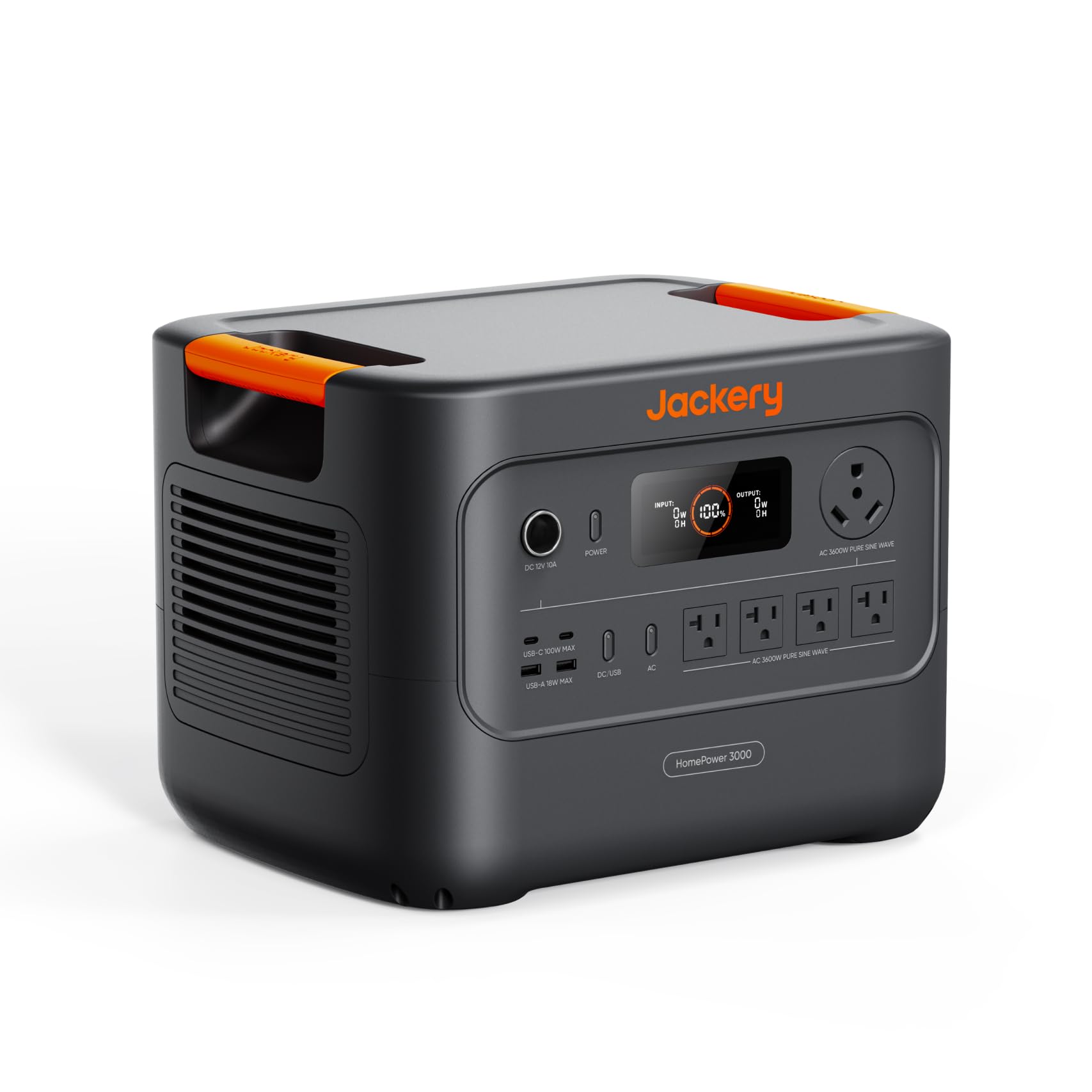
The HomePower 3000 is the balanced pick: same 3600W continuous output as the larger Jackery, with a smaller reserve and a lower price. The 7200W surge rating matters for a stairlift because the motor draws a hard spike on startup, and a unit with surge headroom handles that spike without tripping. LFP chemistry again suits a device that spends most of its life on standby. This is the pick for a household that wants the lift plus a few essentials covered without paying for the expandable flagship.
It suits a home with one stairlift and a modest list of critical loads, and it is the safer recommendation when the budget has a ceiling. The trade-off is reserve: less stored energy than the Plus, so outages that stretch past a day will need careful load management or a solar panel.
Trade-off: A smaller reserve than the flagship means longer outages demand discipline about what stays plugged in.
3. EF EcoFlow Delta 3 Ultra Portable Power Station
Type: Portable power station with LFP battery
Capacity: 3072Wh
AC Output: 3600W
Surge: 7200W
Intended Use: Home backup, emergencies, camping, RV
Solar: Solar generator capable
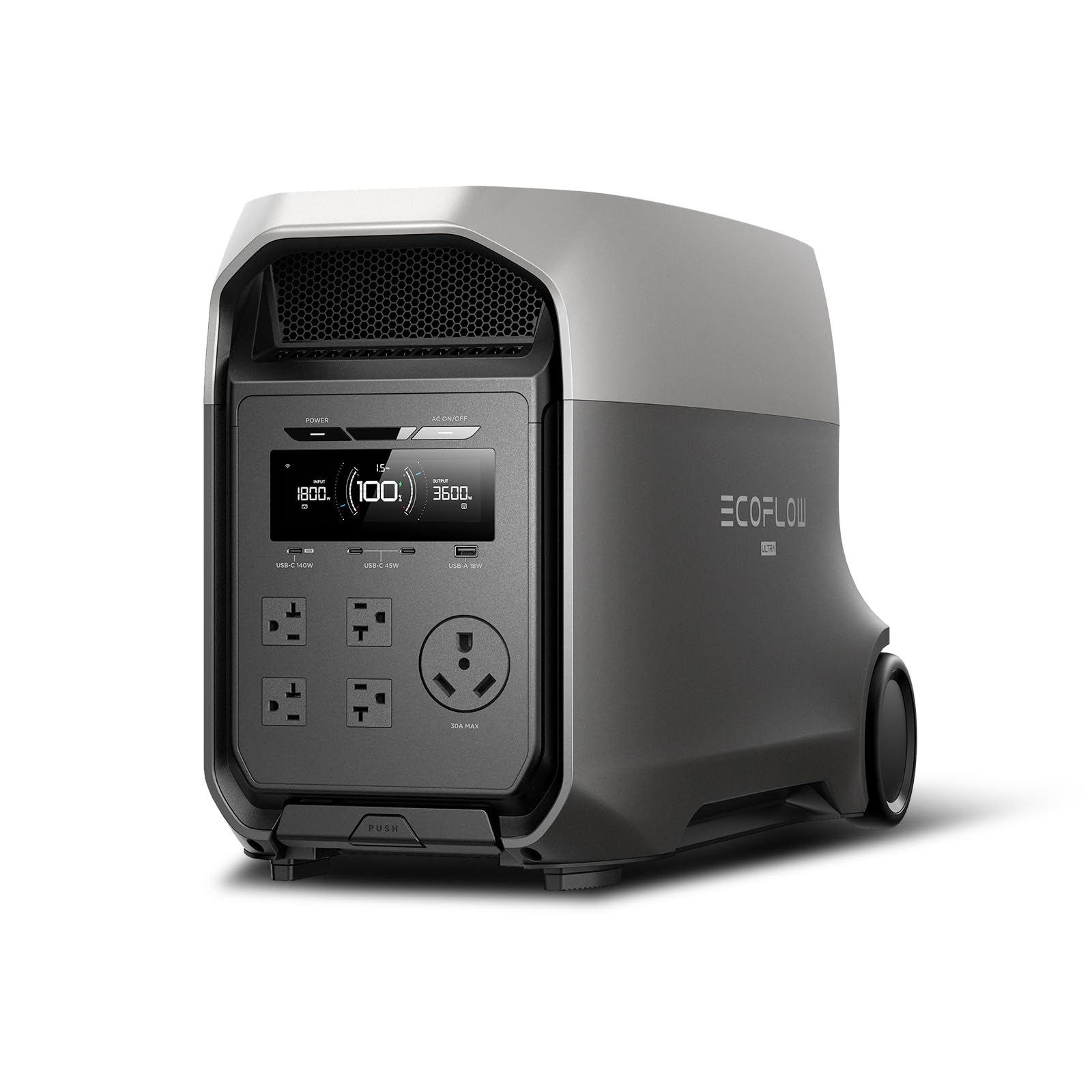
The Delta 3 Ultra matches the Jackery 3000 on paper — 3072Wh, 3600W continuous, 7200W surge — and competes on how it is used rather than raw numbers. LFP cells give it the same long-standby durability, and the EcoFlow line is built around fast recharge and solar input, which helps a household recover reserve between outages. It runs a stairlift comfortably and doubles as a camping or RV unit when it is not on standby duty.
This is the pick for a household that wants a home backup unit that also travels, or one that plans to recharge from solar between storms. The caution is that a feature-rich unit invites complexity: the more charge modes and settings a station offers, the more the owner has to learn before the night the power actually fails.
Trade-off: A feature-dense unit rewards setup time, and a household that never reads the manual will not get the most from it.
4. BLUETTI Elite 400 Portable Power Station
Type: Portable power station with LiFePO4 battery
Capacity: 3840Wh
AC Output: 2600W
Power Lifting: 3900W
Mobility: Built-in wheels
Intended Use: Essential home backup, power outages, RV life, emergencies
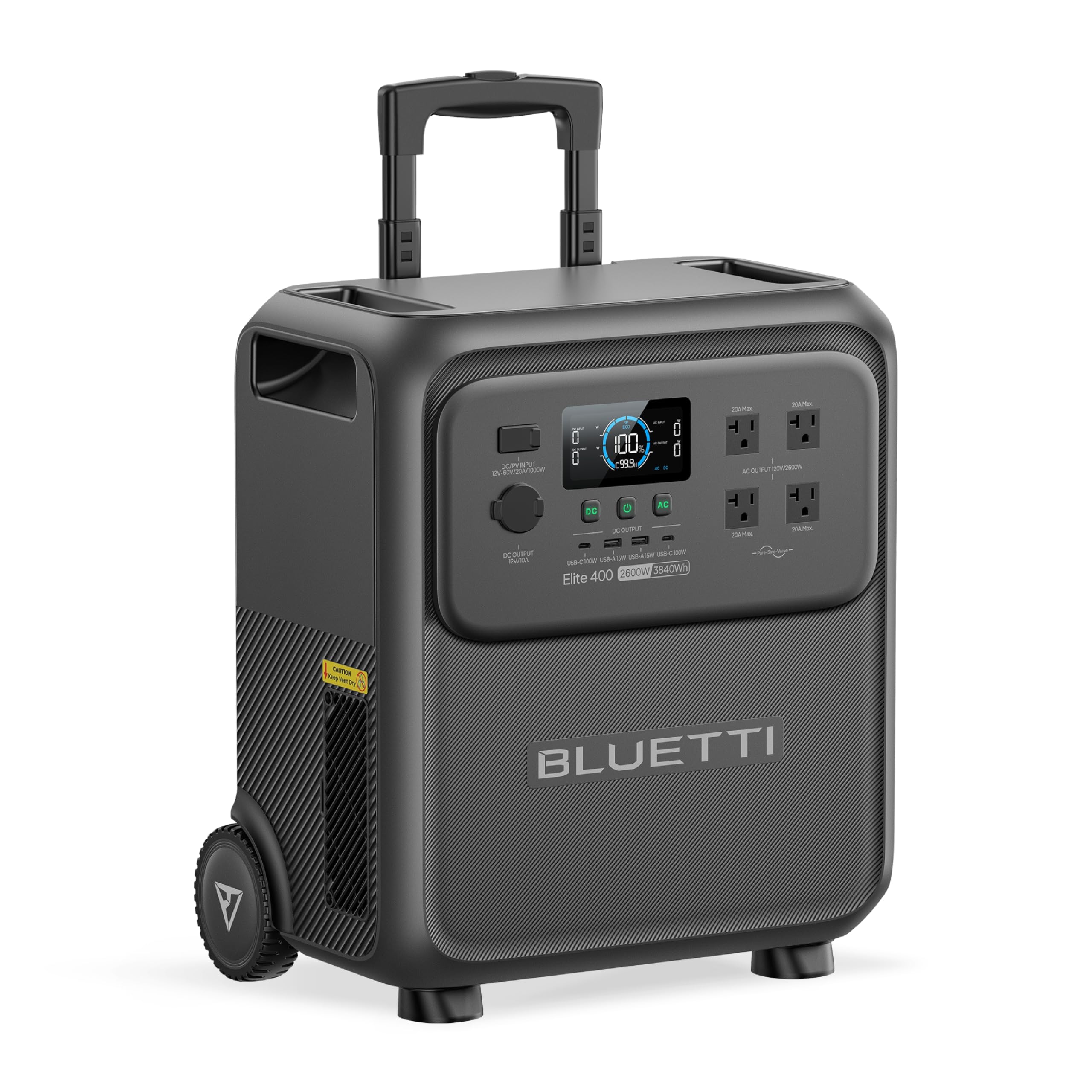
The Elite 400 carries the largest battery in this group at 3840Wh, and it is the only pick with built-in wheels. That combination is the practical answer for a household that needs to move the reserve between floors or rooms — a stairlift backup that cannot be relocated is a backup for one landing only. The 2600W continuous output is lower than the Jackery and EcoFlow units, but the 3900W power-lifting figure covers the startup spike a lift motor throws. LiFePO4 chemistry keeps it durable through long idle stretches.
It suits a home where the unit has to serve the lift on one floor and then roll to the kitchen or a bedroom, and it offers the most watt-hours for the money in this lineup. The lower continuous output is the caution: high-draw appliances run alongside a lift will push it closer to its limit than the 3600W units.
Trade-off: The biggest reserve here comes with the lowest continuous output, so it rewards restraint about what runs at once.
5. CyberPower CP1500PFCLCD PFC Sinewave UPS
Type: Uninterruptible power supply, mini tower
Capacity: 1500VA/1000W
Outlets: 12
Voltage Regulation: AVR
Certification: UL Certified
Intended Use: Battery backup and surge protection

The CyberPower is a different class of device and the budget answer. It is a UPS, not a power station: it sits between the wall outlet and the stairlift’s charger and switches to battery instantly when the grid fails, so the lift’s own battery never notices the outage. Sinewave output suits the lift’s electronics, AVR smooths out sags and brownouts, and the 12 outlets leave room for the lift plus a router or phone charger. UL certification is the reassurance a caregiver wants on a device that will run unattended.
This is the pick for a household whose stairlift already has a working internal battery and simply needs the charger kept alive through short outages. It is not the pick for multi-day grid failure — the reserve is measured in minutes, not hours, and it will not run a fridge. That limit is the trade-off, and it is the reason the larger units exist.
Trade-off: A UPS buys minutes, not days, so it is a bridge to the lift’s own battery rather than a whole-home reserve.
Before You Buy
- Lift draw: Check the stairlift’s rated wattage and its startup surge before sizing anything; the surge figure, not the running figure, is what trips undersized units.
- Runtime needed: A single trip up or down the stairs needs far less reserve than a multi-day outage; match capacity to the realistic worst case.
- Battery age: A lift with a healthy internal battery needs only charger backup, while an older battery calls for a larger reserve.
- Placement: A heavy power station belongs on the floor near the lift’s charging point, not on a shelf, and it needs clearance for ventilation.
- Recharge plan: A unit that cannot be recharged during a long outage is a one-shot reserve; solar input or a generator changes the math.
- Outlets and compatibility: Confirm the station’s outlet type and output waveform suit the lift’s charger, and leave spare outlets for a phone and a light.
- Maintenance: LFP and LiFePO4 units want periodic top-ups and cool, dry storage; a UPS wants its battery replaced on schedule.
Frequently Asked Questions
-
Can a portable power station run a stairlift directly?
Yes — a station with enough continuous and surge output can power the lift’s charger or the lift itself, but the surge rating matters more than the running wattage for a motor-driven chair. -
Is a UPS enough for a stairlift?
A UPS keeps the lift’s charger alive through short outages and brownouts, which is enough when the chair’s own battery is healthy. It is not a multi-day solution. -
How much capacity does a stairlift need?
Far less than a fridge or a furnace; the real question is how many trips and how many days of outage the household wants to cover, plus what else shares the reserve. -
Why does battery chemistry matter for backup power?
LFP and LiFePO4 cells hold up better through long idle periods and repeated shallow cycles than older chemistries, which suits a device that waits months for one bad night. -
Can these units be recharged from solar?
The Jackery, EcoFlow and BLUETTI picks are solar-generator capable with an optional panel, which extends runtime through a long outage. The CyberPower UPS recharges from the wall only. -
Where should the backup unit be stored?
Near the stairlift’s charging point, on a stable surface with ventilation, and somewhere the household can reach it in the dark without moving furniture.
Bottom Line
For most homes with a stairlift, the Jackery HomePower 3600 Plus is the pick to beat: 3600W of output with surge headroom, LFP durability, and an expansion path that lets the reserve grow with the household. Households that only need the charger bridged through short outages can spend far less on the CyberPower UPS, and the BLUETTI Elite 400 is the value choice when the reserve has to roll between floors.
