Why there are Amazon links here: Brave Review is paid a commission for qualifying Amazon purchases made through the links below. Your price does not change, and using our links is entirely optional. How this works
Best Generator Alternative for a Terraced House: 5 Quiet, Fume-Free Picks
A terraced house leaves little room for a petrol generator: no garden to site it in, neighbours a wall away, and nowhere safe to vent exhaust. This guide covers the best generator alternative for a terraced house — battery power stations that run indoors or in a hallway, plus one tri-fuel unit for households with an outdoor spot and a transfer switch. It suits three buyers: the commuter who needs lights, Wi-Fi and a fridge to survive a short outage, the home worker protecting a router and laptop through a longer cut, and the prepared household wiring a proper backup circuit. The overview table below compares all five before the detailed reviews.
Overview Of The Picks
| Product | Key Spec | Best Use | Price Tier |
|---|---|---|---|
| Westinghouse 14500 Peak Watt Tri-Fuel | 14,500 peak watts, gas/propane/natural gas | Whole-home backup with outdoor siting | Premium |
| Jackery HomePower 3600 Plus | 3,584Wh, expandable to 21kWh | Long outages, scalable home backup | Premium |
| EF ECOFLOW DELTA Pro | 3,600Wh, expandable to 25kWh | Whole-home expansion, fast recharge | Premium |
| EF ECOFLOW DELTA 3 Max | 2,048Wh LFP, 2,400W AC | Flat or mid-terrace, everyday essentials | Mid-range |
| 4400-Watt Inverter Generator | 4,400 watts, 30A RV outlet | Budget backup where exhaust can vent outside | Budget |
1. Westinghouse 14500 Peak Watt Tri-Fuel Home Backup Portable Generator
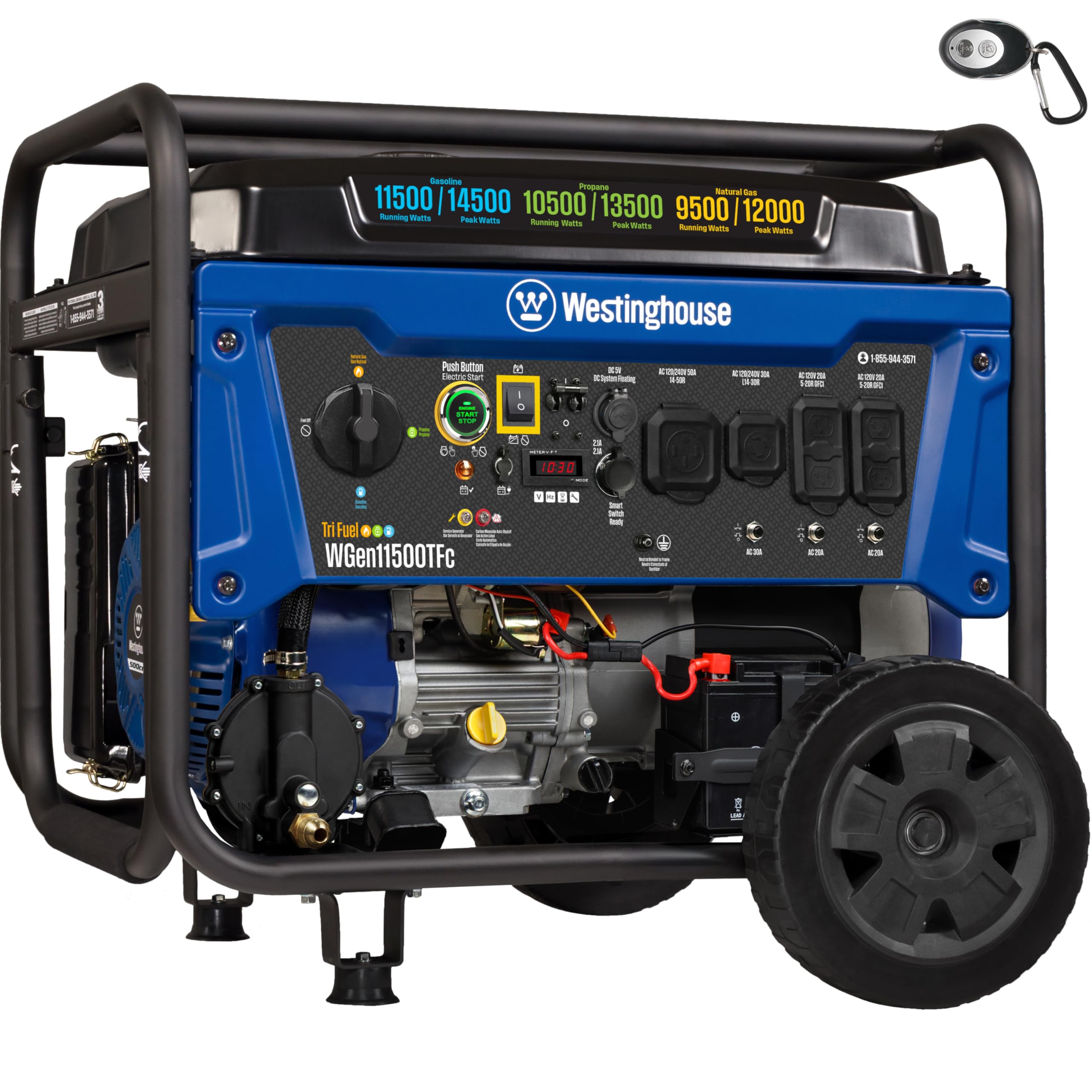
Type: Tri-fuel portable generator
Fuel: Gas, propane, natural gas
Peak output: 14,500 watts
Starting: Remote electric start
Installation: Transfer switch ready
Intended use: Home backup
Westinghouse 14500 Peak Watt Tri-Fuel Home Backup Portable Generator
This is the outlier in the group: a combustion generator rather than a battery, and the only pick that can carry a whole terraced house’s circuits at once. Tri-fuel operation is the practical draw — natural gas means a household can run it from an existing supply line without storing fuel, and propane sidesteps stale petrol. Remote electric start removes the walk outside in bad weather to pull a cord, and transfer-switch readiness means an electrician can wire it into the consumer unit properly. It is built for households with a side return, a rear yard or a driveway where exhaust can vent clear of windows and neighbouring walls. Buyers in a mid-terrace with no outdoor space at all should stop reading here.
Trade-off: It is still a fuel-burning engine, so it cannot run indoors, needs ventilation and exhaust clearance, and is far louder than any battery unit on this list.
2. Jackery HomePower 3600 Plus Power Station

Battery chemistry: LFP
Capacity: 3,584Wh
Expandable to: 21kWh
AC output: 3,600W
Power source: Battery, solar optional
Intended use: Home backup, emergencies, RV
Jackery HomePower 3600 Plus Power Station
The HomePower 3600 Plus is a serious home-backup battery rather than a camping toy, and its expandability is the headline. Starting at 3,584Wh and scaling to 21kWh with add-on batteries, it can be sized to the household instead of bought at full cost in one go. LFP chemistry is the right choice for a unit that sits in a cupboard for months between outages, since it tolerates being held at partial charge far better than older lithium blends. The 3,600W AC output covers a fridge, boiler controls, lighting and networking gear comfortably, and solar input keeps it topped up without mains. It suits a household planning a multi-day outage and willing to build capacity over time.
Trade-off: Reaching the full 21kWh means buying additional batteries, so the entry price understates the cost of a genuinely whole-home setup.
3. EF ECOFLOW Portable Power Station DELTA Pro
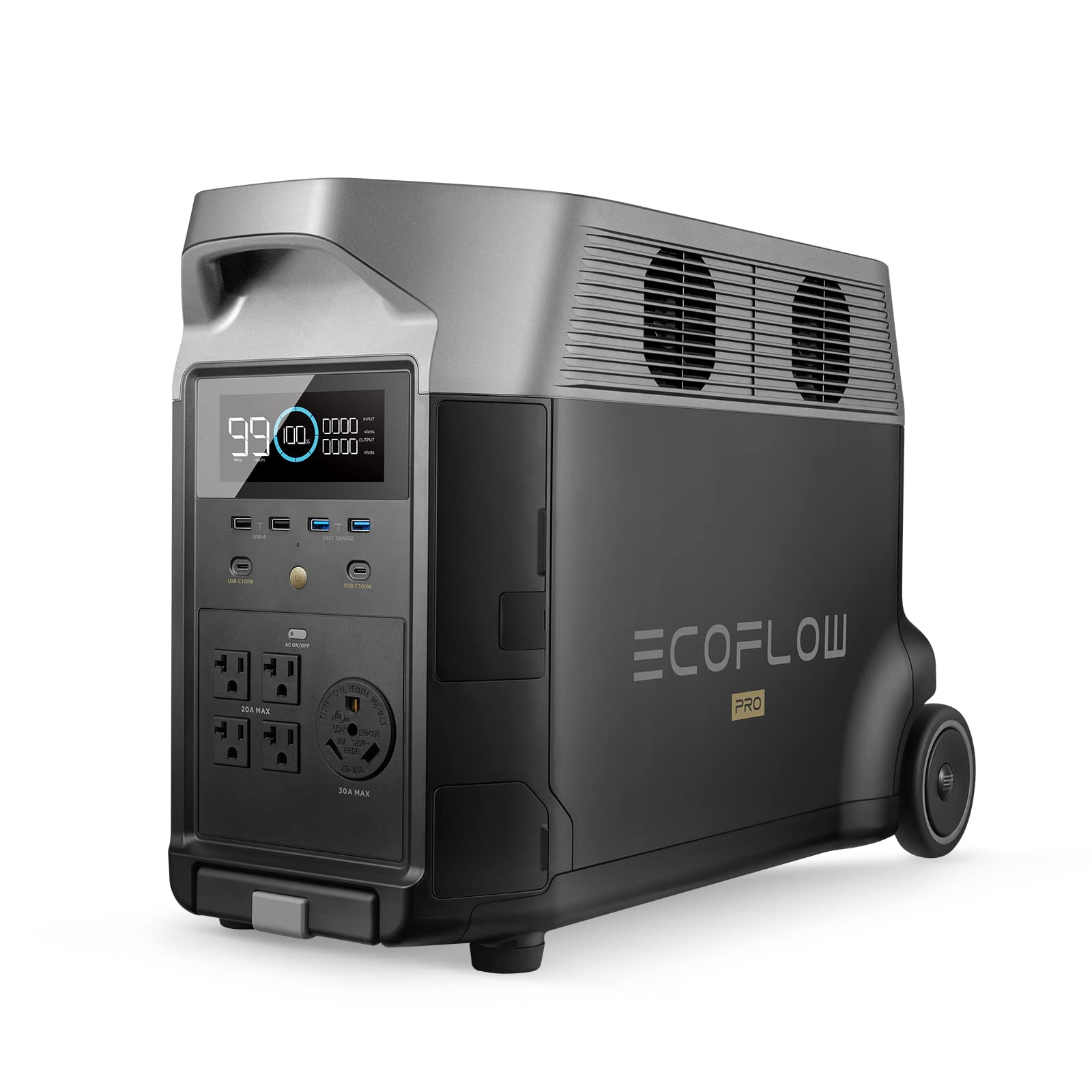
Capacity: 3,600Wh
Expandable to: 25kWh
AC output: 120V, 3,600W
Recharge time: 2.7 hours
Power source: Battery, solar optional
Intended use: Home use, power outage, camping, RV
EF ECOFLOW Portable Power Station DELTA Pro
The DELTA Pro is the largest-capacity starting point here and the fastest to recharge from the wall at 2.7 hours. That combination matters in a terraced house: a unit that refills quickly can be cycled between outages rather than sitting flat, and 3,600Wh covers a realistic evening of fridge, lights, router and a television. Expansion to 25kWh through add-on batteries makes it a genuine whole-home proposition, and 3,600W of AC output handles most household appliances short of heavy heating loads. Solar input keeps it usable through a long cut when mains charging is unavailable. It is the pick for a household that wants one system to grow into rather than several separate units.
Trade-off: It is heavy and bulky for a "portable" unit, so buyers in a narrow terraced house should plan a permanent spot on the ground floor rather than carrying it between floors.
4. EF ECOFLOW DELTA 3 Max Portable Power Station
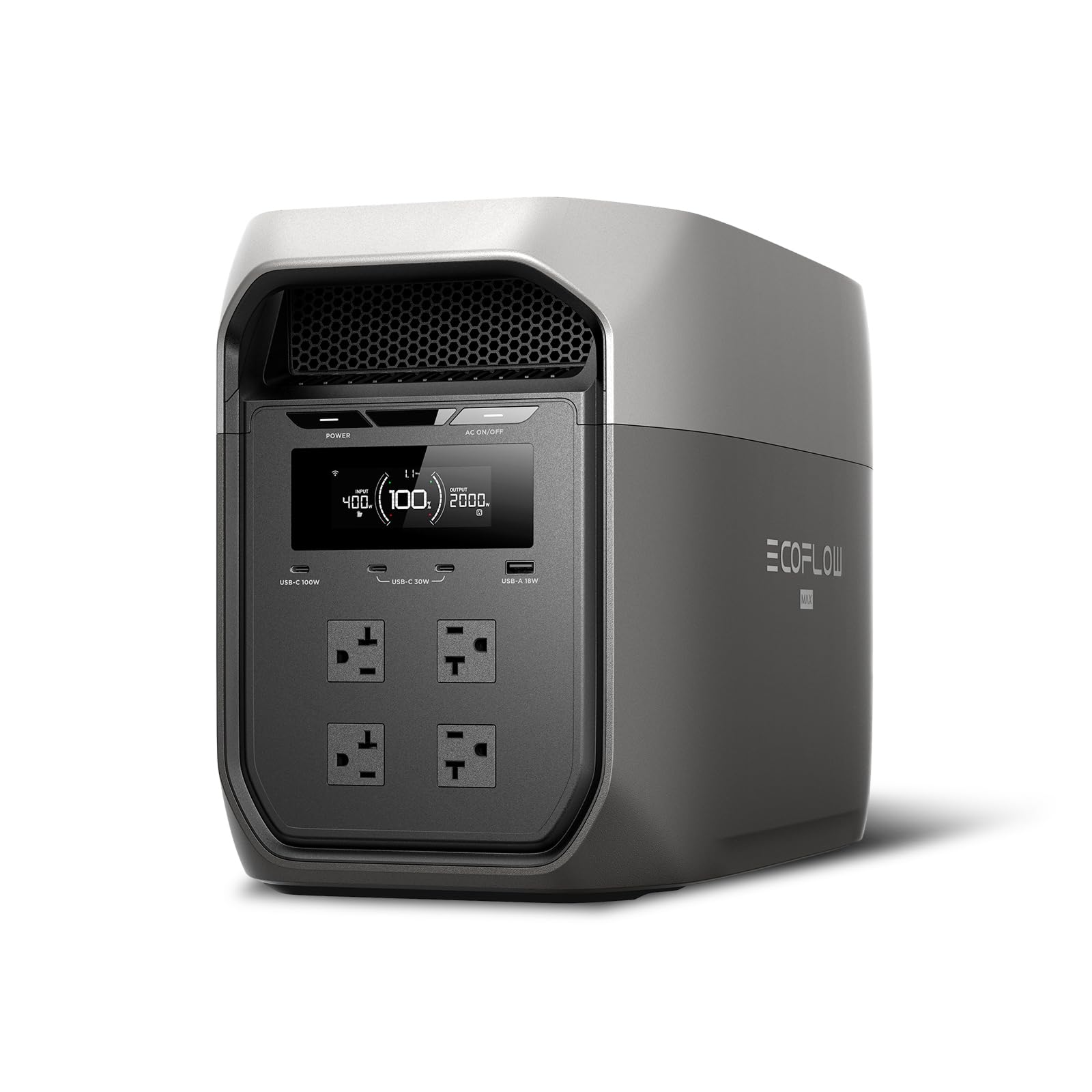
Battery chemistry: LFP
Capacity: 2,048Wh
AC output: 2,400W
X-Boost output: 3,400W
Recharge: 0-80% in 1.13 hours
Power source: Battery, solar optional
Intended use: Home backup, RV camping
EF ECOFLOW DELTA 3 Max Portable Power Station
The DELTA 3 Max is the sensible middle pick and the one most terraced households should look at first. At 2,048Wh it is light enough for one person to move between rooms, yet LFP chemistry and a 2,400W AC output cover a fridge, lighting, router and phone charging through a typical evening outage. X-Boost lifts the output to 3,400W for appliances that draw a surge on startup, which widens the range of devices it can realistically run. The 1.13-hour recharge to 80% means it can be refilled between short cuts rather than sitting depleted. It suits a flat or mid-terrace where a large unit would be impractical to store.
Trade-off: Capacity is the smallest of the three battery flagships here, so a multi-day outage in a household with electric heating will outrun it without solar or a second battery.
5. 4400-Watt Inverter Generator, Open Frame
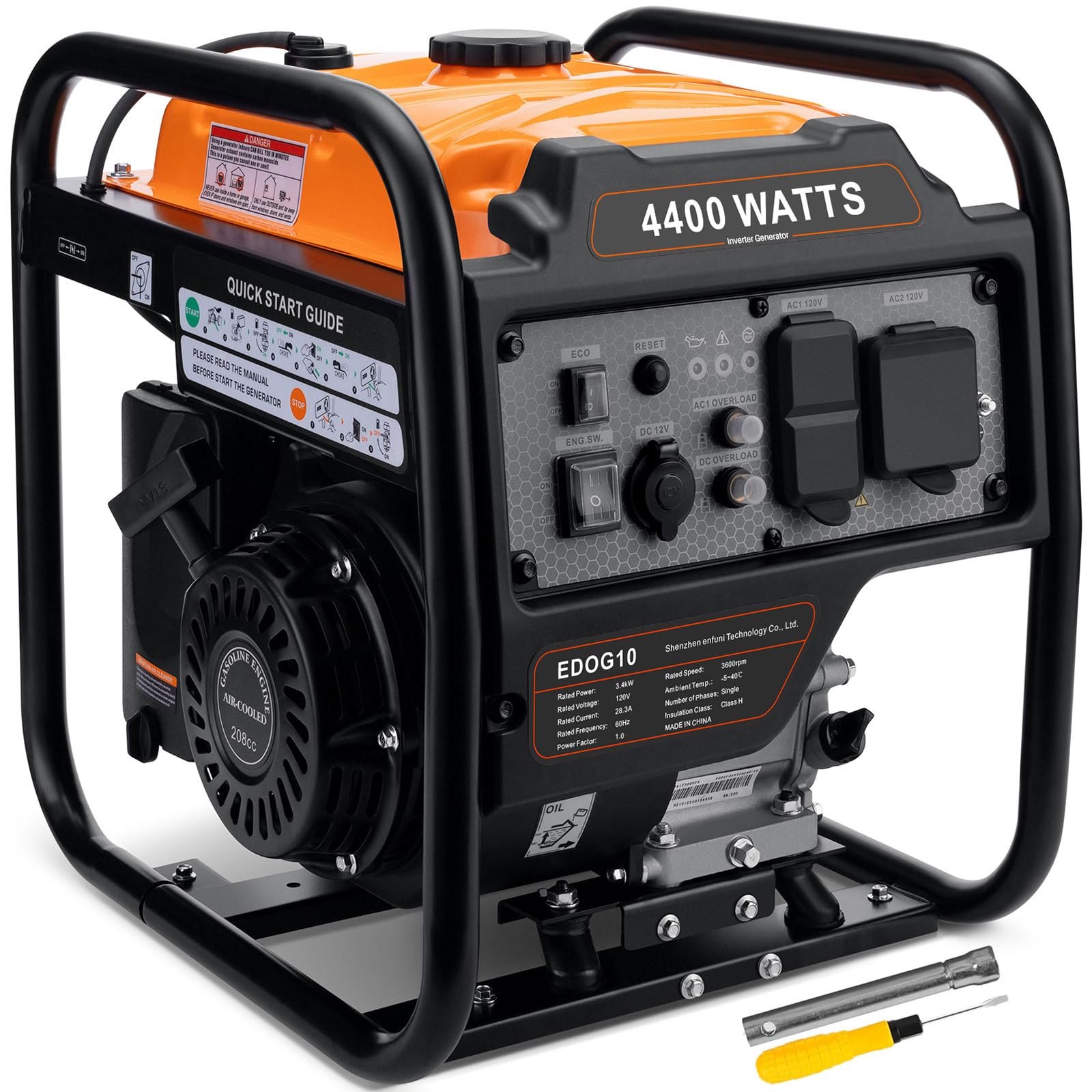
Type: Open-frame inverter generator
Output: 4,400 watts
Fuel: Gas
Outlet: RV-ready 30A
Emissions: EPA compliant
Intended use: Emergency home backup, RV
4400-Watt Inverter Generator, Open Frame Generator Gas Powered
The budget option is a conventional inverter generator, and inverter technology is what makes it worth listing at all: it produces cleaner power than an open-frame conventional set, which matters for electronics and boiler controls. At 4,400 watts it will run a fridge, lights, router and a few small appliances together, and the 30A RV outlet is useful for a caravan or a transfer lead. Open-frame construction keeps the cost down and makes servicing straightforward. It suits a terraced house with a rear yard or driveway where the unit can sit well away from doors and windows while running.
Trade-off: It burns petrol, which means storing fuel safely, and an open-frame set is loud enough that close neighbours will notice — a poor fit for a mid-terrace with no outdoor siting.
Before You Buy
- Ventilation: Any fuel-burning generator must run outdoors, well clear of windows, doors and neighbouring walls; battery power stations are the only option that can run inside.
- Capacity: Add up the wattage of what must stay on — fridge, boiler, router, lights — and size the battery to cover at least one full evening.
- Surge load: Motors in fridges and pumps draw more at startup than their rating suggests, so check surge or X-Boost figures, not just continuous output.
- Storage: A terraced house rarely has a spare room; measure the cupboard or hallway before buying a large unit, and keep LFP batteries at partial charge rather than full.
- Recharge: A unit that refills fast can be cycled between outages; check the wall-charge time and whether solar input is supported.
- Installation: A transfer switch needs an electrician and, in a terraced house, a clear route from the unit’s outdoor position to the consumer unit.
- Noise and neighbours: Battery units are silent; combustion generators are not, and party-wall terraces carry sound.
Frequently Asked Questions
-
Can a battery power station really replace a generator in a terraced house?
For short outages and essential circuits, yes — and it is the only safe option where there is no outdoor space to vent exhaust. For multi-day cuts or electric heating, a generator or a much larger battery bank is needed. -
How long will a power station run a fridge?
It depends on the fridge’s duty cycle and the unit’s capacity; a 2,000Wh-class battery typically covers an evening of normal fridge cycling alongside lights and a router, while larger units stretch that to a day or more. -
Is a tri-fuel generator safe next to a neighbouring wall?
Only with proper clearance and exhaust directed away from windows and adjoining properties. Natural gas operation avoids fuel storage but does not remove the exhaust requirement. -
Do these units need an electrician?
Battery power stations plug into a wall socket or a transfer lead and need no installation. A transfer switch or a generator inlet must be fitted by a qualified electrician. -
Which is quieter, an inverter generator or a power station?
A battery power station makes no engine noise at all. An inverter generator is quieter than a conventional open-frame set but still audible through a party wall. -
Can solar panels be added later?
The Jackery and both ECOFLOW units accept optional solar panels, which allows capacity to be topped up during a long outage when mains charging is unavailable.
Bottom Line
For most terraced households the best generator alternative is the EF ECOFLOW DELTA 3 Max: it is light enough to store and move in a narrow house, silent and fume-free indoors, and fast enough to recharge between outages. Households planning for multi-day cuts should step up to the DELTA Pro or the Jackery HomePower 3600 Plus and expand capacity over time. The Westinghouse tri-fuel unit remains the right answer only where a rear yard or driveway allows safe outdoor siting and a transfer switch is being fitted.
