Why there are Amazon links here: Brave Review is paid a commission for qualifying Amazon purchases made through the links below. Your price does not change, and using our links is entirely optional. How this works
Best Heat Alarm for a Garage Used as a Kitchen
A garage used as a kitchen is a tricky place to protect: smoke alarms false-alarm on every seared steak, while a heat alarm waits for a real temperature spike before it sounds. This guide covers five heat alarms that suit three kinds of buyers — the DIY homeowner wiring a garage kitchen, the renovator who wants interconnected protection tied into the house system, and the budget-minded cook who just needs a dependable unit over the range. The overview table below shows each pick’s key spec, best use and price tier, so a decision can be made in under a minute.
Overview of the Picks
| Product | Key Spec | Best Use | Price Tier |
|---|---|---|---|
| First Alert BRK HD6135FB | Hardwired with 9V battery backup | Whole-garage coverage on a budget | Mid |
| Kidde Heat Detector | Hardwired, battery backup, interconnect | Tying into an existing Kidde system | Mid |
| System Sensor 5601P | 135°F fixed temp plus rate-of-rise | Fast response in a working garage kitchen | Premium |
| First Alert Hardwired Heat Alarm | Thermistor sensor, 50 ft detection, 85 dB | Large open garage kitchens | Mid |
| System Sensor 5604 | 194°F fixed temperature | Hot, steamy cooking zones | Premium |
1. First Alert BRK HD6135FB Hardwired Heat Alarm

Type: Hardwired heat alarm
Power Source: 120V AC with 9V battery backup
Installation: Ceiling mount, hardwired
Backup: 9V battery
Best For: Garage kitchens needing continuous protection during outages
This First Alert unit is the straightforward choice for a garage kitchen conversion: it wires into the household circuit and keeps watching through a power cut thanks to the 9V backup. The heat-sensing element ignores the smoke and steam that a standard smoke alarm would trip over, which is exactly the problem a garage cook faces. It is a ceiling-mounted unit, so it sits out of the way of pots, pans and shelving. The build is typical of residential hardwired alarms — a plastic housing with a twist-off mounting base that makes servicing simple.
It suits the homeowner who is already running electrical work in the garage and wants a set-and-forget alarm rather than a battery-only unit that needs regular attention. The battery backup is the standout feature for a garage that may lose power during storms. The caution here is that hardwiring means an electrician or a confident DIYer with a circuit to spare — a renter without permission to modify wiring should look elsewhere.
Trade-off: The 9V backup battery needs periodic replacement, and a hardwired install is a barrier for anyone who cannot modify the garage circuit.
2. Kidde Heat Detector, Hardwired with Battery Backup

Type: Hardwired heat detector
Power Source: 120V AC with battery backup
Indicators: 2 LEDs
Interconnect: Yes, links with compatible alarms
Best For: Garages that need to alert the rest of the house
Kidde’s heat detector is built for exactly this scenario — the manufacturer flags garages as an ideal location, and the interconnect capability is the reason it earns a spot here. When one alarm in a linked system trips, the others sound too, so a heat event in the garage kitchen is heard in the bedrooms rather than muffled behind a fire door. The dual LEDs give a quick visual status check without climbing a ladder. It runs on household power with a battery backup for outages.
This pick suits the renovator who is already using Kidde alarms elsewhere in the home and wants the garage tied into that network. It is also the better choice for a garage kitchen that sits close to living space, where early warning matters more than a standalone beep. The limitation is that interconnection only works with compatible units — a mixed-brand system will not link, so the rest of the house needs to match.
Trade-off: Interconnect only works within a compatible system, so a home running another brand gets less value from this unit.
3. System Sensor 5601P 135 Degree Heat Detector

Type: Mechanical heat detector
Trigger: 135°F fixed temperature plus rate-of-rise
Circuit: Single-circuit
Housing: Plain
Best For: Fast response in a busy garage kitchen
The 5601P is a step up in sensitivity: it combines a fixed 135°F trip point with rate-of-rise detection, so a sudden temperature surge triggers it before the ceiling reaches the fixed threshold. That dual logic is what makes it a strong fit for a garage kitchen where a hot pan or a flare-up can spike temperatures quickly. The mechanical design needs no battery and no complex electronics, which appeals to buyers who want a long service life with minimal fuss. The plain housing keeps it unobtrusive on a garage ceiling.
This unit suits the cook who uses the garage kitchen heavily and wants the fastest possible warning without the false alarms that smoke sensors produce. It is also a sensible pick for an unheated or semi-exposed garage where electronic sensors may struggle. The catch is that it is a single-circuit device aimed at professional or semi-professional installs — it expects proper wiring and panel compatibility, so a casual DIYer may find the hookup less plug-and-play than a residential alarm.
Trade-off: The single-circuit mechanical format assumes a proper alarm panel and wiring, which puts it beyond a simple swap-in for most homeowners.
4. First Alert Hardwired Heat Alarm, 120V
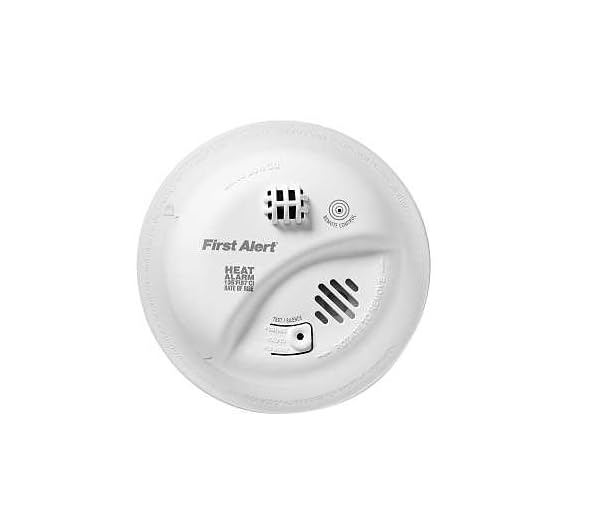
Type: Hardwired heat alarm
Power Source: 120V AC with battery backup
Sensor: Thermistor
Coverage: 50 ft detection
Alarm: 85 dB
Best For: Large, open garage kitchens
The thermistor sensor is the technical highlight here — it responds to temperature change electronically rather than through a mechanical element, which tends to mean steadier performance over years of service. The 50 ft detection figure makes this the pick for a big, open garage kitchen where one unit needs to watch a wide area. At 85 dB the alarm is loud enough to carry across a workshop-sized space. It is hardwired with a battery backup, so it keeps guarding through outages.
This alarm suits the buyer with a large converted garage — think a double bay turned into a prep kitchen with room to spare. It is also the better option for someone who wants a modern sensor type without stepping up to commercial equipment. The drawback is that wide coverage is only useful if the unit is placed well; a 50 ft rating in a cluttered garage with shelving and equipment can leave blind spots, so placement matters as much as the spec.
Trade-off: The wide coverage claim depends on clear ceiling space, and a cluttered garage can leave corners under-watched by a single unit.
5. System Sensor 5604 194°F Fixed Temperature Heat Detector

Type: Fixed temperature heat detector
Trigger: 194°F fixed temperature
Circuit: Single-circuit
Best For: Hot, steamy cooking zones
The 5604 sits at the high end of the temperature range, tripping only when the ceiling reaches 194°F. That sounds slow, but it is deliberate: in a garage kitchen with a commercial-style range, a wok burner or a pizza oven, ambient temperatures and steam plumes run high, and a lower threshold would nuisance-trip. The single-circuit design and fixed-temperature logic make it a robust, no-battery device for harsh environments. It is the specialist pick of the group.
This detector suits the buyer running serious cooking equipment in a garage — the kind of setup where heat, grease and steam are constant companions. It is also a reasonable choice for a garage that doubles as a workshop, where solvent fumes and dust would confuse a smoke alarm. The caution is that a high fixed threshold means slower response to a small, smoldering fire; this is a device for fast, hot fires, not a universal replacement for every alarm in the building.
Trade-off: The high trip point delays warning on slow, smoldering fires, so it works best alongside other protection rather than alone.
Before You Buy
- Power source: Hardwired units need a circuit in the garage; battery-only models are simpler but demand regular checks.
- Interconnect compatibility: A linked alarm only helps if the rest of the house runs the same brand or system.
- Sensor type: Fixed temperature, rate-of-rise and thermistor sensors respond differently — match the sensor to the cooking style.
- Coverage and placement: A wide detection rating still depends on a clear ceiling and sensible mounting away from vents.
- Installation skill: Mechanical and single-circuit detectors assume panel wiring; residential alarms are more DIY-friendly.
- Backup battery: A backup keeps protection alive during outages but adds a maintenance task.
- Environment: Grease, steam and dust in a garage kitchen shorten the life of any alarm, so plan for periodic replacement.
Frequently Asked Questions
-
Why use a heat alarm instead of a smoke alarm in a garage kitchen?
Smoke alarms false-alarm on cooking smoke and steam. A heat alarm ignores smoke and triggers on temperature rise, which suits a garage cooking space far better. -
Can a heat alarm be interconnected with the alarms in the house?
Yes, if the units are compatible. Interconnect capability is brand- and system-specific, so the garage unit needs to match the rest of the home’s alarms. -
What temperature should a garage kitchen heat alarm trip at?
It depends on the cooking equipment. A 135°F unit responds faster in a normal kitchen setup, while a 194°F unit suits hot, steamy or commercial-style cooking where lower thresholds nuisance-trip. -
Does a hardwired heat alarm still work in a power cut?
A hardwired unit with battery backup keeps operating during an outage. Models without a backup go silent when the circuit loses power. -
How many heat alarms does a garage kitchen need?
One unit covers a compact garage, but a large open space with shelving or equipment may need two for full coverage. Placement matters as much as the count. -
Are heat alarms suitable for a garage that is also a workshop?
Often yes — heat alarms tolerate dust and fumes that would set off a smoke alarm. The trade-off is slower response to smoldering fires, so pair them with other protection.
Bottom Line
For most garage kitchens, the First Alert BRK HD6135FB is the pick that balances price, hardwired reliability and battery backup without demanding commercial-grade wiring. Buyers tying the garage into a whole-home system should step up to the Kidde Heat Detector for its interconnect capability, while heavy-duty cooking setups are better served by the System Sensor 5601P or 5604. Whichever route a buyer takes, matching the sensor to the cooking style and confirming the wiring situation before purchase is the difference between a quiet, reliable alarm and a constant nuisance.
