Why there are Amazon links here: Brave Review is paid a commission for qualifying Amazon purchases made through the links below. Your price does not change, and using our links is entirely optional. How this works
Best Whole House Battery Backup for a Terraced House
A terraced house packs a lot of living into a narrow footprint, and that shapes which backup battery actually works: no garage to hide a wall of hardware, a tight side return for cable runs, and neighbors close enough that noise and exhaust matter. The five picks below cover three buyer profiles — the renter or narrow-lot owner who needs a compact, portable unit, the homeowner wiring a proper split-phase backup, and the planner who wants a system that grows over time. The overview table shows the key spec and best use for each; the reviews follow in the same order.
Overview of the Picks
| Product | Key Spec | Best Use | Price Tier |
|---|---|---|---|
| Jackery HomePower 3600 Plus and Extra Battery | 7168Wh, 3600W AC output, expandable to 21kWh | Whole-home essentials with room to grow | Premium |
| GROWATT HELIOS 3600 Home Battery Backup Combo | 7200W, 7200Wh, expandable to 36kWh | Split-phase backup with a double voltage hub | Premium |
| EF ECOFLOW DELTA Pro Ultra with Smart Home Panel 2 | 7200W AC output, 6144Wh, expandable to 90kWh | Full-home backup with smart panel control | Premium |
| OSCAL PowerMax 6000 Solar Generator with 3×400W Solar Panel | 6000W AC output (9000W peak), 120V/240V split phase | Solar-ready whole-home backup on a budget | Mid-range |
| EF ECOFLOW Delta 3 Ultra 3072Wh Portable Power Station | 3600W AC output, 7200W surge | Portable backup for a flat or small terrace | Mid-range |
1. Jackery HomePower 3600 Plus and Extra Battery
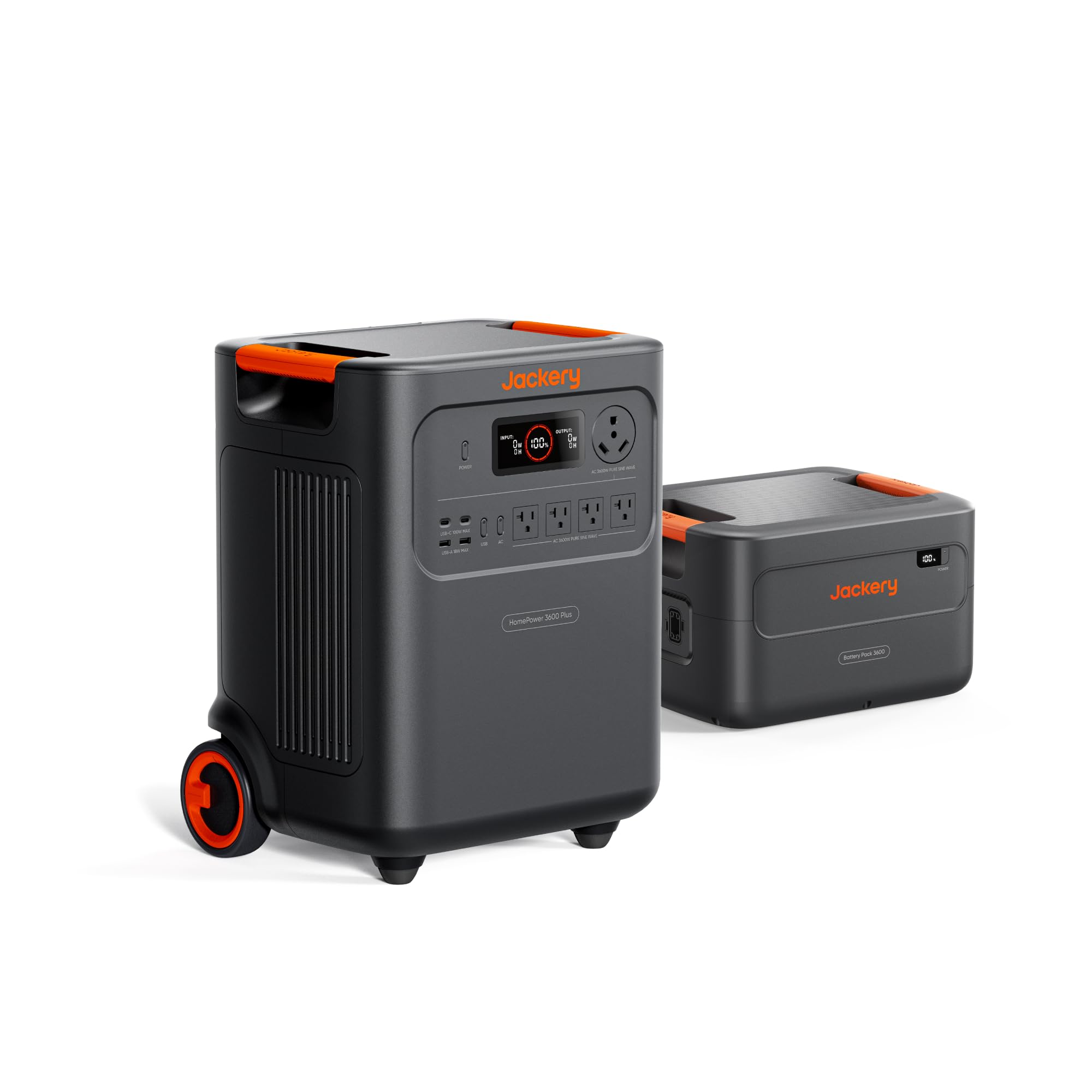
Capacity: 7168Wh, expandable to 21kWh
AC Output: 3600W
Battery Type: LFP
Intended Use: Essential home backup, emergencies
Included: HomePower 3600 Plus plus extra battery
Check the current price on Amazon
This is a lithium iron phosphate (LFP) system built around a 3600W inverter, and the bundle ships with a second battery so the starting capacity is already 7168Wh. LFP chemistry is the sensible choice for a unit that sits in a hallway cupboard or under a stair: it holds up to repeated charge cycles and tolerates being topped off regularly. The 3600W output runs a fridge, lights, router, boiler controls and a few small appliances at once, and the expandable design means a terraced owner can add capacity later without replacing the inverter. It suits the household that wants a recognizable brand, a self-contained unit, and a clear upgrade path.
The trade-off is that 3600W is the lowest AC output in this group, so buyers planning to run a heat pump, an EV charger or a full electric kitchen on backup need to look at the 7200W options instead. The bundle also takes up meaningful floor or shelf space once the extra battery is stacked, which matters in a narrow terrace.
2. GROWATT HELIOS 3600 Home Battery Backup Combo with Double Voltage Hub
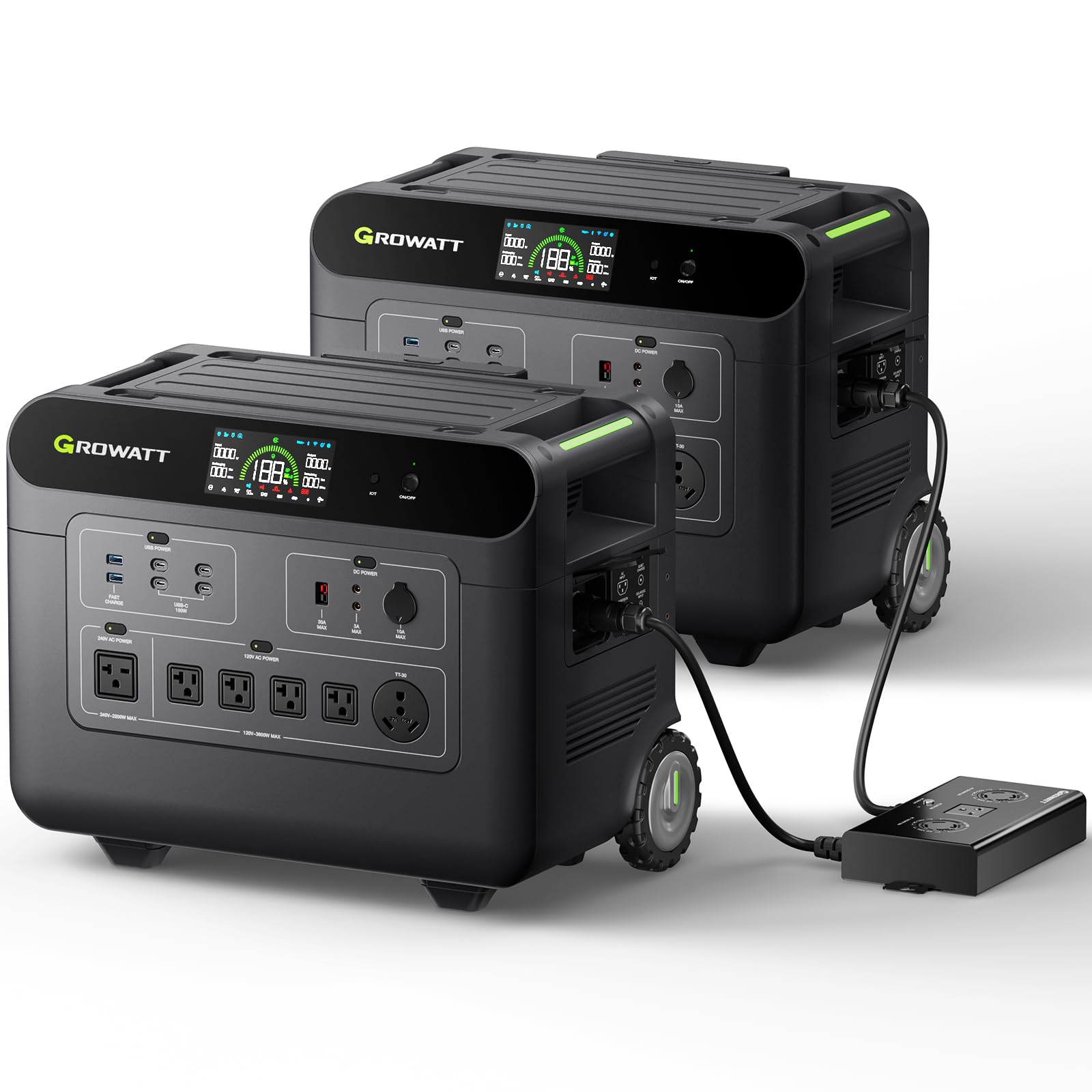
AC Output: 7200W
Capacity: 7200Wh, expandable to 36kWh
Voltage: 120V/240V
Battery Type: LFP
Intended Use: Home backup, RVs, outdoor camping
Included: Double voltage hub
Check the current price on Amazon
The HELIOS combo pairs an LFP battery with a double voltage hub, which is what unlocks 120V/240V split-phase output from a single unit. That matters in a terraced house because 240V is what runs a well pump, a dryer, a larger air conditioner or a workshop circuit — the loads a 120V-only station cannot touch. With 7200W of AC output and 7200Wh to start, it covers a whole-home essentials panel comfortably, and expansion to 36kWh gives a realistic path to multi-day autonomy. The combo format also makes it usable for an RV or camping trip when it is not sitting on backup duty.
The trade-off is that a double voltage hub adds a piece of hardware and a wiring step that a plug-and-play station does not need, so buyers who want a single box and a wall outlet should look elsewhere. The 7200Wh starting capacity is also modest for a whole-home load until at least one expansion battery is added.
3. EF ECOFLOW DELTA Pro Ultra with Smart Home Panel 2
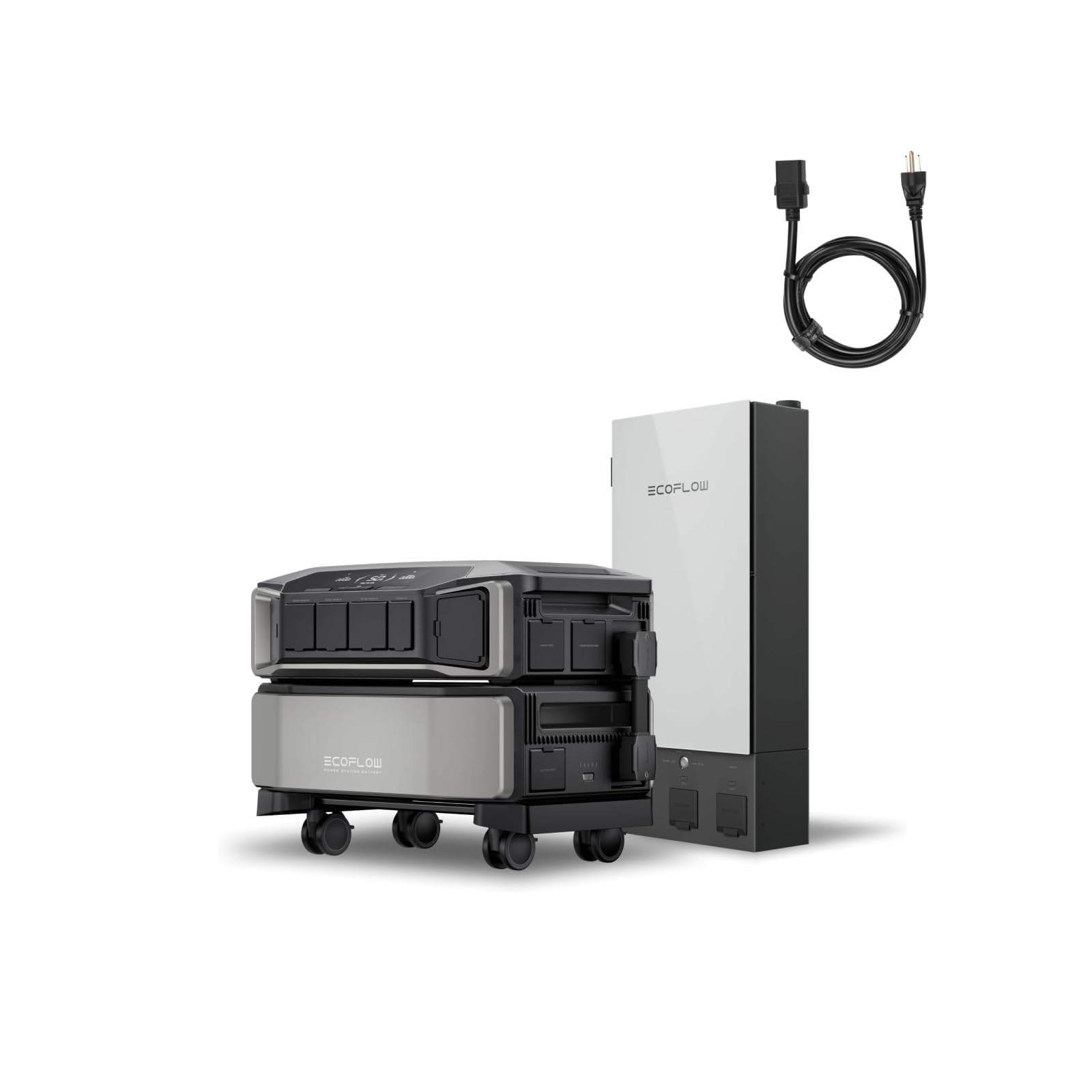
AC Output: 7200W
Capacity: 6144Wh, expandable to 90kWh
Voltage: 120V/240V
Battery Type: LiFePO4
Intended Use: Home backup, emergencies
Included: Smart Home Panel 2
Check the current price on Amazon
This is the most ambitious pick in the group: a 7200W split-phase station paired with the Smart Home Panel 2, which is the piece that turns a battery into a proper whole-house backup system with circuit-level control. The 6144Wh base capacity is the smallest starting figure here, but expansion to 90kWh is by far the largest ceiling, so a terraced owner can begin with one unit and scale to a genuinely house-sized reserve over several years. LiFePO4 chemistry and a 7200W inverter put it in the same performance class as the GROWATT while adding the smart panel’s automatic switchover and load management. It suits the homeowner who intends to stay put and wants the backup to become permanent infrastructure.
The trade-off is that the Smart Home Panel 2 is a installed component, not a plug-in accessory, so this pick only makes sense for an owner prepared to bring in an electrician and commit to the property. The 6144Wh starting capacity is also the leanest of the five until expansion batteries are added.
4. OSCAL PowerMax 6000 Solar Generator with 3×400W Solar Panel
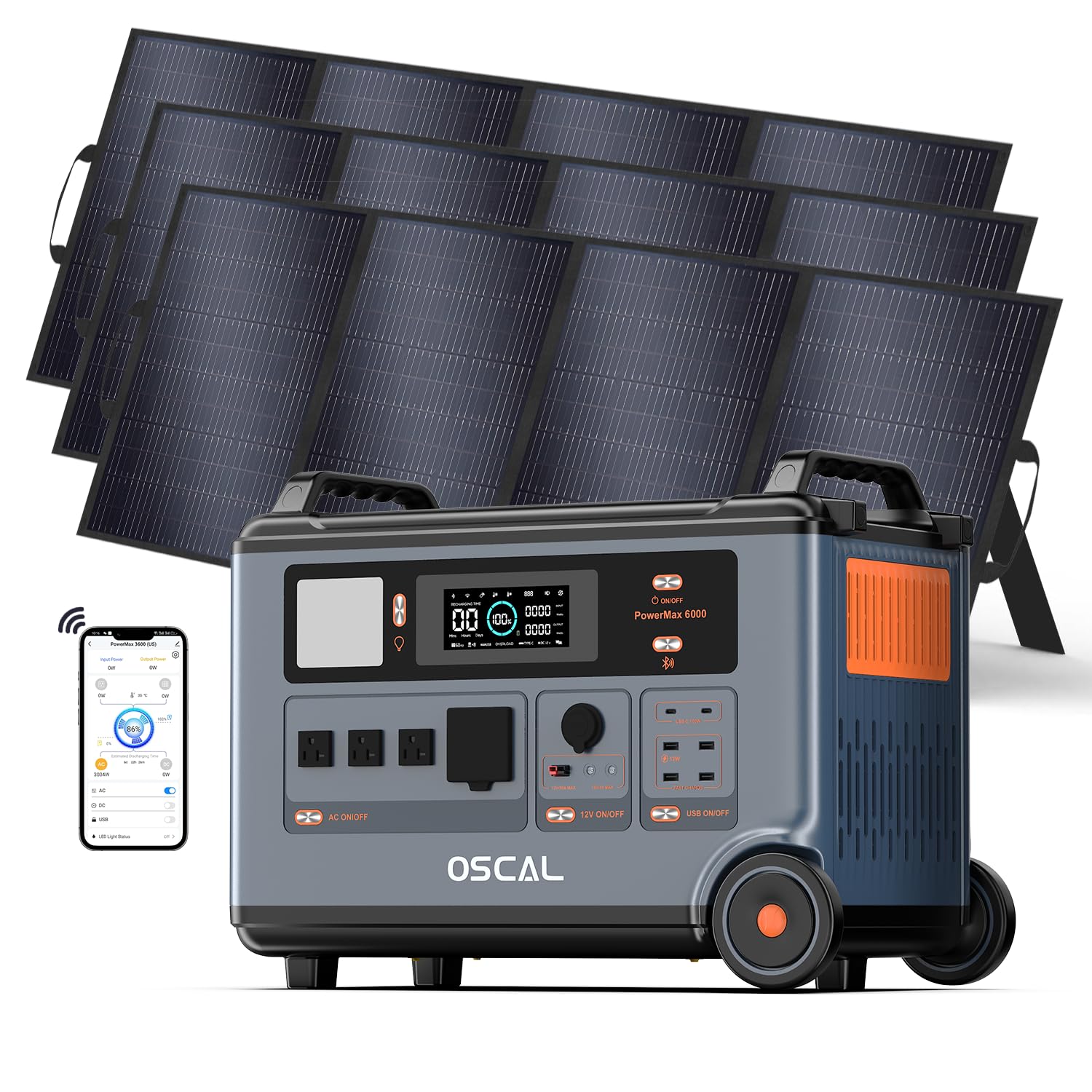
AC Output: 6000W (9000W peak)
Voltage: 120V/240V split phase
Solar Charging: 2400W
AC Charging: 2200W
Included: 3×400W solar panels
Intended Use: Emergency home backup
Check the current price on Amazon
The PowerMax 6000 is the only pick that ships with solar panels in the box, and that changes the economics: a terraced house with a sunny roof or a south-facing garden can recharge from the sun rather than relying on grid top-ups during an outage. The 120V/240V split-phase output and 6000W continuous / 9000W peak rating are enough for a whole-home essentials setup, and the 2400W solar input means the panels can meaningfully refill the battery in a day. It suits the buyer who wants a self-contained solar-plus-storage kit without shopping for panels separately.
The trade-off is that 6000W continuous is a step below the 7200W flagships, so very heavy simultaneous loads need managing, and three loose panels demand somewhere to mount them — a real constraint on a terrace with a small or shaded yard.
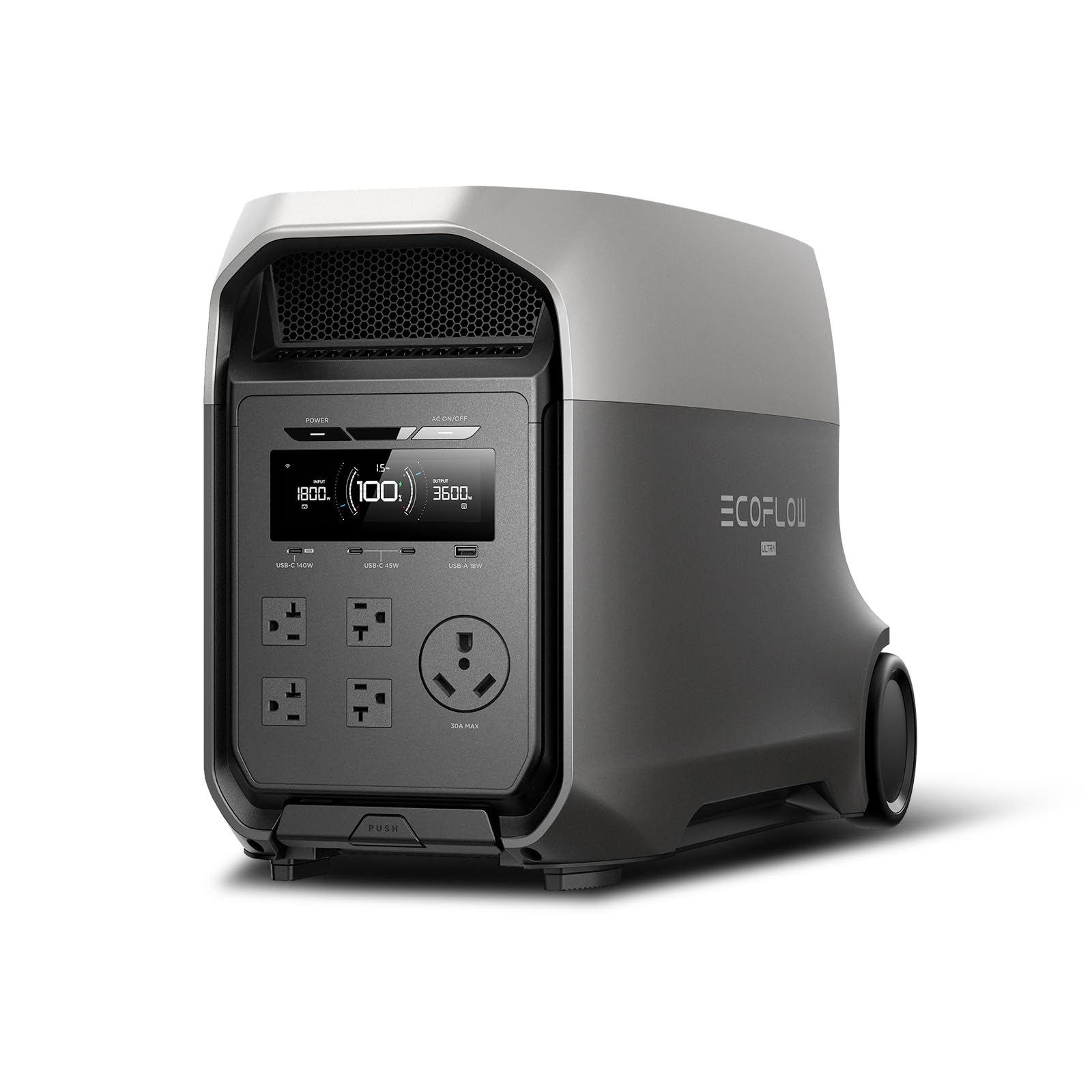
5. EF ECOFLOW Delta 3 Ultra 3072Wh Portable Power Station
Capacity: 3072Wh
AC Output: 3600W
Surge: 7200W
Battery Type: LFP
Intended Use: Home use, camping, emergencies, RV backup
Form Factor: Portable power station
Check the current price on Amazon
This is the compact, portable option: a 3072Wh LFP station with a 3600W inverter and a 7200W surge rating, sized to be wheeled or carried rather than wired in. For a terraced house — especially a rented flat or a narrow property with no plant room — that portability is the whole point: it can sit in a cupboard, come out for an outage, and go in the car for a camping trip. The 7200W surge handles motor startup on a fridge or pump that a 3600W continuous rating alone would trip on. It suits the buyer who wants meaningful backup without committing to installation.
The trade-off is capacity: 3072Wh is the smallest reserve here and covers hours of essentials rather than days of whole-home load, so buyers planning multi-day autonomy need one of the expandable systems instead.
Before You Buy
- Capacity vs. load: Add up the watts of what must stay on during an outage (fridge, lights, router, boiler controls) and match it to the station’s continuous output, not its peak.
- Voltage and wiring: 120V/240V split-phase output is needed for dryers, pumps and larger AC units; 120V-only stations suit essentials-only backup.
- Expandability: A system that grows to 21kWh, 36kWh or 90kWh lets a terraced owner start small and scale without replacing the inverter.
- Installation: Smart panels and double voltage hubs need an electrician; portable stations plug into a wall outlet or a transfer switch.
- Footprint: Measure the cupboard, side return or under-stair space before buying — stacked expansion batteries take more room than the base unit.
- Solar input: A station with high solar charging and included panels can refill during a long outage; check roof or garden space for panel placement.
- Noise and siting: LFP stations are quiet, but inverters and fans still need ventilation, so avoid sealing a unit into a tight closet.
Frequently Asked Questions
-
How much battery backup does a terraced house need?
A essentials-only setup typically starts around 3kWh to 7kWh, while whole-home backup with expansion runs from 7kWh up to 90kWh depending on how long an outage must be covered. -
Can a portable power station back up a whole house?
A portable station can run essential circuits through a transfer switch, but whole-home backup with 240V loads usually calls for a split-phase system and, in most cases, an electrician. -
Is LFP better than other battery types for home backup?
LFP (lithium iron phosphate) is the chemistry used across these picks because it handles frequent cycling and partial charges well, which suits a unit that sits on standby. -
Do these systems need solar panels to work?
No — every pick can charge from the grid, and the OSCAL kit simply includes panels so it can also recharge from the sun during an outage. -
Can a terraced house install a smart home panel?
Yes, but the Smart Home Panel 2 and similar hardware are installed components, so the property needs an electrician’s assessment and the owner’s consent. -
How long will a battery backup run a fridge?
It depends on the fridge’s draw and the station’s capacity; a larger reserve such as the expandable systems covers far longer than a compact 3072Wh unit.
Bottom Line
For most terraced homeowners, the EF ECOFLOW DELTA Pro Ultra with Smart Home Panel 2 is the strongest long-term buy: 7200W of split-phase output, LiFePO4 chemistry and a 90kWh expansion ceiling make it the closest thing here to permanent whole-house infrastructure. Buyers who want portability over permanence should start with the EF ECOFLOW Delta 3 Ultra, and solar-first planners should look at the OSCAL PowerMax 6000 kit.
