Why there are Amazon links here: Brave Review is paid a commission for qualifying Amazon purchases made through the links below. Your price does not change, and using our links is entirely optional. How this works
Best Adhesive Cable Trunking for a Rented Wall: 5 Damage-Free Picks
Renters need cable management that comes off as easily as it goes on, and self-adhesive trunking is the answer: no drills, no anchor holes, and no argument with a landlord at move-out. This guide covers five kits that stick to plaster, paint and tile, hide TV cables, speaker wire and lamp cords, and can be pulled away with a little gentle heat when the lease ends. It suits renters mounting a TV on a stand, desk workers tidying a home office, and anyone in a furnished let who cannot put a single hole in the wall. The overview below ranks all five at a glance; the reviews explain which wall each one suits.
Overview of the Picks
| Product | Key Spec | Best Use | Price Tier |
|---|---|---|---|
| D-Line 157in Cord Cover Kit | 1.18" W x 0.59" H, 10 lengths, 19 accessories | Neat single-run TV and desk cables | Mid |
| Cord Hider 315in Paintable Raceway Kit | 315 in total, paintable white | Long cable runs across a room | Mid |
| Silicone Cord Hider for Wall | 236", side-open, 0.63" x 0.31" cavity | Curved corners and tight bends | Premium |
| Cord Cover Full Kit 26ft | 26 ft, 20 snap-on channels, corners included | Whole-room cable management | Mid |
| Delamu Cord Hider 157in | 0.95" W x 0.55" H, best-selling budget kit | First-time renters on a tight budget | Budget |
1. D-Line 157in Cord Cover Kit

Type: Self-adhesive cable raceway kit
Length: 157 in total (10 x 15.7 in lengths)
Dimensions: 1.18" W x 0.59" H
Accessories: 19 included
Finish: Paintable white
The D-Line kit is the one to reach for when the run is short and the finish matters. Ten rigid lengths snap together with the included accessories, and the 1.18-inch width leaves room for a couple of cables rather than a single thin cord. The paintable white surface means the trunking can be matched to a rented wall rather than sitting on it as a bright stripe. It suits a renter hiding the cable drop from a wall-mounted TV or a desk setup where the run is clean and mostly straight.
This is the pick for buyers who want a tidy, furniture-grade look without touching a drill. The rigid sections keep a straight line on the wall, which is what makes the result look intentional rather than improvised. The trade-off is that rigid lengths handle corners less gracefully than a flexible channel, so a run with several tight bends will need careful measuring and the corner pieces used generously.
2. Cord Hider 315in Paintable White Raceway Kit

Type: Adhesive cable raceway kit
Length: 315 in total
Finish: Paintable white
Intended use: Wall-mounted TV, cord concealing
Mounting: Self-adhesive channel
Cord Hider 315in Paintable White Raceway Kit
This kit is built for distance. The 315-inch total covers a full drop from a ceiling-mounted TV plus a run along a skirting board, which is more than most single-room jobs need. The paintable white channel blends into a rented wall and can be recoated in the landlord’s colour at move-out. It is aimed at the renter who wants one kit to finish the whole job rather than buying a second pack halfway through.
It earns its place for TV walls where the cables have to travel. Buyers who are covering a long horizontal stretch along a wall will find the length is the selling point, not the fittings. The trade-off is that a long kit at this price is unlikely to include premium adhesive, so surface prep matters more than usual: a dusty or freshly painted wall will need cleaning and a full cure before the channel goes up.
3. Silicone Cord Hider for Wall
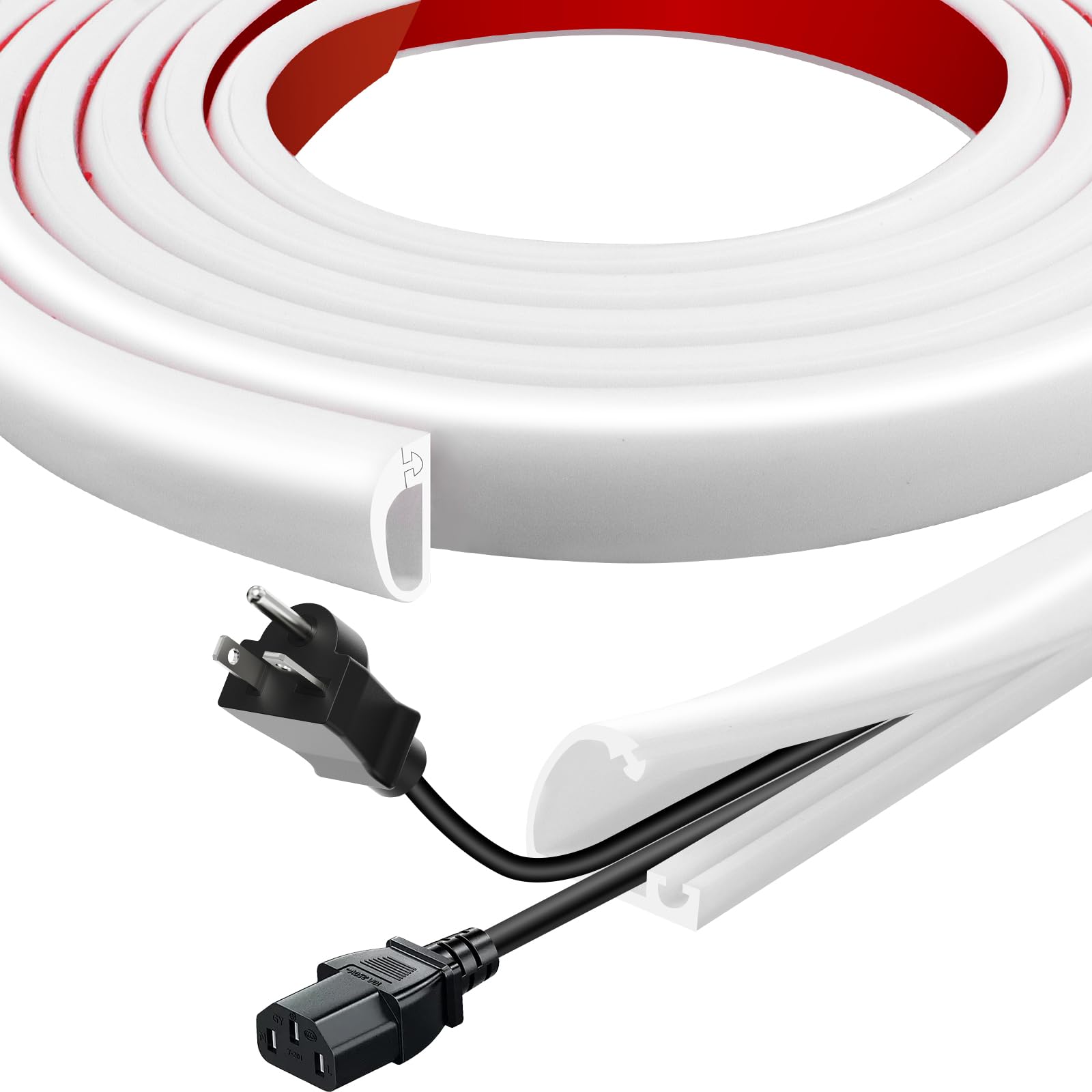
Type: Flexible silicone cable raceway
Length: 236 in total
Cavity: 0.63" W x 0.31" H
Opening: Side-open channel
Intended use: Wall-mounted TV, home and office
Silicone is the differentiator here. The channel bends around corners and follows the curve of a wall without the mitred joints a rigid kit needs, and the side-open design means cables can be added or swapped after the trunking is already stuck down. The 0.63-inch cavity is sized for a couple of standard cords rather than thick bundles. It suits renters in older flats where walls are rarely square and a straight-line raceway would show every wobble.
This is the pick for awkward geometry: chimney breasts, alcoves and anything that is not a flat plane. The flexible body also absorbs minor knocks better than rigid plastic, which matters in a busy rental. The trade-off is the price. Silicone costs more per foot than PVC, and the narrow cavity means thick HDMI or power bundles may not fit, so buyers with a lot of cable should measure before committing.
4. Cord Cover Full Kit 26ft
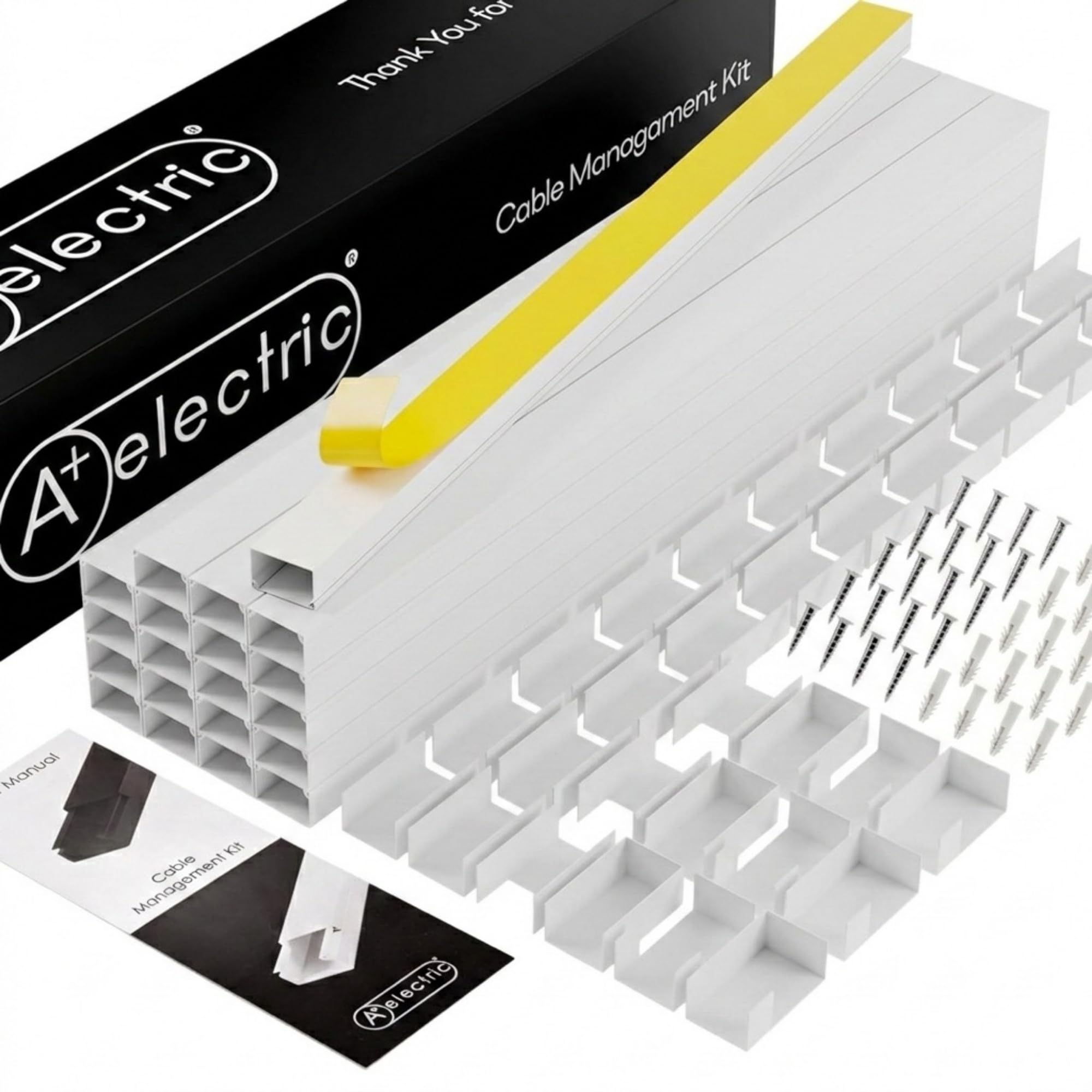
Type: Snap-on cable raceway kit
Length: 26 ft / 315 in total
Channels: 20 snap-on sections
Accessories: Connectors and corners included
Finish: Paintable white
Intended use: TV, HDMI and speaker cables
This is the whole-room option. Twenty snap-on channels plus connectors and corners mean a single box can handle a TV, a soundbar and a pair of speaker runs without a second order. The snap-on lid makes it easy to add a cable later without pulling the base off the wall, which is a real advantage in a rental where the setup changes. The paintable white finish keeps it neutral against most wall colours.
It suits renters wiring a full media corner rather than a single cable drop. The included corners are the reason it works on a room-scale job: a long run that turns a corner needs proper fittings or it looks improvised. The trade-off is that a kit this size at a mid-range price spreads its value across quantity rather than adhesive quality, so heavy cable bundles in a long vertical drop may need extra tape or a mid-run support.
5. Delamu Cord Hider 157in

Type: Adhesive cable raceway kit
Length: 157 in total
Dimensions: 0.95" W x 0.55" H
Finish: White
Intended use: TV and general cord concealment
The Delamu kit is the budget entry and the one most renters start with. The 157-inch total and slim 0.95-inch profile suit a single TV drop or a desk run, and the white finish is unobtrusive on a light wall. It is a straightforward stick-and-snap job with no tools beyond a tape measure and a clean cloth. For a first flat or a short lease, it covers the job at the lowest outlay of the five.
It earns its place as the low-risk first purchase: a renter who has never used trunking can test the look on one wall before committing to a bigger kit. The slim profile is also less visually heavy in a small room. The trade-off is that the narrow channel and budget price point point to a lighter adhesive and less room for thick bundles, so it is best kept to a couple of standard cords rather than a full media setup.
Before You Buy
- Material: Rigid PVC holds a straight line; silicone bends around corners and uneven walls. Match the material to the shape of the run, not the price.
- Size: Measure the widest cable bundle first. A cavity under half an inch handles a couple of cords; thick HDMI or power leads need more.
- Adhesive and surface: Fresh paint, dusty plaster and textured wallpaper all weaken the bond. Clean and dry the wall, and let new paint cure before sticking anything up.
- Paintability: If the wall is not pure white, choose a paintable channel and keep a sample of the wall colour for touch-ups at move-out.
- Compatibility: Check that the kit’s connectors and corners suit the route. A long run with several turns needs proper corner pieces, not bent channel.
- Included accessories: Count the connectors, corners and end caps before buying. A cheap kit that needs extras often costs more than a complete one.
- Removal: Adhesive trunking comes off with gentle heat from a hairdryer and a slow pull. Test on an inconspicuous patch first.
Frequently Asked Questions
-
Will adhesive cable trunking damage a rented wall?
Usually not if it is removed carefully. Gentle heat softens the adhesive and a slow, low-angle pull lifts the channel without taking paint with it. Glossy paint releases more cleanly than fresh matt emulsion. -
Can the trunking be painted to match the wall?
Yes, most white PVC and silicone channels accept a coat of wall paint. Lightly key the surface first and use the same paint as the wall so touch-ups at move-out are invisible. -
How much cable fits in a channel?
It depends on the cavity. Slim channels around half an inch wide take one or two standard cords; wider raceways handle a small bundle. Measure the bundle before ordering. -
Does adhesive trunking work on textured or wallpapered walls?
It holds less reliably. Textured plaster and vinyl wallpaper reduce contact area, so clean the surface thoroughly and consider a short test strip before committing to a full run. -
Can more cable be added after the trunking is installed?
With a snap-on or side-open design, yes. Rigid closed channels usually need the lid lifted or the section replaced, so choose an openable style if the setup is likely to change. -
How is the trunking removed at the end of a tenancy?
Warm the adhesive, peel slowly from one end, then lift any residue with a little warm soapy water. Avoid sharp scrapers, which mark paint and cost more than the trunking saved.
Bottom Line
For most renters, the D-Line 157in Cord Cover Kit is the safest single purchase: a rigid, paintable channel with enough accessories to finish a clean TV or desk run, at a mid-range price. Renters with awkward corners should step up to the silicone kit, and anyone wiring a whole room should take the 26 ft full kit instead.
