Why there are Amazon links here: Brave Review is paid a commission for qualifying Amazon purchases made through the links below. Your price does not change, and using our links is entirely optional. How this works
Best Radiator Valves for a House With a Conservatory
A conservatory changes how a house heats. It gains and loses warmth fast, it sits at the end of the run, and it often shares a system with radiators that need steady, predictable control. The five valves below cover the two jobs that matter: venting steam and hot-water radiators properly, and giving each radiator a temperature-sensitive head that reacts on its own. Steam-system owners, hot-water TRV installers and anyone replacing a tired vent will each find a sensible match, and the overview table below points straight to the right pick.
Overview of the Picks
| Product | Key Spec | Best Use | Price Tier |
|---|---|---|---|
| Midline Valve IXW-U034 | 3/4 in. FIP x Male Union, brass | One-piece steam/hot-water vent replacement | Budget |
| Varivalve 925005-00 | Adjustable angle vent, 3 pack | Multiple radiators, fine-tuning vent rate | Mid |
| G1/2" & G3/4" Radiator Temperature Control Valve | 3/4 in. DN20, liquid sensor, frost protection | Hot-water radiator with automatic TRV control | Budget |
| Danfoss RA2000 | 3/4 in. straight, FPT x MPT union tailpiece | Pairing with RA 2000 operators on a quality body | Premium |
| Midline Valve 6I342 | 1 in. FIP x Male Union, brass | Larger-bore steam radiator venting | Budget |
Midline Valve IXW-U034 Heavy Duty Hot Water Steam Radiator Valve
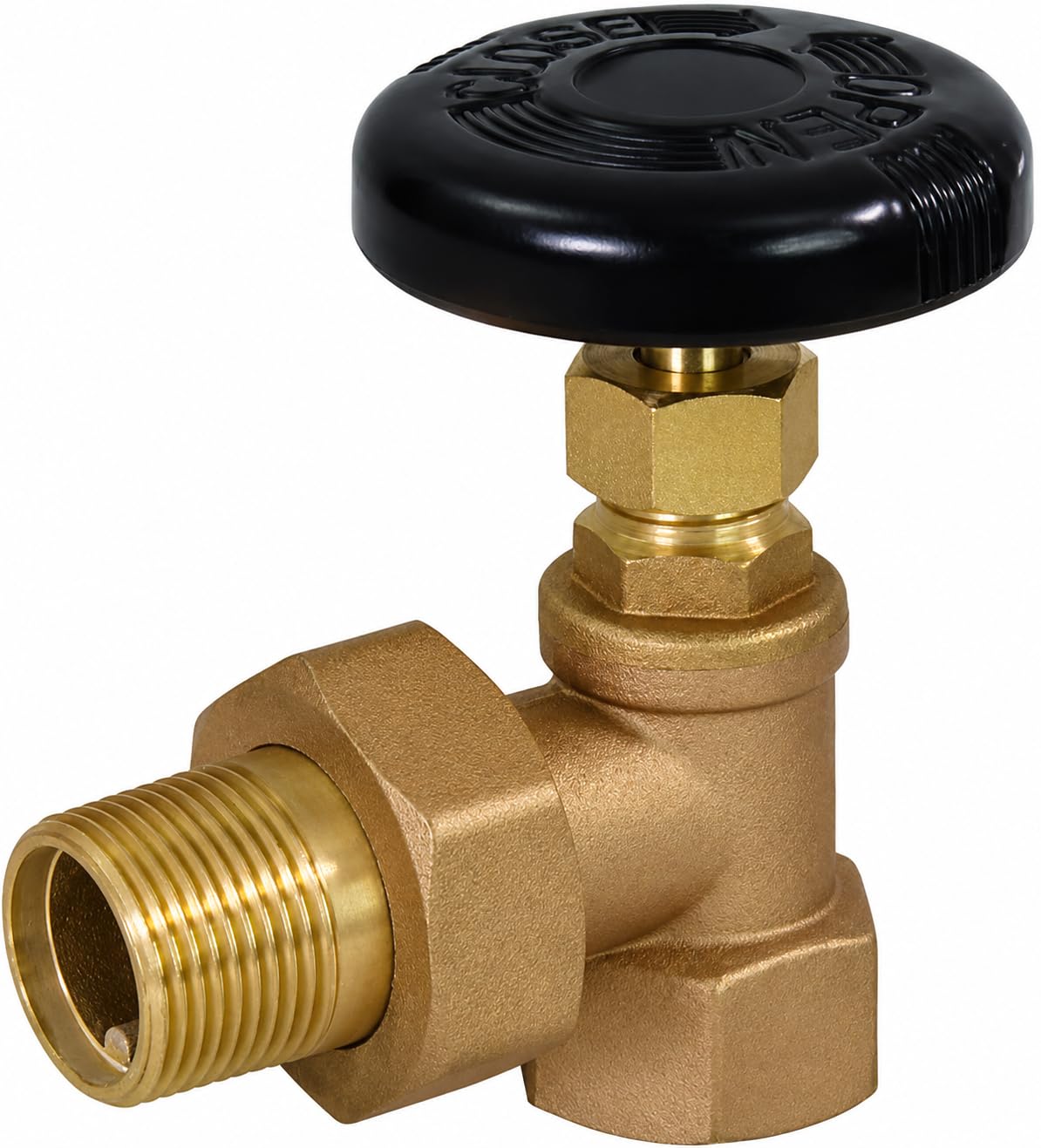
Type: Air vent with temperature control
Connection: 3/4 in. FIP x Male Union
Material: Brass
System: Hot water and steam radiators
Price Tier: Budget
Midline Valve IXW-U034 Heavy Duty Hot Water Steam Radiator Valve is a brass vent-and-control unit built for the 3/4 in. union fitting found on many older radiators. The male union tailpiece threads into the radiator and the female inlet takes the supply, which makes it a direct swap for a failed vent rather than a full valve rebuild. Brass construction suits the wet, hot environment of a heating system and resists the corrosion that shortens the life of cheaper metals. The temperature-control element lets the vent respond to the radiator’s own heat rather than staying open on a fixed schedule.
This is the pick for a house where the conservatory radiator is fed from the same loop as the rest of the ground floor and the existing vent has started hissing or weeping. It suits a confident DIYer replacing like-for-like on a 3/4 in. union, and it keeps the job cheap. The caution is fitment: a union valve only works if the radiator’s tailpiece matches the thread, and a mismatch means adapters or a return.
Trade-off: The budget brass build is honest value, but it assumes the existing union thread matches — measure before ordering.
Varivalve 925005-00 Adjustable Angle Vent Valve – 3 Pack

Type: Adjustable angle vent valve
Pack Size: 3 valves
Adjustability: Variable vent rate
Angle: Angled body for side clearance
Price Tier: Mid
Varivalve 925005-00 Adjustable Angle Vent Valve – 3 Pack solves a problem single vents cannot: balancing a whole house. Steam radiators heat in the order they vent, so a vent that lets air out fast heats that radiator fast. The adjustable design lets the installer slow the vent rate on radiators close to the boiler and speed it up on distant ones, which is exactly the situation a conservatory radiator creates at the far end of the run. The angled body clears skirting and pipework where a straight vent would foul.
The three-pack suits a household replacing several vents at once or keeping spares for a system that eats them. It is the pick for steam-system owners who want control over heat distribution rather than a fixed-rate vent. The drawback is that adjustment takes patience — each vent has to be dialed in by trial, and a setting that suits winter may need revisiting when the conservatory is in heavy use.
Trade-off: Adjustability rewards tuning, but buyers who want a fit-and-forget vent will find the setup fussy.
G1/2" & G3/4" Radiator Temperature Control Valve
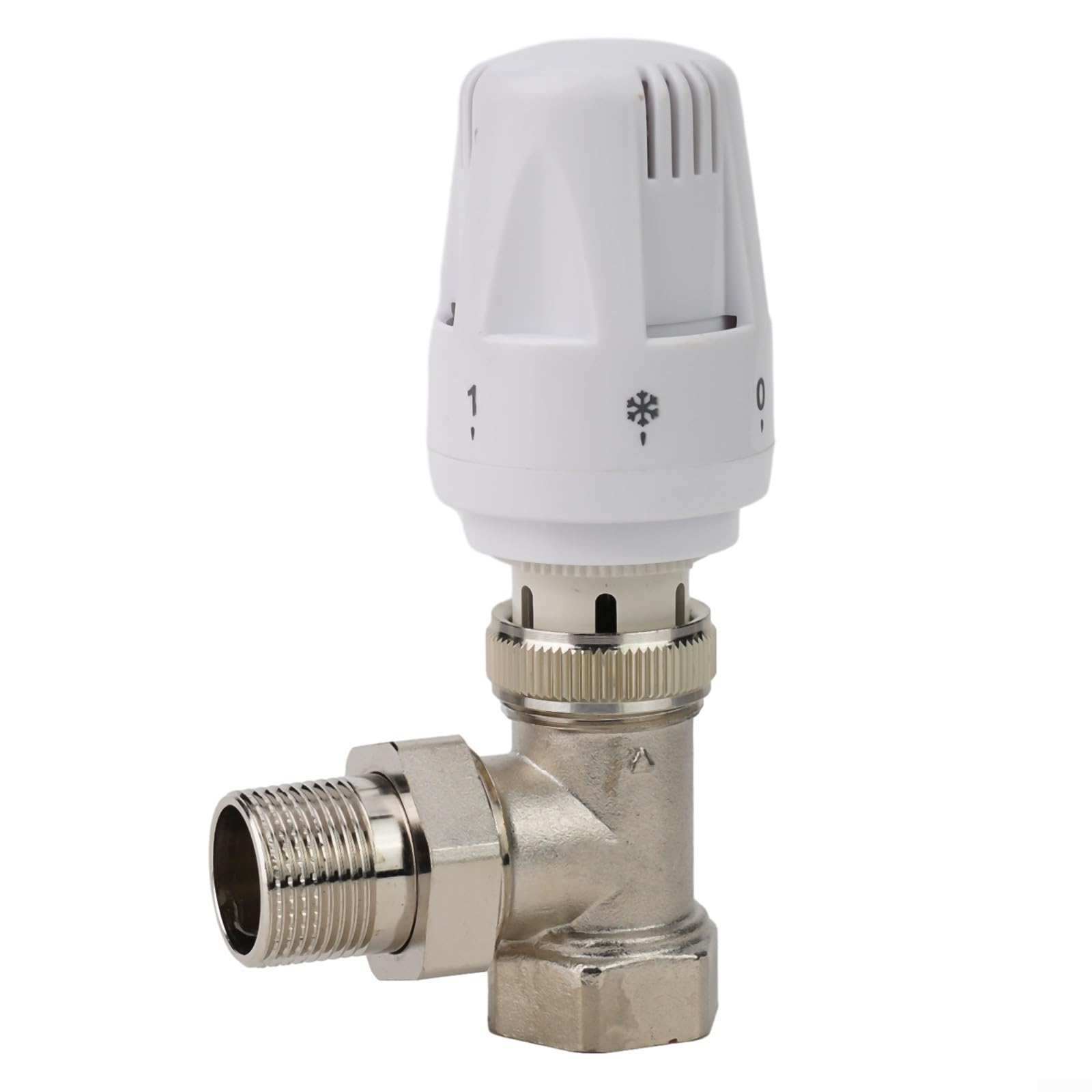
Type: Automatic thermostatic radiator valve
Connection: G1/2 in. and G3/4 in., 3/4 in. DN20
Body: Copper, angled
Sensor: Liquid-filled
Features: Manual control, frost protection
Price Tier: Budget
G1/2" & G3/4" Radiator Temperature Control Valve is the hot-water answer for a conservatory that swings in temperature. A liquid-filled sensor reacts to room air and opens or closes the valve body to hold the set temperature, so the radiator stops pumping heat into a sun-warmed conservatory and restarts when the glass cools. The angled copper body fits tight pipe runs, and the manual control lets the head be overridden when a room needs a boost. Frost protection is a genuine comfort on a conservatory radiator that sits against cold glazing in winter.
This suits a hot-water system where the conservatory has its own radiator and the owner wants it to look after itself. It is the cheapest route to automatic control here, and the dual G1/2 and G3/4 fittings widen the chance of a direct fit. The caution is that a thermostatic head only works if the system is balanced and the boiler is happy with TRVs on most radiators — a conservatory TRV on an unbalanced loop will fight the rest of the house.
Trade-off: The low price buys automatic control, but the valve depends on a balanced system to deliver it.
Danfoss RA2000 Fixed Capacity NPT Radiator Valves for Thermostats

Type: Thermostatic radiator valve body
Connection: 3/4 in. straight, FPT x MPT union tailpiece
Compatibility: RA 2000 radiator operators
Capacity: Fixed
Price Tier: Premium
Danfoss RA2000 Fixed Capacity NPT Radiator Valves for Thermostats is the valve body only — the operator or head is sold separately. That split is the point: the body is a known, serviceable pattern that accepts the RA 2000 series operators, so a household already running Danfoss heads can add or replace a body without changing the control side. The straight 3/4 in. union tailpiece suits a standard NPT connection, and fixed capacity means predictable flow rather than a preset that drifts. It is the premium pick for a reason: the body is built to outlast the budget alternatives.
This suits a homeowner upgrading the conservatory radiator to match the rest of a Danfoss-fitted house, or replacing a failed body where the head is still good. It is not for anyone expecting a complete valve in the box — the operator is a separate purchase, and the total cost climbs once that is added. Buyers on a tight budget will get automatic control for less with the copper TRV above.
Trade-off: The premium body is excellent, but it ships without an operator, so the real cost is higher than the listed price.
Midline Valve 6I342 Steam Radiator Valve

Type: Air vent with temperature control
Connection: 1 in. FIP x Male Union
Material: Brass
System: Steam radiators
Price Tier: Budget
Midline Valve 6I342 Steam Radiator Valve is the larger-bore sibling of the first pick, built for radiators with a 1 in. union rather than 3/4 in. Brass construction and a temperature-control vent make it a straightforward replacement for a failed vent on a bigger steam radiator — the kind often found in hallways or large ground-floor rooms that share a loop with a conservatory. The 1 in. fitting moves more air faster, which helps a radiator that has been slow to heat.
This suits a steam-system owner with a 1 in. union radiator who needs a cheap, direct replacement. It is not for hot-water systems and not for 3/4 in. fittings — the two Midline valves look alike and the thread is the deciding factor. The caution is the same as its smaller sibling: confirm the union size before ordering, because a 1 in. vent will not seat on a 3/4 in. tailpiece.
Trade-off: Cheap and effective, but the 1 in. thread limits it to radiators with matching unions.
Before You Buy
- System type: Steam radiators use air vents; hot-water radiators use thermostatic or manual valves. The two are not interchangeable.
- Connection size: Measure the union or thread on the existing valve. The picks here cover 3/4 in. and 1 in. — a mismatch means adapters or a return.
- Compatibility: A valve body may need a separate operator or head. Confirm what is in the box before ordering.
- Balancing: Automatic TRVs only deliver comfort if the system is balanced, especially with a conservatory at the end of the run.
- Material: Brass and copper resist corrosion in hot, wet systems better than cheaper metals.
- Placement: Angled bodies clear skirting and pipework; straight bodies suit clean vertical runs.
- Spares: A multi-pack of vents is worth considering for older steam systems that fail vents regularly.
Frequently Asked Questions
-
Can a conservatory radiator use a thermostatic valve?
Yes, on a hot-water system. A TRV with a liquid sensor lets the conservatory radiator respond to its own room temperature instead of running flat out. -
Do steam radiators use the same valves as hot-water radiators?
No. Steam radiators use air vents that release air and close on steam; hot-water radiators use valves that control water flow. -
What size valve does a typical radiator need?
Many older radiators use a 3/4 in. union, while larger radiators can use 1 in. Measure the existing fitting rather than assuming. -
Is a valve body enough, or is a head needed too?
It depends on the product. The Danfoss RA2000 is a body only and needs an RA 2000 operator; the copper TRV and the Midline vents are complete units. -
Why does the conservatory radiator heat unevenly?
Often it is a venting or balancing issue. An adjustable vent on steam, or a properly balanced TRV on hot water, usually fixes it. -
Can a budget valve be reliable?
Brass and copper budget valves are a sound choice for a like-for-like replacement. The risk is fitment, not the metal.
Bottom Line
For most houses with a conservatory, the best radiator valves for the job depend on the system: steam owners should start with the Midline Valve IXW-U034 for a cheap, direct 3/4 in. replacement, while hot-water systems get the most value from the copper thermostatic valve with its liquid sensor and frost protection. Buyers already running Danfoss heads should pay the premium for the RA2000 body, and anyone balancing several steam radiators will get the most control from the adjustable Varivalve three-pack.
