Why there are Amazon links here: Brave Review is paid a commission for qualifying Amazon purchases made through the links below. Your price does not change, and using our links is entirely optional. How this works
Best Carbon Monoxide Alarm for a Garage Conversion: 5 Picks That Fit the Job
A garage conversion puts sleeping or living space next to a car, a furnace, or a water heater, so a carbon monoxide alarm stops being optional. This roundup covers five models that suit three kinds of buyers: the plug-in-and-forget type, the backup-battery type, and the compact low-level monitor for tight walls. Every pick is a real Amazon listing, and the overview below shows each one’s key spec and best use so a decision takes under a minute. Read the overview, then jump to the pick that matches the room.
The Picks at a Glance
| Product | Key Spec | Best Use | Price Tier |
|---|---|---|---|
| Kidde Plug-in CO Detector with AA Backup | Plug-in, AA battery backup, 85 dB alarm | Main converted room with an outlet | Mid |
| First Alert CO400 Battery CO Alarm | Battery only, no cord | Conversions with no free outlet | Budget |
| Heiman 735ESY Mini Digital CO Alarm | AA battery, UL 2034, low-level display | Small or awkward spaces | Budget |
| First Alert CO606 Plug-in CO Alarm | Plug-in, 9V battery backup | Bedroom or living area | Mid |
| Kidde CO + Explosive Gas Alarm | Plug-in, 9V backup, digital display, gas detection | Conversions near gas appliances | Premium |
1. Kidde Carbon Monoxide Detector, Plug-in with AA Battery Backup
Type: Plug-in carbon monoxide detector
Backup: AA battery backup
Alarm: 85 dB
Indicators: LED status lights
Edition: 3rd Edition
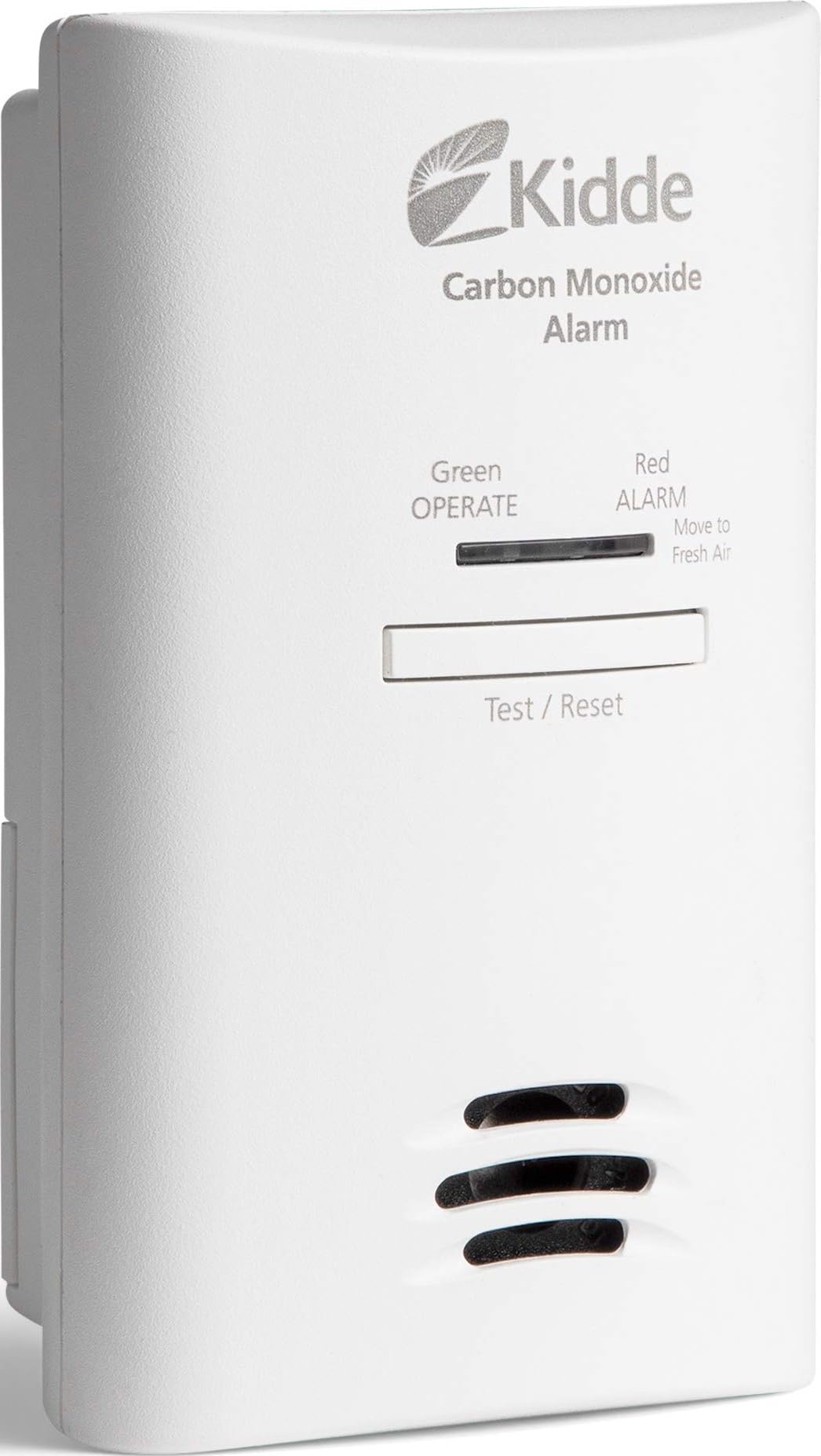
This Kidde runs off a wall outlet, so it never needs a battery change to stay powered, and the AA backup keeps it live through a power cut. The 85 dB alarm is loud enough to carry from a converted garage into the house, and the LED status lights give a quick visual check without pressing anything. It suits a main converted room that has a free outlet near the sleeping or living area. The 3rd Edition badge means it is the current revision of a long-running model, which makes replacement easy later.
The plug-in design is the reason this pick earns a spot: a garage conversion often has outlets, and a corded unit removes the annual battery chore from the homeowner’s list. The LED indicators are simple rather than a full readout, so the buyer who wants a numeric ppm display should look elsewhere. It is a straightforward, dependable choice for the room people actually sleep in.
Trade-off: The plug-in format is only useful where an outlet sits at the right height, and the LED lights show status rather than a numeric reading.
2. CO400 First Alert Battery Carbon Monoxide Alarm
Type: Battery-operated carbon monoxide alarm
Power source: Battery only
Brand line: First Alert CO400
Mounting: Wall or ceiling, cord-free

CO400 First Alert Battery Carbon Monoxide Alarm
The CO400 is the simplest unit here: a battery-only alarm with no cord, no outlet dependency, and no display to interpret. That makes it easy to mount high on a wall or ceiling wherever the converted space allows, including a garage with few or no outlets. It fits a conversion where wiring is limited or the homeowner wants an alarm that works during an outage without any backup arrangement. The First Alert name is one of the most familiar in home safety, which helps at resale or inspection time.
Battery-only operation is the whole point of this pick, and it is also its main cost: the unit depends on the owner actually replacing the battery on schedule. There is no LED readout or digital number, so the buyer who wants to watch levels climb will find it basic. For a budget-minded conversion where the alarm only needs to sound and be heard, it does the job.
Trade-off: With no backup and no display, the CO400 is entirely dependent on battery upkeep and gives no numeric feedback.
3. Heiman 735ESY Mini Digital Low-Level CO Alarm
Type: Mini battery-operated carbon monoxide alarm
Power source: AA battery
Certification: UL 2034
Display: Low-level mini digital display
Feature: Low ppm detection, early warning
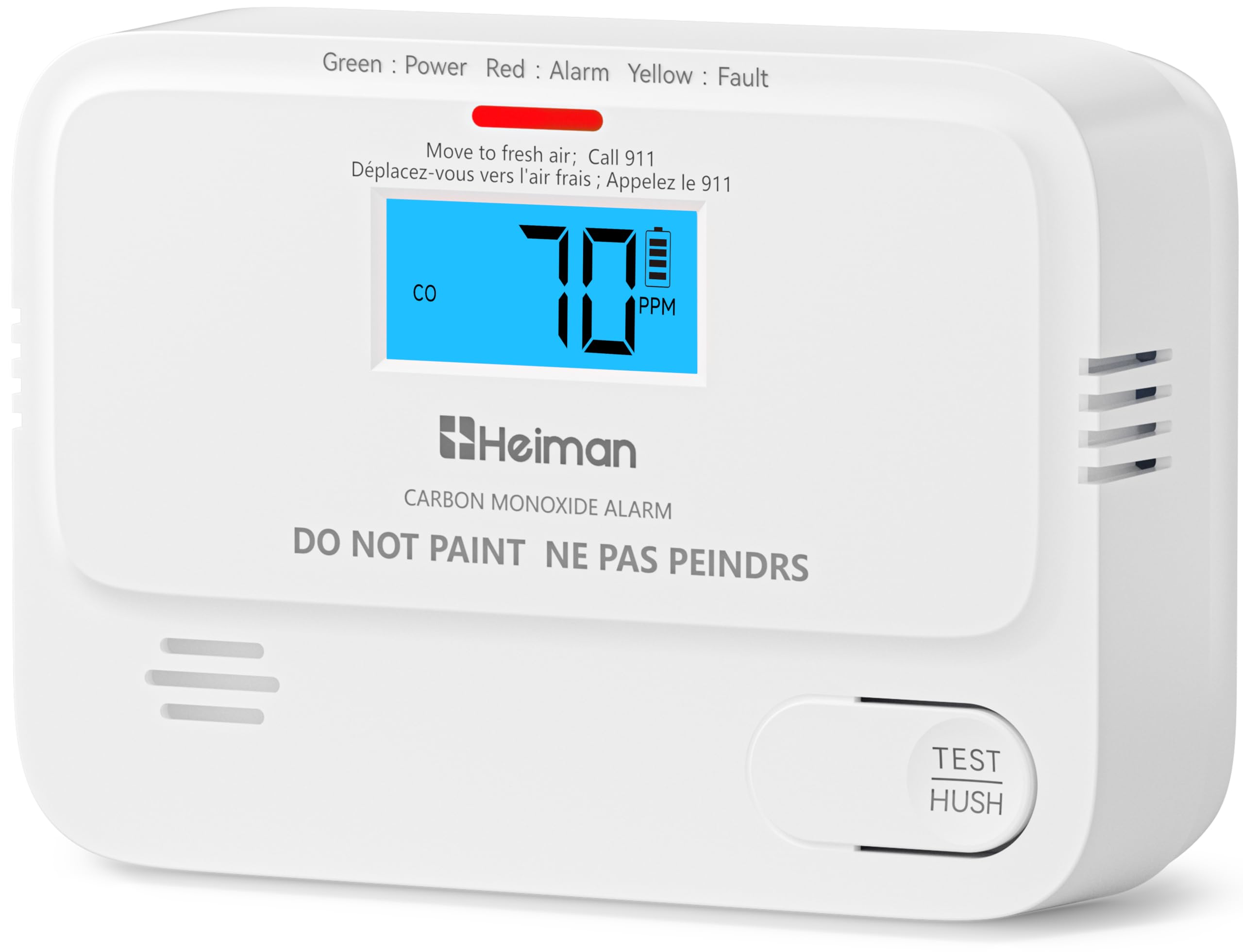
This Heiman is the compact option: a mini alarm that runs on AA batteries and shows a low-level digital readout, so the owner can see small CO concentrations before they reach alarm threshold. It is UL 2034 certified, which is the standard benchmark for residential CO alarms in the US. The small footprint suits a tight converted garage, a narrow wall strip, or a spot where a full-size plug-in unit would be in the way. Early warning at low ppm is the feature that sets it apart from the basic battery alarms.
The low-level display is genuinely useful in a garage conversion, where a car idling outside or a nearby furnace can push CO up gradually rather than in one surge. The trade-off for the small size is that the display is mini, so reading it from across a room takes a closer look than a full-size screen. It suits the detail-oriented buyer who wants to watch numbers, not just hear a siren.
Trade-off: The mini digital display is small and battery-only operation means no backup if the AA cells run down.
4. First Alert CO606 Plug-in Carbon Monoxide Alarm
Type: Plug-in carbon monoxide alarm
Backup: 9V battery backup
Brand line: First Alert CO606
Power source: Wall outlet with battery backup
CO606, 9V Battery Backup First Alert Plug in Carbon Monoxide Alarm
The CO606 pairs a wall-outlet plug with a 9V battery backup, so it stays powered through an outage without relying on the owner to swap AA cells mid-storm. It is the middle-ground First Alert in this lineup: corded convenience with a backup layer, and no digital display to complicate the front panel. It fits a converted garage bedroom or living area that has an accessible outlet and wants outage protection. The 9V backup is a common format, so replacement batteries are easy to find.
This pick earns its place for the buyer who wants plug-in simplicity but does not want the alarm to go dark when the power does. It is less informative than the Heiman and less feature-rich than the Kidde gas model, which is the point: it is a quiet, set-and-check unit. The lack of a display means the owner checks status by indicator rather than by number.
Trade-off: No digital display and the plug-in format still needs an outlet, so placement is less flexible than a battery-only unit.
5. Kidde Carbon Monoxide + Explosive Gas, Natural Gas & Propane Alarm
Type: Plug-in combination carbon monoxide and explosive gas alarm
Backup: 9V battery backup
Display: Digital display
Alarm: 85 dB
Indicators: LED status lights
Edition: 3rd Edition

This Kidde is the premium pick because it watches two hazards at once: carbon monoxide and explosive gas, covering natural gas and propane. It plugs in, carries a 9V battery backup, and adds a digital display plus LED status lights and an 85 dB alarm. It suits a garage conversion that sits near a gas water heater, furnace, or propane appliance, where a leak could be either CO or raw gas. The 3rd Edition marking puts it on the current revision.
The dual-sensor design is the reason it costs more, and for a conversion with gas appliances in or next to the space, that coverage is worth the step up. The digital display gives a readable number rather than just a status light, which helps when tracking a slow rise. It is more alarm than a conversion with no gas service nearby needs, so the basic plug-in Kidde above stays the smarter buy in that case.
Trade-off: The combination sensor set costs more than a CO-only alarm, and it is overkill for a conversion with no gas appliances nearby.
Before You Buy
- Coverage: A garage conversion should have an alarm in the sleeping area and one on each level if the space is multi-level; CO mixes with air, so height matters less than proximity to the source.
- Power source: Plug-in units need an outlet at the right height; battery-only units mount anywhere but depend on battery changes.
- Backup: A plug-in alarm with battery backup keeps working through an outage, which matters in a conversion used for sleeping.
- Gas appliances: A conversion near a furnace, water heater, or propane tank benefits from a combination CO and explosive gas alarm.
- Display: A digital readout shows low-level ppm trends; an LED-only unit shows status without numbers.
- Certification: Look for UL 2034 on the label, the residential CO alarm standard.
- Placement: Keep the alarm out of dead-air corners and away from the direct exhaust path of a car or appliance.
Frequently Asked Questions
-
Does a garage conversion legally need a carbon monoxide alarm?
Many jurisdictions require CO alarms in sleeping areas and near fuel-burning appliances; a conversion with an attached garage or gas equipment usually falls under those rules. Local code is the final word. -
Plug-in or battery — which is better for a converted garage?
Plug-in with battery backup suits a room with an outlet and gives outage protection; battery-only suits a space with limited wiring but needs scheduled battery swaps. -
Where should the alarm go in a garage conversion?
Mount it in or just outside the sleeping area and near any fuel-burning appliance, following the manufacturer’s placement guidance. -
Will a CO alarm detect a natural gas or propane leak?
Only a combination unit like the Kidde explosive gas model does; a CO-only alarm will not respond to raw gas. -
How often does the battery need replacing?
Most manufacturers recommend a yearly battery change and a test at the same interval; a plug-in with backup still needs its backup battery checked. -
Can one alarm cover the whole conversion?
A single alarm covers one room well; a larger or multi-room conversion benefits from one unit per sleeping area plus one near the appliance.
Bottom Line
For most garage conversions, the Kidde plug-in with AA backup is the best carbon monoxide alarm for the job: it stays powered, keeps working through an outage, and sounds loudly enough to reach the house. Buyers near a gas appliance should step up to the Kidde combination unit, and anyone short on outlets should take the battery-only First Alert CO400. Check the current price on the Kidde plug-in and match the pick to the room.
