Why there are Amazon links here: Brave Review is paid a commission for qualifying Amazon purchases made through the links below. Your price does not change, and using our links is entirely optional. How this works
Best Silent Power Station for a Flat With Neighbours Below
A power station makes no engine noise, so the real question for flat dwellers is fan noise, bulk and whether the unit can sit quietly through a blackout without drawing a complaint from the floor below. This roundup covers five lithium iron phosphate (LFP) stations, from a compact 288Wh unit to a 3.5kWh home backup block, and each pick is matched to a buyer profile: small-flat renters, work-from-home households and anyone running essential circuits through an outage. The overview table below sorts all five by key spec, best use and price tier so a decision can be made in under a minute.
Overview of the Picks
| Product | Key Spec | Best Use | Price Tier |
|---|---|---|---|
| BLUETTI Elite 30 V2 | 288Wh, 600W AC | Desk and router backup in a small flat | Budget |
| EF ECOFLOW Delta 3 Classic | 1024Wh, 1800W AC | Everyday home backup and camping | Mid-range |
| BLUETTI Elite 100 V2 | 1024Wh, 1800W AC, 35% smaller | Tight spaces and shared walls | Mid-range |
| DYNESS Portable Power Station | 2048Wh, 2400W AC | Longer outages, heavier appliances | Upper mid-range |
| Jackery HomePower 3600 Plus | 3584Wh, 3600W AC, expandable | Whole-flat essential circuits | Premium |
BLUETTI Elite 30 V2 Portable Power Station
Type: Portable power station with UPS function
Capacity: 288Wh
AC Output: 600W
Battery Chemistry: LFP (lithium iron phosphate)
Recharge: 0-80% in 45 minutes
UPS Switchover: 10ms
Best For: Small flats needing router and device backup
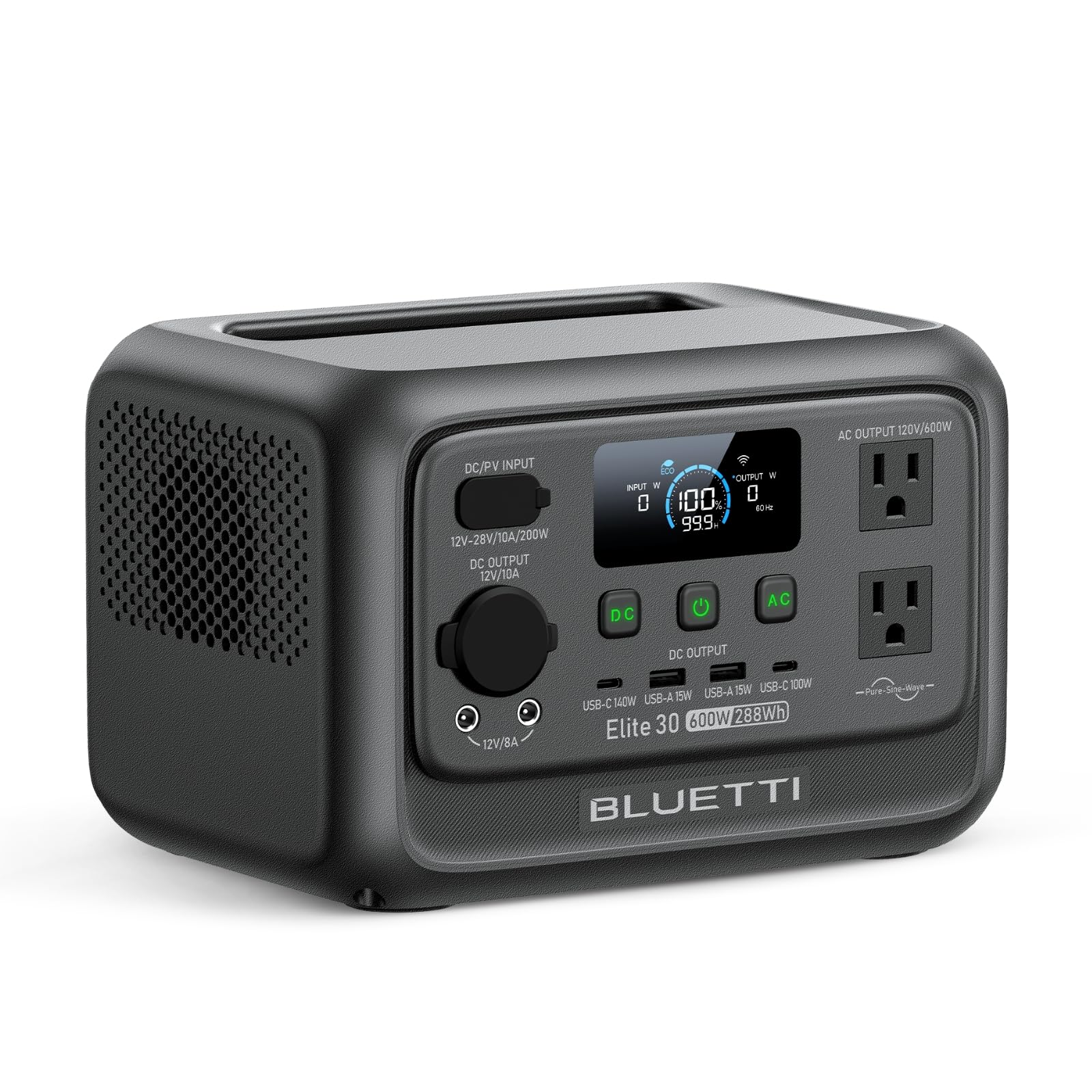
BLUETTI Elite 30 V2 Portable Power Station 288Wh 600W LFP Solar Generator
The Elite 30 V2 is the smallest unit here and the one least likely to be noticed through a floor. Its LFP cells are the same chemistry used in the larger stations, so the lifespan expectation is consistent across the range, and the 45-minute recharge to 80% means it recovers fast between short outages. A 600W AC output covers a router, a laptop, a lamp and a phone charger without strain. The 10ms UPS switchover is quick enough that most home networking gear will ride through a cut without rebooting.
This pick suits renters in a one-bedroom or studio who want the lights and internet to stay on and nothing more. It earns its place because it is the cheapest route into LFP and UPS behaviour in the same box, and it stores on a shelf rather than the floor. The trade-off is capacity: 288Wh will not run a kettle, a heater or a fridge for long, so buyers with heavier essentials should look further up the list.
EF ECOFLOW Delta 3 Classic Portable Power Station
Type: Portable power station with UPS function
Capacity: 1024Wh
AC Output: 1800W, 3600W surge
Battery Chemistry: LiFePO4
Recharge: 1 hour fast charge
USB-C Output: 100W
Best For: Households wanting one unit for home and camping
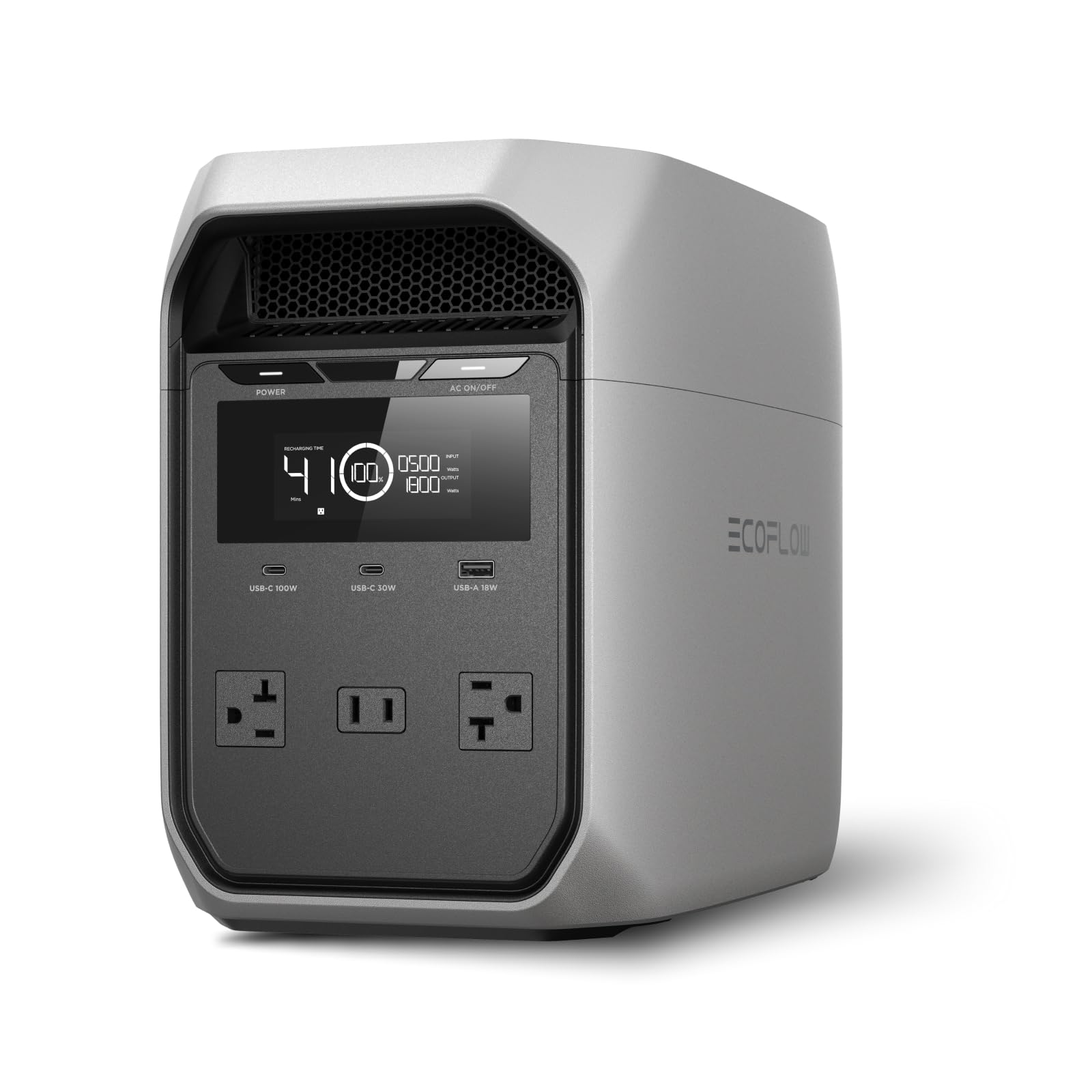
EF ECOFLOW Portable Power Station Delta 3 Classic, 1024Wh 1800W AC
The Delta 3 Classic sits in the middle of the range with a full kilowatt-hour of LiFePO4 storage and an 1800W AC inverter that surges to 3600W for motor starts. The one-hour recharge is the headline for flat dwellers, because a unit that refills quickly can be topped up in a quiet off-peak window rather than running for hours. A 100W USB-C port charges laptops directly without the AC inverter, which keeps the fans idle for light loads. The 10ms UPS mode makes it a viable standby for a router, a desktop or a small fridge.
It suits households that want one box to cover blackouts at home and weekends away, and it is the sensible default for a two-person flat. It earns its place on versatility rather than size. The trade-off is that a kilowatt-hour unit is heavy and bulky enough to live on the floor rather than a shelf, which matters in a small flat where floor space near a wall socket is contested.
BLUETTI Elite 100 V2 Portable Power Station
Type: Portable power station with UPS function
Capacity: 1024Wh
AC Output: 1800W, 3600W surge
Battery Chemistry: LiFePO4
Recharge: 0-80% in 45 minutes
UPS Switchover: 10ms
Best For: Tight flats where footprint matters
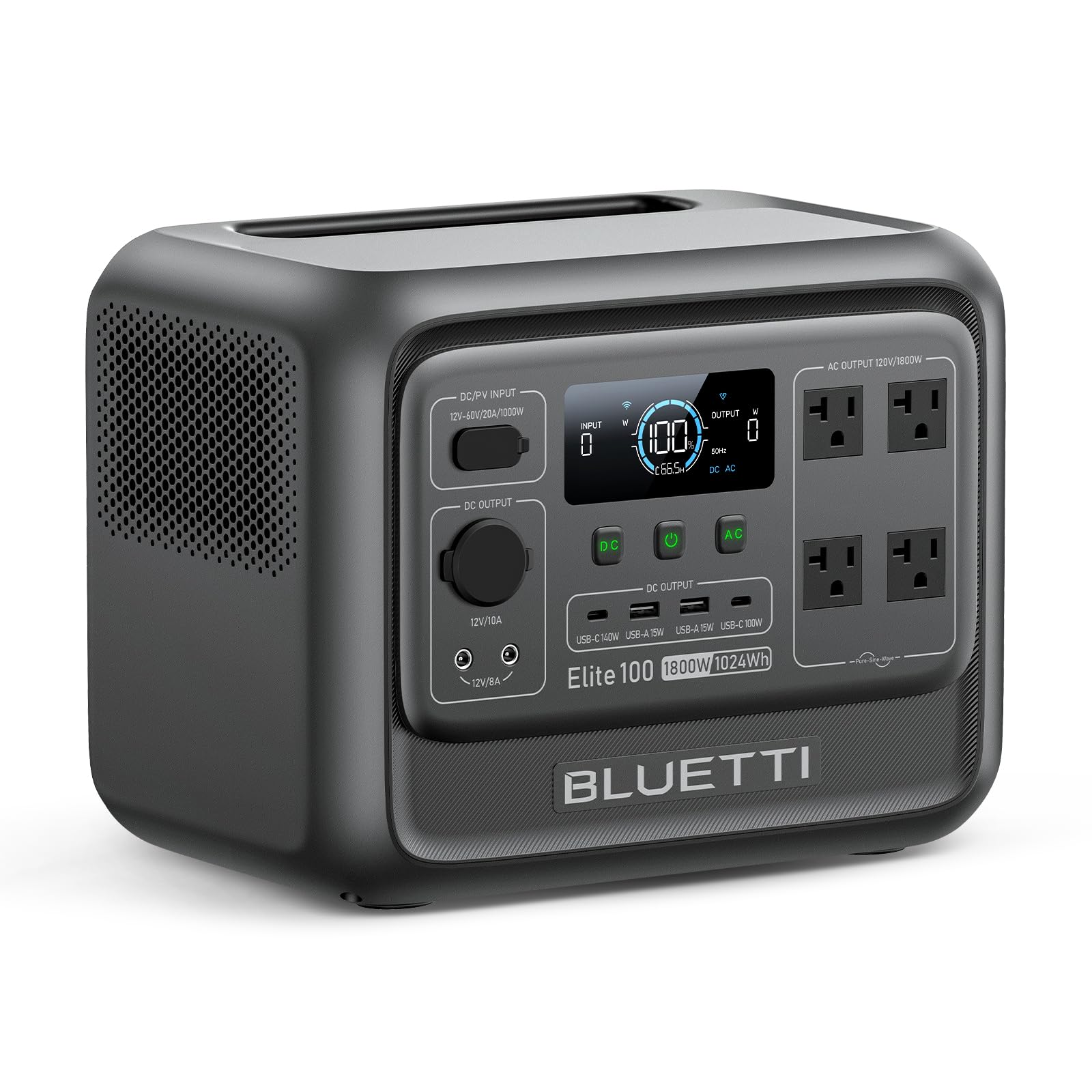
BLUETTI Elite 100 V2 Portable Power Station for Camping 1024Wh 1800W
The Elite 100 V2 carries the same 1024Wh capacity and 1800W AC output as the EcoFlow above, but the build is pitched at compactness rather than raw features. The case is described as 35% smaller, which in practice means it tucks into a cupboard or beside a sofa instead of claiming a permanent corner of the room. LFP cells and a 45-minute charge to 80% keep it practical for repeat outages. The 10ms UPS switchover protects connected equipment from dropping out during the transfer.
This is the pick for buyers in a small flat who want real backup capacity without a large box on display. It earns its place on footprint, and for anyone whose neighbours below would notice a heavy unit being dragged across a floor, the lighter case helps. The trade-off is that compact housings usually mean tighter thermal margins, so sustained heavy loads will spin the fans more than a larger-bodied unit at the same output.
DYNESS Portable Power Station
Type: Portable power station
Capacity: 2048Wh
AC Output: 2400W
Battery Chemistry: LiFePO4
Best For: Longer outages and heavier appliances
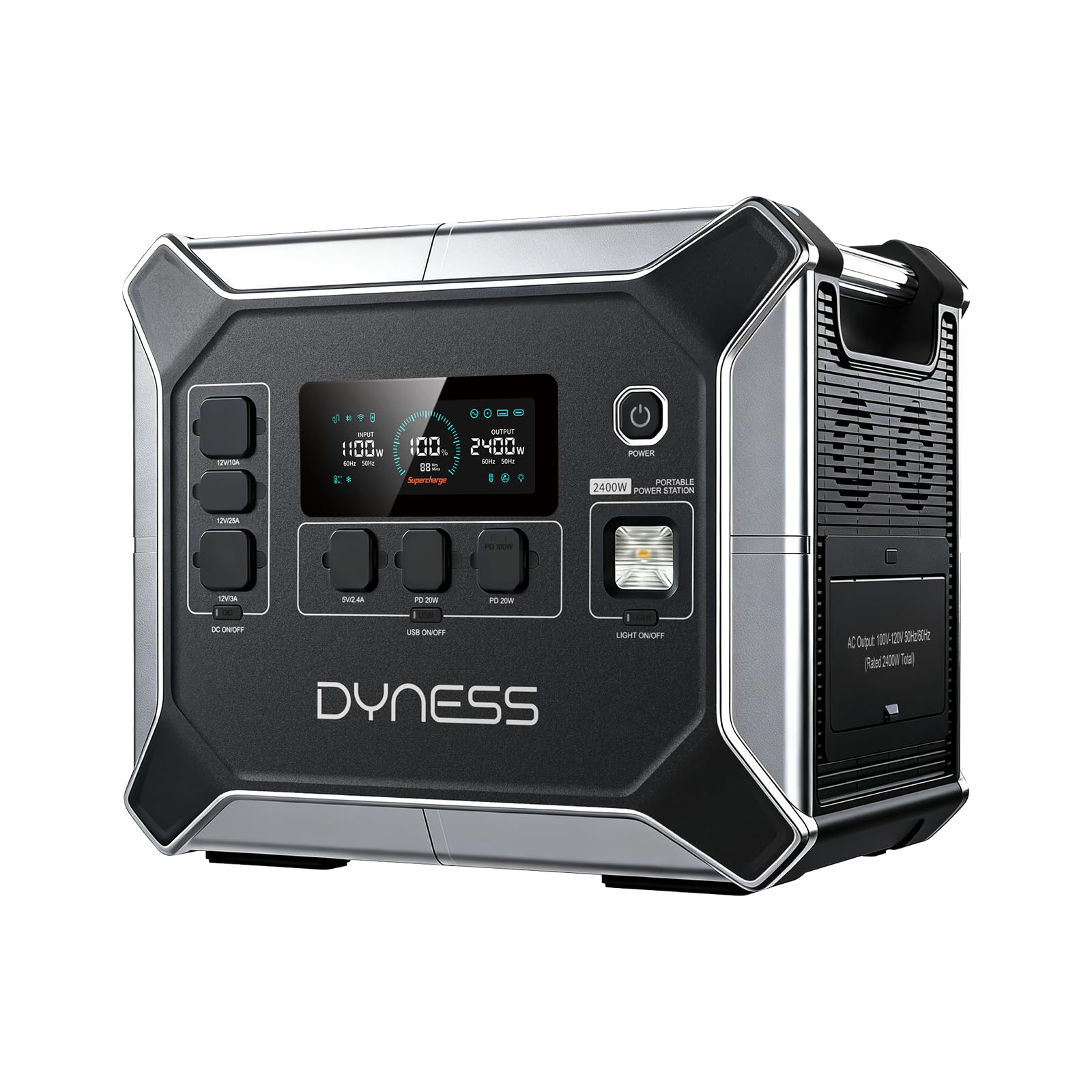
DYNESS Portable Power Station, 2048Wh, 2400W Output, LiFePO4 Battery
The DYNESS doubles the storage of the mid-range picks and raises the AC output to 2400W, which opens up appliances the smaller units cannot touch. Two kilowatt-hours of LiFePO4 is enough to carry a fridge, a boiler’s controls and lighting through an extended cut rather than a brief one. The higher output ceiling means a microwave or a small heater becomes realistic, if only for short bursts. Build quality at this price tier is typically a sturdy shell with carry handles and a fan-cooled inverter.
It suits flats that lose power for hours rather than minutes, and households with medical or work equipment that cannot go dark. It earns its place as the capacity step-up before prices climb steeply. The trade-off is weight and bulk: a 2048Wh station is a two-person lift and needs a permanent floor position, which is awkward in a flat with limited storage and shared walls.
Jackery HomePower 3600 Plus Power Station
Type: Expandable home backup power station
Capacity: 3584Wh, expandable to 21kWh
AC Output: 3600W
Battery Chemistry: LFP
Solar Input: Solar panel optional
Best For: Whole-flat essential circuits during long outages

Jackery HomePower 3600 Plus Power Station, 3584Wh, 3600W AC Output
The HomePower 3600 Plus is the only pick built as a home backup system rather than a portable box. Its 3584Wh LFP battery expands to 21kWh with add-on packs, and the 3600W AC output is enough to run a flat’s essential circuits through a multi-day outage. The unit is designed to sit in one place and be wired in, with solar as an optional input for topping up during daylight. That combination makes it the closest thing here to a permanent silent generator.
It suits owners who have already decided that a blackout plan is worth real money and who want one system rather than a collection of small units. It earns its place on expandability and output. The trade-off is cost and commitment: the premium tier price is several times the budget pick, and the system only makes sense if it is installed and left in place rather than carried between rooms.
Before You Buy
- Capacity: Match watt-hours to outage length. A router and a lamp need far less than a fridge, and oversizing means paying for weight that never gets used.
- Noise: Every unit here is fan-cooled, and fan noise rises with load. Siting the station on a mat in a hallway or against an internal wall reduces transfer through the floor.
- Weight and floor loading: Anything above 1024Wh is heavy. Check the floor position before buying, and avoid dragging a unit across a wooden floor above a neighbour.
- UPS switchover: A 10ms transfer keeps networking gear and desktops alive; units without a stated UPS figure are better treated as manual backup.
- Battery chemistry: LFP is the chemistry to look for in a flat, because it handles being kept at partial charge and lasts through more cycles than older lithium blends.
- Expandability: Only the Jackery pick supports add-on batteries. Buyers who expect to grow should decide that up front rather than replace a unit later.
- Ventilation: Leave clearance around the vents. A station pushed into a closed cupboard will run hotter and louder than one with breathing room.
Frequently Asked Questions
-
Is a power station actually silent?
There is no engine or compressor, so there is no mechanical drone. The only sound is the cooling fan, which is inaudible at light loads and becomes noticeable under heavy draw. -
Will neighbours below hear a power station through the floor?
Fan noise is airborne and low-level, so it rarely travels through a floor. The bigger risk is physical impact from moving or dropping a heavy unit, which is why a mat and a fixed position help. -
How much capacity does a flat need for a short blackout?
A router, a lamp and phone charging can run for hours on the 288Wh budget pick. Adding a fridge or a heater pushes the requirement into the 1024Wh to 2048Wh range. -
What does the 10ms UPS figure mean?
It is the gap between mains power dropping and the station taking over. At 10ms, most computers and networking equipment keep running without a restart. -
Can these units be charged from a wall socket in a flat?
Yes, all five recharge from mains, and the fast-charge models reach 80% in well under an hour, which keeps the charging window short in a shared building. -
Is LFP safer indoors than other lithium batteries?
LFP is the more thermally stable chemistry and is the standard choice for indoor backup units. It is still worth leaving vents clear and avoiding enclosed cupboards.
Bottom Line
For most flats with neighbours below, the BLUETTI Elite 100 V2 is the best silent power station: it delivers a full kilowatt-hour of LFP storage and a 10ms UPS in a case compact enough to keep out of the way, at the mid-range price tier. Buyers who only need router and device backup should take the cheaper Elite 30 V2, while anyone planning for multi-day outages should go straight to the expandable Jackery HomePower 3600 Plus.
