Why there are Amazon links here: Brave Review is paid a commission for qualifying Amazon purchases made through the links below. Your price does not change, and using our links is entirely optional. How this works
Best Thermostat for a Basement Flat with Storage Heaters
Storage heaters run on cheap overnight electricity and release heat through the day, so the thermostat in a basement flat is less about firing a boiler and more about managing when the heat arrives and when it stops. The five picks below cover the whole range: a cheap heat-only dial for a single storage heater, a no-frills digital unit, two programmable models, and a smart Wi-Fi option for anyone who wants to set a schedule from the sofa. Two buyer profiles matter most here — the renter or landlord who wants a simple swap with no rewiring, and the owner who wants to cut waste from a flat that loses heat through a concrete floor. The overview table below shows the key differences at a glance; the reviews explain who each one suits.
The Picks At A Glance
| Product | Key Spec | Best Use | Price Tier |
|---|---|---|---|
| Honeywell Home CT87K1004 The Round Heat Only Manual Thermostat | Heat only, manual dial | Single storage heater, simple setup | Budget |
| NonProgrammable Thermostat for Home | 1 heat/1 cool, digital, white backlight | No-schedule digital control | Budget |
| RTH20B Honeywell Home X2P Programmable Thermostat | 5-2 day schedule, 1 heat/1 cool | Weekday/weekend programming | Mid |
| Sensi Smart Thermostat ST55 | Wi-Fi, Alexa, Energy Star | App and voice control | Mid |
| Honeywell Home RTH9585WF1004 Wi-Fi Smart Color Thermostat | 7-day programmable, touch screen | Full weekly scheduling | Premium |
Honeywell Home CT87K1004 The Round Heat Only Manual Thermostat

Type: Heat only
Control: Manual dial
Compatibility: Heat-only systems
Finish: White
Size: Large
This is the classic round dial thermostat, and for a basement flat with one storage heater it is often the most sensible thing on the wall. There is no programming to learn and no screen to fail — the occupant turns the dial to a comfort mark and the heater responds. The large dial is easy to read in a dim basement hallway, and the heat-only design matches a storage heater’s single output rather than pretending to control cooling the flat does not have. It suits a landlord replacing a broken dial before a tenancy, or a renter who wants the simplest possible upgrade.
The catch is that a manual dial cannot schedule anything, so the flat still depends on the occupant remembering to turn it down before the cheap overnight charge and back up in the evening. Buyers who want the flat to manage itself should look at the programmable picks instead.
Trade-off: A manual dial gives no schedule and no setback, so heat is wasted whenever nobody remembers to adjust it.
Check the current price on Amazon
NonProgrammable Thermostat for Home

Type: Non-programmable, digital
Stages: Single-stage
Compatibility: 1 heat / 1 cool
Display: White backlight
Install: DIY
A digital thermostat without a schedule sounds like a contradiction, but this model earns its place as the cheapest way to get an accurate readout. The white backlight makes the setpoint visible in a dark basement, and the single-stage 1 heat/1 cool compatibility covers the straightforward wiring found in most small flats. Installation is pitched at DIY, so a competent occupant can swap an old dial without calling an electrician. It suits a buyer who wants a clear temperature display and precise setting but has no interest in app pairing.
The trade-off is the same as any non-programmable unit: the flat only saves energy when someone is there to turn it down. In a basement flat that is empty all day, that habit matters more than the display.
Trade-off: No schedule and no remote access, so savings depend entirely on manual adjustment.
Check the current price on Amazon
RTH20B Honeywell Home X2P Programmable Thermostat
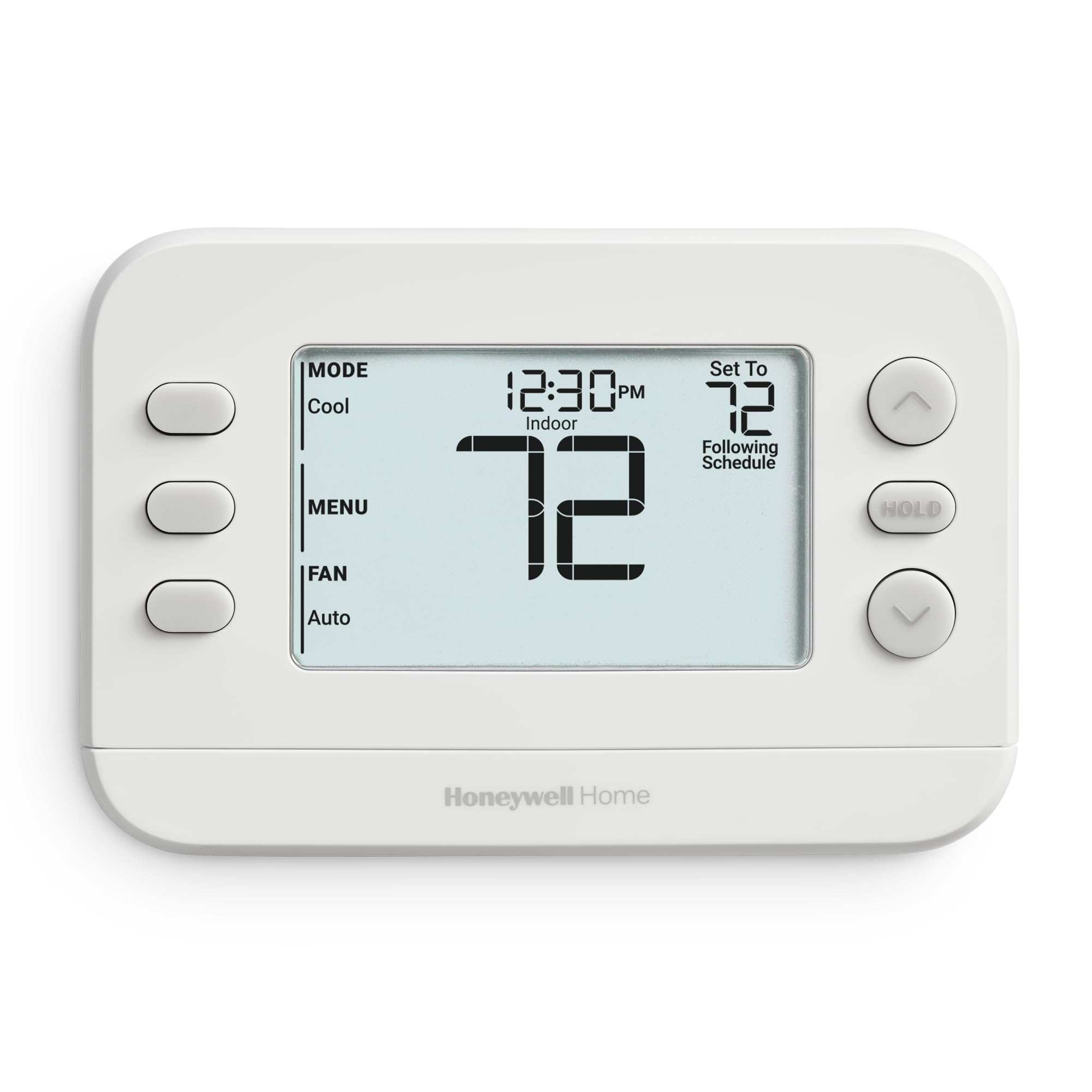
Type: Programmable
Schedule: 5-2 day
Stages: Single-stage
Compatibility: 1 heat / 1 cool
Finish: White
The X2P is the sweet spot for a basement flat that is empty on weekdays and busy at weekends. The 5-2 day schedule sets one routine for Monday to Friday and another for Saturday and Sunday, which matches how most people actually use a flat. Single-stage 1 heat/1 cool compatibility keeps the wiring simple, and the plain white face suits a hallway or living room wall without drawing attention. It suits an owner-occupier who wants set-and-forget control without paying for Wi-Fi.
There is no app and no remote access, so a change of routine means standing at the unit. Buyers who travel or let the flat short-term will find the schedule limiting.
Trade-off: The 5-2 schedule cannot be adjusted remotely, so any change of routine has to be made at the wall.
Check the current price on Amazon
Sensi Smart Thermostat ST55
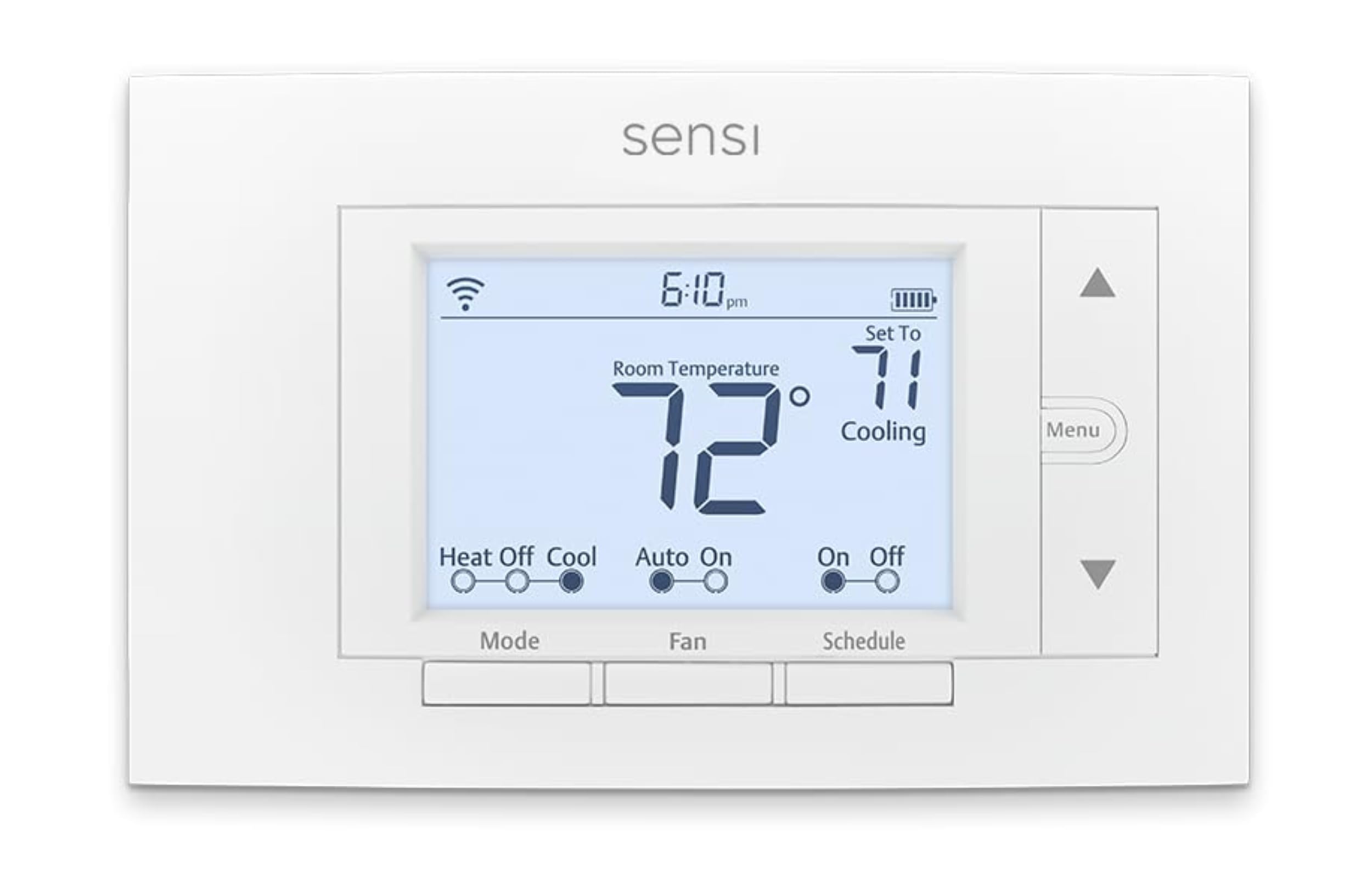
Type: Smart, Wi-Fi
Voice control: Alexa
Install: DIY
Certification: Energy Star
Model: ST55
The Sensi ST55 is the entry point into smart control, and for a basement flat it solves the biggest practical problem: adjusting the heat without walking into a cold room. Wi-Fi pairing and Alexa support mean the setpoint can be changed by voice or phone, and the DIY install keeps the swap within reach of a confident occupant. Energy Star certification signals efficient scheduling behaviour rather than raw power. It suits a renter or owner who wants app control but does not need a colour touch screen.
Smart thermostats depend on a stable Wi-Fi signal, and a basement flat is exactly where that signal is weakest. Buyers should check connectivity at the thermostat’s wall position before committing.
Trade-off: Wi-Fi dependence is a real risk in a basement, where signal strength at the wall can be poor.
Check the current price on Amazon
Honeywell Home RTH9585WF1004 Wi-Fi Smart Color Thermostat

Type: Smart, Wi-Fi
Schedule: 7-day programmable
Display: Colour touch screen
Certification: Energy Star
Voice: Alexa ready
Finish: Gray
The RTH9585WF1004 is the most capable unit here, with a full 7-day schedule that lets every day of the week run its own routine. The colour touch screen is easy to read and to set, and Alexa readiness adds voice control on top of the app. Energy Star certification and the gray finish round out a unit that looks and feels a step above the budget picks. It suits an owner who wants precise daily control and does not mind paying for the screen.
The touch screen and colour display are the parts most likely to date or fail, and the premium price is hard to justify for a single storage heater in a small flat. Buyers with one heater and a simple routine will get most of the benefit from a cheaper programmable model.
Trade-off: The colour touch screen and premium price are more capability than a single storage heater in a small flat really needs.
Check the current price on Amazon
Before You Buy
- Compatibility: Confirm the thermostat matches the flat’s wiring — a heat-only storage heater setup needs a heat-only or 1 heat/1 cool unit, not a multi-stage model.
- Control type: Decide between manual, programmable and smart before comparing prices; the cheapest unit is wasted if the occupant needs a schedule.
- Wi-Fi signal: A basement flat often has weak signal at the wall, so test connectivity before buying a smart model.
- Schedule fit: A 5-2 schedule suits a weekday routine; a 7-day schedule suits shift work or short lets.
- Installation: DIY-friendly units suit a confident occupant, but any doubt about wiring should go to an electrician.
- Display visibility: A backlit or colour screen matters in a dim basement hallway.
- Heater count: One storage heater rarely justifies a premium smart unit; multiple heaters may.
Frequently Asked Questions
-
Can a standard thermostat control a storage heater?
A heat-only or 1 heat/1 cool thermostat can control a storage heater’s output, but the cheap overnight charge is usually set at the heater itself, so the thermostat manages release rather than charging. -
Is a smart thermostat worth it in a basement flat?
It is worth it when the occupant wants to adjust heat remotely or run a precise schedule, but weak Wi-Fi signal in a basement can undermine the benefit. -
What is the difference between 5-2 and 7-day programming?
A 5-2 schedule sets one routine for weekdays and another for the weekend, while a 7-day schedule lets every day run its own routine. -
Do these thermostats need a neutral wire?
Wiring requirements vary by model, so the existing wiring should be checked against the unit’s instructions before purchase. -
Can a renter swap a thermostat?
A simple heat-only or non-programmable swap is within reach of a confident DIYer, but landlord permission and local rules should be checked first. -
Which pick suits a single storage heater?
The Honeywell Home CT87K1004 heat-only dial is the simplest match for one heater, while the RTH20B adds a schedule for a modest step up.
Bottom Line
For most basement flats with storage heaters, the RTH20B Honeywell Home X2P Programmable Thermostat is the best balance of price, simplicity and real energy savings, with the Sensi ST55 the pick for anyone who wants app control. Buyers with a single heater and no interest in scheduling should take the heat-only dial and spend the difference elsewhere.
