Why there are Amazon links here: Brave Review is paid a commission for qualifying Amazon purchases made through the links below. Your price does not change, and using our links is entirely optional. How this works
First Alert SMI100 Battery Smoke Alarm: Simple Protection, One Room at a Time
The First Alert SMI100 is a single, battery-powered smoke alarm built for the buyer who wants basic fire warning in one room without wiring, apps, or a contractor. This review covers what the unit is, how it is put together, where it fits in a home, and where it falls short. Readers deciding between a cheap standalone alarm and a connected system will find the honest answer here. The short version: the SMI100 suits budget-minded, low-fuss coverage; it is not the pick for anyone who wants smart alerts or whole-home interconnect.
Features and Specifications
Product Name: First AlertSMI100, 1-Pack Battery Smoke Alarm
Type: Standalone battery-operated smoke alarm
Pack Size: 1 unit
Power Source: Battery
Installation: Surface-mount, no hardwiring
Intended Use: Single-room residential smoke detection
The name tells most of the story. This is a First Alert smoke alarm, sold as a one-pack, running on battery power rather than house wiring. That combination defines the entire purchase: no electrician, no ceiling box, no breaker work.
First Alert is one of the best-known names in residential safety gear, and the SMI100 sits at the entry level of that lineup. The unit is designed to be screwed to a ceiling or wall and left alone, with the battery doing the work. There is no display, no app pairing, and no hub required.
That simplicity is the point. A buyer can order this, mount it in under fifteen minutes with a screwdriver, and have a working alarm the same afternoon. The trade-off is that nothing about the unit is connected, so it protects the room it is in and nothing more.
Build and Design
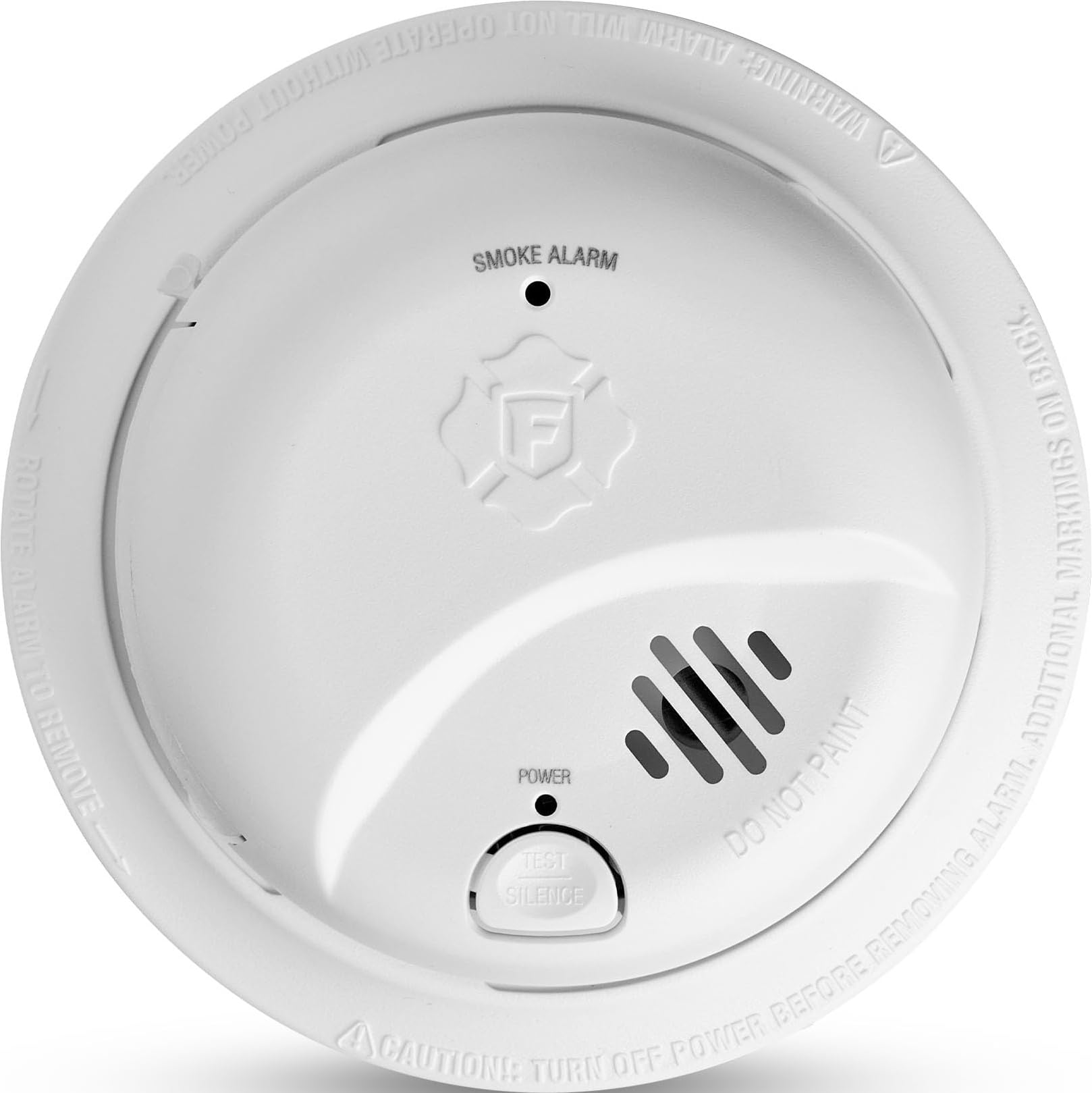
The SMI100 follows the classic smoke alarm shape: a round plastic housing with a vented cover, a test button on the face, and a mounting bracket that screws to the ceiling or wall. The shell is ordinary consumer-grade plastic, which is what the price tier supports, and it is light enough that the bracket carries it without fuss.
Because the unit is battery-powered, placement is flexible. A buyer can put it in a hallway, a bedroom, a basement stairwell, or a rental unit without touching the home’s electrical system. That matters for renters and for anyone in an older house where running new wiring is expensive or simply not an option.
The design is deliberately plain. There is no digital readout, no voice announcement, and no decorative trim. The alarm is meant to be noticed only when it sounds, and the plain white housing blends into most ceilings rather than drawing the eye.
Trade-off: The plastic housing and basic finish are clearly built to a price, so the unit feels utilitarian rather than premium — a fair trade for the low cost, but not a product anyone will describe as nicely made.
Power and Operation
The SMI100 runs on battery power, which is the single most important fact about it. There is no hardwired backup and no battery-free operation: when the battery is depleted or removed, the alarm is off. Buyers who want a unit that works through a power outage get that here, but only as long as the battery holds.
Operation is intentionally minimal. The unit sounds a loud alert when it detects smoke, and the test button on the face lets a buyer confirm the alarm and battery are working. There is no sensitivity adjustment, no silence-and-hush logic beyond the standard test function, and no way to tune the unit to a particular room.
That is fine for a bedroom or hallway, where the job is simply to wake someone up or warn them on the way out. It is a weaker fit for a kitchen, where cooking smoke can trigger nuisance alarms and a buyer will want a hush feature or a photoelectric design tuned for that environment.
Battery replacement is a maintenance item, not a convenience. The unit will chirp when the battery runs low, and the buyer has to act on that chirp. Anyone who tends to ignore a beeping alarm should think carefully before choosing a battery-only model.
Trade-off: Battery-only power means the SMI100 is only as reliable as its battery and its owner’s willingness to replace it — a hardwired or sealed-battery unit removes that responsibility at a higher price.
Maintenance and Placement
Maintenance on the SMI100 is about as simple as it gets: test the unit regularly with the face button, replace the battery when it chirps, and keep the vented cover free of dust. There are no filters, no sensors to calibrate, and no software to update.
Placement deserves more thought than the unit itself. Because the alarm is standalone, each protected area needs its own device. A buyer covering a hallway, two bedrooms, and a basement is looking at four units, not one. That math is worth doing before checkout, since the one-pack format is really a starter quantity.
Dust and grease are the quiet enemies of any smoke alarm. A unit mounted near a bathroom door or directly over a stove will collect residue and may false-alarm more often. The SMI100 has no special resistance to either, so sensible placement does more for reliability than any feature on the box.
The unit is also not interconnectable. When one SMI100 sounds, the others in the house stay quiet. For a single room that is irrelevant; for a family home where a basement alarm should wake people upstairs, it is a real limitation.
Trade-off: The one-pack format and lack of interconnect mean whole-home coverage requires buying several units that will not talk to each other — fine for a single room, weaker for a full house.
Who It Suits and Who It Does Not
The SMI100 suits renters, budget buyers, and anyone adding basic coverage to a specific room. It also works well as a spare: a unit for a guest room, a workshop, a cabin, or a rental property where a simple, replaceable alarm is preferable to a wired system.
It does not suit buyers who want smart-home integration, phone alerts, or voice announcements. It also is not the right pick for anyone covering a large home in one purchase, or for a kitchen where nuisance alarms are likely. Those buyers should look at interconnected or feature-rich models instead.
The low price is the headline. At the budget end of the smoke alarm market, the SMI100 competes on cost and simplicity rather than capability, and buyers should judge it on that basis.
Check the current price on Amazon
FAQ
-
What is the First Alert SMI100?
It is a single, battery-operated smoke alarm sold as a one-pack, designed for surface mounting in a bedroom, hallway, or similar room without any wiring work. -
Does the First Alert SMI100 need to be hardwired?
No. The unit runs on battery power, so it mounts to a ceiling or wall with the included bracket and does not connect to the home’s electrical system. -
How many SMI100 alarms are needed for a house?
Because each unit protects only its own area and the alarms do not interconnect, a buyer needs one per room or zone to be covered — typically several for a full home. -
Will the SMI100 work during a power outage?
Yes, as long as the battery has charge. Battery-only operation means the alarm does not depend on house power, but it does depend on a healthy battery. -
Is the First Alert SMI100 good for a kitchen?
It is a weaker fit there. Cooking smoke can trigger nuisance alarms, and the unit lacks the hush and sensitivity features that make kitchen placement easier. -
Does the SMI100 connect to a smart home system?
No. It is a standalone alarm with no app, hub, or phone notification capability. -
How does the SMI100 alert the user?
It sounds an audible alarm when smoke is detected, and the test button on the face lets the user confirm the unit and battery are working. -
Is the First Alert SMI100 a good choice for renters?
Yes. No wiring and no permanent installation make it easy to mount, remove, and take to a new address. -
What maintenance does the SMI100 require?
Regular testing with the face button, battery replacement when the low-battery chirp sounds, and keeping the vented cover free of dust. -
Who should not buy the First Alert SMI100?
Buyers who want interconnected alarms, smart alerts, or whole-home coverage in one purchase should choose a different model.
Bottom Line
The First Alert SMI100 is a straightforward, low-cost battery smoke alarm for one room at a time. It is the right buy for renters, budget shoppers, and anyone adding simple coverage to a bedroom, hallway, or spare space. Buyers who need interconnected protection or smart features should spend more elsewhere — but for basic, no-wiring fire warning, this one does the job.