Why there are Amazon links here: Brave Review is paid a commission for qualifying Amazon purchases made through the links below. Your price does not change, and using our links is entirely optional. How this works
Shark Matrix Plus AV2613WA Review: A Self-Emptying Robot That Mops and Maps
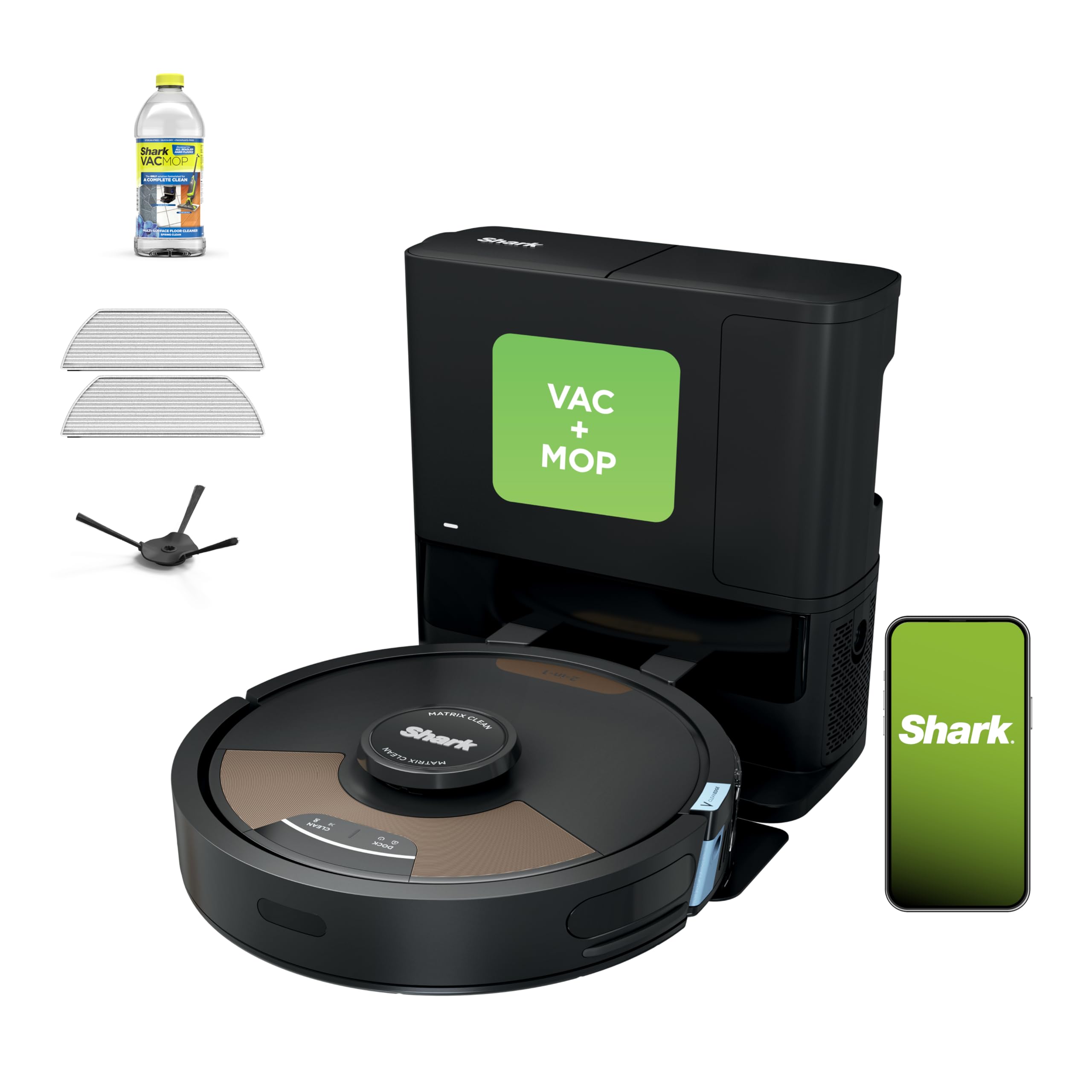
The Shark Matrix Plus AV2613WA is a robot vacuum and mop combo aimed at households that want floors handled without daily attention, including homes with pets and a mix of carpet and hard flooring. It brings LiDAR mapping, sonic mopping, anti-hair wrap and a 60-day self-empty base into one mid-to-upper tier package.
This review covers how the machine is built, what its feature set means in practice, and where the compromises sit — so a buyer can decide quickly whether it fits a home.
Features and Specifications
Product Type: Robot vacuum and mop combo
Model: AV2613WA (Matrix Plus)
Navigation: LiDAR mapping with Matrix Clean Navigation
Floor Types: Carpet, hard floors
Filtration: HEPA
Mopping: Sonic mopping
Hair Handling: Anti-hair wrap
Docking: 60-day self-empty base
Control: Wi-Fi app control
The headline here is the combination rather than any single spec. LiDAR mapping is the foundation: it lets the robot build a floor plan instead of wandering, which is what makes room-by-room cleaning and no-go zones possible through the app.
Sonic mopping and anti-hair wrap are the two features that decide whether this suits a given home. Sonic mopping means the mop head vibrates against the floor rather than simply dragging a wet cloth, which helps on dried-on marks. Anti-hair wrap addresses the tangle problem that plagues roller brushes in homes with long hair or shedding pets.
The 60-day self-empty base is the convenience anchor. Instead of emptying a small onboard bin after every run or two, the robot docks and transfers debris into a larger bag or container, pushing hands-on maintenance out to roughly two months. HEPA filtration matters for allergy-conscious buyers, since it means fine dust is captured rather than blown back into the room.
Build, Navigation and Mapping
LiDAR mapping is the most consequential upgrade in this class of robot. A robot that maps builds a persistent plan of the home, cleans in ordered passes rather than random patterns, and can be told to handle one room or avoid another. That structure is what separates a robot that gets used daily from one that gets abandoned.
Matrix Clean Navigation is the label Shark attaches to its cleaning path logic — the claim being that the robot makes multiple passes over the same area rather than a single sweep. In practice, buyers should expect better coverage of a room per run than a non-mapping robot delivers, at the cost of longer run times.
The trade-off with LiDAR is height and hard edges. Mapping robots generally need clearance under furniture and a reasonably uncluttered floor to build a good plan, and they work best when the home is tidied before a scheduled run rather than after.
Carpet, Hard Floors and Sonic Mopping
This is a hybrid machine, and hybrids always involve a compromise. On carpet it vacuums; on hard floors it can vacuum and mop. The sonic mopping function is designed for maintenance cleaning — light spills, dust film, everyday foot traffic — rather than scrubbing grout or lifting set-in stains.
Buyers with wall-to-wall carpet in most rooms get less value from the mop side and are paying for a capability they will rarely use. Buyers with tile, laminate or vinyl in the main living areas get the full benefit, since the robot can run a vacuum pass and a mop pass in the same session.
The practical limitation of any robot mop is that it cannot lift a wet pad over carpet. Homes with rugs on hard floors need no-mop zones set in the app, or the mop function needs to be disabled for those runs. That is a setup task, not a one-time one — floor plans and zone rules need occasional review as furniture moves.
Pet Hair and Anti-Hair Wrap
Anti-hair wrap is the feature most likely to justify the price for pet owners. Hair wrapped around a brush roller is the single most common reason robot vacuums underperform over time, and a design that sheds hair into the bin rather than winding it around the roller keeps suction and agitation consistent between cleanings.
HEPA filtration pairs with this sensibly. Pet homes generate both visible hair and fine dander, and a sealed HEPA path keeps the fine fraction out of the exhaust air. Combined with the self-empty base, the routine of dealing with collected debris drops to roughly once every two months.
The caution for heavy-shedding homes is capacity versus demand. A 60-day self-empty interval is an estimate based on typical use; a home with multiple large dogs will fill the base faster and should expect to check it more often than the label suggests.
Maintenance and the Self-Empty Base
The self-empty base removes the most frequent chore but not all of them. The robot’s sensors, side brushes and mop pad still need periodic attention, and the base itself needs its bag or container changed. Buyers should think of the base as converting daily emptying into a monthly task, not eliminating maintenance.
Wi-Fi control adds scheduling and remote starts through the app, which is what makes the self-empty design useful — a robot that runs on a schedule while the house is empty only works if it can also empty itself and keep going.
The trade-off is footprint. A self-empty base is substantially larger than a standard charging dock, and it needs clearance in front for the robot to dock reliably. Small apartments with limited wall space should measure before committing.
Trade-off: The self-empty base and mapping hardware make this a large-footprint, higher-cost machine, and buyers in small homes or mostly-carpeted spaces pay for mopping and docking capacity they may not use.
Check the current price on Amazon
Who It Suits and Who It Does Not
This machine fits homes with a genuine mix of carpet and hard flooring, at least one shedding pet or long-haired resident, and enough open floor space for a mapping robot to work efficiently. It also suits buyers who want to stop thinking about vacuuming for weeks at a time and are willing to pay for the docking hardware that makes that possible.
It does not suit small apartments where the base would dominate the room, nor homes that are almost entirely carpeted, where the sonic mop adds cost without adding much. Buyers on a tight budget are better served by a simpler robot that vacuums well and skips the mop and self-empty base entirely.
FAQ
-
What does the Shark Matrix Plus AV2613WA actually do?
It is a robot vacuum and mop combo that vacuums carpet and hard floors, runs a sonic mopping pass on hard surfaces, and empties itself into a base designed for roughly 60 days of hands-off debris storage. -
Does the Shark Matrix Plus AV2613WA work on carpet?
Yes. Carpet vacuuming is a core function, and the robot uses LiDAR mapping to plan coverage. The mop function is intended for hard floors, so carpeted areas should be excluded from mopping runs through the app. -
What is sonic mopping?
Sonic mopping means the mop head vibrates against the floor rather than passively dragging. It is designed for everyday maintenance cleaning on hard floors — dust film and light marks — rather than deep stain removal. -
How often does the self-empty base need changing?
The 60-day figure is a design target based on typical use. Homes with multiple heavy-shedding pets should check the base more frequently, since debris volume rather than time is the real limit. -
Is HEPA filtration useful for allergy sufferers?
HEPA filtration captures fine particles that would otherwise pass through the exhaust. Paired with a sealed system and self-empty base, it reduces how much fine dust is redistributed during cleaning. -
Does it need Wi-Fi to work?
The robot can clean without an app connection, but Wi-Fi control is what enables scheduling, room selection, no-mop zones and remote starts. Those features are central to getting value from the mapping hardware. -
Can it handle pet hair without tangling?
Anti-hair wrap is designed to keep hair from winding around the brush roller and instead route it toward the bin. It reduces the tangle problem rather than eliminating the need to check the roller occasionally. -
How much floor clearance does the base need?
A self-empty base requires open space in front for docking and enough wall clearance behind. Buyers with tight layouts should measure the intended spot before ordering rather than after. -
Is this a good choice for a mostly carpeted home?
Less so. The value sits in the combination of mopping and self-emptying. A mostly carpeted home pays for the mop hardware without using it, and a simpler vacuum-focused robot would be a better fit. -
Does it replace a full-size vacuum?
It reduces how often a full-size vacuum is needed on open floor areas, but stairs, upholstery and tight corners remain outside its reach. Most households keep a manual vacuum for those jobs.
Bottom Line
The Shark Matrix Plus AV2613WA makes the most sense for a home with mixed flooring, shedding pets and enough open space for a mapping robot and its self-empty base to operate properly. LiDAR mapping, sonic mopping, anti-hair wrap and HEPA filtration combine into a genuinely hands-off routine, with the main compromises being footprint and the cost of features that mostly-carpeted or very small homes will not fully use.
