Why there are Amazon links here: Brave Review is paid a commission for qualifying Amazon purchases made through the links below. Your price does not change, and using our links is entirely optional. How this works
Best Portable Power Station for a Power Cut in a Bedsit
A bedsit leaves little room for a generator, no garden for a fuel can, and often no permission to drill or rewire — so the best portable power station for a power cut in a bedsit has to be small, silent, and safe to run indoors. The five picks below cover three kinds of renter: the light user who only needs lights, Wi-Fi and a phone charged; the remote worker who cannot lose a laptop or router for an afternoon; and the heavier user running a small fridge or heater for short stretches. Sizes run from a compact 288Wh unit to a 1152Wh backup, and the overview table below shows each one’s key spec, best use and price tier so a decision is possible in under a minute.
The Picks at a Glance
| Product | Key Spec | Best Use | Price Tier |
|---|---|---|---|
| Jackery Explorer 300 | 292Wh, LiFePO4 | Lights, Wi-Fi, phones | Budget |
| Jackery Explorer 1000 v2 | 1070Wh, 1500W, 1 hr fast charge | Remote work and small appliances | Mid |
| BLUETTI AC180 | 1152Wh, 1800W AC outlets | Long outages, off-grid | Mid |
| BLUETTI Elite 30 V2 | 288Wh, 600W, 10ms UPS | Desk backup and short cuts | Budget |
| 640Wh Portable Power Station | 640Wh, 1200W surge, 10ms UPS | Best all-round value | Budget |
1. Jackery Explorer 300 Portable Power Station, 292Wh
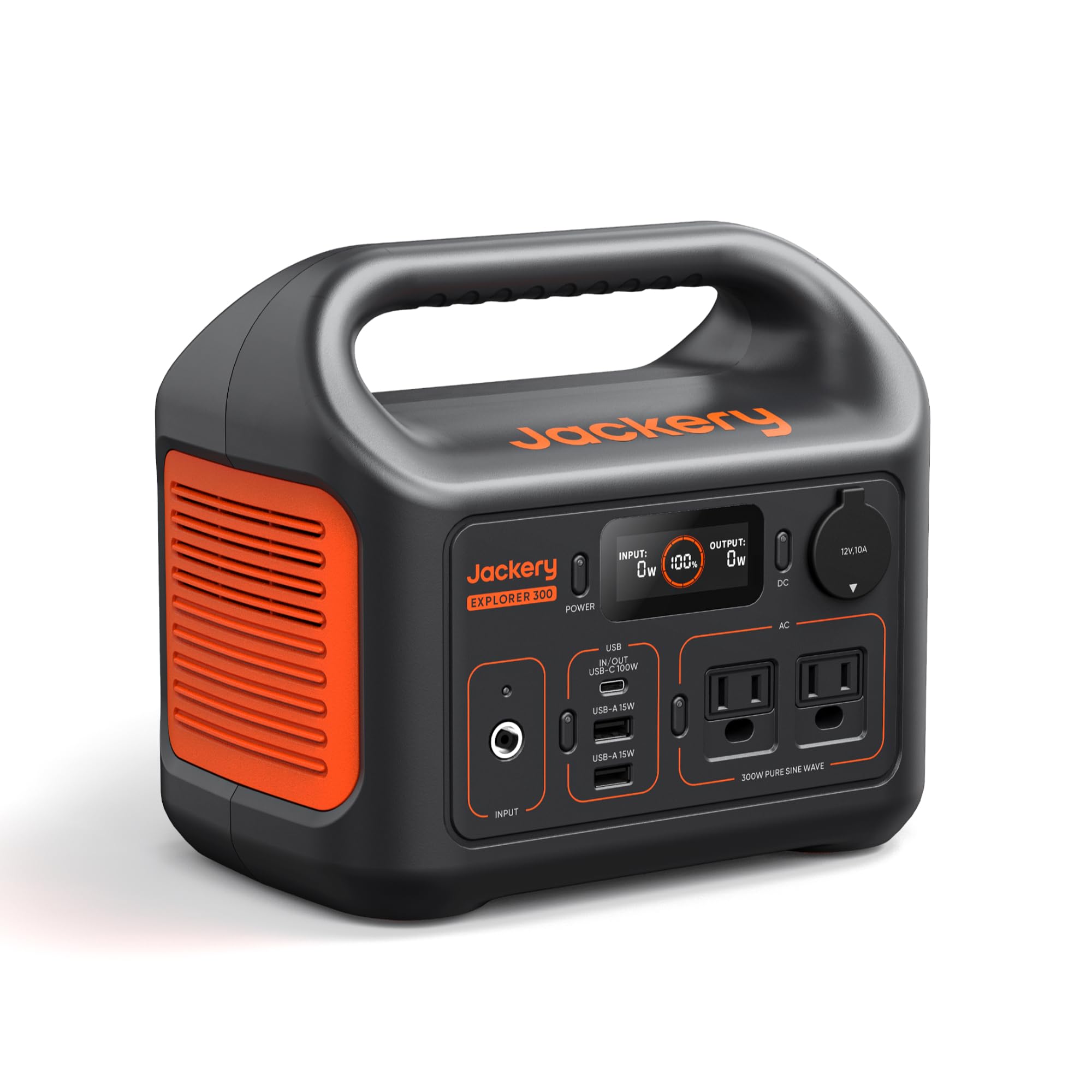
Battery chemistry: LiFePO4
Capacity: 292Wh
Intended use: Outdoors, camping, travel, hunting, blackout
Solar input: Solar panel optional
Form factor: Compact portable power station
The Explorer 300 is the smallest unit here and the one that fits a bedsit best: it sits on a shelf, weighs little enough to move with one hand, and its LiFePO4 cells are the longer-lived chemistry rather than the older lithium-ion mix. At 292Wh it is a lights-and-devices machine — a router, a lamp, a phone, a laptop and a small fan for an evening — not an appliance runner. The optional solar input matters for anyone with a windowsill that catches sun, since a small folding panel can top it back up during a long daytime cut.
It earns its place as the default first pick for renters who only lose a few hours at a time and want something they can carry between rooms or take camping in summer. The trade-off is capacity: 292Wh will not run a kettle, a heater or a fridge for long, so buyers planning to keep food cold need to look further down this list.
2. Jackery Explorer 1000 v2 Portable Power Station, 1070Wh, 1500W

Battery chemistry: LiFePO4
Capacity: 1070Wh
AC output: 1500W
Charge time: 1 hr fast charge
USB-C output: 100W
Intended use: Camping, emergency, RV
Solar input: Solar panel optional
The Explorer 1000 v2 is the pick for a bedsit where someone works from home and cannot afford to lose a router, a monitor and a laptop mid-afternoon. The 1070Wh battery and 1500W AC output push it into small-appliance territory — a mini fridge, a fan, a kettle for one cup — and the 1 hr fast charge means it can be refilled between outages rather than sitting flat. The 100W USB-C port charges a modern laptop directly without the AC brick, which saves a socket and a little waste.
This is the heaviest and priciest unit here, so it suits a buyer who has decided the bedsit needs proper backup rather than a stopgap. The trade-off is bulk and cost: it takes up real floor or shelf space in a small room, and anyone whose cuts last an hour twice a year will be paying for capacity they never touch.
3. BLUETTI Portable Power Station AC180, 1152Wh

Battery chemistry: LiFePO4
Capacity: 1152Wh
AC outlets: 2 × 1800W, 2700W peak
Charge time: 0–80% in 45 min
Intended use: Camping, off-grid, power outage
The AC180 is the heavy-duty option for a bedsit that loses power for whole evenings or sits in a building with unreliable supply. Two 1800W AC outlets with a 2700W peak handle appliances that would trip a smaller station — a small microwave, a heater on a low setting, a fridge cycling on — and the 45-minute run to 80% makes it practical to recharge during a brief window of mains power. LiFePO4 cells suit this kind of deep, repeated discharge better than older chemistries.
It suits the renter who has decided the bedsit is the long-term home and wants one box that covers a fridge, a lamp and a laptop at once. The trade-off is weight and footprint: a 1152Wh station is a two-hand lift and needs a dedicated spot on the floor, which is a real cost in a single room.
4. BLUETTI Elite 30 V2 Portable Power Station, 288Wh, 600W
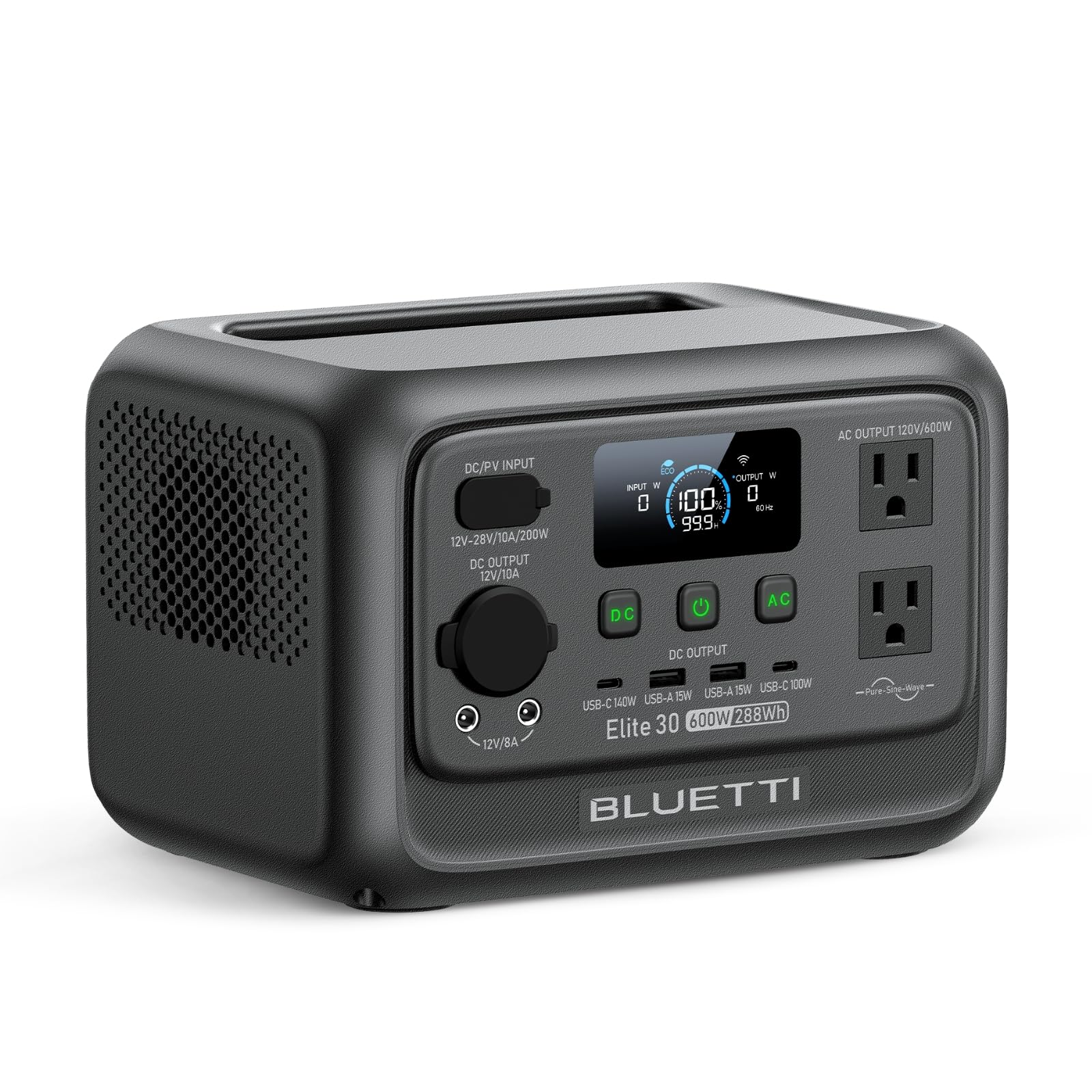
Battery chemistry: LFP (LiFePO4)
Capacity: 288Wh
Output: 600W
UPS switchover: 10ms
Charge time: 45 min to 80%
Intended use: Blackout, camping, outage, road trip
The Elite 30 V2 is the desk-side pick: its 10ms UPS switchover means a plugged-in laptop or router keeps running through a cut without a reboot, which is the single most useful feature for anyone whose income depends on a stable connection. At 288Wh and 600W it stays compact and light, and the fast charge to 80% in 45 minutes means it recovers quickly once the mains returns. LFP cells give it the same long service life as the larger picks.
It suits the bedsit worker who wants the router and laptop protected automatically rather than manually replugged in the dark. The trade-off is headroom: 600W will not start a fridge compressor or run a heater, so it is a devices-only station despite the UPS convenience.
5. 640Wh Portable Power Station, 1200W Surge
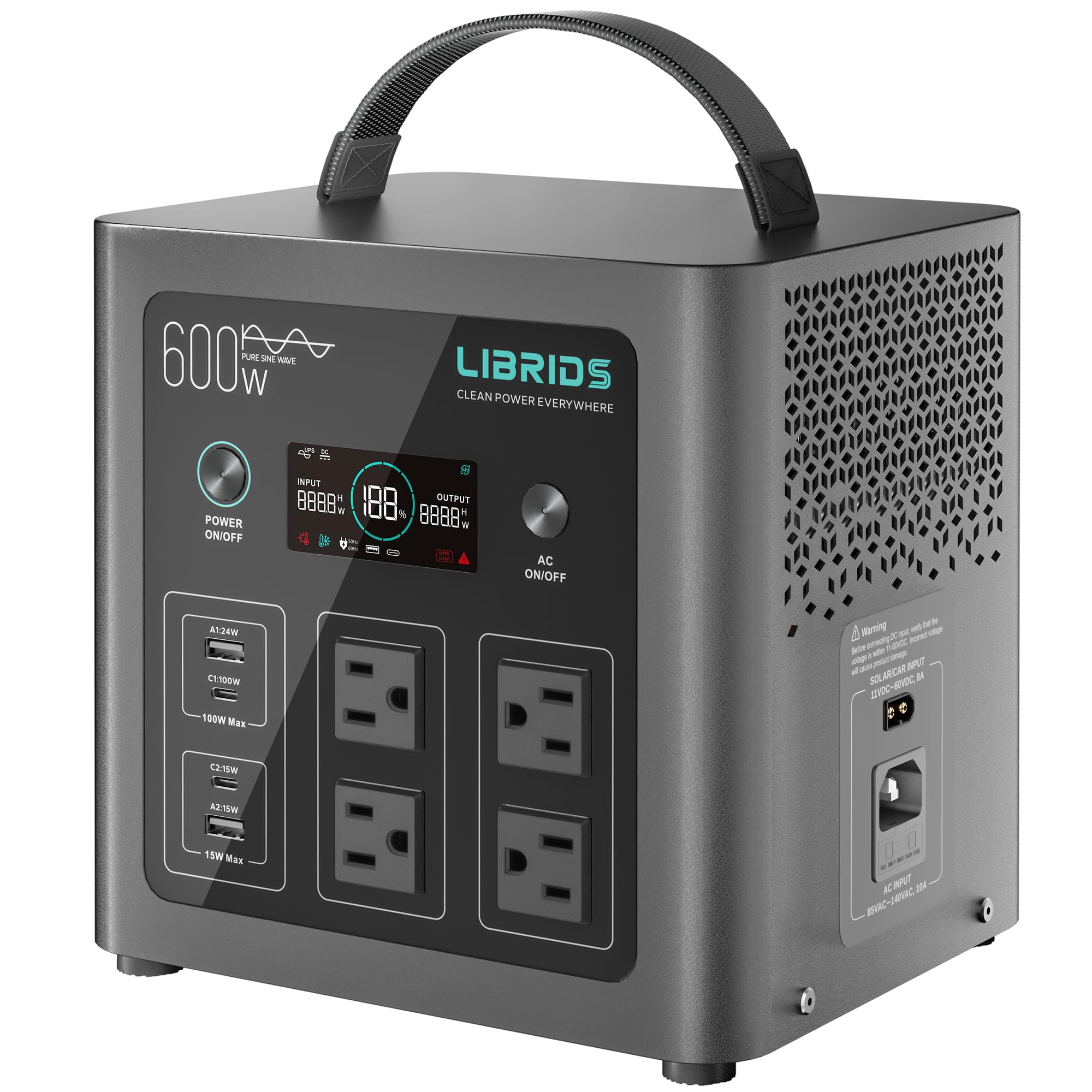
Battery chemistry: LiFePO4
Capacity: 640Wh
Surge output: 1200W
Ports: 8 (4 AC)
UPS switchover: 10ms
Charge time: 1.5 hr
Build: Metal design, pure sine wave
Intended use: RV camping, home backup, emergency
The 640Wh unit is the value pick and arguably the best portable power station for a power cut in a bedsit where the budget is tight but the outage list is long. It splits the difference between the compact 288Wh stations and the 1000Wh-plus units: enough capacity for a router, a lamp, a laptop and a small fridge for a stretch, with a 1200W surge to start motors. Eight ports including four AC outlets cover a whole desk and a lamp without a power strip, the 10ms UPS protects a router automatically, and the pure sine wave output keeps sensitive electronics happy. The metal body is a step up from the plastic shells common at this price.
It suits the renter who wants one box to do everything reasonably well without paying premium money. The trade-off is track record: this is a less established name than Jackery or BLUETTI, so buyers are trading brand certainty for capacity per dollar.
Before You Buy
- Capacity: Add up what needs to run and for how long. Lights, router and phone are a few hundred watt-hours; a fridge or heater pushes into the 1000Wh class.
- Output: Check the running wattage of every appliance, and remember motors and compressors draw a surge well above their rating.
- UPS switchover: A 10ms UPS keeps a router and desktop alive through a cut; a station without it means manual replugging in the dark.
- Size and weight: A bedsit has limited floor and shelf space. Measure the spot before buying anything above 640Wh.
- Chemistry: LiFePO4/LFP cells last far more charge cycles than older lithium-ion, which matters for a unit that will sit idle for months.
- Ventilation and storage: Run the station in open air, not in a cupboard, and store it partly charged rather than flat.
- Solar option: A folding panel on a sunny windowsill can stretch a long daytime outage, but only where the window actually gets sun.
Frequently Asked Questions
-
Can a portable power station run a fridge in a bedsit?
A small under-counter fridge typically needs a 1000Wh-class station with a surge rating above its running wattage. The 640Wh unit here can start one but will not run it for a full day. -
Is it safe to use a power station indoors during a power cut?
Yes — unlike a fuel generator, a battery station produces no exhaust fumes. It should still sit in open air rather than a sealed cupboard, and clear of soft furnishings. -
How long will a station keep a router and laptop running?
A router and a laptop together draw little; a 288Wh station covers most of a working day, while the larger units here stretch to several days of light use. -
What does 10ms UPS mean?
It is the gap between the mains failing and the station taking over. At 10ms a router or desktop does not reboot, so the connection and unsaved work survive. -
Do these stations need a solar panel?
No — all five charge from a normal wall socket. Solar is an optional extra for daytime top-ups during a long outage, and each unit lists it as optional. -
How often should a stored power station be charged?
A top-up every few months keeps the cells healthy. LiFePO4 handles long storage better than older chemistries, but a flat battery for a year still shortens its life.
Bottom Line
For most bedsits the 640Wh Portable Power Station is the sensible buy: enough capacity for a router, a lamp and a small fridge, four AC outlets, a 10ms UPS and a metal body, all at the lowest price tier here. The Jackery Explorer 300 remains the right answer for anyone who only needs lights and devices and values a known brand in the smallest possible box.
