Why there are Amazon links here: Brave Review is paid a commission for qualifying Amazon purchases made through the links below. Your price does not change, and using our links is entirely optional. How this works
ecobee Voice Control SmartThermostat with Voice Control: Talk to Your Comfort
The ecobee Voice Control SmartThermostat with Voice Control is built for households that want to adjust the temperature without reaching for a phone or walking to the wall. It listens for spoken commands, runs schedules on its own, and folds in remote sensors to balance comfort across rooms. This review covers what the hardware does, how the voice features work in daily life, where the design makes compromises, and which buyers should look elsewhere.
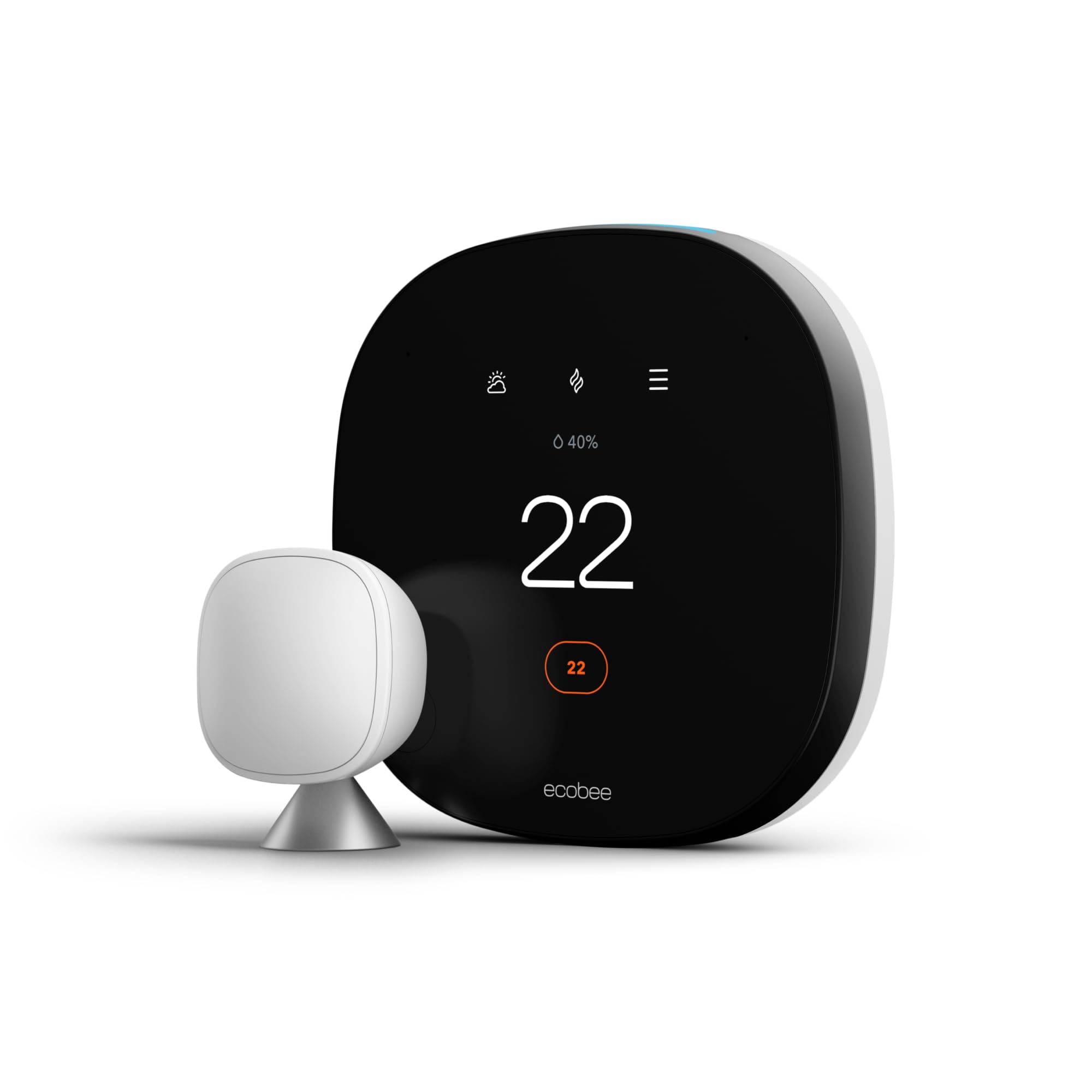
Features and Specifications
Product Type: Smart thermostat with built-in voice control
Voice Control: Built-in, hands-free command support
Sensors: Remote room sensors included for multi-room comfort
Mounting: Wall-mounted replacement for a standard thermostat
Connectivity: Wi-Fi for app and voice integration
Compatible Systems: Conventional heating and cooling setups
The headline feature is the built-in voice layer. Commands like raising the heat or switching modes are handled at the device itself, so a homeowner does not need a separate smart speaker in the hallway to make an adjustment. That matters most in homes where the thermostat sits far from the kitchen or living room.
Remote sensors extend the picture beyond the wall unit. Instead of reading temperature at one spot, the system can weigh conditions in the rooms people actually occupy. The result is a schedule that follows occupancy patterns rather than a single hallway reading.
Trade-off: Built-in voice control adds cost and complexity over a plain programmable thermostat, and buyers who already own a smart speaker may be paying twice for the same convenience.
Check the current price on Amazon
How the Voice Control Works in Practice
Microphone Array and Command Handling
The voice system relies on microphones built into the thermostat face, tuned to pick up speech from across a room. In a quiet house, that means a homeowner can call out a temperature change while carrying groceries or settling onto the couch. In a noisy kitchen with a running range hood, recognition becomes less reliable, which is true of every far-field microphone setup at this price.
Commands are handled locally enough to feel responsive, but the device still depends on a Wi-Fi connection for app control, scheduling updates, and any cloud-side features. A router outage does not brick the thermostat — heating and cooling keep running on the last schedule — but voice and remote access go quiet until the network returns.
Scheduling and Sensor Logic
The scheduling engine is where the thermostat earns its keep. Rather than a fixed weekday-and-weekend program, the system can follow occupancy signals and adjust when rooms are empty. Remote sensors feed that logic, so a bedroom that heats up in the afternoon does not trick the system into cooling an empty living room.
Buyers who work from home benefit most here. A house that is occupied all day needs different logic than one that empties at eight in the morning, and the sensor-driven approach handles both without manual reprogramming each season.
Installation and Compatibility
Wiring Requirements
This is a wall-mounted replacement for an existing thermostat, which means it inherits the wiring already in the wall. Most conventional forced-air systems are a straightforward swap. Homes with unusual setups — older two-wire configurations, or systems that need a common wire that is not present — may need an adapter or a professional install.
The practical advice is to photograph the existing wiring before disconnecting anything and to check the compatibility guidance on the product page before ordering. A five-minute check saves a return.
What It Replaces
The unit is designed to take over from a standard thermostat rather than sit alongside one. Buyers with a modern smart thermostat already installed will find little reason to switch unless the built-in voice control is the specific feature they want. Buyers upgrading from a basic programmable unit get the biggest jump in capability.
Trade-off: Installation is friendly to typical forced-air homes but unforgiving of odd wiring, and buyers in older houses should budget for an adapter or an installer visit.
Build, Materials, and Daily Handling
Physical Design
The thermostat is a wall-mounted panel with a touch-sensitive display and a microphone opening on the face. The finish is the matte plastic typical of this product class — neutral enough to disappear on a hallway wall and easy to wipe clean. It is not a statement piece, and it is not meant to be.
The touchscreen handles manual adjustments when voice is impractical, which matters at night or in a household with sleeping children. The two input methods complement each other rather than competing.
Maintenance and Longevity
Upkeep is minimal: dust the face occasionally, keep the microphone opening clear, and replace the filter on schedule so the HVAC system itself stays efficient. Firmware updates arrive over Wi-Fi and generally run in the background.
The realistic caution is lifespan. Smart thermostats live or die by their software support, and a device that loses updates after several years becomes a very expensive programmable thermostat. Buyers should treat this as a long-term platform purchase, not a one-off gadget.
Trade-off: The matte plastic and touchscreen are durable enough for daily use, but long-term value depends on continued software support that no buyer can guarantee at purchase.
Smart Home Integration and App Control
Voice Assistants and Ecosystem
Beyond the built-in microphone, the thermostat fits into the broader smart home through Wi-Fi and app control. Temperature changes, schedules, and sensor preferences are all adjustable from a phone, which is useful when a homeowner is away and wants the house at a comfortable temperature on arrival.
Households already invested in a voice ecosystem get a second layer of control on top of the on-device commands. The built-in microphone is the differentiator; the app is the safety net.
Remote Access and Notifications
Remote access covers the obvious cases: adjusting the setpoint before returning home, checking that the system is running while traveling, and reviewing whether the schedule is doing what it should. Filter reminders and system alerts round out the package.
The limitation is that all of this rides on the home network. A flaky router produces a flaky experience, and buyers with weak Wi-Fi at the thermostat’s location should address that before blaming the device.
Who Should Buy It
This thermostat suits households that want hands-free temperature control without adding another smart speaker to the wall. It fits well in homes with forced-air heating and cooling, a solid Wi-Fi signal at the thermostat location, and at least one room that runs hotter or colder than the rest.
It is a poor fit for buyers on a tight budget who just want a programmable schedule, for homes with wiring that needs an adapter and no appetite for install work, and for anyone who already owns a smart speaker and is happy using it for voice commands. Those buyers are paying a premium for a microphone they will not use.
FAQ
-
Does the ecobee Voice Control SmartThermostat work without Wi-Fi?
Heating and cooling continue to run on the existing schedule, but voice commands, app access, and remote features need a network connection. -
Does it need a common wire to install?
Many conventional systems work with the wiring already present. Older or unusual setups may need an adapter, so the wiring should be checked before ordering. -
Can it control the temperature by voice without a separate smart speaker?
Yes. The microphone is built into the thermostat, so commands are handled at the wall unit itself. -
What do the remote sensors actually do?
They report conditions in other rooms so the system can balance comfort across the house instead of relying on one hallway reading. -
Is it compatible with heat pumps and conventional furnaces?
It is designed for common residential heating and cooling systems. Buyers with unusual equipment should confirm compatibility on the product page first. -
How many zones can it manage?
The system balances rooms through sensors rather than true ducted zoning, so it improves average comfort without replacing a zoned HVAC setup. -
Does it work with a phone app?
Yes. Scheduling, setpoints, and sensor preferences are all adjustable remotely through the companion app. -
What happens to the thermostat if the company stops supporting it?
Basic heating and cooling control continues, but app features and updates may stop. That risk is common to all connected thermostats. -
Is it hard to install for a DIY homeowner?
A standard swap is manageable for anyone comfortable with low-voltage wiring. Unusual configurations are better left to a professional. -
Who is this thermostat not for?
Buyers who already own a smart speaker, who want the cheapest programmable option, or whose wiring needs an adapter should look at simpler alternatives.
Bottom Line
The ecobee Voice Control SmartThermostat with Voice Control makes the most sense for households that want hands-free temperature control built into the wall rather than routed through a separate speaker. The sensor-driven scheduling is the real value, and the built-in microphone is the convenience that justifies the premium for the right buyer. Anyone already comfortable issuing voice commands through an existing smart speaker can save money with a simpler model.
