Why there are Amazon links here: Brave Review is paid a commission for qualifying Amazon purchases made through the links below. Your price does not change, and using our links is entirely optional. How this works
Best Smart Thermostat Alternative for a Flat with Storage Heaters
A flat with storage heaters does not need a gas-furnace thermostat — it needs a line-voltage controller that can talk to an electric heating system and still be scheduled from a phone. The five picks below are all real high-voltage thermostats, not low-voltage boiler controllers, and they range from budget Wi-Fi units to premium baseboard specialists. Renters who want app control without a subscription, owners replacing a broken manual dial, and small flats where a single heater is the whole heat source will each find a fit. The comparison table below sorts them by what matters fastest.
The Picks at a Glance
| Product | Key Spec | Best Use | Price Tier |
|---|---|---|---|
| Mysa Smart Thermostat LITE | 120V–240V, HomeKit/Alexa/Google | Budget baseboard control | Budget |
| Sensi Smart Thermostat ST55 | Wi-Fi, Alexa, Energy Star | Simple DIY replacement | Mid-range |
| Mysa Smart Thermostat V2 | Humidity sensor, no subscription | Full-feature baseboard control | Premium |
| Meross Matter Smart Thermostat | Matter, HomeKit/Alexa/Google/SmartThings | Multi-platform smart homes | Budget |
| Amazon Smart Thermostat | Alexa and Ring | Alexa-first households | Mid-range |
1. Mysa Smart Thermostat LITE for Electric Baseboard Heaters
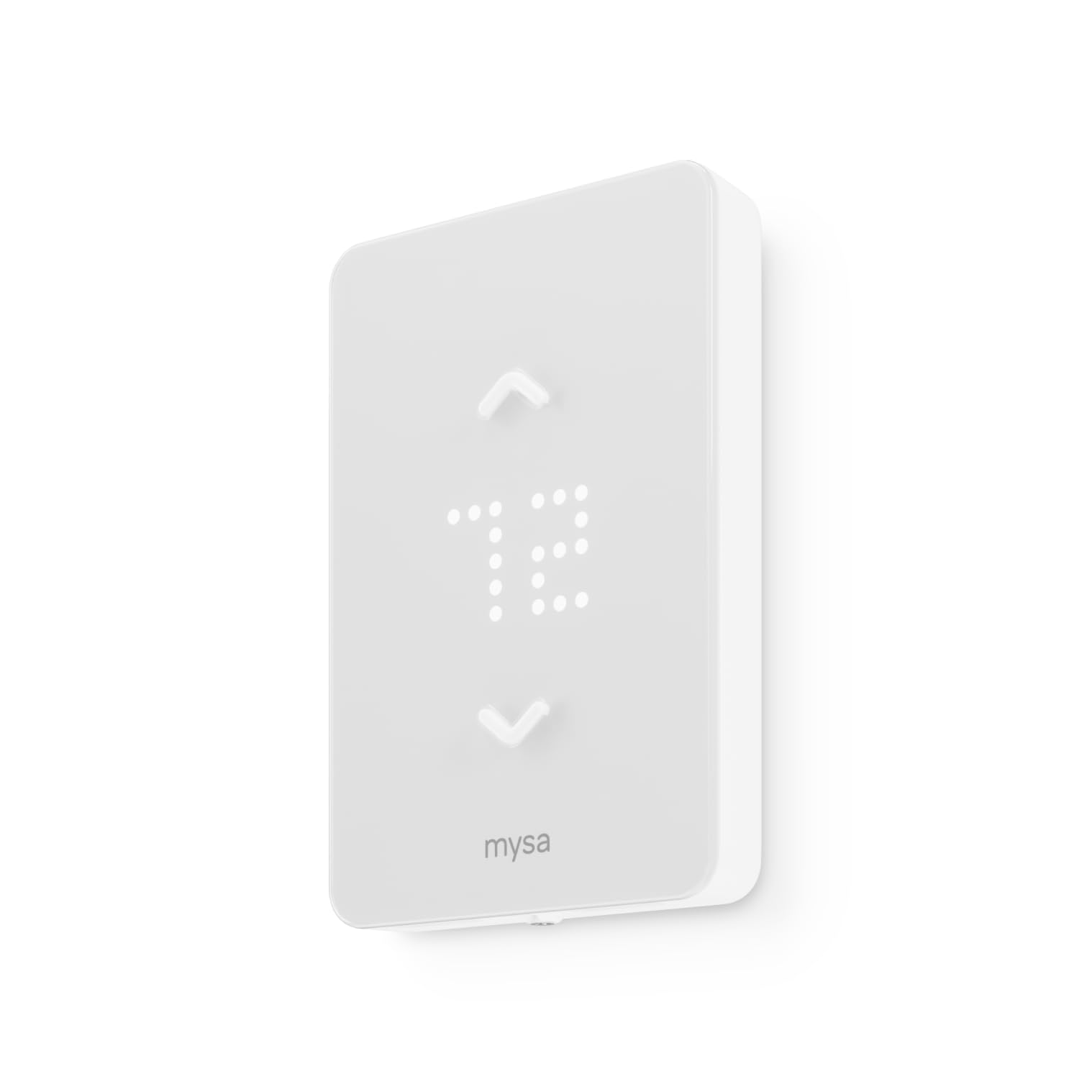
Voltage Range: 120V–240V
Control: Wi-Fi programmable
Scheduling: 7-day
Voice/Platform: HomeKit, Alexa, Google
Claimed Savings: Up to 26% on heating
Mysa Smart Thermostat LITE for Electric Baseboard Heaters
The LITE is built specifically for high-voltage electric heating rather than adapted from a low-voltage design, which is the whole reason it appears here. It handles line voltage from 120V through 240V, so it can drop into the wiring a storage heater or baseboard already uses. The seven-day scheduling is the core function: wake-up, away and return periods set once and repeated weekly. It works with all three major voice platforms, so a flat split between Apple and Alexa users is not a problem.
This is the pick for anyone who wants baseboard-style control on a tight budget and does not need occupancy sensing or humidity data. Buyers replacing a plain dial thermostat will find the feature set generous for the money. The trade-off is that the LITE name is literal — the premium Mysa adds sensors and a touchscreen this one leaves out, so anyone wanting geofencing or humidity tracking should look at the V2 instead.
Check the current price on Amazon
2. Sensi Smart Thermostat, Wi-Fi, DIY, Alexa, Energy Star Certified, ST55
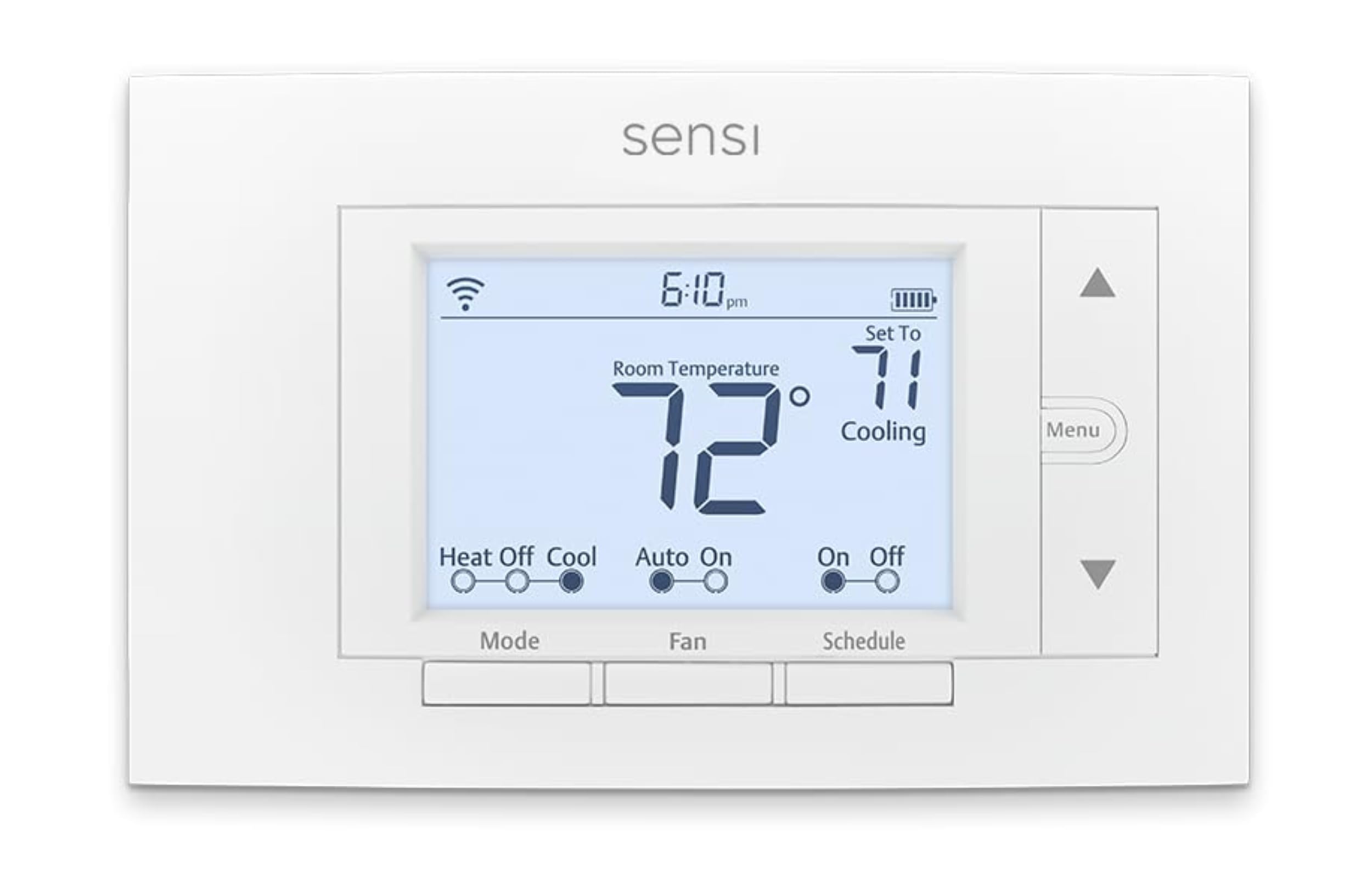
Connectivity: Wi-Fi
Installation: DIY
Voice Control: Alexa
Certification: Energy Star
Model: ST55
Sensi Smart Thermostat, Wi-Fi, DIY, Alexa, Energy Star Certified, ST55
Sensi is one of the best-known names in DIY thermostat swaps, and this model is aimed squarely at homeowners who want to do the job themselves without calling an electrician. The Energy Star certification signals it meets a recognized efficiency standard, which matters for anyone replacing an old mechanical unit. Wi-Fi plus Alexa covers the essentials: remote adjustment and voice setpoint changes. The DIY framing suggests a straightforward wiring process and an app-guided setup.
It earns its place for the buyer who wants a mainstream, widely supported brand and does not mind a slightly older design. The trade-off is that this is a general-purpose smart thermostat rather than a baseboard specialist, so a flat with unusual heater wiring should confirm compatibility before ordering — the spec sheet is thinner on line-voltage detail than the Mysa listings.
Check the current price on Amazon
3. Mysa Smart Thermostat V2 for Electric Baseboard Heaters
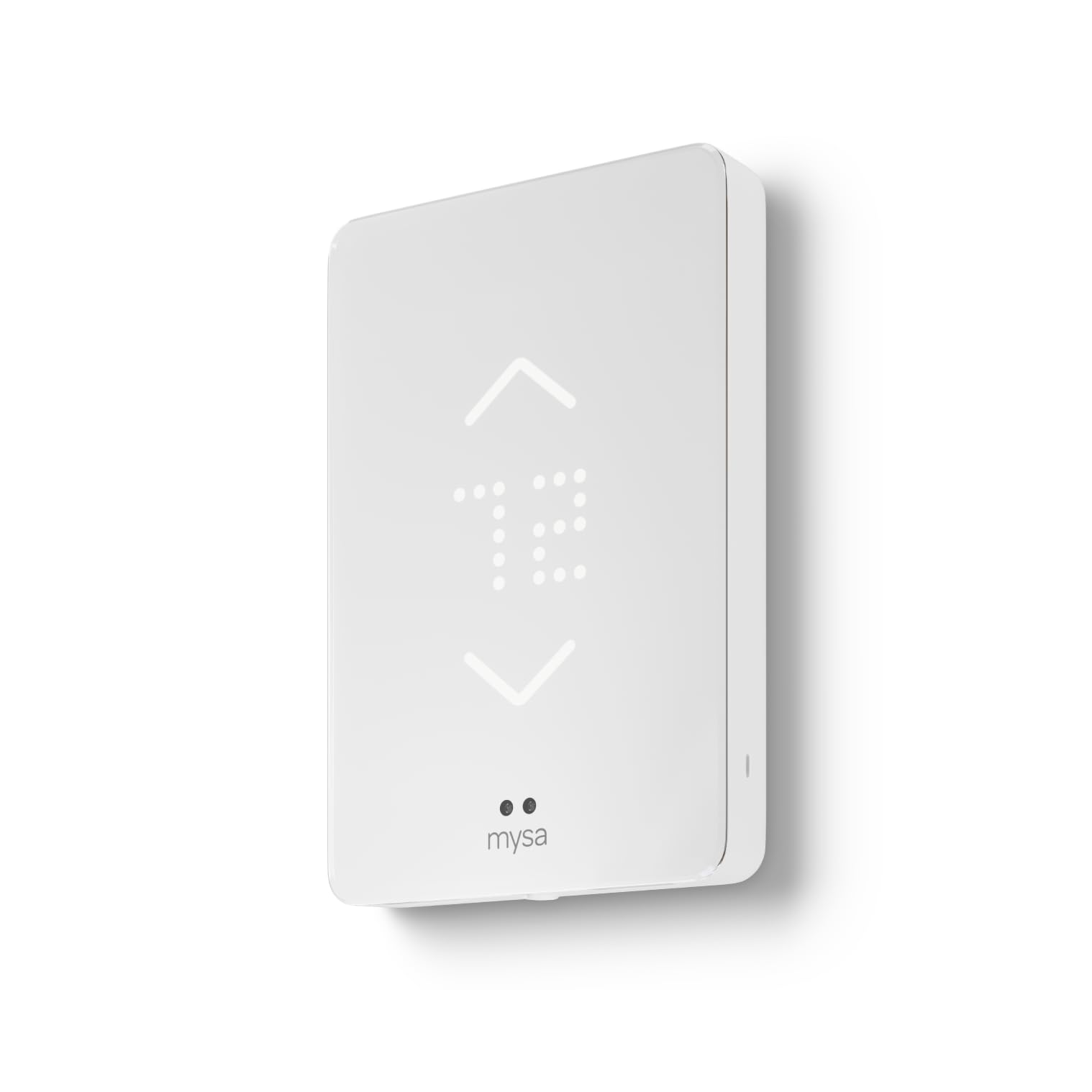
Voltage Range: 120V–240V
Subscription: None required
Sensors: Humidity sensor, touchscreen
Control: Wi-Fi programmable
Features: Scheduling, geofencing
Platforms: Apple Home, Alexa, Google
Mysa Smart Thermostat V2 for Electric Baseboard Heaters
The V2 is the full-feature version of the Mysa formula: line-voltage control for electric baseboard, a humidity sensor, a touchscreen and geofencing that turns the heat down when nobody is home. The no-subscription promise is the headline for anyone burned by app fees — scheduling, geofencing and remote control are all included rather than locked behind a plan. Support for Apple Home, Alexa and Google means it slots into whichever ecosystem the flat already uses.
This suits the buyer who wants the most capable baseboard controller available and is willing to pay for it. It is also the better choice for a flat where heating is the single biggest bill, since geofencing and scheduling together do more than a fixed dial ever could. The trade-off is price: it costs meaningfully more than the LITE, and a small studio with one heater may never use the humidity data or touchscreen enough to justify the difference.
Check the current price on Amazon
4. Meross Matter Smart Thermostat for Electric Baseboard Heaters
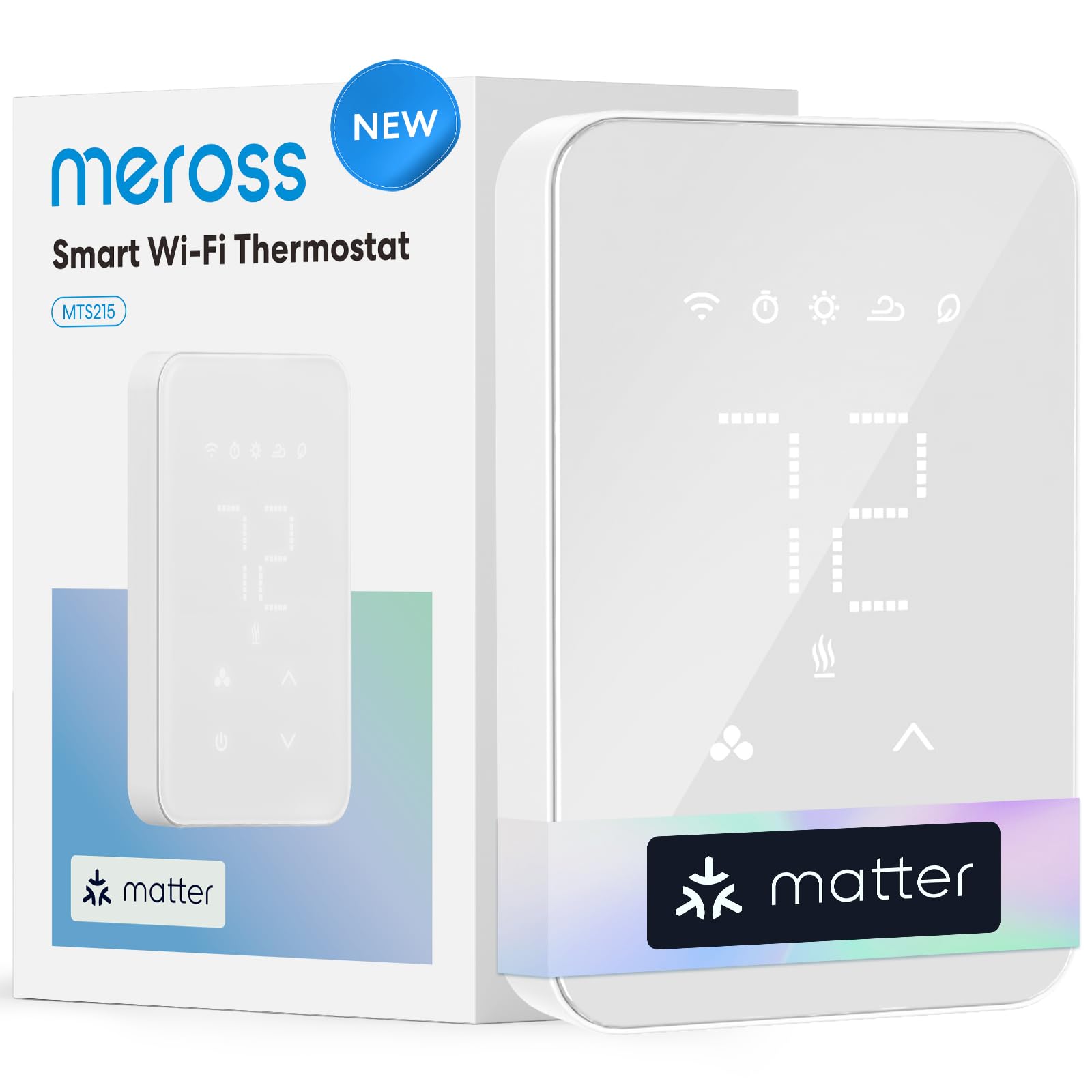
Voltage Range: 120–240V
Protocol: Matter
Platforms: HomeKit, Alexa, Google Home, SmartThings
Control: Wi-Fi programmable
Feature: Remote control
Purpose: Energy saving
Meross Matter Smart Thermostat for Electric Baseboard Heaters
Meross positions this as a Matter-certified line-voltage thermostat, which is the interesting part: Matter support means it can join a smart home through a standard protocol rather than a single vendor’s app. The four-platform listing — HomeKit, Alexa, Google Home and SmartThings — is the widest in this group. It covers 120–240V and is explicitly marketed for electric baseboard heaters, so the high-voltage use case is stated rather than implied. Remote control and energy-saving scheduling round out the feature set.
This is the pick for a flat already running a Matter or multi-platform setup, where a thermostat that speaks to everything is worth more than one with a nicer screen. It is also the cheapest route into line-voltage smart control in this lineup. The trade-off is that Matter setups still vary in how much of a device’s own features surface in each app, and a budget unit like this typically offers less on-device control than the premium Mysa.
Check the current price on Amazon
5. Amazon Smart Thermostat
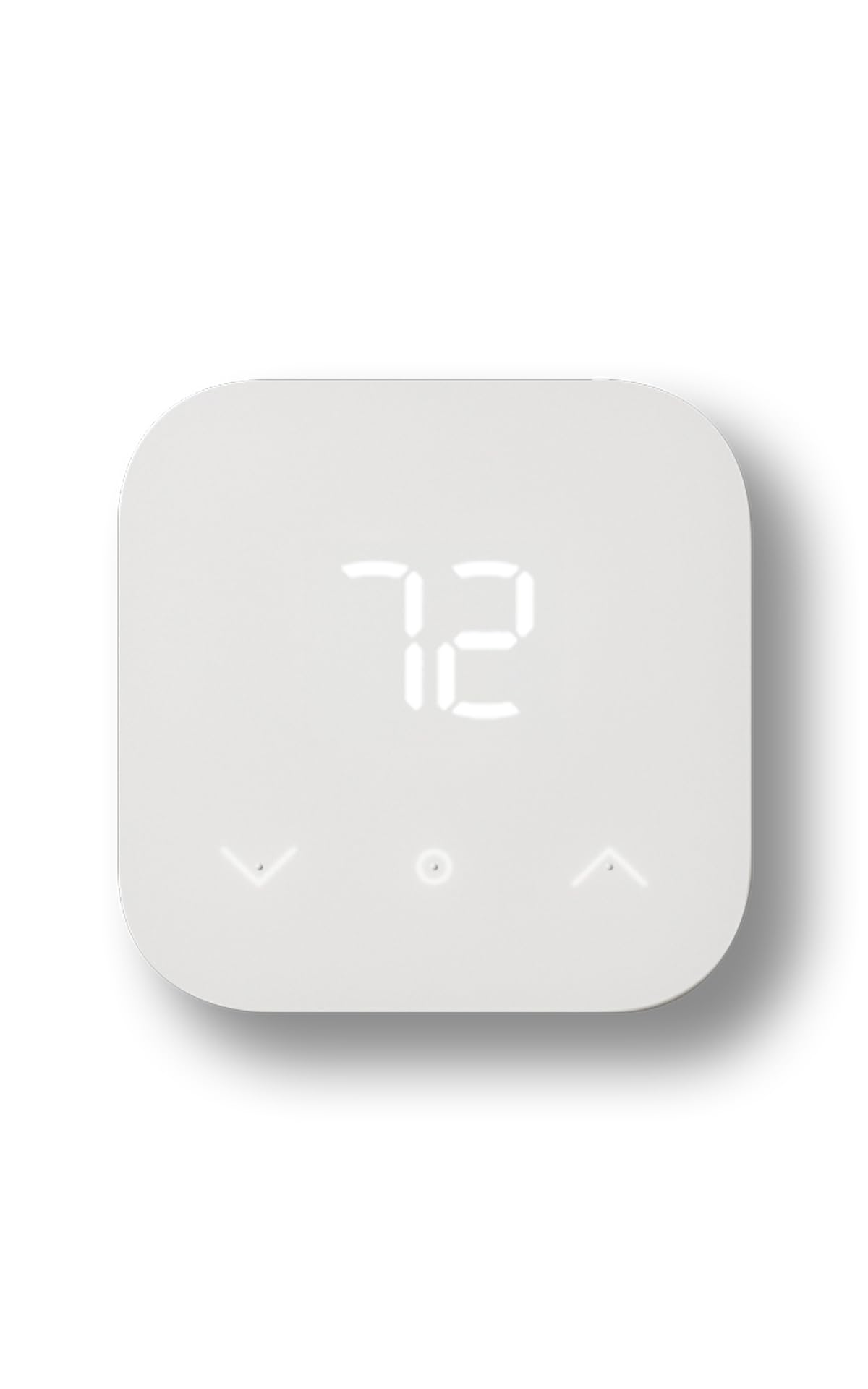
Ecosystem: Alexa and Ring
Purpose: Energy saving
Control: Smart scheduling
Installation: DIY
Amazon’s own thermostat is the volume seller of the group, and its appeal is ecosystem simplicity: it works with Alexa and Ring, so a flat already using Echo speakers and a Ring doorbell gets a thermostat that joins the same app and the same routines. The pitch is savings and energy management rather than deep customization. Setup is DIY-oriented, and the Alexa app handles scheduling and remote changes.
It suits the buyer who is already all-in on Amazon devices and wants heating folded into existing voice routines without a second app. The trade-off is compatibility: this is designed around conventional low-voltage HVAC wiring, not line-voltage electric baseboard, so a flat with storage heaters must verify it will actually work with the heater before buying — it is the weakest fit on this list for pure electric heating.
Check the current price on Amazon
Before You Buy
- Voltage: Storage heaters and electric baseboard run on line voltage, so confirm the thermostat is rated for 120V–240V before ordering.
- Wiring: Count the wires at the old thermostat and photograph them; a line-voltage unit needs both live conductors plus a ground.
- Compatibility: Match the thermostat to the heater type, not just the brand — a low-voltage HVAC thermostat will not control a storage heater.
- Heater type: Storage heaters with separate input and output controls may need a different approach than a simple baseboard thermostat.
- Platform: Pick the ecosystem the flat already uses — Apple Home, Alexa, Google or Matter — to avoid running two apps.
- Subscriptions: Check whether scheduling and geofencing are included or tied to a paid plan.
- Rental limits: In a rented flat, confirm the landlord permits hardwired thermostat changes before booking an electrician.
Frequently Asked Questions
-
Can a normal smart thermostat control storage heaters?
Usually not. Most mainstream smart thermostats are built for low-voltage gas or heat-pump systems, so a line-voltage model rated for 120V–240V is the safer choice. -
Does a storage heater flat need an electrician to fit a smart thermostat?
It depends on confidence with mains wiring. The DIY-friendly models are designed for homeowner installation, but line-voltage work carries real risk and a qualified electrician removes it. -
Which pick is best for a renter?
The Mysa LITE is the most sensible starting point — it is the cheapest baseboard-specific unit here, so the outlay is lower if the flat is temporary. -
Do any of these need a subscription?
The Mysa V2 is explicitly sold with no subscription required, and the others rely on their standard free apps for scheduling and remote control. -
What is the advantage of Matter support?
Matter lets one thermostat join several platforms through a common standard, which matters in a flat with mixed Apple, Google and Alexa devices. -
Will a smart thermostat actually cut heating bills?
Scheduling and geofencing reduce wasted heat when the flat is empty. Savings depend on how the flat was heated before, so expect improvement rather than a guaranteed figure.
Bottom Line
For most flats with storage heaters, the Mysa Smart Thermostat V2 is the strongest single answer: it is purpose-built for line-voltage electric heating, needs no subscription, and adds geofencing and humidity sensing that a plain dial cannot match. Buyers on a tighter budget should take the Mysa LITE for the same baseboard compatibility at a lower outlay, while Matter households should look hard at the Meross before paying premium prices.
