Why there are Amazon links here: Brave Review is paid a commission for qualifying Amazon purchases made through the links below. Your price does not change, and using our links is entirely optional. How this works
Shelly Blu TRV & Blu Gateway Gen3 Smart Thermostatic Valve: Smart Radiator Control Without the Wiring
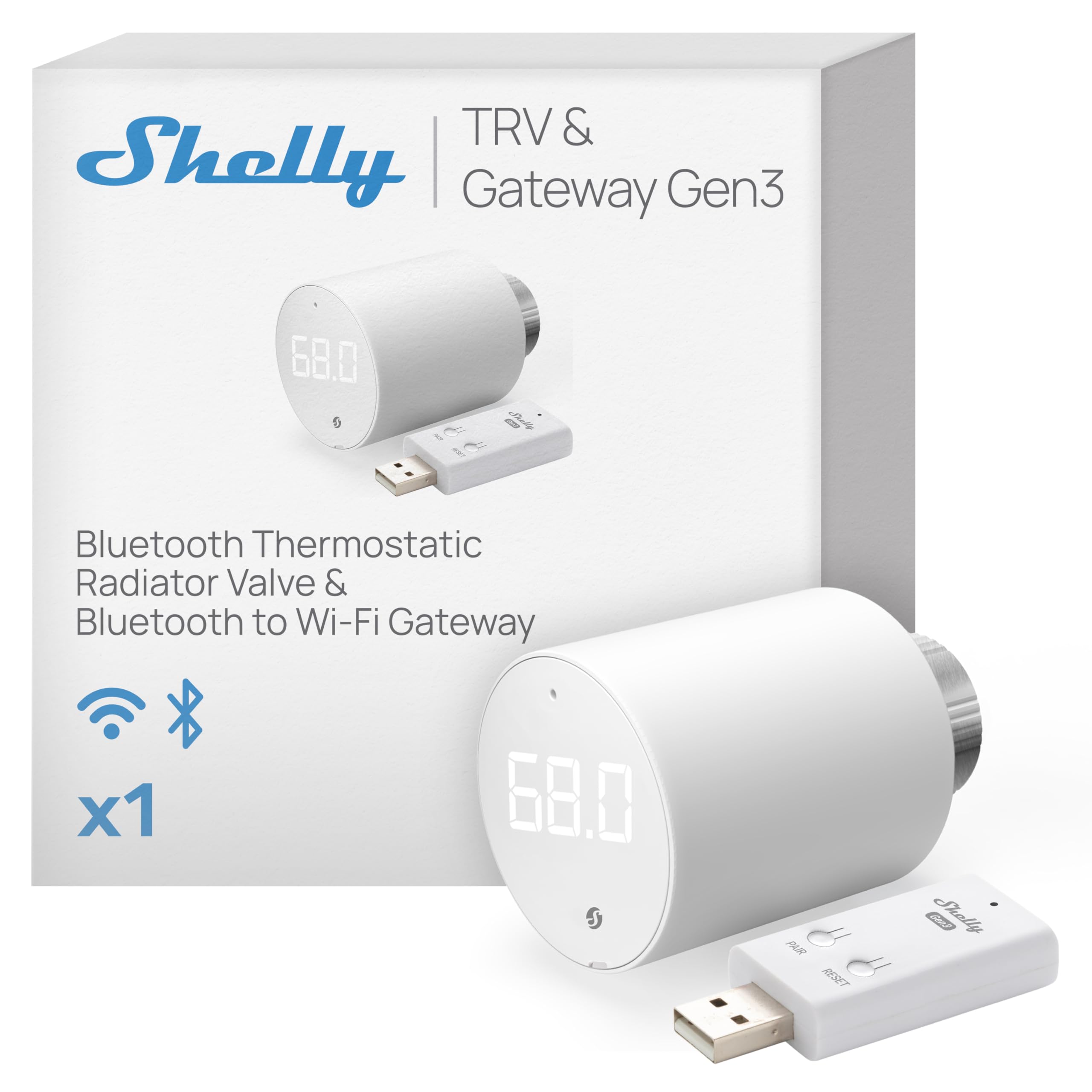
The Shelly Blu TRV & Blu Gateway Gen3 is a two-piece kit that turns an ordinary radiator into a schedule-driven, app-controlled heating zone. The valve replaces the manual head on the radiator; the gateway bridges Bluetooth to the home network so the valve can be reached remotely and by voice assistants. This review covers what the kit does, how the pieces fit together, who it suits, and where the setup asks more of the buyer than a plug-in thermostat would. Buyers who want per-room heating control without running new wiring are the target audience here.
Features and Specifications
Type: Smart thermostatic radiator valve with Bluetooth gateway
Function: Radiator temperature control and home automation
Connectivity: Bluetooth, bridged to the home network by the included gateway
Voice and platform support: Alexa, Google, Home Assistant
Composition: Two-piece kit — one TRV, one Gen3 gateway
Mounting: Replaces the existing manual valve head on the radiator
The kit is built around a simple division of labor. The TRV is the part that touches the radiator: it reads the room, drives the valve pin, and opens or closes the hot water flow to that one radiator. The gateway is the part that touches the network: it collects the Bluetooth signal from the valve and exposes it to the rest of the smart home.
That split matters because Bluetooth alone is short-range and local. A phone can talk to the valve from across a room, but nothing talks to it while the household is away. The gateway is what converts a local-only gadget into something that can be scheduled, automated and voice-controlled from elsewhere.
Build, Capacity and Power
The TRV is a battery-powered device, which is the norm for this category — there is no mains wiring at a radiator, so the valve head has to run on its own cell. Buyers should expect to swap batteries periodically, and the interval depends on how hard the valve works: a radiator that is constantly adjusting will drain faster than one that sits at a steady setpoint. Battery type and life are worth confirming on the product page before ordering, since they are not stated in the product name.
Physical fit is the first real decision. Radiator valves come in more than one thread standard, and a TRV head only works if it matches the valve body underneath. Shelly sells adapters separately for the common non-standard fittings, so buyers with older radiators should check the valve collar before assuming the kit will screw straight on. This is the single most common reason a radiator valve purchase goes wrong.
The gateway’s job is modest but essential: it needs to sit within Bluetooth range of the valve and within Wi-Fi range of the router. A hallway socket between the two usually works. A gateway placed in a distant room, or behind a metal radiator cover, is a weak link.
Platform Support and Automation
Alexa and Google support means voice control and routine integration: the radiator can be folded into morning and evening scenes alongside lights and plugs. Home Assistant support is the more interesting line for tinkerers, because it opens the valve up to local automation — schedules, presence-based rules, window-open detection and dashboards — without depending on a cloud service.
Buyers should think of the kit as two separate purchases in one box. The valve is useful on its own with the phone app for local control. The gateway is what unlocks remote access, voice assistants and any automation that has to run while nobody is home. Skipping the gateway saves money but caps the system at Bluetooth range.
The trade-off of a two-piece design is that it doubles the number of things that can fail or need attention. A valve with a flat battery and a gateway that has lost its network connection look identical from the sofa: the room is cold and nothing in the app explains why.
Maintenance and Day-to-Day Use
Routine care is minimal. The valve head needs fresh batteries, and the radiator itself still needs its usual annual bleed. In summer, when heating is off, the valve pin can seize if it never moves — a periodic manual cycle in the app is cheap insurance.
The bigger maintenance question is seasonal. A smart valve is only as good as the boiler behind it. In a house with a single central thermostat and no zone control, closing one radiator does not save much, because the boiler still fires for the rest of the system. The savings case for per-room valves is strongest where rooms are used unevenly and the boiler can be told to run less.
Trade-off: The kit asks the buyer to verify valve thread compatibility and place a gateway within Bluetooth range, so it is a more involved install than a plug-in thermostat and can disappoint anyone expecting a screw-on-and-forget device.
Check the current price on Amazon
Who It Suits and Who It Does Not
This kit suits the buyer who already runs a smart home and wants radiators to join it. Home Assistant users get the most out of it, because the valve becomes a local entity rather than a cloud accessory. Alexa and Google households get voice control and scenes with less depth but less setup.
It also suits renters and owners who cannot or will not run wiring to a thermostat. Everything here is battery-powered and radio-based, so nothing needs an electrician.
It does not suit the buyer who wants one app and one device to control the whole house heating from scratch. That buyer is better served by a smart thermostat on the boiler, with radiator valves added later as a second phase. Nor does it suit anyone unwilling to check the radiator valve thread before ordering — the wrong fitting turns an afternoon project into a returns process.
FAQ
-
What is the Shelly Blu TRV & Blu Gateway Gen3?
It is a two-piece kit: a Bluetooth thermostatic radiator valve that replaces the manual head on a radiator, plus a Gen3 gateway that connects the valve to the home network so it can be controlled remotely and by voice assistants. -
Do I need the gateway, or can I use the valve alone?
The valve works on its own over Bluetooth with a phone nearby. The gateway is what enables remote access, Alexa and Google control, and automations that run while nobody is home. -
Does it work with Alexa and Google Home?
Yes. The product name lists compatibility with Alexa, Google and Home Assistant, so voice control and routine integration are part of the package. -
Is Home Assistant support native?
Home Assistant is named as a supported platform, which makes the kit attractive to buyers running a local smart home hub. Setup details and the exact integration path are worth confirming on the product page before ordering. -
Will it fit an existing radiator valve?
Only if the thread matches. Radiator valves use more than one standard, and adapters for non-standard fittings are sold separately. The valve collar should be checked before purchase. -
Does it need mains wiring?
No. The valve head is battery-powered and the gateway plugs into a normal socket, so no electrician is required. -
Can it save money on heating bills?
It can, but mostly in homes where rooms are heated unevenly. In a house with one central thermostat and no zone control, closing a single radiator does little on its own. -
How often do the batteries need changing?
That depends on how actively the valve adjusts. A radiator held at a steady setpoint lasts longer than one constantly reacting to schedule changes. Battery type and expected life are listed on the product page. -
Can several valves be used in one home?
Yes — the point of a gateway-based system is managing multiple rooms. Each radiator needs its own valve, and each valve needs to be within range of a gateway. -
What happens if the internet goes down?
Bluetooth control from a phone in the same room should still work. Remote access and cloud-dependent automations will not, which is why local platform support matters to buyers who want resilience.
Bottom Line
The Shelly Blu TRV & Blu Gateway Gen3 is the right buy for a smart-home household that wants radiators controlled room by room without new wiring, and it is at its best for Home Assistant users who value local control. Buyers should confirm the radiator valve thread and plan the gateway’s position before ordering — do those two checks and the kit does its job quietly.