Why there are Amazon links here: Brave Review is paid a commission for qualifying Amazon purchases made through the links below. Your price does not change, and using our links is entirely optional. How this works
Best Smart Thermostat for a House with Underfloor Heating Upstairs
Upstairs underfloor heating behaves differently from a radiator circuit: the floor slab holds warmth long after the heat source stops, so the thermostat has to read the floor, not just the air. This guide covers five controllers that suit that job, from dedicated floor-sensor units to mainstream smart thermostats that can be paired with a floor probe. It is written for three kinds of buyer: the renovator wiring a new upstairs zone, the homeowner replacing a failed floor controller, and the smart-home builder who wants app and voice control across the whole house. The overview below puts the key differences side by side so a decision can be made in under a minute.
The Picks at a Glance
| Product | Key Spec | Best Use | Price Tier |
|---|---|---|---|
| 6iE Smart WiFi Thermostat for Underfloor Heating | Ultra-thin touchscreen, SmartGeo | Sleek wall-mounted upgrade for a single floor zone | Mid |
| Honeywell Home RTH9585WF1004 | 7-day programmable, color touchscreen | Whole-house smart control with a familiar brand | Mid |
| Sensi Smart Thermostat ST55 | DIY Wi-Fi, Energy Star | Budget-friendly straightforward scheduling | Budget |
| ecobee Smart Thermostat Enhanced | Siri, Alexa, Google Assistant | Voice-first smart homes | Premium |
| Programmable Thermostat for Radiant Underfloor Heating | Dual air and floor sensing, built-in GFCI | Direct replacement for an electric floor mat controller | Budget |
1. 6iE Smart WiFi Thermostat for Underfloor Heating

Type: Underfloor heating thermostat
Control: Smartphone touchscreen and app
Connectivity: Wi-Fi
Standout feature: SmartGeo technology
Design: Ultra-thin wall profile
The 6iE is built specifically for underfloor heating rather than adapted from a radiator thermostat, and that focus shows in the app’s scheduling and the geo-aware SmartGeo feature, which adjusts heating based on occupancy patterns. The ultra-thin wall plate and touchscreen suit a hallway or landing where the unit stays visible. App control means the upstairs zone can be managed without walking to the wall panel.
This pick suits the homeowner who wants a clean, modern faceplate and app-based control for a single upstairs floor zone. It earns its place as the most purpose-built option here. The caution is that a small-brand unit means support and firmware updates are less predictable than with a major manufacturer, so buyers should confirm the wiring and floor-sensor compatibility before ordering.
Trade-off: A niche brand offers a tailored floor-heating feature set but a thinner support and update track record than the big names.
2. Honeywell Home RTH9585WF1004 Wi-Fi Smart Color Thermostat

Type: Wi-Fi smart thermostat
Programming: 7-day programmable
Display: Color touchscreen
Certification: Energy Star
Voice control: Alexa ready
Finish: Gray
Honeywell’s RTH9585WF is a mainstream whole-house thermostat with a color touchscreen and a seven-day program that lets each day run its own schedule — useful when upstairs rooms are used at different times. Energy Star certification signals efficient default behavior, and Alexa readiness adds voice control for households already using an Echo. The familiar Honeywell ecosystem means wide installer familiarity.
This pick suits the buyer who wants one trusted thermostat brand across the house and values installer familiarity over floor-specific features. It is the safe, well-supported choice. The caution is that it is designed around air-temperature sensing, so an electric floor zone will typically need a separate floor sensor or a relay to protect the slab from overshooting.
Trade-off: Strong brand support and a rich display come at a mid-tier price, and floor-level sensing is not its native job.
3. Sensi Smart Thermostat ST55
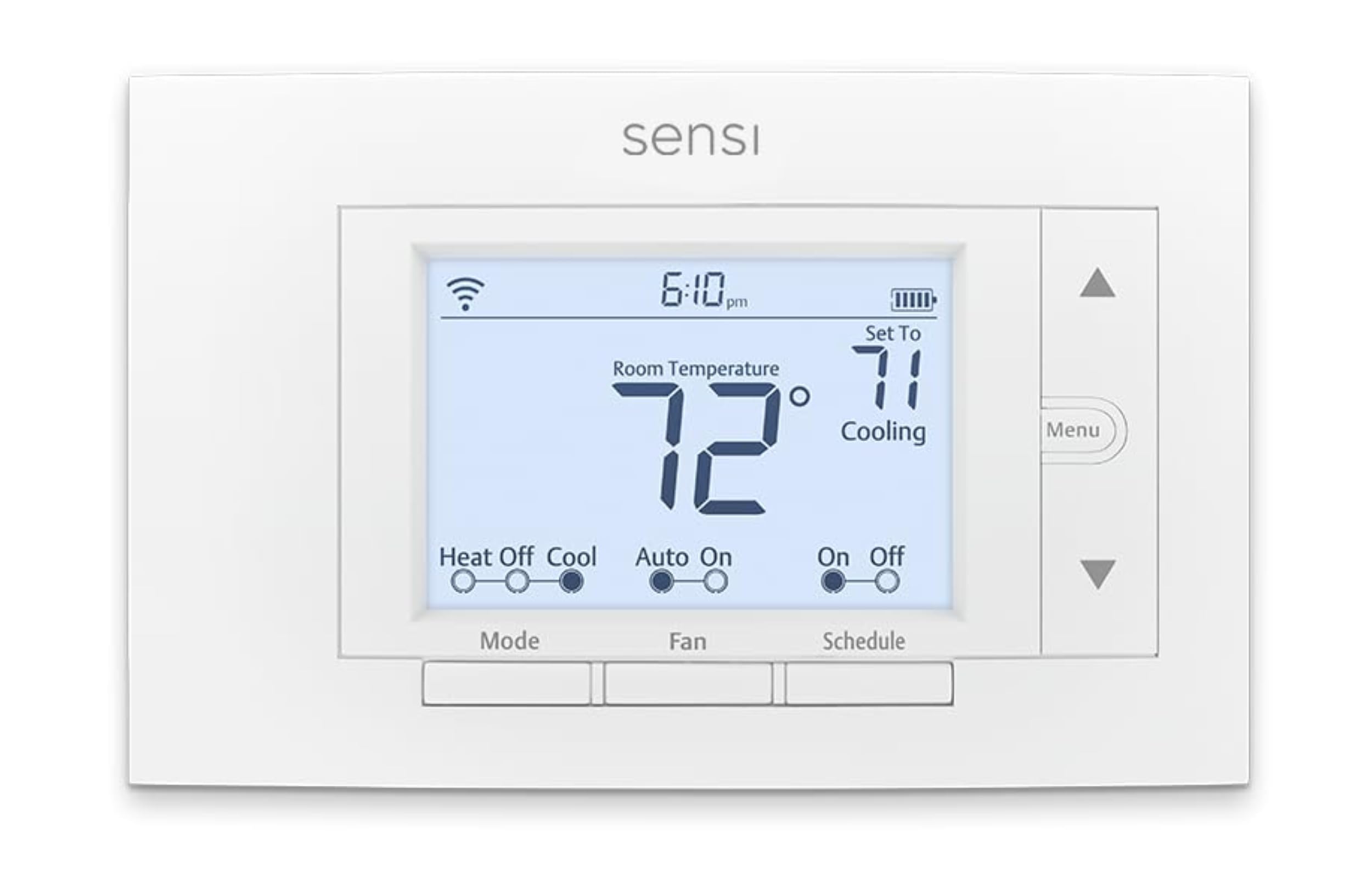
Type: Wi-Fi smart thermostat
Installation: DIY
Voice control: Alexa
Certification: Energy Star
Model: ST55
The Sensi ST55 is the value pick: a straightforward Wi-Fi thermostat with DIY installation, Alexa support, and Energy Star certification. It focuses on the essentials — app scheduling, remote adjustment, and a clean wall unit — without the extra sensors or color displays of pricier models. For a secondary upstairs zone that only needs reliable scheduling, that simplicity is a feature.
This pick suits the budget-conscious buyer adding smart control to an upstairs floor zone without overspending. It earns its place as the lowest-cost entry to app-based scheduling here. The caution is that the ST55 is a general-purpose air thermostat, so a floor sensor is not part of the package; buyers with electric mats should plan for a separate probe or controller.
Trade-off: The lowest price here buys reliable basics but no floor-sensing hardware and a plainer interface.
4. ecobee Smart Thermostat Enhanced

Type: Programmable Wi-Fi smart thermostat
Voice assistants: Siri, Alexa, Google Assistant
Certification: Energy Star
Ecosystem: Smart home
The ecobee Enhanced is the premium, ecosystem-first choice, working with all three major voice assistants and carrying Energy Star certification. Its programmable Wi-Fi scheduling and smart-home integration make it the natural hub for a house that already runs on voice commands and routines. The build and app polish reflect its higher price tier.
This pick suits the smart-home builder who wants one thermostat to talk to everything else in the house. It earns its place as the most connected option in the roundup. The caution is that, like the other mainstream units, its native sensing is air-based, and the premium price is hard to justify for a zone that only needs basic scheduling.
Trade-off: Top-tier ecosystem support and polish cost more, and floor-sensor control still needs extra hardware.
5. Programmable Thermostat for Radiant Underfloor Heating

Type: Radiant underfloor heating controller
Sensing: Dual air and floor sensor
Voltage: AC 120/240V with self-adaption
Safety: Built-in Class A GFCI
Power: 3600W
This is the only unit here built from the ground up as a floor-heating controller, and it shows: dual air-and-floor sensing reads the slab directly, self-adapting voltage handles either 120V or 240V supply, and a built-in Class A GFCI adds ground-fault protection for the mat circuit. At 3600W it is sized for a serious electric floor zone. For a straight replacement of a failed floor controller, it is the closest match to the original job.
This pick suits the renovator or DIYer replacing an electric floor mat controller who needs floor sensing and GFCI protection in one box. It earns its place as the most technically appropriate unit for electric underfloor heating. The caution is that it is a controller rather than a full smart-home hub, so app and voice features are limited compared with the mainstream thermostats above.
Trade-off: Excellent floor-specific hardware and safety features, but a narrower smart-home feature set.
Before You Buy
- Sensing type: Electric floor systems need a floor sensor to avoid overheating the slab; air-only thermostats require a separate probe or controller.
- Voltage: Confirm the supply is 120V or 240V and that the unit matches; the dedicated floor controller here self-adapts.
- Safety: A built-in GFCI is strongly preferred on electric mat circuits.
- Power rating: Match the thermostat’s wattage rating to the floor zone’s load.
- Compatibility: Check wiring (line voltage versus low voltage) before ordering, especially when swapping brands.
- Smart features: Decide whether app, geofencing, and voice control matter, or whether simple scheduling is enough.
- Brand support: Mainstream brands offer longer update and installer support than niche units.
Frequently Asked Questions
-
Can a regular smart thermostat control underfloor heating? Only with the right wiring and, for electric mats, a floor sensor or relay; line-voltage floor systems need a compatible controller.
-
Why is floor sensing important upstairs? The slab holds heat after the source stops, so floor sensing prevents overshoot and keeps the surface comfortable.
-
Does the dedicated floor controller work with 120V and 240V? Yes — the unit here self-adapts to either supply.
-
Do these thermostats work with Alexa or Google? The Honeywell, Sensi, and ecobee units support voice assistants; the dedicated floor controller is more limited.
-
Is a built-in GFCI necessary? It is strongly recommended for electric floor mats as ground-fault protection.
-
Which pick is best for a whole-house smart setup? The ecobee Enhanced, for its broad voice-assistant support and ecosystem fit.
Bottom Line
For a house with underfloor heating upstairs, the dedicated Programmable Thermostat for Radiant Underfloor Heating is the most technically correct choice for electric floor zones, thanks to dual floor sensing, self-adapting voltage, and built-in GFCI. Buyers who want app and voice control across the whole house should look to the ecobee Enhanced or the Honeywell RTH9585WF instead.
