Why there are Amazon links here: Brave Review is paid a commission for qualifying Amazon purchases made through the links below. Your price does not change, and using our links is entirely optional. How this works
ST19 Dusk to Dawn Bulb Review: Vintage Look, Automatic Outdoor Light
This is a review of the Dusk to Dawn Outdoor Sensor ST19 LED Light Bulb, a 7W vintage-filament bulb with a built-in photocell that switches itself on at dusk and off at dawn. It suits homeowners who want porch or garage lighting that runs without a timer, a smart plug or a phone app. The review covers the specifications, the build, the photocell behavior and the upkeep, so a buyer can decide quickly whether this two-pack fits the fixture already on the wall.
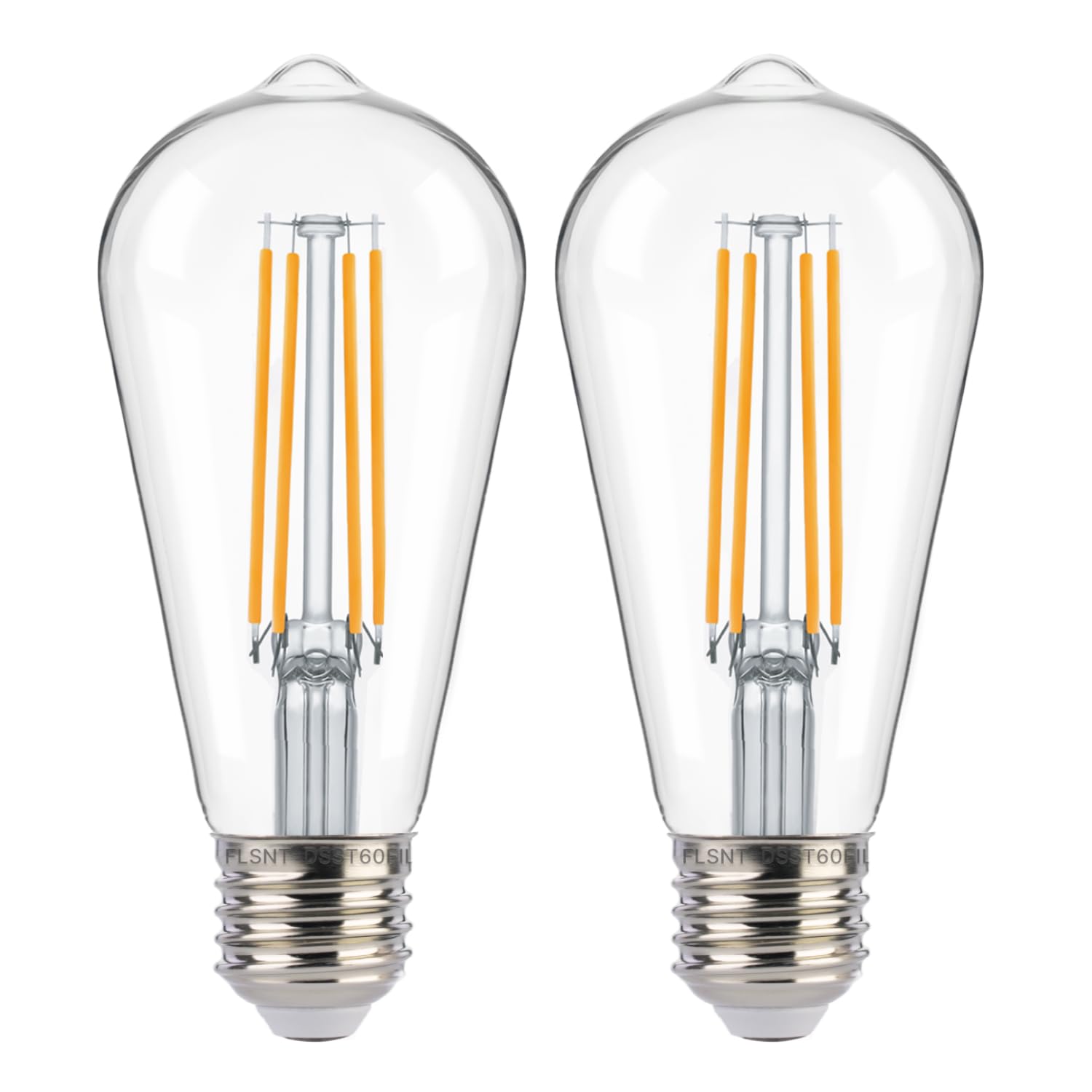
Features and Specifications
Type: Dusk to dawn outdoor sensor LED bulb
Shape: ST19 vintage filament
Wattage: 7W, equivalent to a 60W incandescent
Brightness: 800 lumens
Color Temperature: 2700K soft white
Base: E26 medium screw base
Control: Built-in photocell, automatic on/off
Pack Size: 2 pack
The core of the product is the photocell built into the bulb itself. No separate sensor, no wall switch timer, no hub — the light-sensing circuit sits inside the glass and decides when to fire. That makes it a drop-in upgrade for any standard E26 outdoor fixture that already has power.
The filament styling is the second half of the pitch. An ST19 is a tall, straight-sided bulb with an exposed look, and the vintage filament inside is meant to be seen rather than hidden behind a shade. The 2700K soft white output keeps the glow warm and residential rather than the cold blue-white of a security floodlight.
Build and Vintage Filament Design
The ST19 shape is a deliberate choice, not an accident of manufacturing. It is a long, narrow bulb that reads as decorative, and it is designed to be visible in an open lantern, a wall sconce with no diffuser, or a post light with glass panels. In those fixtures the filament is the point — it gives the entrance a warm, slightly old-fashioned look that a frosted A19 or a plastic globe cannot match.
The trade-off is fragility. Exposed-glass decorative bulbs are more vulnerable to a stray ball, a ladder, or a hard knock than a shrouded bulb, and the filament is the part most likely to fail first. In a fixture that is protected by a cage or a deep housing, that risk drops considerably. In a wide-open sconce next to a driveway, it is worth thinking about.
The E26 base is the standard medium screw base found on the overwhelming majority of US outdoor fixtures, so fit is rarely the problem. The limitation is physical size: an ST19 is noticeably longer than a conventional bulb, and a shallow or tightly enclosed fixture may not close over it. Buyers should measure the fixture’s interior before ordering, especially on older lanterns with a small glass cage.
Power, Output and the Photocell
At 7W drawing against a 60W incandescent equivalent, the bulb is squarely in the energy-saving category without being dim. The 800-lumen output is roughly what a buyer expects from a 60W replacement, which is enough to light a doorway, a porch step or a small garage entry — but not enough to flood a large driveway or a wide backyard.
That brightness ceiling is the honest limit of this product. It is an accent and safety light, not a security light. A buyer who wants to illuminate a 30-foot stretch of pavement needs a proper floodlight or a pair of higher-output fixtures, and this bulb will disappoint in that role.
The photocell is the feature that justifies the price premium over a plain filament bulb. It reads ambient light and switches the bulb on when the level drops at dusk, then off again when daylight returns. That behavior is what makes it useful for a porch light that would otherwise be left burning all day or forgotten at night.
There are practical caveats to any built-in sensor. The photocell needs a reasonably unobstructed view of the sky, so a fixture tucked under a deep overhang or behind dense shrubbery may switch late or switch early. The bulb also has no manual override beyond the wall switch, so a buyer who wants the light on during a dark storm or off for a movie night on the patio is limited to cutting power at the switch. And like any dusk to dawn bulb, it will cycle on and off if it is placed where it can see its own light — a common problem with reflective surfaces nearby.
Maintenance and Longevity
Maintenance on this bulb is close to zero by design. There is no app to configure, no battery to replace, no schedule to reset after a power outage. The photocell resets itself with the daylight cycle, which is the main reason buyers choose this category over a smart bulb or a plug-in timer.
The realistic upkeep is occasional cleaning. Outdoor glass collects dust, pollen and spider webs, and a dirty lens cuts output and can confuse the sensor. A wipe-down once or twice a season keeps the light performing as intended. The bulb is also not rated for wet locations in the product name, so it belongs in a fixture that shelters it from direct rain rather than in an exposed socket.
Longevity is the one thing no buyer can judge from the listing. LED filament bulbs generally outlast incandescent by a wide margin, but the photocell is an additional electronic component that can fail before the LEDs do. That is the trade-off of combining two devices in one envelope: fewer parts to install, but a single point of failure.
Trade-off: The built-in photocell and decorative filament make this a convenient, good-looking porch bulb, but the exposed glass and the sensor are both more fragile than a plain enclosed LED, and 800 lumens will not cover a large yard.
Check the current price on Amazon
Who It Suits and Who It Does Not
This two-pack is a strong fit for a homeowner with one or two front-facing fixtures — a porch lantern, a garage sconce, a pair of post lights along a walkway — who wants automatic evening light without adding a smart home device. The vintage filament look is a genuine upgrade for a house with a traditional or farmhouse exterior, and the two-pack covers a matched pair of fixtures in one order.
It is a poor fit for three kinds of buyer. The first wants bright security lighting over a driveway or a large yard; 800 lumens per bulb will not do it. The second has a shallow or fully enclosed fixture where a tall ST19 will not fit. The third wants app control, dimming or scheduling; this bulb offers none of that, and a smart bulb would be the better purchase.
Renters and anyone who wants a reversible upgrade should also note that the bulb is only as automatic as the fixture’s wiring. A switched outlet that gets cut at the wall defeats the photocell, so the light needs constant power to behave as advertised.
FAQ
-
What does "st19 dusk to dawn" mean?
ST19 is the bulb shape — a tall, straight-sided decorative globe — and dusk to dawn means the bulb has a built-in photocell that turns it on at sunset and off at sunrise without a timer or app. -
Does this bulb need a special fixture?
No. It uses a standard E26 medium screw base, the same as most household bulbs. The only fit concern is physical length, since an ST19 is longer than a standard A19. -
Will it work in a fully enclosed fixture?
It can, provided the fixture has room for the taller ST19 shape and the enclosure does not block the sensor’s view of daylight. A deep or opaque housing can delay or prevent switching. -
Can the bulb be used indoors?
It can be screwed into any E26 socket, but the photocell will keep it off during daylight hours. It is designed for outdoor fixtures that need automatic evening light. -
How bright is 800 lumens?
Roughly the output of a traditional 60W bulb. That is enough for a doorway, porch or small garage entry, but not for lighting a large driveway or yard. -
Is 2700K warm or cool?
2700K is on the warm end of the scale — a soft, yellowish white similar to an old incandescent. It reads as cozy and residential rather than crisp or clinical. -
Does it work with a dimmer switch?
The product is not described as dimmable, and photocell bulbs generally are not designed for dimmer circuits. A standard on/off switch is the right control. -
What happens during a power outage?
The photocell resets with ambient light, so the bulb returns to normal dusk to dawn behavior once power is restored. There is no schedule to re-enter. -
How many bulbs come in the pack?
Two. That covers a matched pair of porch or post fixtures in a single order. -
Is it worth it over a plain LED bulb?
For an outdoor fixture that would otherwise be left on or forgotten, yes — the automatic switching is the whole value. For an indoor socket or a fixture on a timer, a plain bulb is cheaper and just as effective.
Bottom Line
The ST19 dusk to dawn bulb is the right purchase for a buyer who wants a warm, vintage-looking porch or post light that handles its own schedule. The 7W draw, 800-lumen output and 2700K soft white hit the sweet spot for residential entry lighting, and the two-pack covers a matched pair of fixtures. Buyers with large areas to light, tight fixtures or a preference for app control should look elsewhere; everyone else can check the price on Amazon and be done.
