Why there are Amazon links here: Brave Review is paid a commission for qualifying Amazon purchases made through the links below. Your price does not change, and using our links is entirely optional. How this works
Best Smoke Alarm for a Studio Flat With One Room
A studio flat with one room needs one thing from a smoke alarm: coverage that reaches every corner without turning the kitchen into a nuisance-alarm factory. This guide compares five alarms that suit small, single-room living — battery-only models for renters, hardwired units for owners, and a combo detector for anyone who wants carbon monoxide cover in the same device. Renters who cannot touch the wiring, owners replacing an old hardwired unit, and safety-first buyers who want the most coverage from a single ceiling point all have a pick here. The overview table below shows the differences at a glance.
The Picks at a Glance
| Product | Key Spec | Best Use | Price Tier |
|---|---|---|---|
| First Alert SMI100 Battery Smoke Alarm | Battery-powered, 1-pack | Simple renter install | Budget |
| X-Sense SD2J0AX Photoelectric Alarm | 10-year sealed battery, UL 217 | Set-and-forget coverage | Mid-range |
| First Alert SMI100-AC Hardwire Alarm | Hardwired with 9V backup | Replacing an existing wired unit | Mid-range |
| SITERWELL Interconnected Hardwired Alarm | Hardwired, 9V backup, interconnect | Whole-flat wiring setups | Mid-range |
| Heiman Smoke & CO Combo Detector | Photoelectric smoke plus CO, 10-year battery | Dual-threat safety in one unit | Premium |
1. First Alert SMI100 Battery Smoke Alarm
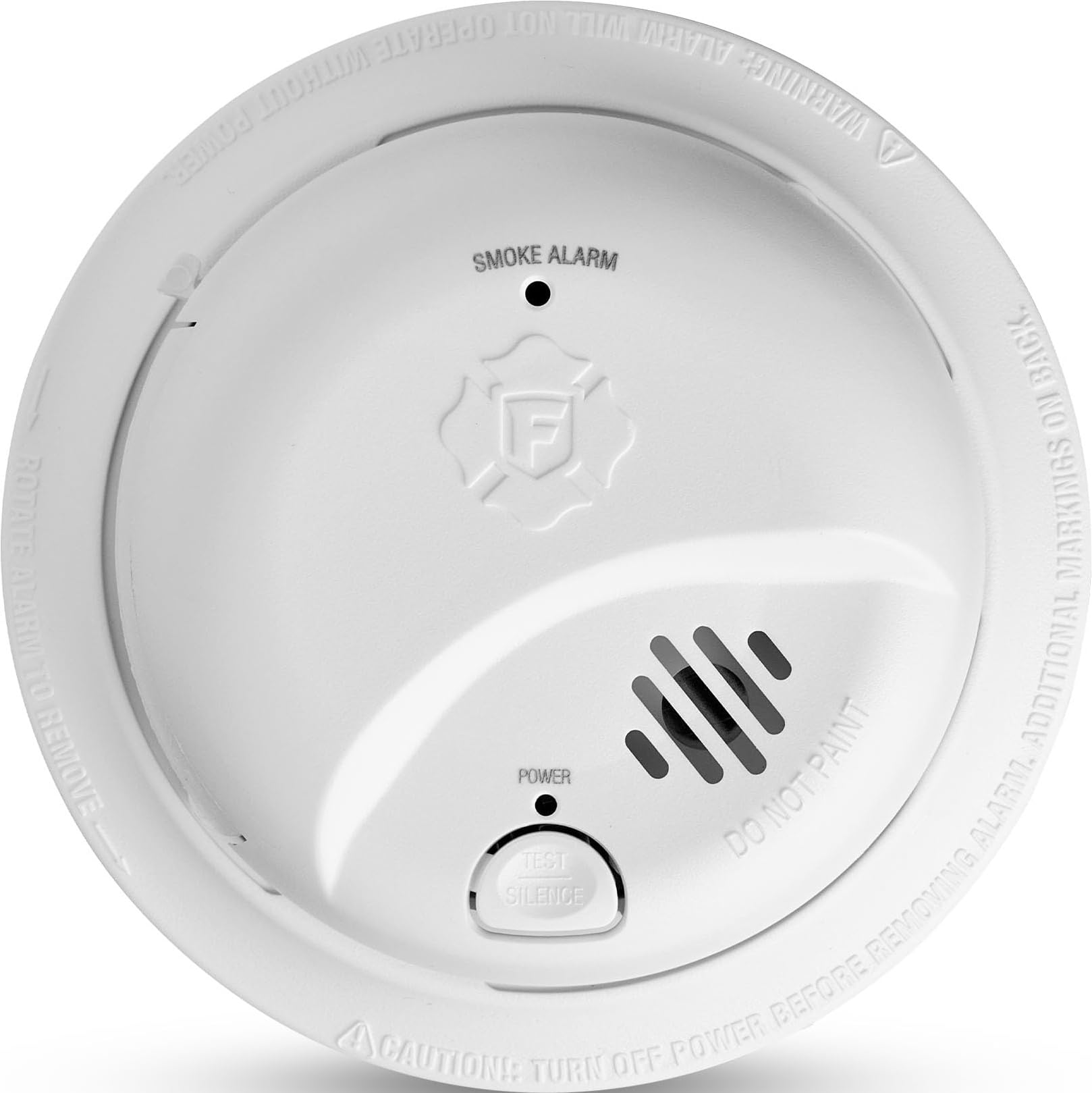
Type: Battery smoke alarm
Pack Size: 1-pack
Power Source: Battery
Brand: First Alert
Best For: Renters and quick replacements
SMI100, 1-Pack First Alert Battery Smoke Alarm
This is the straightforward choice for a studio renter who wants an alarm on the ceiling without calling an electrician. The unit runs on battery power alone, so installation means mounting the bracket and twisting the alarm into place — no wiring, no breaker work, no landlord permission for electrical changes. First Alert is a familiar name in household safety, and the single-pack format suits a one-room flat where a single alarm covers the whole living space.
The pick earns its place on simplicity. Buyers who move often can take it down and reinstall it in the next flat, and there is nothing to program or pair. The caution is the battery: an alarm that runs on replaceable cells needs a reminder to swap them, and a studio dweller who forgets leaves the room unprotected.
Trade-off: Battery-only operation means the alarm is only as reliable as the owner’s memory for battery changes.
2. X-Sense SD2J0AX Photoelectric Smoke Alarm

Type: Photoelectric smoke alarm
Power Source: 10-year sealed battery
Certification: UL 217
Features: One-button hush and self-test
Installation: No-wire
Pack Size: 1-pack
Photoelectric sensing is the reason this alarm suits a studio where the kitchen sits a few feet from the bed. Photoelectric units respond to smoldering, smoky fires and are generally less prone to tripping on cooking fumes than ionization types, and the one-button hush lets the occupant silence a nuisance alarm without pulling the unit down. The 10-year sealed battery removes the annual battery swap entirely, and the no-wire install keeps it renter-friendly. UL 217 certification is stated on the label, so the safety standard is covered.
This is the pick for buyers who want to mount an alarm once and forget it. The sealed battery is the catch: when the ten years run out, the whole unit is replaced rather than refilled, so the long-term cost sits in the device rather than in cheap batteries.
Trade-off: The sealed power cell cannot be swapped, so end-of-life means buying a new alarm rather than a fresh battery.
3. First Alert SMI100-AC Hardwire Smoke Alarm
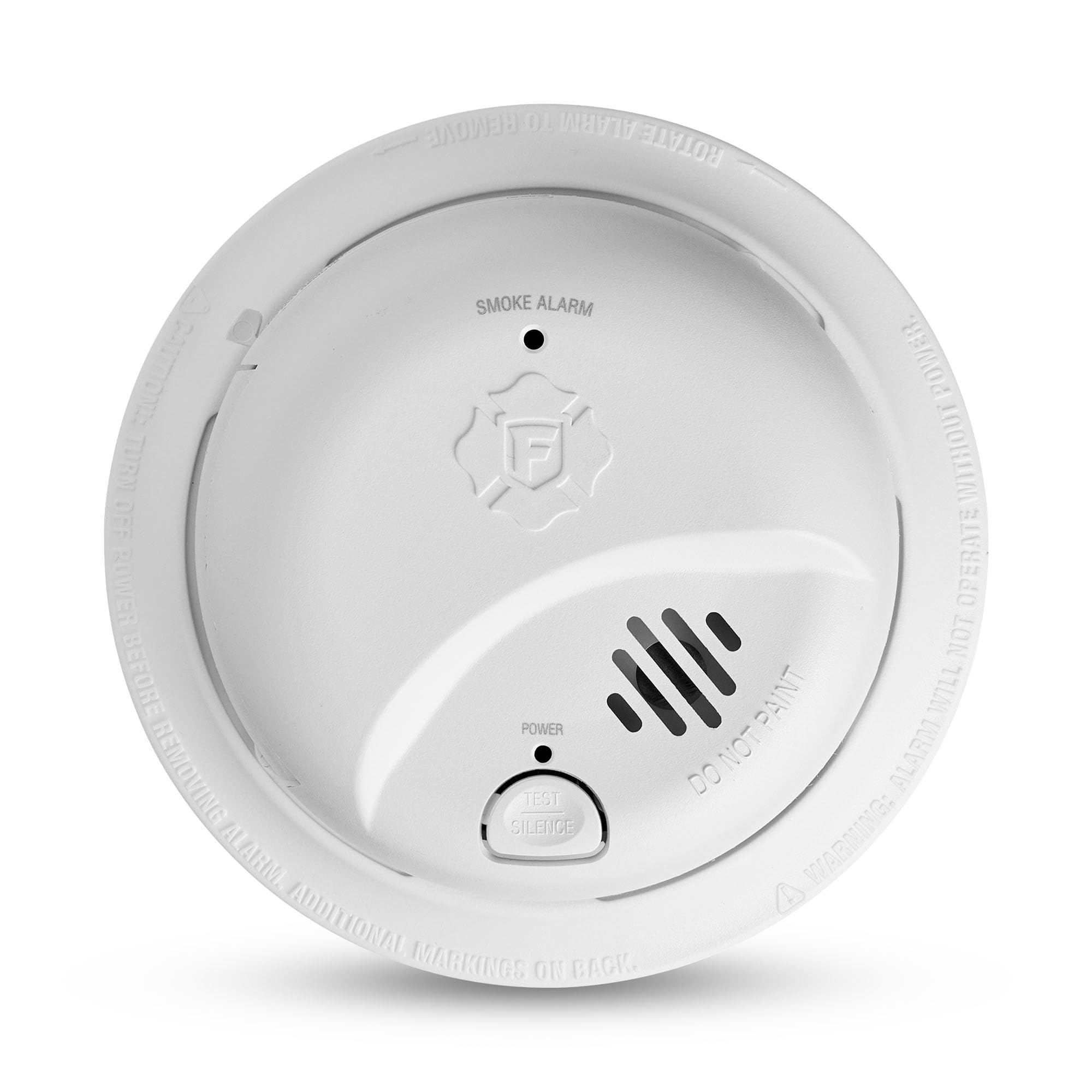
Type: Hardwired smoke alarm
Power Source: Hardwired with 9V battery backup
Brand: First Alert
Pack Size: 1-pack
Best For: Replacing an existing wired alarm
SMI100-AC, 9V Battery Backup, 1-Pack First Alert Hardwire Smoke Alarm
Studio owners who already have a wired alarm point on the ceiling get a direct replacement here. The SMI100-AC draws mains power and keeps a 9V battery as backup, so the alarm keeps working through a power cut — a real concern in a small flat where the alarm is the only warning device. The single-pack suits one-room coverage, and the First Alert badge keeps brand consistency for anyone replacing an old unit of the same make.
It suits owners rather than renters, because hardwiring means tying into the ceiling circuit. The drawback is installation: this is not a twist-and-go unit, and a buyer without basic electrical confidence needs an electrician, which adds cost on top of the alarm itself.
Trade-off: Mains wiring makes this an owner’s product; renters and anyone without electrical comfort should look elsewhere.
4. SITERWELL Interconnected Hardwired Smoke Alarm
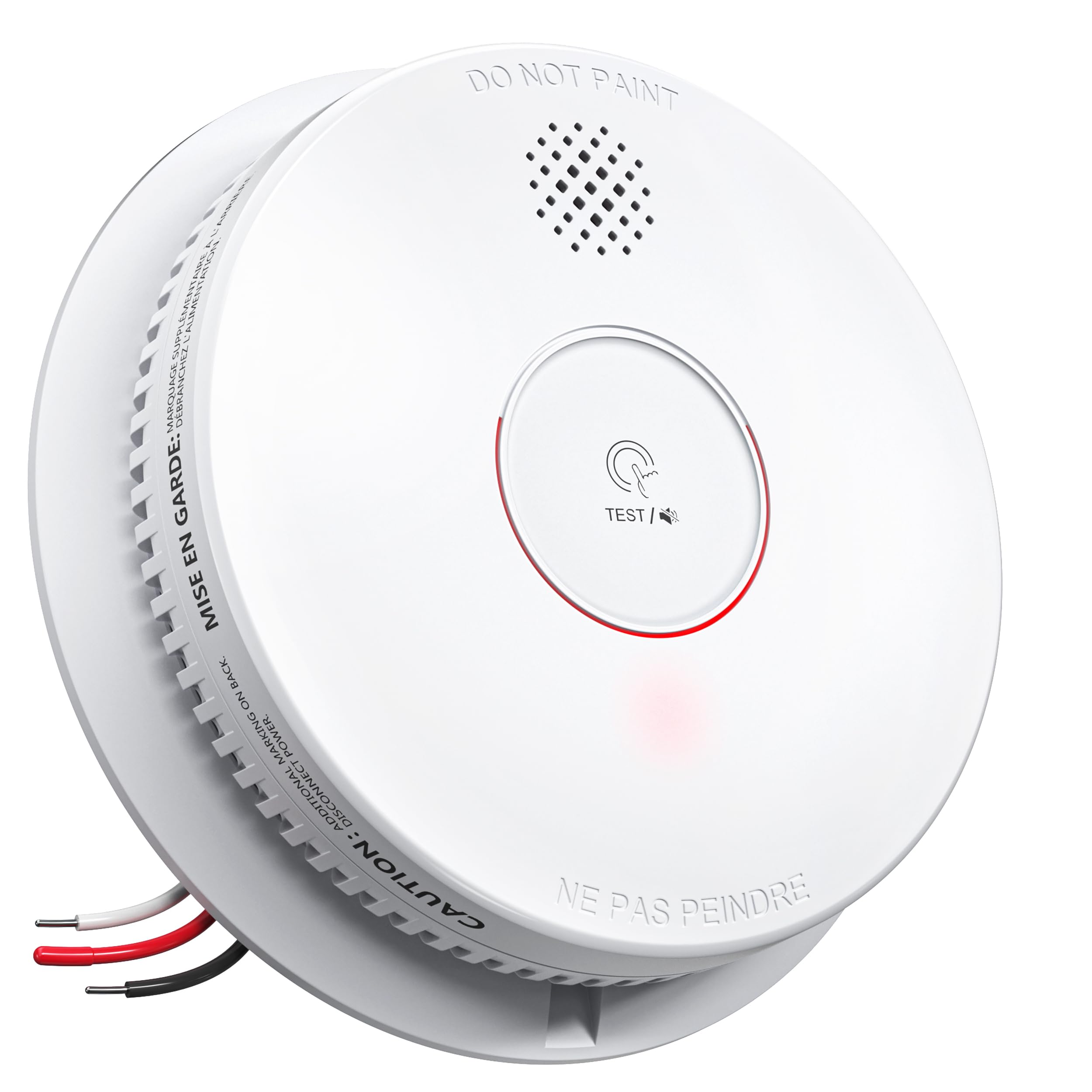
Type: Hardwired photoelectric smoke alarm
Power Source: Hardwired with 9V backup battery
Feature: Interconnectable
Controls: Test and silence button
Pack Size: 1-pack
The interconnect feature is what separates this unit from a plain hardwired alarm. Interconnected alarms talk to each other over the wiring, so when one sounds, they all sound — useful in a studio flat that has a separate hallway or bathroom the occupant cannot see from the main room. Photoelectric sensing keeps nuisance alarms down near a kitchenette, and the test/silence button handles both routine checks and a quick hush. The 9V backup keeps it live during an outage.
This one suits owners who plan to add a second alarm later and want them linked. The caution is that interconnection only pays off with more than one unit and compatible wiring — in a true single-alarm setup, part of what the buyer pays for goes unused.
Trade-off: The interconnect value depends on a multi-alarm plan; a one-alarm flat pays for a feature it never uses.
5. Heiman Smoke and Carbon Monoxide Combo Detector
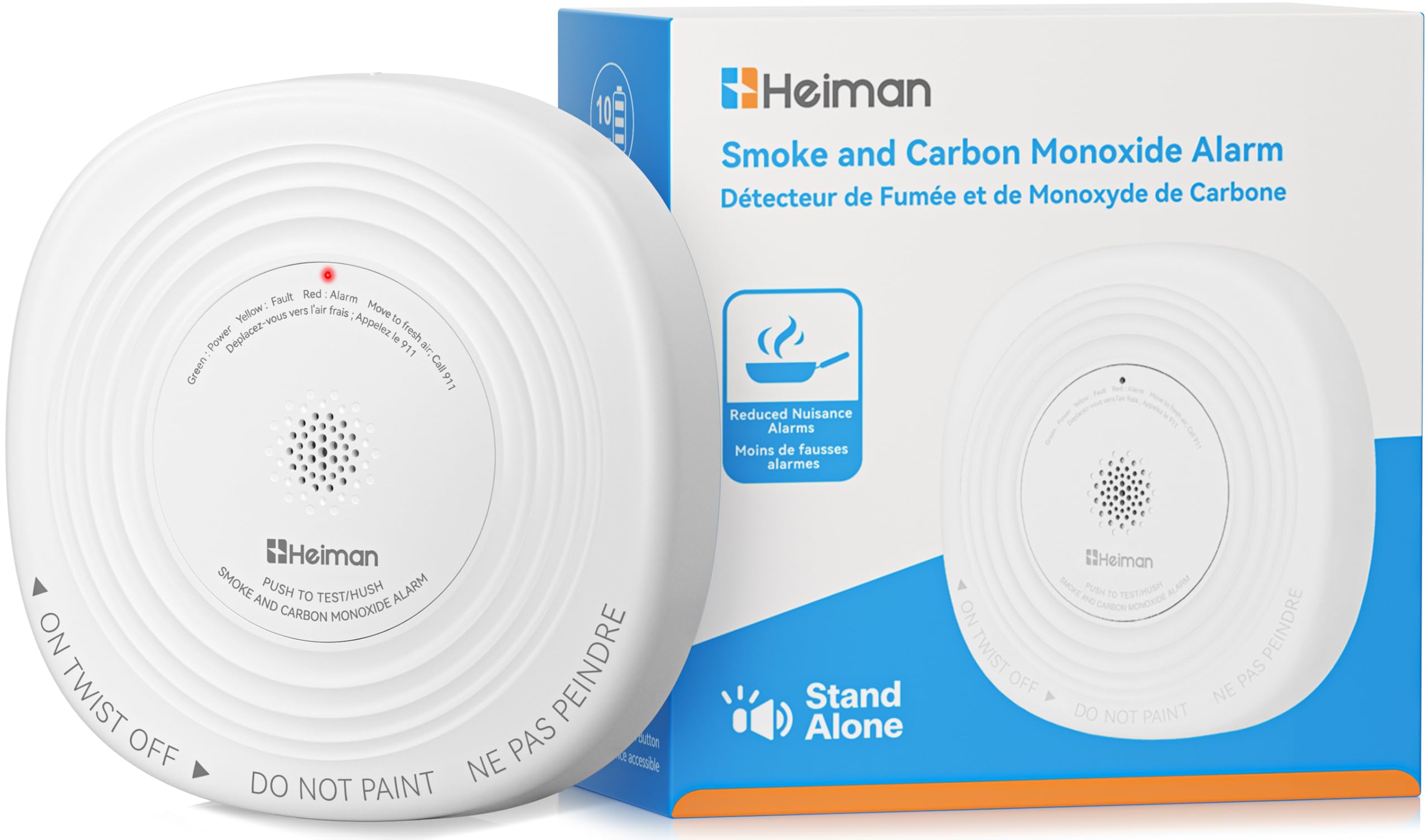
Type: Photoelectric smoke and CO combo detector
Certification: UL 217 and UL 2034
Alarm Volume: 85 dB
Power Source: 10-year sealed battery
Best For: Combined fire and carbon monoxide cover
A studio flat with a gas hob or a fuel-burning heater has two hazards to watch, and this unit covers both from one ceiling point. It pairs photoelectric smoke sensing with carbon monoxide detection, carries both UL 217 and UL 2034 certification, and sounds an 85 dB alarm — loud enough to wake a sleeper in a single room. The 10-year sealed battery means no annual swap, and the combo format saves the buyer from mounting two separate devices in a small space.
This is the pick for safety-first buyers who want maximum coverage per square foot of ceiling. The trade-off is price and complexity: a combo detector costs more than a smoke-only alarm, and the sealed battery means the whole unit retires at end of life rather than taking a fresh cell.
Trade-off: Dual sensing and sealed power push the price up; buyers without a CO source may not need the second sensor.
Before You Buy
- Power source: Battery-only alarms suit renters; hardwired units need an existing ceiling circuit and an owner’s permission to fit.
- Sensor type: Photoelectric sensing is the better match for a studio where the kitchen sits close to the sleeping area, as it is less prone to cooking nuisance alarms.
- Coverage: One alarm covers a single-room flat, but a separate hallway or bathroom may justify a second unit or an interconnectable model.
- Certification: Look for UL 217 on smoke alarms and UL 2034 on any carbon monoxide function; both are stated on the product label.
- Battery life: Sealed 10-year batteries remove maintenance but retire the whole unit at end of life; replaceable cells cost less up front and more in upkeep.
- Installation skill: Hardwired models need basic electrical work or an electrician; no-wire models mount with a bracket and a twist.
- Combo vs single: A smoke-and-CO combo saves ceiling space but costs more; a smoke-only alarm is enough where there is no gas or fuel-burning appliance.
Frequently Asked Questions
- How many smoke alarms does a studio flat need? One alarm covers a single open room, but a separate hallway, bathroom or sleeping alcove may warrant a second unit or an interconnected model.
- Is photoelectric or ionization better for a small flat? Photoelectric sensing is generally the better fit near a kitchenette because it is less prone to nuisance alarms from cooking.
- Can a renter install a hardwired alarm? Not usually without the landlord’s consent, since hardwiring ties into the ceiling circuit; battery and no-wire models are the renter-friendly option.
- How long does a sealed 10-year battery last? The sealed cell is rated for the life of the unit, after which the whole alarm is replaced rather than refilled.
- Does a combo detector replace a separate CO alarm? Yes — a unit certified to UL 2034 covers carbon monoxide as well as smoke, so one device handles both hazards.
- Where should the alarm be mounted in a studio? On the ceiling, away from the cooking surface and any dead-air corner, so smoke reaches the sensor before it disperses.
Bottom Line
For most studio flats, the X-Sense SD2J0AX is the best smoke alarm for a studio flat with one room: photoelectric sensing keeps cooking nuisance alarms down, the 10-year sealed battery removes maintenance, and the no-wire install suits renters and owners alike. Buyers replacing an existing wired unit should step up to the First Alert SMI100-AC, and anyone with a gas hob or fuel-burning heater gets the most from the Heiman combo detector.
