Why there are Amazon links here: Brave Review is paid a commission for qualifying Amazon purchases made through the links below. Your price does not change, and using our links is entirely optional. How this works
Best WiFi Extender for a House With a Metal Front Door
A metal front door is a radio shield: it stops the signal from reaching the porch, the entry hall and the rooms behind it, so the front of the house often has the worst WiFi in it. The fix is an extender placed on the safe side of the door, not on the metal. The picks below cover five approaches, from a cheap dual-band unit to a Wi-Fi 6 model built for whole-house duty. Three buyer profiles matter here: a renter who wants a small plug-in for one dead zone, a homeowner who needs the entry and a back room covered, and a large house that needs the biggest reach on offer. The overview table below ranks all five at a glance.
Overview of the Picks
| Product | Key Spec | Best Use | Price Tier |
|---|---|---|---|
| TP-Link AC1200 WiFi Extender (RE315) | 1.2Gbps, up to 1600 sq.ft, 32 devices | Small homes and single dead zones | Budget |
| 2026 WiFi Extender Wi-Fi 6 Signal Booster | Wi-Fi 6, up to 18,888 sq.ft, Gigabit port | Big houses and modern routers | Premium |
| 2026 Upgraded WiFi Extender for Home | Up to 18000 sq.ft, 15X amplifier | Long-range coverage on a budget | Mid-range |
| TP-Link AC1900 WiFi Range Extender (RE550) | Up to 2200 sq.ft, 32 devices, Gigabit port | Mid-size homes with wired devices | Mid-range |
| WiFi Extender Signal Booster for Home (Pure White) | Up to 19999 sq.ft, 125+ devices | Many devices, whole-house spread | Mid-range |
TP-Link AC1200 WiFi Extender Dual Band 5GHz/2.4GHz (RE315)

Speed: 1.2Gbps
Bands: Dual band 5GHz / 2.4GHz
Coverage: Up to 1600 sq.ft
Devices: 32
Mesh: EasyMesh compatible
Ports: One Ethernet port
TP-Link AC1200 WiFi Extender Dual Band 5GHz/2.4GHz (RE315)
The RE315 is the small, cheap answer to a single dead zone, and a metal front door usually creates exactly one. It repeats a dual-band signal at 1.2Gbps and carries 32 devices, which covers phones, a TV and a couple of smart plugs without strain. The single Ethernet port lets a wired device join the extended network. EasyMesh compatibility means it can join a mesh network later if the house gets one.
This pick earns its place as the budget option: a buyer who needs the entry hall and the front room back should start here. It is not the right pick for a large house or a router that already runs at Wi-Fi 6, and the 1600 sq.ft rating means it will not cover a whole floor on its own.
Trade-off: The compact, low-power build limits real-world reach and throughput compared with the larger models here, so it suits one zone rather than a whole house.
2026 WiFi Extender, New Gen Wi-Fi 6 Signal Booster Range up to 18,888 sq.ft

Standard: Wi-Fi 6
Coverage: Up to 18,888 sq.ft
Bands: Dual band
Ports: Gigabit Ethernet
Setup: 1-tap
Also works as: Wireless router, repeater
This is the premium pick and the only Wi-Fi 6 model in the group. Wi-Fi 6 matters behind a metal door because it handles congestion and many devices better than older standards, and the claimed 18,888 sq.ft range is the largest here. The Gigabit Ethernet port keeps wired throughput high when a device is plugged in. One-tap setup keeps installation simple, and the unit can also run as a router or repeater.
It suits a large house with a modern router and a heavy device load, where the entry zone sits far from the main unit. It is not for a buyer on a tight budget or a small apartment where the range is wasted.
Trade-off: The premium price buys Wi-Fi 6 and the biggest coverage claim, but a buyer with an older router and a single small dead zone will not use either.
2026 Upgraded WiFi Extender for Home, Up to 18000Sq.ft Long Range Coverage

Coverage: Up to 18000 sq.ft
Amplifier: 15X signal amplifier
Ports: Ethernet
Compatibility: Works with 99% router
Type: Wireless repeater
This model targets range first: a 15X signal amplifier and a claimed 18000 sq.ft coverage figure put it in the same class as the premium pick for far less money. The Ethernet port adds a wired option, and the broad router compatibility claim means it should pair with most existing setups. It is a straightforward repeater rather than a mesh node.
It suits a buyer who wants long reach across a big floor plan but does not need Wi-Fi 6. It is not for a household that depends on the newest standard or wants a mesh ecosystem.
Trade-off: The range claims are ambitious for the price tier, so real coverage will likely fall short of the headline figure in a house with thick walls or a metal door.
TP-Link AC1900 WiFi Range Extender RE550, Dual-Band Wireless Repeater
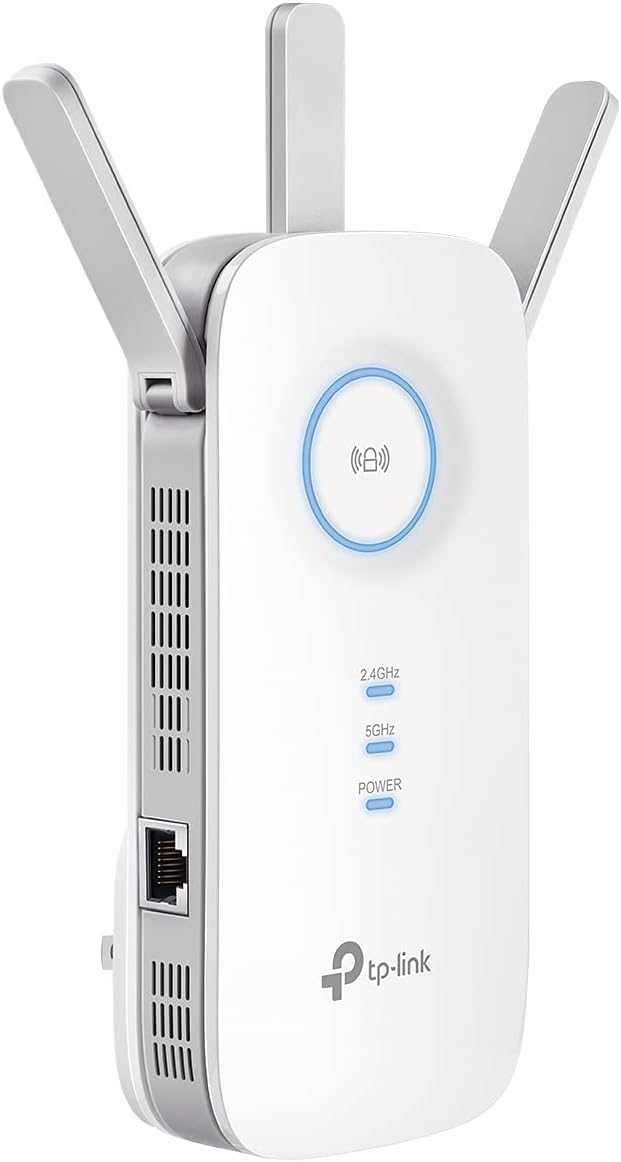
Speed: AC1900
Coverage: Up to 2200 sq.ft
Devices: 32
Ports: Gigabit Ethernet
Mesh: EasyMesh compatible
Setup: App setup
TP-Link AC1900 WiFi Range Extender RE550, Dual-Band Wireless Repeater
The RE550 is the step up from the RE315: faster AC1900 throughput, a Gigabit Ethernet port for wired devices and app-based setup. Coverage is rated to 2200 sq.ft with 32 devices, which fits a mid-size home where the front room and hallway need a lift. EasyMesh compatibility lets it join a mesh network later.
It suits a buyer who wants a known brand, app setup and a wired port without paying premium money. It is not for a very large house, where the coverage rating is too small, or a buyer who specifically wants Wi-Fi 6.
Trade-off: The Gigabit port is only useful if the extender is placed where the backhaul signal is strong, and the coverage rating is modest next to the long-range models here.
WiFi Extender Signal Booster for Home with Ethernet Port, Covers up to 19999sq.ft
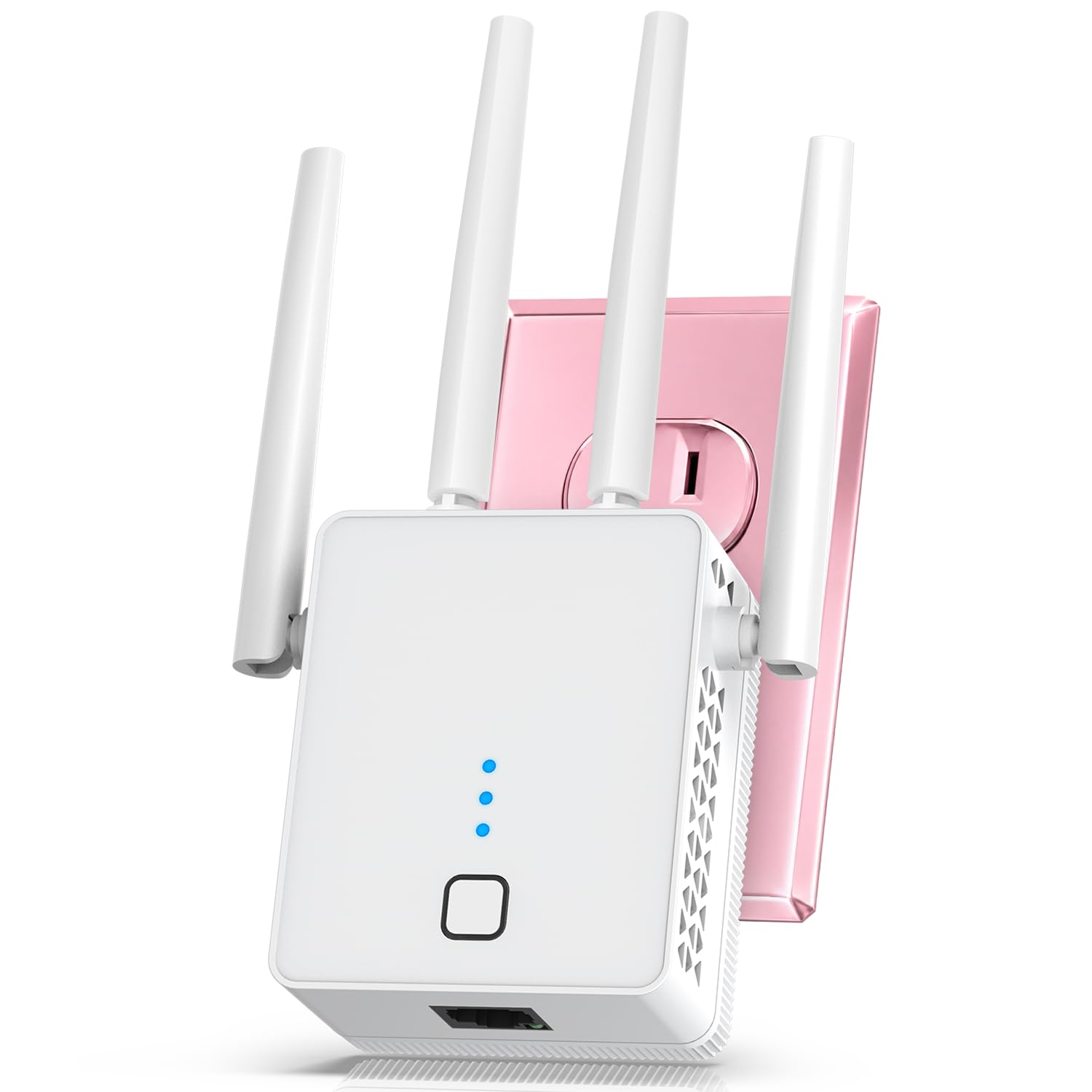
Speed: 1200Mbps
Bands: Dual band 5.8GHz / 2.4GHz
Coverage: Up to 19999 sq.ft
Devices: 125+
Ports: Ethernet
Amplifier: 20X booster
This pick is built for device count: a 125+ device rating and a claimed 19999 sq.ft coverage figure make it the busiest-house option in the group. It runs 1200Mbps dual band on 5.8GHz and 2.4GHz and includes an Ethernet port. The 20X booster claim is the highest amplifier figure here.
It suits a large household with many phones, tablets, cameras and smart devices spread across the house. It is not for a buyer who wants a known brand or Wi-Fi 6, and the headline device count is more than most homes will ever use.
Trade-off: The high device and coverage claims come from a budget-tier unit, so the 1200Mbps speed will be the real bottleneck for heavy streaming or gaming.
Before You Buy
- Placement: The extender must sit on the safe side of the metal door, in a spot where the router’s signal is still strong. Placing it next to the door or on the metal side repeats a weak signal.
- Coverage rating: Treat the sq.ft figure as a best case. A metal door and thick walls shrink real coverage, so buy one step larger than the room count suggests.
- Compatibility: Match the extender to the router’s standard. A Wi-Fi 6 extender only pays off with a Wi-Fi 6 router; older routers pair fine with the dual-band models.
- Ports: A Gigabit Ethernet port is worth having when a TV, console or desktop sits near the dead zone and can be wired to the extender.
- Device count: Count phones, tablets, cameras, TVs and smart plugs. A household with many smart devices needs one of the higher device ratings.
- Mesh: EasyMesh compatibility matters if the house may move to a mesh system later, since the extender can then join it instead of being replaced.
- Setup: App setup and one-tap setup cut installation time; a model without either means configuring through a browser.
Frequently Asked Questions
-
Will a WiFi extender work through a metal front door?
No — metal blocks radio signals, so the extender cannot push WiFi through the door. It works by being placed inside the house on the safe side of the door and covering the entry area from there. -
Where should the extender go in a house with a metal front door?
In a spot between the router and the dead zone where the router’s signal is still usable, such as a hallway or interior wall near the entry. It should not sit against the door or on the metal side. -
How much coverage is needed for a house with a metal front door?
More than the room count suggests. The door and any metal in the walls cut range, so a buyer should pick a model rated well above the home’s actual square footage. -
Does the extender need to match the router brand?
No. The models here are built to work with most routers, and the broad-compatibility claim on the budget long-range pick covers mixed setups. Matching standards matters more than matching brands. -
Is Wi-Fi 6 worth it for a metal-door house?
It helps when many devices compete for signal, which is common in the rooms behind a blocked entry. A buyer with an older router will see less benefit and can save money with a dual-band model. -
Can an extender be wired to a device near the front door?
Yes. The models with an Ethernet port can connect a wired device such as a TV or console, which avoids relying on the extended wireless signal in that spot.
Bottom Line
For most houses with a metal front door, the TP-Link AC1200 WiFi Extender (RE315) is the sensible first buy: cheap, EasyMesh compatible and enough for the entry zone and front room. A large home with a modern router and a heavy device load should step up to the 2026 WiFi Extender Wi-Fi 6 Signal Booster for the biggest coverage claim and Wi-Fi 6 handling. Either way, place the unit on the safe side of the door and buy one size larger than the floor plan suggests.
