Why there are Amazon links here: Brave Review is paid a commission for qualifying Amazon purchases made through the links below. Your price does not change, and using our links is entirely optional. How this works
Best Portable Power Station for a Renter in a Studio Flat
A studio flat leaves little room for a generator, and a rental agreement leaves even less room for wiring one in. The best portable power station for a renter in a studio flat is a plug-in box that sits on a shelf, charges from a wall socket, and moves with the tenant when the lease ends. This shortlist covers five models, from a compact budget unit to a full-size backup that can run a fridge or a workspace. Three buyer profiles matter here: the renter who only wants to keep a laptop and router alive through an outage, the one working from home who needs a desk to stay powered, and the one who wants a real apartment backup without an electrician. The overview table below shows the differences at a glance.
Overview of the Picks
| Product | Key Spec | Best Use | Price Tier |
|---|---|---|---|
| Jackery Explorer 300 | 292Wh, LiFePO4 | Small flats, light backup | Budget |
| BLUETTI Elite 30 V2 | 288Wh, 600W, 10ms UPS | Desk and router protection | Budget |
| EF ECOFLOW Delta 3 Classic | 1024Wh, 1800W AC | Whole-room backup | Mid-range |
| Jackery Explorer 1000 v2 | 1070Wh, 1500W | Fridge and appliance backup | Mid-range |
| 640Wh Portable Power Station | 640Wh, 1200W surge, 8 ports | Ports and value | Entry |
1. Jackery Explorer 300 Portable Power Station, 292Wh
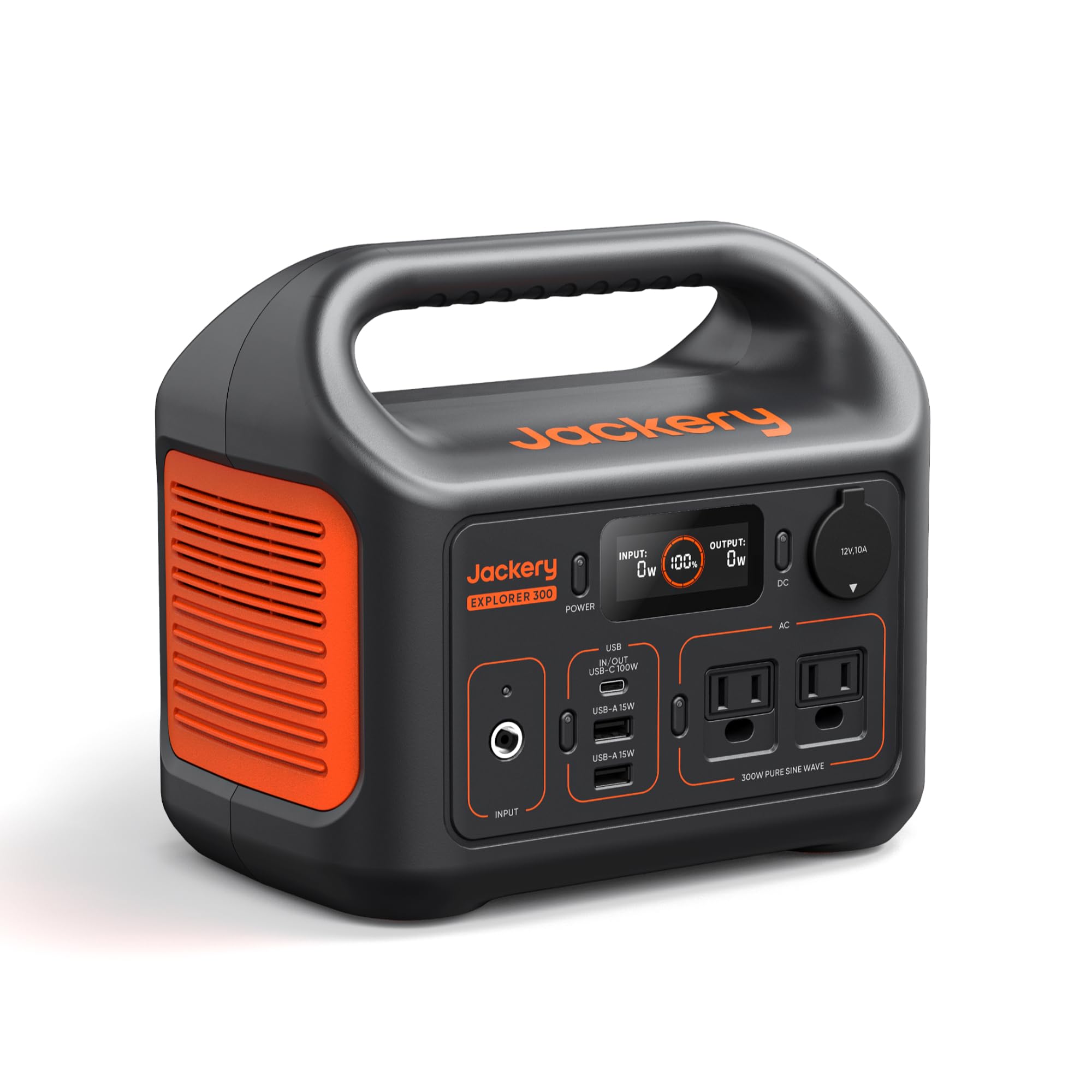
Battery: LiFePO4, 292Wh
Intended use: Outdoors, camping, travel, hunting, blackout backup
Power source: Wall outlet or optional solar panel
Type: Portable power station
Check the current price on Amazon
The Explorer 300 is the smallest unit on this list and the one that fits a studio flat most naturally. Jackery builds it around a LiFePO4 battery, a chemistry chosen for a long service life and stable output rather than raw capacity. At 292Wh it is a phone, laptop, router and lamp machine — enough to ride out a short outage without taking up floor space. The carrying handle and modest footprint mean it can live in a cupboard and come out only when needed. It is the pick for a renter who wants backup power that never becomes furniture.
This model suits the single-occupant studio where the priority is keeping communications and a work laptop alive, not running appliances. It earns its place because it is the cheapest way into a reputable brand without sacrificing battery chemistry. The trade-off is capacity: 292Wh will not run a fridge, a heater or a kettle, so buyers planning to power real appliances need to look further up this list. Solar charging is optional and sold separately, which adds cost for anyone wanting off-grid capability.
2. BLUETTI Elite 30 V2 Portable Power Station, 288Wh, 600W
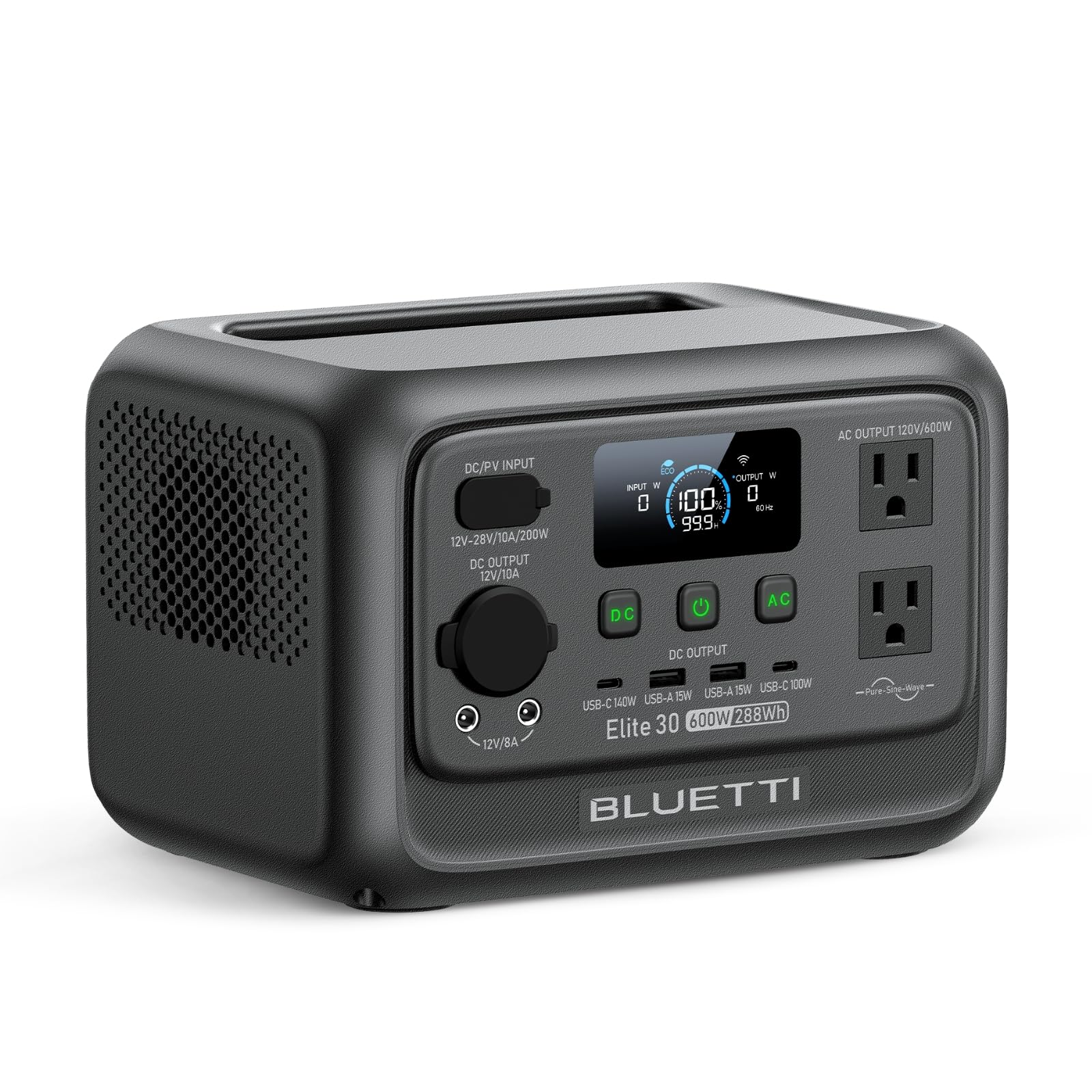
Battery: LFP (LiFePO4), 288Wh
AC output: 600W, 1500W power lifting
UPS switchover: 10ms
Fast charging: 45 minutes to 80%
Intended use: Blackout, camping, outage, road trip
Check the current price on Amazon
The Elite 30 V2 is the same capacity class as the Jackery above but aimed at a different job. Its headline feature is the 10ms UPS switchover, which means it can sit between the wall socket and a desktop setup and take over almost instantly when mains power drops. For a renter running a home office in a studio, that is the difference between a lost afternoon of work and a shrug. The 45-minute charge to 80% also makes it easy to top up before a forecast storm.
It suits the work-from-home renter whose main concern is the desk, the router and the monitor rather than the kitchen. It earns its place as the most protective small unit here. The trade-off is that 288Wh is still a small reserve — a UPS role and long runtime are different things, and this unit protects equipment rather than carrying an apartment through a multi-hour outage.
3. EF ECOFLOW Portable Power Station Delta 3 Classic, 1024Wh, 1800W AC
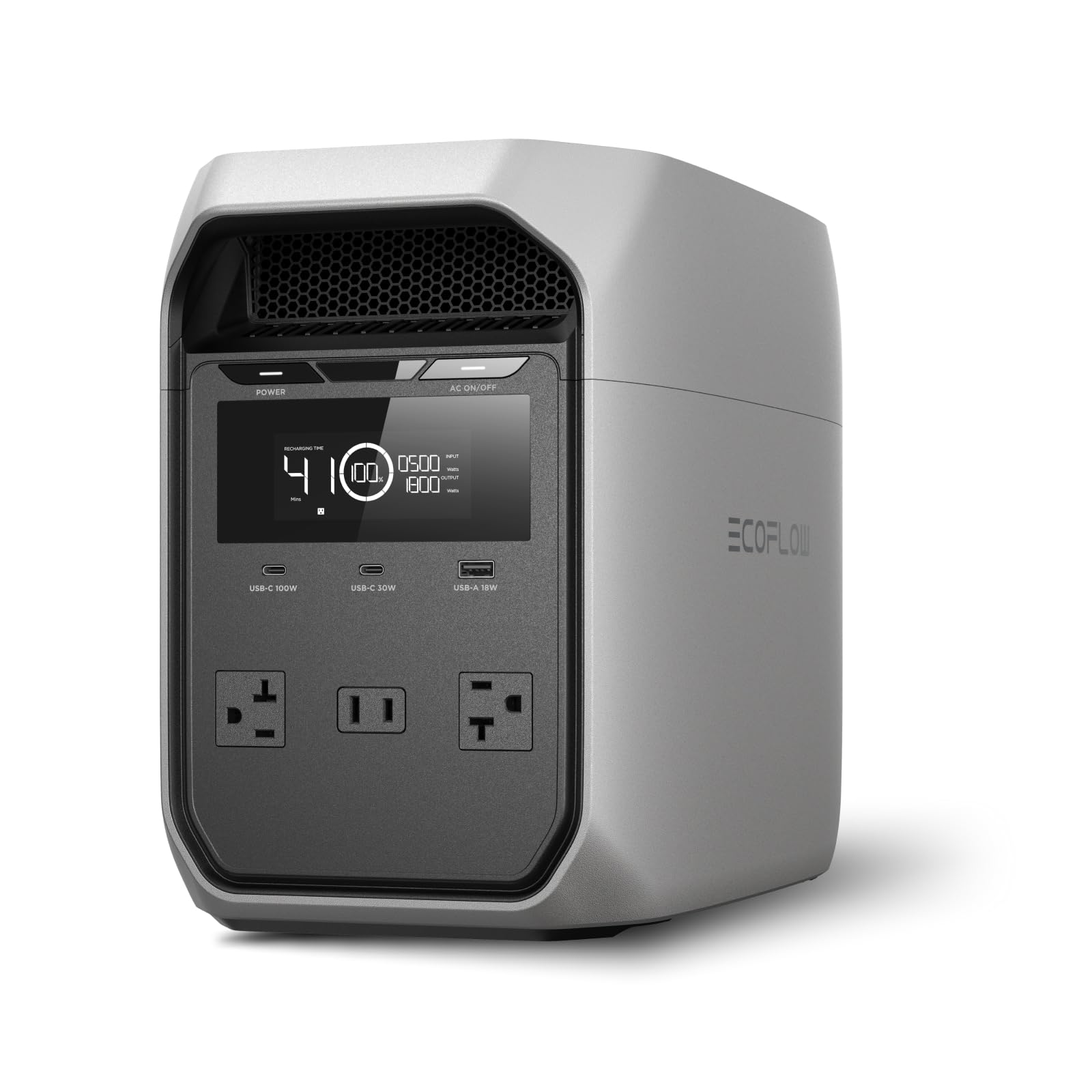
Battery: LiFePO4, 1024Wh
AC output: 1800W, 3600W surge
UPS switchover: 10ms
Fast charging: 1 hour
USB-C output: 100W
Intended use: Home backup, camping, RVs
Check the current price on Amazon
The Delta 3 Classic is the point where a studio flat gets genuine apartment-grade backup. At 1024Wh with 1800W of AC output and a 3600W surge, it can carry a small fridge, a microwave or a workspace through an evening without drama. EcoFlow’s one-hour recharge means it can be refilled during a break in an outage, and the 10ms UPS mode lets it double as permanent protection for a desk. The 100W USB-C port charges a laptop directly without an adapter.
This is the pick for the renter who treats a power station as real insurance rather than a camping accessory. It earns its place on the combination of capacity, surge headroom and fast recharge at a mid-range price. The trade-off is size and weight: a unit in this class is a deliberate piece of furniture in a studio, and it needs a permanent spot near an outlet rather than a cupboard shelf.
4. Jackery Explorer 1000 v2 Portable Power Station, 1070Wh, 1500W

Battery: LiFePO4, 1070Wh
AC output: 1500W
Fast charging: 1 hour
USB-C output: 100W
Intended use: Camping, emergency, RV
Solar input: Optional panel, sold separately
Check the current price on Amazon
The Explorer 1000 v2 is Jackery’s answer to the same brief as the Delta above, and the two sit at the same price point. It offers 1070Wh and 1500W of AC output with a one-hour recharge and a 100W USB-C port, wrapped in the familiar Jackery shell. For a renter who already trusts the brand or wants a simpler control layout, it is a straightforward alternative. It handles a fridge, a router and lighting together for a useful stretch.
It suits the studio tenant who wants one box that covers both a real outage and the occasional weekend away. It earns its place through brand familiarity and a slightly larger reserve than its direct rival. The trade-off is the lower AC output ceiling compared with the EcoFlow, and solar charging again requires a separately purchased panel, so the true cost of off-grid use is higher than the sticker suggests.
5. Portable Power Station 640Wh, 1200W Surge, 8 Ports
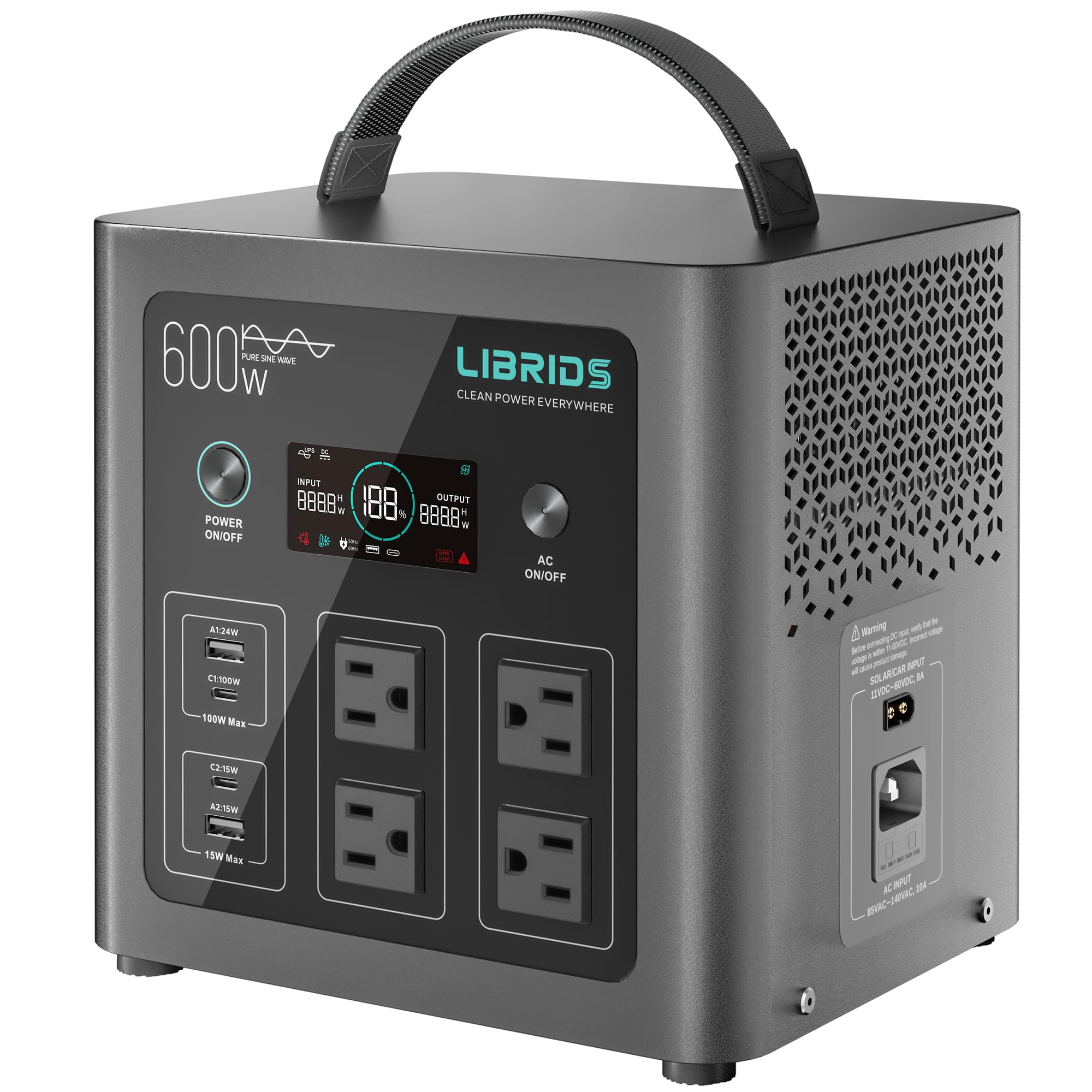
Battery: LiFePO4, 640Wh
AC output: 1200W surge, 4 AC outlets
Total ports: 8
UPS switchover: 10ms
Fast charging: 1.5 hours
Construction: Metal design, pure sine wave output
Intended use: RV camping, home backup, emergency
Check the current price on Amazon
This unit sits between the small and large picks on capacity and undercuts both on price. The 640Wh LiFePO4 battery, eight ports including four AC outlets, 10ms UPS mode and a metal housing make it the most feature-dense option per dollar here. Pure sine wave output matters for anything with a motor or a sensitive power supply, and the metal case is a sensible choice for a unit that may live on a hard floor. A 1.5-hour recharge is quick enough to be practical between outages.
It suits the renter who wants maximum outlets and UPS protection on a tight budget, and who can accept a less established brand name. It earns its place as the value pick of the group. The trade-off is track record: at this price the savings come partly from buying outside the big names, so buyers should weigh the lower cost against long-term support and resale confidence.
Before You Buy
- Capacity: Match watt-hours to the job. A router and laptop need a few hundred; a fridge or microwave needs closer to a thousand.
- Output and surge: Check continuous AC watts against the appliance’s running draw, and surge watts against motor start-up.
- UPS mode: A 10ms switchover protects a desktop and router; units without it are backup only, not uninterruptible.
- Size and weight: A studio has limited floor and shelf space — measure the intended spot before ordering a large unit.
- Recharge speed: Fast charging matters in a real outage, when there may be only a short window of mains power.
- Solar compatibility: Panels are usually sold separately, so factor that into the total cost if off-grid charging is the plan.
- Rental rules: Cordless units need no installation, but check the lease on balcony solar panels and storage of large batteries.
Frequently Asked Questions
-
Can a renter install a portable power station in a studio flat?
Yes. These units plug into a standard wall socket to charge and need no wiring, mounting or landlord permission. -
How much capacity does a studio flat actually need?
A few hundred watt-hours covers phones, a router and a laptop; around a thousand is the entry point for running a fridge or a workspace through an outage. -
What does UPS mode mean on a power station?
It means the unit sits between the wall and the device and takes over within milliseconds of a power cut, so equipment keeps running instead of shutting down. -
Do these units need a solar panel?
No. Every pick here charges from a normal outlet; solar panels are optional extras for off-grid use and are generally sold separately. -
Is LiFePO4 better than other battery types for a flat?
LiFePO4 is chosen for long service life and stable output, which suits a unit that may sit idle for months and then be needed suddenly. -
Can a power station run a heater or kettle?
Only the larger units here come close, and even then runtime is short. Heating appliances are best left to mains power.
Bottom Line
For most renters in a studio flat, the EF ECOFLOW Delta 3 Classic is the pick that balances real backup capability with a one-hour recharge and UPS protection, while the Jackery Explorer 300 remains the sensible entry point for anyone who only needs to keep communications and a laptop alive. Buyers should confirm the capacity matches the appliances they actually plan to run, then check the current price on Amazon before ordering.
