Why there are Amazon links here: Brave Review is paid a commission for qualifying Amazon purchases made through the links below. Your price does not change, and using our links is entirely optional. How this works
DIGITENTemperature Controlled Outlet with Power Cord for Heating and Cooling, Remote Control Plug in Thermostat, Easy to Use, for home Wireless Thermostat Outlet 1800w for Space Heater, Fan, AC: Turn a Space Heater into a Thermostat-Controlled Appliance
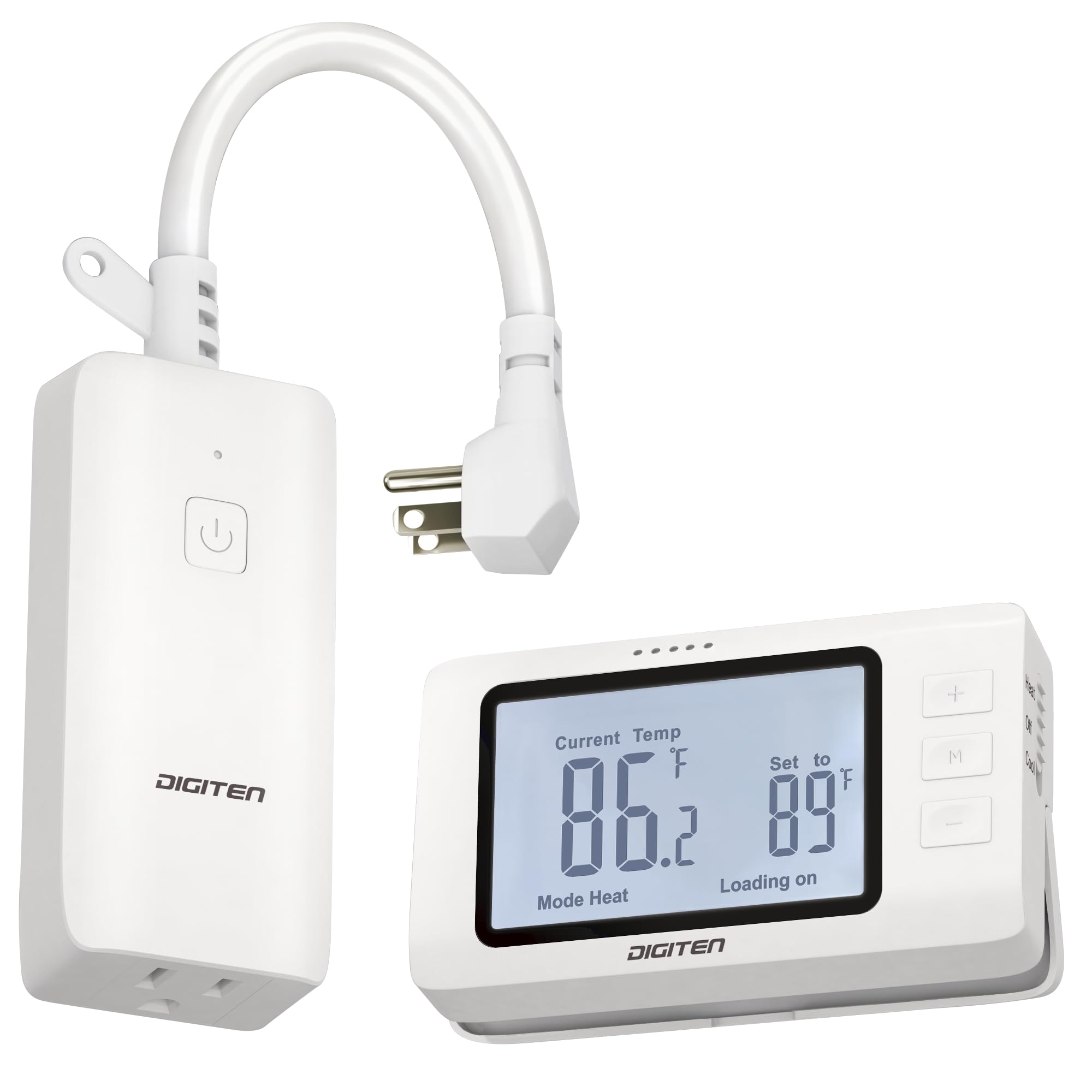
The Digiten wireless thermostat outlet is a plug-in controller that adds temperature-based on/off switching to a space heater, fan, or window AC — a simple way to stop a room from overheating or overcooling without replacing the appliance. It suits renters, garage and workshop owners, and anyone running a plug-in heater in a room the central thermostat does not reach. This review covers what the outlet does, how the power cord changes the install, where the design falls short, and who should skip it.
Features and Specifications
Type: Plug-in temperature-controlled outlet with power cord
Function: Heating and cooling control (switches connected appliance on and off by temperature)
Control: Remote control
Rated Power: 1800W
Intended Use: Space heater, fan, air conditioner
Setup: Easy to use, plug-in, no wiring
The name tells most of the story. This is a thermostat that lives between the wall socket and the appliance rather than inside the appliance, so it can be moved from a bedroom heater to a workshop fan without any rewiring. The 1800W rating is the number that matters most: it covers most household space heaters and fans, but it is not a whole-house solution.
The power cord is the detail that separates this unit from a plain wall-plug thermostat. The control box can sit on a shelf or floor near the appliance while the cord reaches the outlet, which matters in rooms where the socket is behind furniture or high on a wall.
Build and Design
The outlet is a small inline control box with a short cord and a socket for the appliance, plus a separate remote for setting the target temperature. That arrangement is deliberately simple: no app pairing, no hub, no account. Buyers who want a thermostat they can set once and forget will find the layout familiar, while buyers expecting smart-home integration will not.
The corded design trades a little tidiness for placement flexibility. In a garage or basement, the box can rest near the heater instead of dangling from the wall, which reduces strain on the plug and keeps the controls within reach. In a tight bedroom, the same cord becomes one more thing to route behind a nightstand.
Capacity and Power
The 1800W ceiling is the practical limit of this unit. A typical portable space heater, box fan, or window AC draws well under that figure, so the outlet is a realistic match for the appliances named in the product listing. Anything larger — a baseboard heater, a 240V unit, or a hardwired appliance — is outside what a plug-in thermostat can safely handle.
Because the outlet switches the appliance fully on and off rather than modulating its output, the connected heater or fan runs at full power whenever the temperature crosses the setpoint. That is how most plug-in thermostats work, and it is why the outlet pairs best with appliances that tolerate frequent cycling.
Heating and Cooling Control
The heating and cooling modes let the same outlet manage a space heater in winter and a fan or AC in summer, which is the main reason to buy a thermostat outlet instead of a smart plug. The remote handles setpoint changes without reaching behind furniture, and the unit runs its schedule independently once configured.
Control accuracy is the trade-off of any plug-in thermostat. The sensor sits in the outlet, not in the middle of the room, so the reading reflects the air around the device rather than the temperature where people actually sit. Placement matters more than the settings: keeping the outlet away from the heater’s direct output and out of drafts gives a more representative reading.
Maintenance and Everyday Use
Day-to-day, the outlet needs almost nothing: plug it in, set a target temperature on the remote, and let it cycle the appliance. The remote is the main point of contact, so battery replacement and keeping the remote findable are the routine chores. There is no filter, no firmware, and no subscription.
The unit is best treated as a seasonal tool. Buyers who move it between a heater in January and a fan in July should unplug it before swapping appliances, and anyone running it continuously should check that the plug and socket stay cool to the touch — standard practice for any high-draw plug-in device.
Trade-off: The 1800W rating and plug-in format rule out large or hardwired heaters, and the built-in sensor reads the air at the outlet rather than the room, so results depend heavily on placement.
Check the current price on Amazon
Who It Suits and Who It Does Not
The Digiten outlet suits renters who cannot install a line-voltage thermostat, garage and workshop owners heating a space the house thermostat ignores, and anyone who wants a plug-in heater to hold a room at a set temperature overnight. It also fits buyers who prefer a physical remote over a phone app.
It does not suit buyers with hardwired baseboard or 240V heating, households that want app control, scheduling from a phone, or voice-assistant integration, or anyone heating a large open-plan space where a single point sensor cannot represent the room. Buyers running a high-draw appliance near the 1800W ceiling should confirm the appliance’s wattage before pairing it.
FAQ
-
What is a wireless thermostat outlet?
It is a plug-in device that sits between a wall socket and an appliance and switches the appliance on and off to hold a set temperature. The "wireless" part refers to the remote control rather than to Wi-Fi. -
What can the Digiten thermostat outlet control?
The product name lists space heaters, fans, and air conditioners. It is built for plug-in appliances within its 1800W rating, not for hardwired or 240V heating equipment. -
Does it need Wi-Fi or an app?
No. Control is through the included remote, so the outlet works without a network, a hub, or a phone. -
Can it run a space heater overnight?
It can cycle a plug-in space heater within its wattage rating. Buyers should follow the heater’s own safety instructions and keep the outlet and cord clear of the heater’s output. -
Why does the outlet have a power cord instead of plugging straight into the wall?
The cord lets the control box sit closer to the appliance or in a more accessible spot when the wall socket is awkwardly placed. -
How accurate is the temperature reading?
The sensor measures the air at the outlet, so accuracy depends on placement. Keeping it out of drafts and away from the heater’s direct airflow gives a more useful reading. -
Can it be used for cooling in summer?
Yes. The heating and cooling modes let the same outlet cycle a fan or window AC, which is the main advantage over a standard timer plug. -
Does it work with a window air conditioner?
It works with plug-in AC units that draw within the 1800W rating. Large units and anything hardwired are outside its range. -
Is it suitable for a garage or workshop?
Yes, provided the heater or fan is a plug-in model within the wattage limit and the outlet is kept away from moisture and direct heat. -
What is the main limitation to know before buying?
The 1800W ceiling and the outlet-mounted sensor. Buyers with big heaters or hardwired systems need a different class of thermostat.
Bottom Line
The Digiten wireless thermostat outlet is a straightforward, low-cost way to give a plug-in space heater, fan, or window AC its own temperature control without touching the wiring. It suits renters, garage and workshop users, and anyone who wants a physical remote rather than an app, and it falls short only for hardwired heating, high-wattage appliances, and buyers who need smart-home integration. For the right plug-in appliance, it is the simplest fix in its price tier.
