Why there are Amazon links here: Brave Review is paid a commission for qualifying Amazon purchases made through the links below. Your price does not change, and using our links is entirely optional. How this works
Honeywell RTH9580WF1005 vs Google Nest Learning Thermostat 3rd Generation: Which Smart Thermostat Fits the Home
This comparison covers two Wi-Fi smart thermostats that sit within a few dollars of each other yet take opposite approaches to comfort control. The Honeywell RTH9580WF1005 is a hands-on, fully programmable color touchscreen unit with Alexa voice control, while the Google Nest Learning Thermostat 3rd Generation leans on automatic learning and a stainless-steel finish that is meant to be seen. The sections below break down scheduling, design, ecosystem fit and cost so a buyer can pick one quickly and move on to checking today’s price.
The Picks at a Glance
| Product | Key Spec | Best Use | Price Tier |
|---|---|---|---|
| Honeywell RTH9580WF1005/W1 | 7-day programmable color touchscreen, Alexa voice control | Households that want to build and see an explicit weekly schedule | Mid-range |
| Google Nest Learning Thermostat 3rd Gen | Programmable learning thermostat, Alexa compatible, stainless steel | Homes that want set-and-forget comfort with a display worth showing | Mid-range to premium |
The two sit in nearly the same price band, so cost is not the deciding factor here. What separates them is how much control a household wants to hand over versus program by hand.
Honeywell RTH9580WF1005/W1 Smart Wi-Fi 7 Day Programmable Color Touch Thermostat
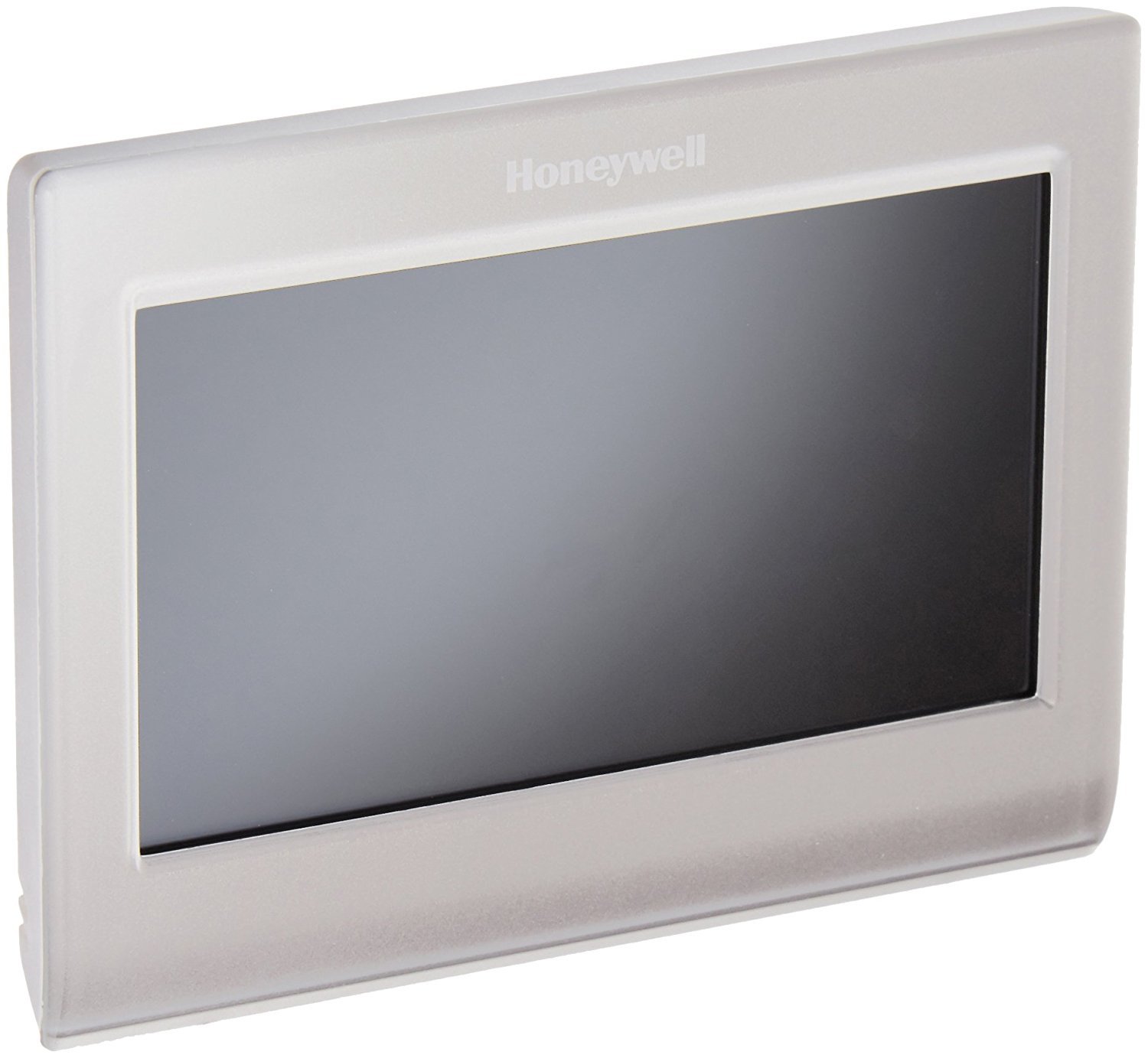
Type: Smart Wi-Fi thermostat with color touchscreen
Scheduling: 7-day programmable
Voice Control: Works with Amazon Alexa
Connectivity: Wi-Fi
Display: Color touchscreen
Intended Use: Whole-home heating and cooling control
This is a thermostat built around an explicit weekly schedule. The color touchscreen lets a household map out a seven-day plan and adjust it on the wall without reaching for a phone, which suits people who like to see and tune exactly what the system will do. Alexa voice control adds a hands-free layer for quick setpoint changes from an Echo or similar device.
The 7-day programming is the real selling point. Rather than inferring a routine, the unit asks the household to define one, so the behavior on any given morning is predictable and easy to explain to everyone in the home. That structure is a comfort for larger households or anyone who has been burned by a "smart" schedule that drifted away from what they actually wanted. The trade-off is that a manual schedule only stays accurate if it gets updated when life changes.
Trade-off: The hands-on programming model means the thermostat is only as smart as the schedule it is given, so a household that wants the device to figure out its routine will find it does no such thing.
Check the current price on Amazon
Google Nest Learning Thermostat 3rd Generation (Stainless Steel)

Type: Learning smart thermostat
Scheduling: Programmable, with automatic learning
Voice Control: Compatible with Amazon Alexa
Finish: Stainless steel
Intended Use: Whole-home heating and cooling control
Design: Display-forward, wall-mounted
The Nest Learning Thermostat 3rd Gen is aimed at households that would rather not build a schedule at all. It is a programmable thermostat that also learns from adjustments over time, so the routine gradually gets handled without a manual seven-day grid. The stainless-steel body and prominent display are designed to read as a piece of hardware on the wall rather than a plain control panel, which matters in visible hallways and open-plan rooms.
The learning approach rewards consistency. A household with a fairly regular weekday-and-weekend rhythm tends to get the most out of it, because the adjustments it observes become the basis for its automatic settings. It is also a strong fit for anyone already living in the Google smart-home ecosystem, and Alexa compatibility keeps voice control open to Amazon device owners as well. The trade-off runs the other way from the Honeywell: less direct, up-front control over the exact schedule, and a household with an irregular routine may spend more time overriding it than letting it learn.
Trade-off: The learning model puts the device in charge of the routine, so buyers who want precise manual control over every time block will find it less direct than a fully programmable unit.
Check the current price on Amazon
Side-by-Side Comparison
| Dimension | Honeywell RTH9580WF1005/W1 | Google Nest Learning Thermostat 3rd Gen |
|---|---|---|
| Type | Smart Wi-Fi thermostat | Learning smart thermostat |
| Scheduling | 7-day programmable | Programmable with automatic learning |
| Display | Color touchscreen | Display-forward, wall-mounted |
| Finish | Standard housing | Stainless steel |
| Voice Control | Works with Amazon Alexa | Compatible with Amazon Alexa |
| Control Style | Manual schedule, on-device | Learns from adjustments |
| Best For | Households that want explicit control | Households that want set-and-forget comfort |
| Price Tier | Mid-range | Mid-range to premium |
The clearest split is control style. The Honeywell asks the household to define the week, and the Nest asks the household to adjust naturally and lets the device catch up. Neither is better in the abstract, but they suit different temperaments.
On voice control the two are level: both work with Amazon Alexa, so an Echo owner is not locked out of either. Where they diverge is on-device interaction. The Honeywell’s color touchscreen puts the full schedule in front of the user, while the Nest’s display is more about presenting status and letting the learning layer do the work behind it.
Design and finish favor the Nest for visible locations. The stainless-steel housing is meant to be looked at, and it fits a home where the thermostat sits in a hallway or living area rather than a utility corridor. The Honeywell is a competent, functional wall unit rather than a design statement.
Price tier is close enough that the decision should not hinge on it. The Honeywell lands in the mid-range, the Nest at the top of mid-range or into premium territory, and the gap is small enough that the right call is the one that matches the household’s routine rather than the cheaper sticker.
Which Should You Buy?
Choose the Honeywell RTH9580WF1005/W1 if the household wants a thermostat it fully controls. Anyone who likes to see a seven-day schedule on a color touchscreen, adjust it by hand and know exactly what the system will do tomorrow morning will be more comfortable here. It also suits a home with several people who need a schedule they can all read and understand at a glance, and Alexa owners get voice control without extra hardware.
Choose the Google Nest Learning Thermostat 3rd Gen if the household wants the thermostat to handle the routine. A fairly regular weekday-and-weekend pattern is ideal, because that is what the learning behavior has to work with. It also suits a home where the thermostat is visible and the stainless-steel finish is part of the appeal, and it keeps Alexa compatibility for Amazon device owners. Buyers who dislike fiddling with schedules will find it the calmer choice.
Frequently Asked Questions
-
Does the Honeywell RTH9580WF1005 work with Alexa?
Yes. The product is certified by Amazon to work with Alexa and can be controlled by voice through Alexa-enabled devices such as Amazon Echo and Amazon Tap. -
Is the Google Nest Learning Thermostat 3rd Gen compatible with Alexa?
Yes. The product name lists it as compatible with Alexa, so Amazon device owners can use voice control alongside the learning behavior. -
What is the main difference between the two thermostats?
The Honeywell is a 7-day programmable unit with a color touchscreen that puts the schedule in the household’s hands. The Nest is a learning thermostat that adjusts automatically from observed routine, wrapped in a stainless-steel finish. -
Which one is better for an irregular schedule?
The Honeywell, because the household sets the schedule directly and it does exactly what it is told. A learning thermostat has less to work with when the routine changes often. -
Which one is better for a household that wants to set it and forget it?
The Nest, since its learning behavior is designed to take over the routine without a manual weekly grid. -
Do both work with Wi-Fi?
Yes. Both are Wi-Fi smart thermostats, which is what allows remote control and voice integration through connected devices. -
Is the Nest’s stainless-steel finish worth the higher price tier?
That is a matter of placement. In a visible hallway or living space the finish is part of the appeal; in a utility corridor it matters much less, and the Honeywell’s explicit scheduling may be the better fit.
Bottom Line
The Google Nest Learning Thermostat 3rd Generation is the top pick for most households, because its learning behavior removes the ongoing chore of maintaining a schedule and its stainless-steel build suits a visible wall. The Honeywell RTH9580WF1005/W1 remains the better choice for buyers who want explicit, hands-on control of a seven-day plan on a color touchscreen. Check the current price on the Nest Learning Thermostat 3rd Gen on Amazon before deciding.
