Why there are Amazon links here: Brave Review is paid a commission for qualifying Amazon purchases made through the links below. Your price does not change, and using our links is entirely optional. How this works
Best Power Station for a Household with a Stairlift
A household with a stairlift has one non-negotiable job for a backup battery: keep the chair moving when the grid drops. This guide covers five power stations that can carry that load, from a budget unit for short outages to large expandable systems that run a stairlift and a fridge at the same time. Three buyer profiles are served here — the budget-minded household that only needs a few hours of coverage, the mid-range buyer who wants headroom, and the whole-home planner who wants expandable capacity. The overview table below puts every pick side by side.
Overview of the Picks
| Product | Key Spec | Best Use | Price Tier |
|---|---|---|---|
| Jackery HomePower 3600 Plus | 3584Wh, 3600W AC, expandable to 21kWh | Whole-home backup with room to grow | Premium |
| Jackery HomePower 3000 | 3072Wh, 3600W AC, 7200W surge | Stairlift plus fridge on a mid-range budget | Mid-range |
| EF ECOFLOW DELTA Pro | 3600Wh, 3600W AC, expandable to 25kWh | Fast recharge and long-term expansion | Premium |
| BLUETTI Apex 300 | 2764.8Wh, 3840W AC, 120V/240V output | High-draw homes and 240V appliances | Mid-range |
| EBL 2400W Portable Power Station | 1843.2Wh, 2400W AC, 12 outlets | Short outages on a tight budget | Budget |
Jackery HomePower 3600 Plus Power Station

Battery Type: LFP
Capacity: 3584Wh
AC Output: 3600W
Expandable: Up to 21kWh
Intended Use: Essential home backup, emergencies, RV
Solar Input: Optional panel
This is the largest-capacity single unit in the lineup, built on lithium iron phosphate chemistry that holds up to repeated charge cycles better than older battery types. The 3600W AC output gives a stairlift motor plenty of headroom, and the expansion path to 21kWh means the same system can later carry a furnace blower or a well pump. A household that expects multi-day outages should start here. The unit is heavy and takes up real floor space, so it wants a permanent spot near the main panel rather than a closet shelf.
Who It Suits: Households planning for long outages who want one system that grows with them. It is not for a buyer who needs something portable enough to move between floors.
Trade-off: The capacity and expansion hardware push the price into premium territory and make the unit too heavy to relocate easily.
Jackery HomePower 3000 Portable Power Station
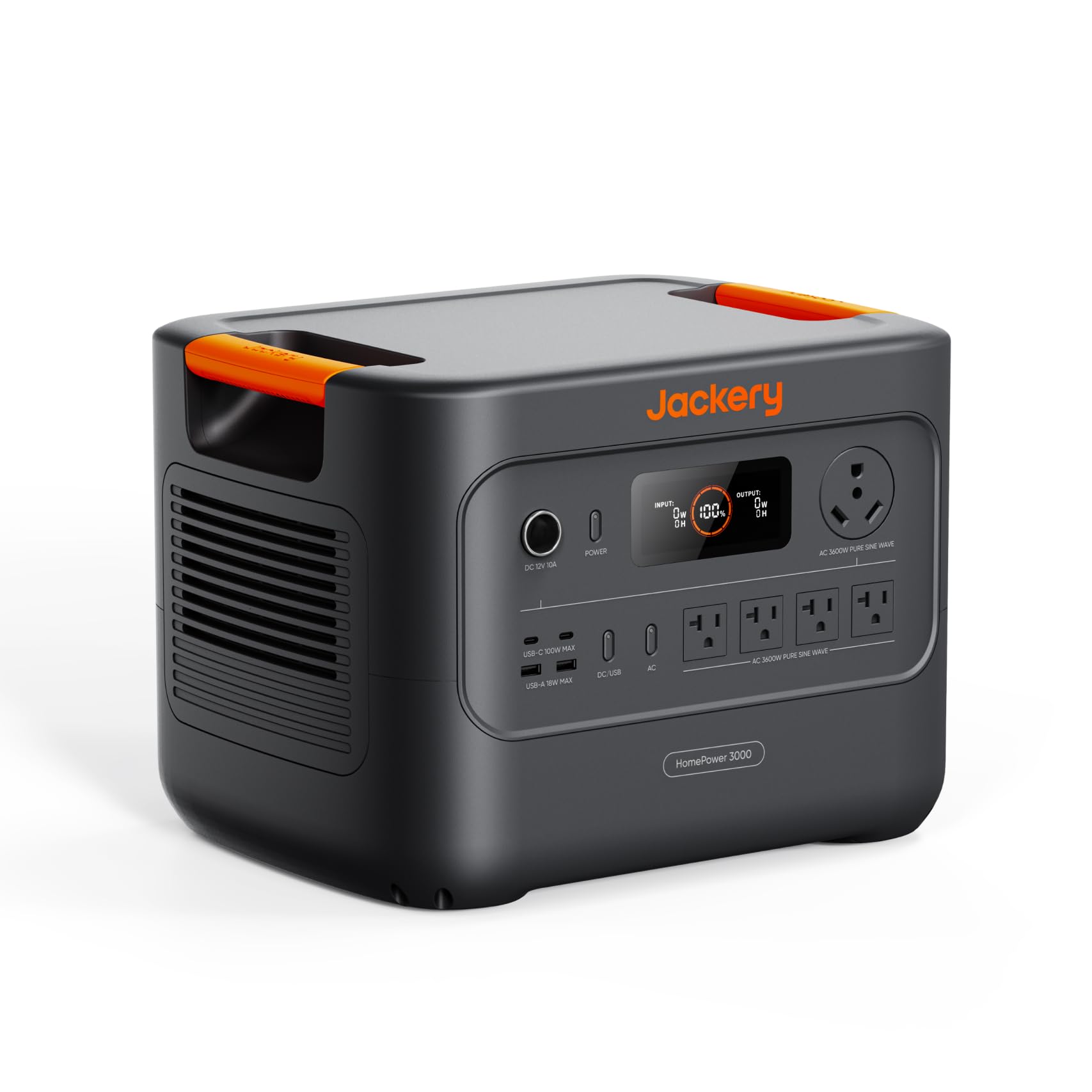
Battery Type: LFP
Capacity: 3072Wh
AC Output: 3600W
Surge Output: 7200W
Intended Use: Essential home backup, power outages
Solar Input: Optional panel
The 7200W surge rating is the headline here, and it matters for a stairlift because motors draw a hard spike on startup before settling into a steady pull. A 3600W continuous output with double that in reserve means the chair starts smoothly without tripping the unit. Capacity sits just under the Plus model, which keeps the price lower while still covering a stairlift plus a refrigerator for a realistic outage window. LFP chemistry again means the battery tolerates being held at full charge for long stretches between storms.
Who It Suits: The household that wants solid coverage without paying for expansion it may never use. It is not for a buyer planning to back up a whole panel of large appliances.
Trade-off: There is no expansion path, so capacity is fixed at purchase and a longer outage means rationing.
EF ECOFLOW DELTA Pro Portable Power Station
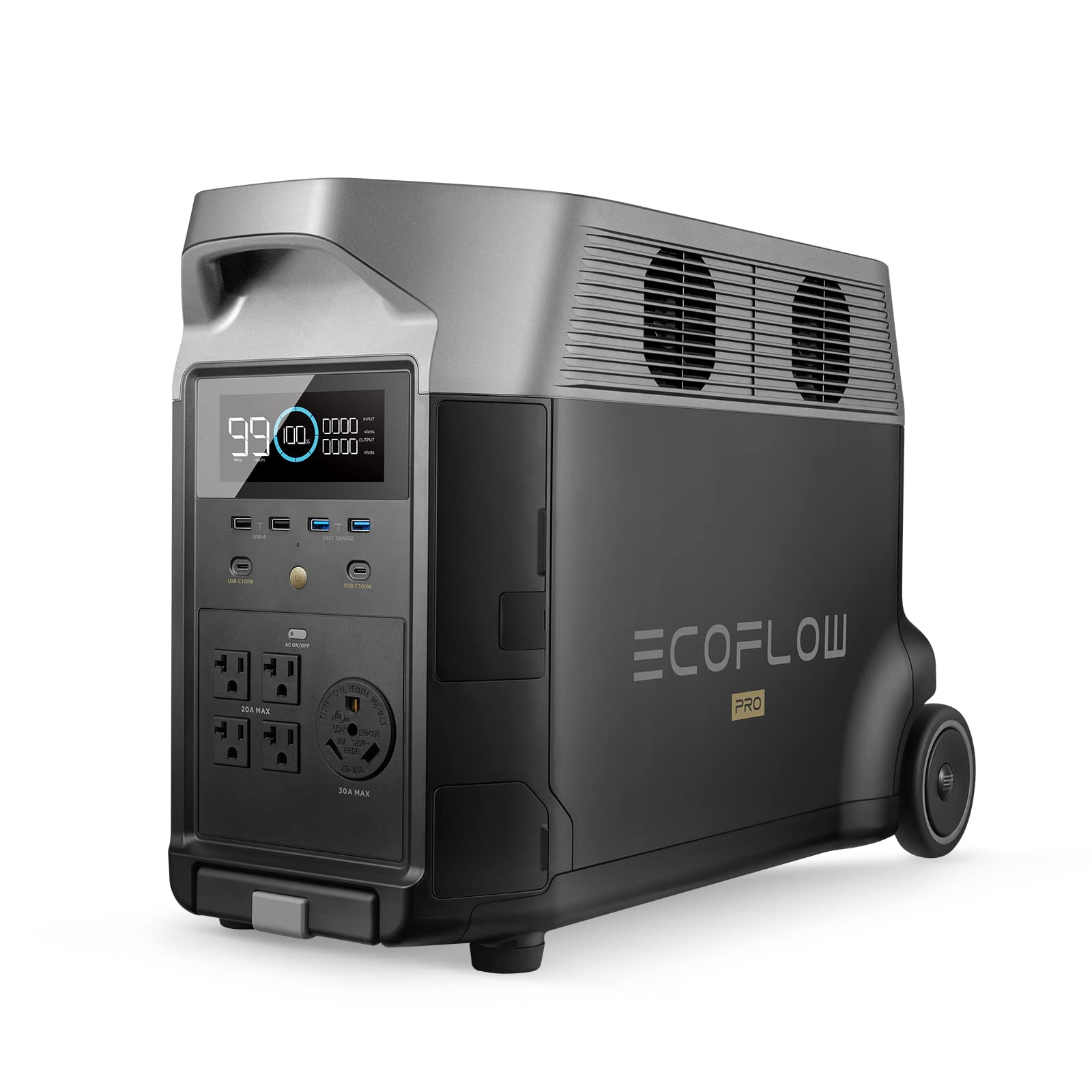
Battery Type: Not stated in name — LFP-class portable station
Capacity: 3600Wh
AC Output: 3600W at 120V
Recharge Time: 2.7 hours fast charge
Expandable: Up to 25kWh
Intended Use: Home backup, outages, camping, RV
The 2.7-hour recharge time is the feature that separates this unit from the rest of the field. A household that loses power, runs the stairlift for a day, and then gets a short window of grid power back can top the battery up before the next outage hits. The 3600W output covers the chair comfortably, and the expansion ceiling of 25kWh is the highest here. It is also the most expensive pick, and the fast-charge circuitry is the kind of feature that rewards a dedicated circuit rather than a daisy chain of extension cords.
Who It Suits: Buyers who value fast turnaround between outages and want the longest expansion runway. It is not for a shopper who wants the lowest entry price.
Trade-off: The premium price buys recharge speed and expansion rather than more built-in capacity, so a buyer who never expands pays for unused headroom.
BLUETTI Apex 300 Portable Power Station
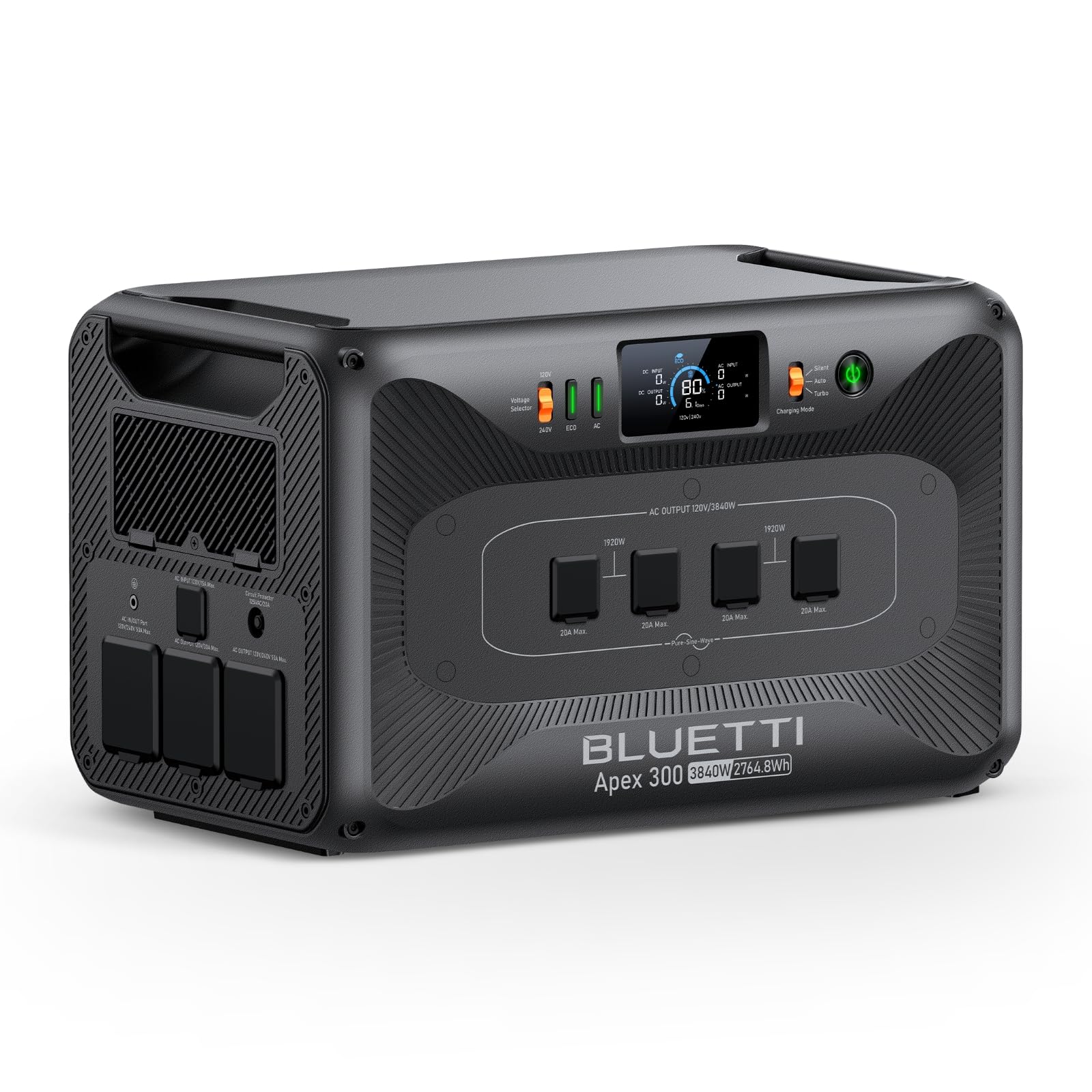
Battery Type: LFP
Capacity: 2764.8Wh
AC Output: 3840W across 6 AC ports
Surge Output: 7680W
Output Format: Simultaneous 120V/240V with black start
Intended Use: Home, RV, emergencies
This is the only pick with simultaneous 120V and 240V output, which matters in a home that has a 240V circuit the household wants to keep alive alongside the stairlift. Six AC ports and a 3840W continuous rating mean the chair, a fridge, and a few lights can all stay plugged in at once without swapping cords. Black start capability lets the unit come up without grid assistance, a genuine advantage in a hard outage. Capacity is the smallest of the mid-range group, so runtime per charge is shorter.
Who It Suits: Homes with a 240V load to protect and buyers who want many outlets live at once. It is not for a household that needs maximum watt-hours per dollar.
Trade-off: The rich output features come at the cost of capacity — this unit stores less energy than the cheaper Jackery 3000.
EBL 2400W Portable Power Station
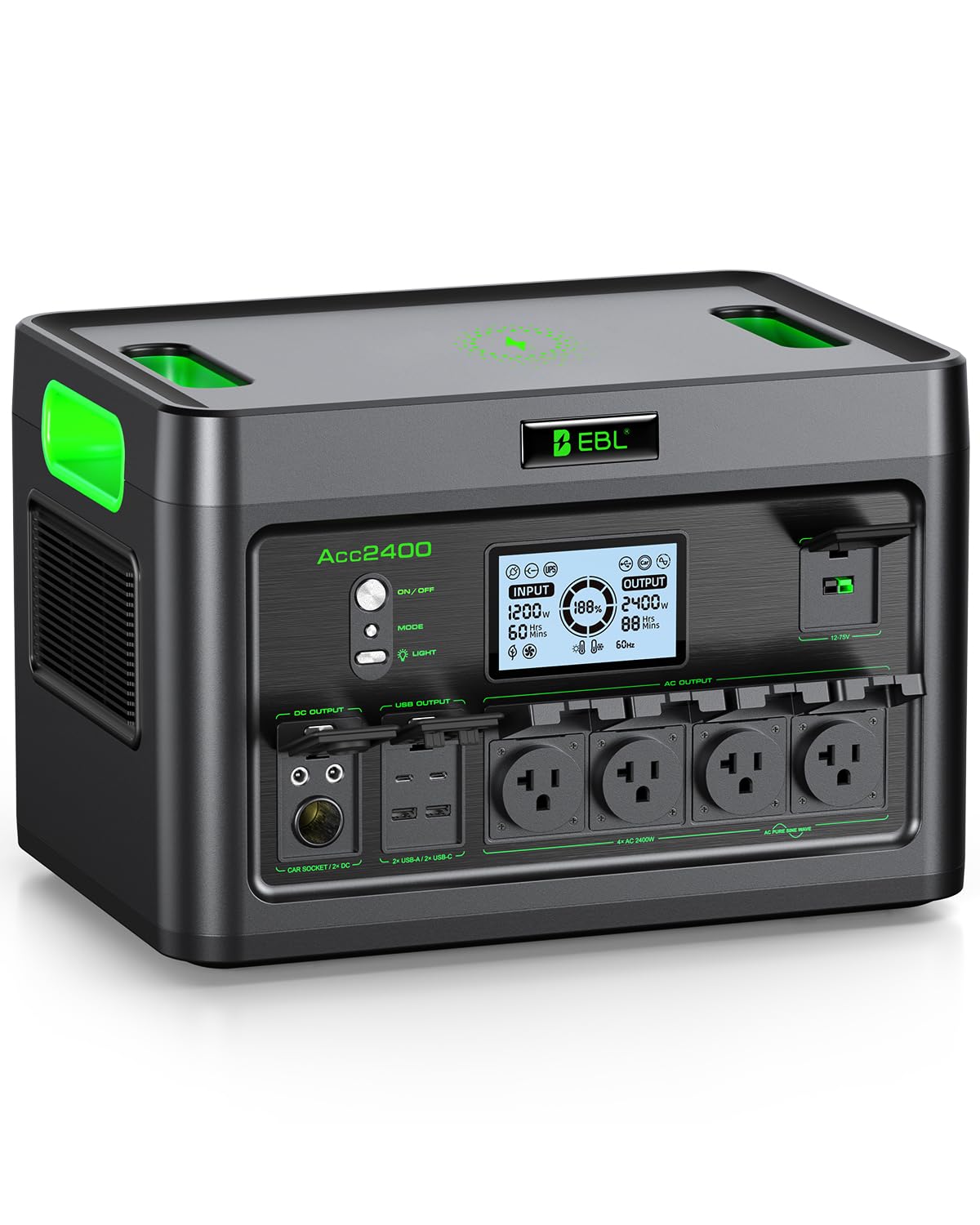
Battery Type: LiFePO4
Capacity: 1843.2Wh
AC Output: 2400W
Outlets: 12 total, including USB-C PD 100W
Recharge Time: 2 hours quick charge
Intended Use: Home use
The budget pick, and a sensible one for a household whose main worry is a chair that stops between floors during a short outage. LiFePO4 chemistry at this price is the reason it earns a slot — the battery is the durable type rather than a cheaper formulation. Twelve outlets, including a 100W USB-C port, cover phones, a router, and a lamp alongside the stairlift. The 2400W AC rating is the lowest here, so it suits a stairlift on its own circuit rather than a chair plus a fridge plus a space heater.
Who It Suits: Budget-conscious households facing short, infrequent outages. It is not for a buyer who needs to run large appliances or ride out a multi-day event.
Trade-off: The 2400W ceiling leaves little margin for a second heavy load, and the smaller battery means hours rather than days of coverage.
Before You Buy
- Motor surge: A stairlift motor draws a startup spike well above its running draw — check the station’s surge rating, not just its continuous output, before committing.
- Capacity versus runtime: Match watt-hours to the length of outage the household actually expects, and remember the chair is not the only load that needs power.
- Dedicated circuit: Plan to plug the station into a wall circuit the chair can reach, or have an electrician wire a transfer point, rather than running extension cords across a landing.
- Battery chemistry: LFP and LiFePO4 units tolerate being held at full charge and cycled often, which suits a backup that sits idle for months.
- Placement and weight: Large-capacity stations are heavy and need ventilation — pick a permanent floor spot near the panel, not a shelf.
- Solar and expansion: Panels are sold separately on most of these units; budget for them if the household expects outages longer than a day.
- Recharge speed: A fast recharge window between outages can matter more than a few hundred extra watt-hours.
Frequently Asked Questions
-
How much power does a stairlift need from a power station?
A stairlift motor typically draws far less than the 2400W floor of this group while running, but the startup surge is the real test. Any of these five units has enough continuous output for a single chair. -
Can a power station run a stairlift and a refrigerator at the same time?
Yes on the larger units — the Jackery 3000, Jackery 3600 Plus, DELTA Pro, and Apex 300 all have the output headroom. The EBL is better reserved for the chair and small electronics. -
How long will a battery backup keep a stairlift running?
Runtime depends on how many trips are made and what else is plugged in. A 3000Wh-class unit covers a realistic multi-day outage for a chair plus a fridge; the 1843.2Wh unit covers hours to a day. -
Is LFP or LiFePO4 the better battery for a backup that sits idle?
Both are the durable lithium iron phosphate family and are the right choice for a unit that stays charged for long stretches. All five picks here use that chemistry or an equivalent. -
Do these stations include solar panels?
No — panels are optional on the models that accept solar input. A household planning for outages longer than a day should price panels into the budget. -
Where should the power station be placed in a stairlift household?
On a stable floor near the base of the stairs and close to a wall outlet, with clear ventilation. Heavy units should not be moved between floors once installed.
Bottom Line
For most stairlift households, the Jackery HomePower 3000 is the pick that balances output, capacity, and price — a 3600W continuous rating with a 7200W surge covers the chair’s startup draw with margin to spare, and the LFP battery is built to sit charged. Households facing long outages should step up to the Jackery HomePower 3600 Plus, whose expansion path to 21kWh turns a stairlift backup into whole-home coverage.
