Why there are Amazon links here: Brave Review is paid a commission for qualifying Amazon purchases made through the links below. Your price does not change, and using our links is entirely optional. How this works
Best Gas Leak Alarm for a Kitchen with a Hob: 5 Picks That Fit Real Cooking Spaces
A hob running on natural gas, LPG or propane needs a dedicated alarm, not a smoke detector, because gas leaks collect near the floor and around the burners long before a smoke alarm reacts. This short roundup covers five alarms that suit three kinds of buyer: the renter who wants a plug-in unit with no wiring, the homeowner who wants a sealed long-life battery and a listed device, and the RV or small-apartment cook who needs something compact and portable. Each pick below is judged on sensor coverage, power source, mounting and price tier, and the overview table lets a reader choose in under a minute.
The Picks at a Glance
| Product | Key Spec | Best Use | Price Tier |
|---|---|---|---|
| Kidde Carbon Monoxide + Explosive Gas Alarm | Plug-in with 9V backup, digital display | Combined CO and gas coverage in one outlet | Mid |
| Natural-Gas-Detector Plug in (Upgrade Sensor) | Plug-in, digital display, portable | Budget plug-in for kitchen or RV | Budget |
| Plug in Natural-Gas-Detector for Home | Plug-in, LED display, propane-capable | Simple low-cost kitchen backup | Budget |
| VIGAS Natural Gas Alarm Detector | 10-year sealed battery, ETL listed to UL 1484 | Wiring-free, long-life main alarm | Premium |
| PT520A Natural Gas Detector | 17-inch gooseneck, battery powered, 3 batteries included | Pinpointing the source of a smell | Mid |
1. Kidde Carbon Monoxide + Explosive Gas Alarm
- Type: Combined carbon monoxide and explosive gas alarm
- Gas coverage: Natural gas and propane
- Power source: Plug-in with 9V battery backup
- Alarm output: 85 dB
- Display: Digital, with LED status indicators
- Edition: 3rd Edition

Kidde Carbon Monoxide + Explosive Gas, Natural Gas & Propane Alarm
Check the current price on Amazon
This is the do-two-jobs pick. A single outlet unit watches for carbon monoxide from a badly burning hob as well as explosive gas from a leak, which is exactly the pairing a gas kitchen creates. The 9V backup keeps it live through a power cut, and the digital display plus LED status indicators make it easy to see at a glance whether the unit is working. It is a sensible anchor alarm for a main kitchen where a gas hob and a gas boiler sit close together.
It earns its place because combined coverage removes the need for two separate devices on one wall. The trade-off is that a plug-in unit only protects the outlet it sits in, so a long kitchen still needs a second alarm at the far end, and the battery backup needs periodic checking.
2. Natural-Gas-Detector Plug in (Upgrade Sensor)
- Type: Plug-in gas leak detector
- Gas coverage: LPG, LNG and natural gas
- Power source: Mains plug-in
- Display: Digital
- Portability: Portable, suited to home, RV, apartment and kitchen

Natural-Gas-Detector Plug in, Gas Leak Detector,LPG,LNG, Upgrade Sensor
Check the current price on Amazon
The budget plug-in option covers the three gases most kitchens actually see: piped natural gas, LNG and bottled LPG. It runs straight from a wall socket with no batteries to swap, and the digital display gives a quick read on status. Because it is built to move, it suits renters who cannot hard-wire anything and RV owners who want one alarm that travels between the van and the house.
It suits buyers who want a low-cost second alarm for a galley kitchen or a rental. The trade-off is that a low-cost plug-in sensor tends to have a shorter service life than a sealed long-life unit, and it protects only the room it is plugged into.
3. Plug in Natural-Gas-Detector for Home
- Type: Plug-in gas and propane leak detector
- Gas coverage: Natural gas and propane
- Power source: Mains plug-in
- Display: LED
- Intended use: Kitchen, apartment and RV
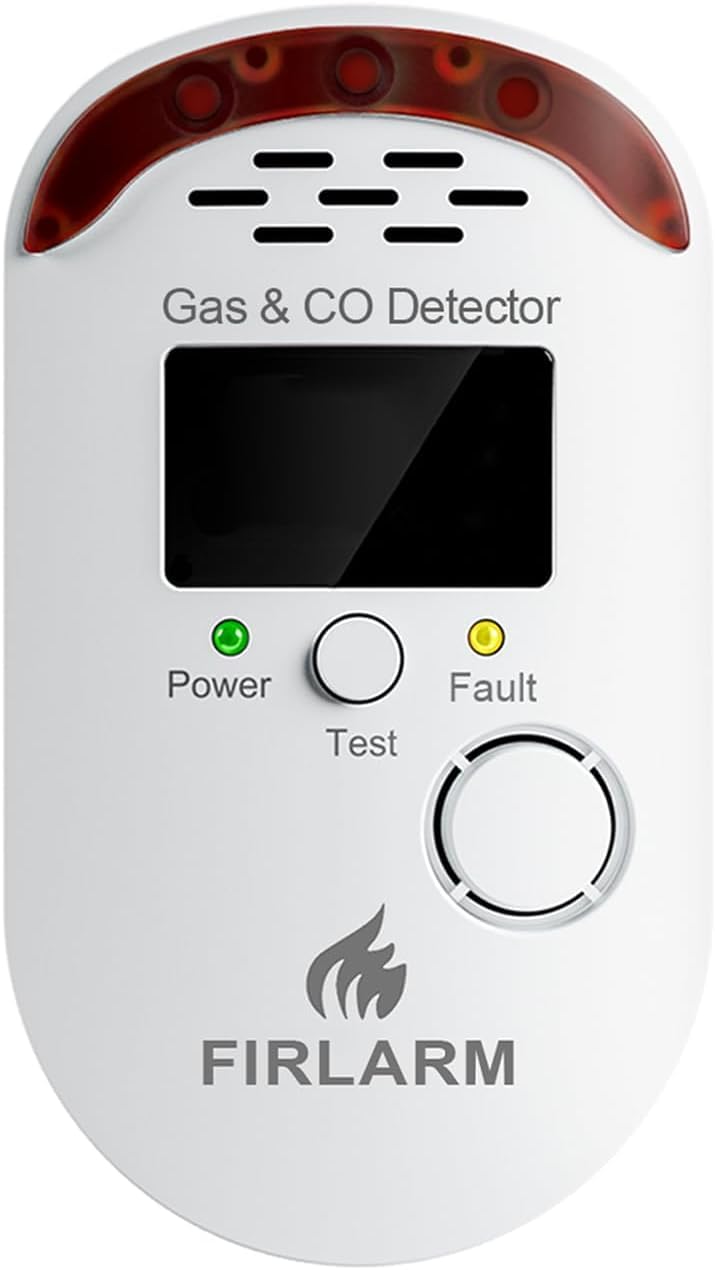
Plug in Natural-Gas-Detector for Home, Propane-Leak-Detector with LED Display
Check the current price on Amazon
This is the simplest and cheapest way to add gas cover to a kitchen. It plugs into a standard socket, watches for natural gas and propane, and reports status through an LED display rather than a full digital readout. The compact body and portable design make it easy to move between a kitchen, a small apartment and an RV.
It earned a spot as the entry-level backup alarm, the one to put in a second kitchen or a holiday let where a premium unit is hard to justify. The trade-off is that LED-only status is less informative than a digital readout, and at this price tier the housing and sensor are built to a budget, so it is a supporting alarm rather than a sole one.
4. VIGAS Natural Gas Alarm Detector
- Type: Standalone methane gas leak alarm
- Power source: 10-year sealed battery
- Alarm output: 85 dB
- Listing: ETL Listed to UL 1484
- Intended use: Home gas leak monitoring

VIGAS Natural Gas Alarm Detector, 10-Year Sealed Battery, Methane Gas Leak Alarm for Home
Check the current price on Amazon
This is the premium pick and the only one here that states a third-party listing, ETL to UL 1484, which is the standard for gas detectors. The 10-year sealed battery means no outlet is required and no annual battery swap, so it can be screwed to a wall wherever gas is most likely to gather. An 85 dB alarm is loud enough to carry through a kitchen into the next room.
It suits homeowners who want one main alarm with a long service life and no wiring, and it is the pick for anyone who values a listed device over a low price. The trade-off is the higher upfront cost and a sealed battery that cannot be replaced, so the whole unit is retired at the end of its life.
5. PT520A Natural Gas Detector
- Type: Handheld gas leak detector with gooseneck probe
- Probe: 17-inch gooseneck
- Gas coverage: Propane, methane and butane
- Power source: Battery powered, 3 batteries included
- Intended use: Home and RV

PT520A Natural Gas Detector, Gas Leak Detector with 17-Inch Gooseneck
Check the current price on Amazon
This one works differently from the rest: it is a locating tool, not a wall-mounted alarm. The 17-inch gooseneck lets a user reach behind a hob, under a worktop or along a gas line to find where a smell is coming from, and it covers propane, methane and butane. Three batteries are included, so it is ready to use out of the box, and the orange body is easy to find in a drawer.
It suits the household that already has a fixed alarm but wants a way to trace a suspected leak before calling an engineer. The trade-off is that a handheld detector provides no continuous protection, so it complements a mounted alarm rather than replacing it.
Before You Buy
- Gas type: Match the alarm to the gas in use. Natural gas, methane, LPG, propane and butane are not always covered by the same sensor, so check the label against the hob’s supply.
- Power source: A plug-in unit needs a free socket near the hob and stops protecting during a power cut unless it has a battery backup. A sealed-battery unit mounts anywhere but is retired when the cell dies.
- Placement: Gas is heavier than air for propane and LPG and lighter for methane, so mounting height matters. Follow the manufacturer’s placement guidance rather than choosing a spot by eye.
- Listing and standard: A stated third-party listing such as ETL to UL 1484 is the clearest signal that a detector has been tested to a recognized gas-alarm standard.
- Alarm volume: An 85 dB alarm is the practical baseline for a kitchen, since a hob extractor fan can mask a quieter unit.
- Coverage per unit: One alarm protects one area. A long or open-plan kitchen generally needs a second unit at the opposite end.
- Maintenance: Test each alarm on a regular schedule and note the replacement date, especially for sealed-battery models where the whole device is retired.
Frequently Asked Questions
-
Where should a gas alarm go in a kitchen with a hob?
Mount it near the hob but not directly above the burners, and follow the manufacturer’s height guidance for the gas type. Propane and LPG settle low, while methane rises. -
Can a carbon monoxide alarm double as a gas leak alarm?
Only if it is a combined unit like the Kidde pick. A standard CO alarm will not detect a raw gas leak, so a dedicated or combined explosive-gas sensor is needed. -
Is a plug-in or battery alarm better for a kitchen?
Plug-in units are simple and need no battery swaps but depend on a socket and lose cover in a power cut unless backed up. Sealed-battery units mount anywhere and keep working, at a higher upfront cost. -
Does a gas alarm replace an annual gas safety check?
No. An alarm is a warning device, not an inspection. A qualified engineer should still service the hob and gas lines on schedule. -
How long does a gas leak alarm last?
Sealed-battery models are typically built around a 10-year service life, while budget plug-in sensors usually have a shorter working life and should be replaced sooner. -
Will a gas alarm detect a small leak?
A detector reacts to gas concentration, so a slow leak may take time to register. A handheld locator like the PT520A is the better tool for tracing a faint smell.
Bottom Line
For most kitchens with a gas hob, the best gas leak alarm is the Kidde Carbon Monoxide + Explosive Gas Alarm, because one plug-in unit covers both explosive gas and carbon monoxide with a battery backup. Buyers who want a listed, wiring-free main alarm should look at the VIGAS, and anyone on a tight budget can add the plug-in picks as secondary cover.
