Why there are Amazon links here: Brave Review is paid a commission for qualifying Amazon purchases made through the links below. Your price does not change, and using our links is entirely optional. How this works
Best Interlinked Smoke Alarm System for Whole-Home Coverage
A linked alarm network turns every detector in the house into one alert system: when one sounds, they all do. This roundup covers five multi-pack options that fit different buyers — renters who can’t hardwire, homeowners outfitting a full floor plan, and tech-minded households that want phone alerts. Each pick is a sealed-battery, wire-free design, so installation stays simple. The overview table below shows the differences at a glance before the full reviews.
The Picks at a Glance
| Product | Key Spec | Best Use | Price Tier |
|---|---|---|---|
| X-Sense SC07-W 6-Pack | Smoke + CO, LCD display | Full-home protection with carbon monoxide cover | Mid |
| X-Sense SC06-W 6-Pack | 2-in-1 smoke & CO, simple install | Budget whole-home smoke and CO on one system | Budget |
| Heiman S1-R 6-Pack + Gateway | Wi-Fi gateway, app alerts | Remote monitoring and instant phone alerts | Premium |
| X-Sense SD19-W 12-Pack | Up to 18 detectors linked | Large homes and multi-floor coverage | Mid |
| X-Sense SD20-W 6-Pack | Up to 18 Link+ alarms, one-button hush | Bedroom-focused smoke-only coverage | Budget |
1. X-Sense SC07-W 6-Pack — Best Overall
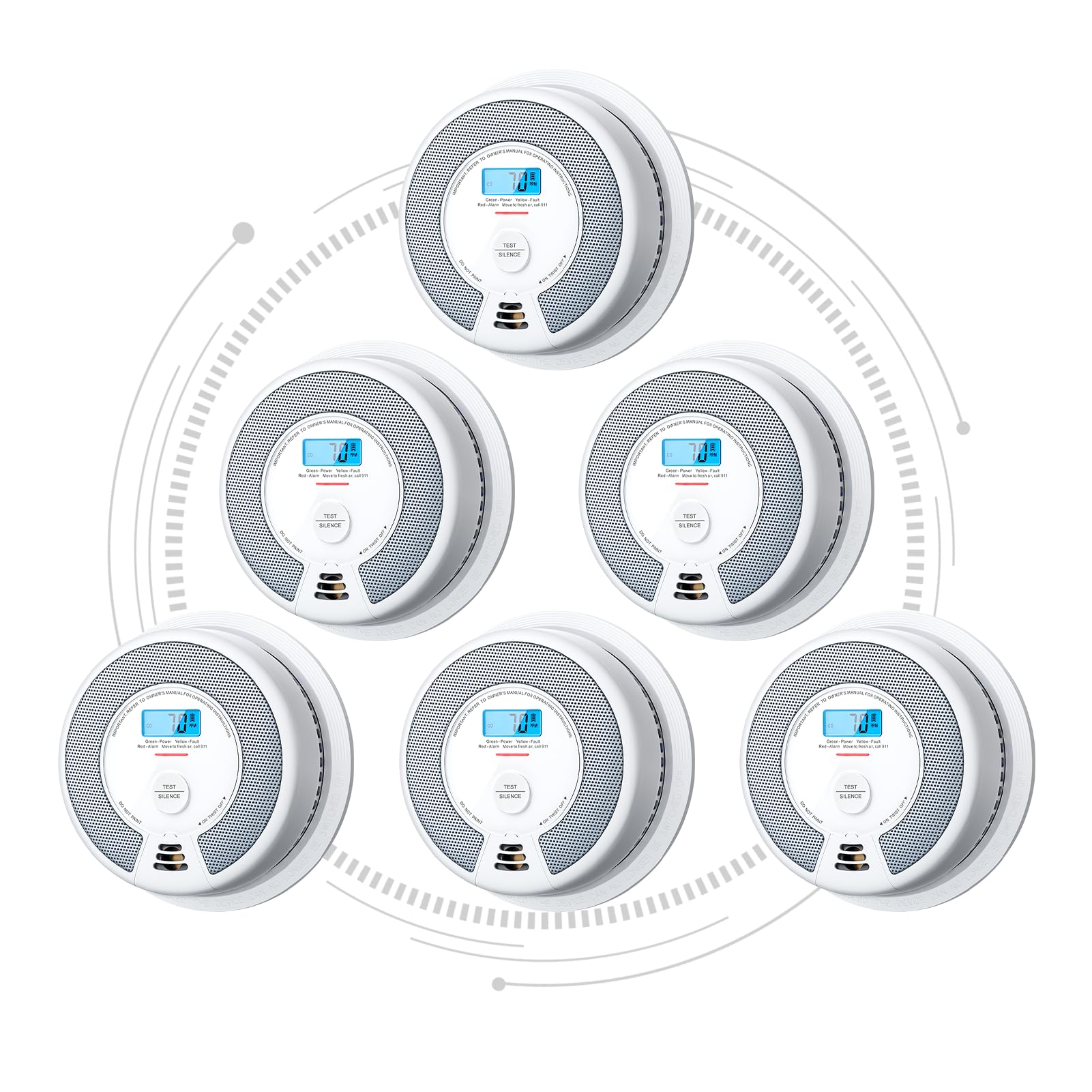
Power Source: 10-year sealed battery, not hardwired
Coverage: Whole-home interconnected network
Display: LCD screen
Certifications: UL 217 and UL 2034
Detection: Smoke and carbon monoxide
Pack Size: 6 detectors
The SC07-W pairs smoke and carbon monoxide detection in a single sealed unit, which cuts the number of devices needed on a ceiling. Its LCD display shows status at a glance, and the sealed battery removes the annual battery swap that trips up most households. A six-pack covers a typical single-family layout — hallway, kitchen perimeter, bedrooms and basement — as one linked network. This is the pick for buyers who want the most protection per device without pulling wire.
It earns the top spot because it covers both hazards and still installs without an electrician. The LCD adds a readable status check for anyone who dislikes indicator-light guesswork. The trade-off is cost: two sensors in one unit push the price above smoke-only alternatives, so buyers on a tight budget may prefer a simpler system.
2. X-Sense SC06-W 6-Pack — Best Budget Smoke and CO System
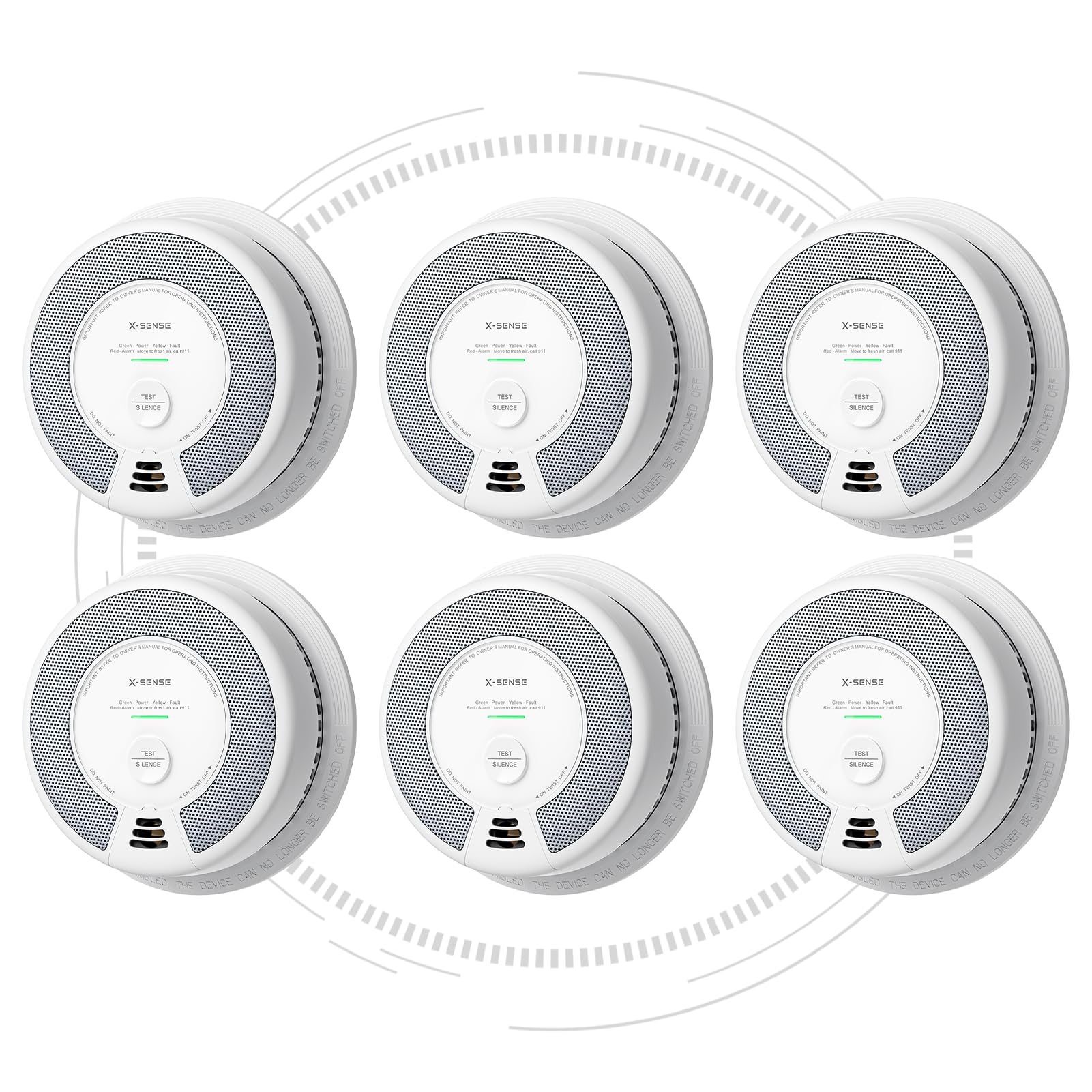
Power Source: 10-year sealed battery, not hardwired
Detection: 2-in-1 smoke and carbon monoxide
Alerts: Interconnected across the network
Installation: Easy install
Certifications: UL 217 and UL 2034
Pack Size: 6 detectors
The SC06-W is the value route into a linked smoke-and-CO system. It drops the LCD of the SC07-W but keeps the same core capability: one alarm triggering the rest, sealed battery power, and dual-sensor protection. Setup is designed for a homeowner with a drill and a few minutes, not an electrician. Six units suit a standard house or a large apartment with several bedrooms.
Buyers who want carbon monoxide cover on every level without paying for displays will find this the sensible middle. It keeps the safety essentials and trims the extras. The trade-off is the missing display — status checks rely on indicator behavior rather than a readout, which some households find less intuitive.
3. Heiman S1-R 6-Pack + Gateway — Best Smart System
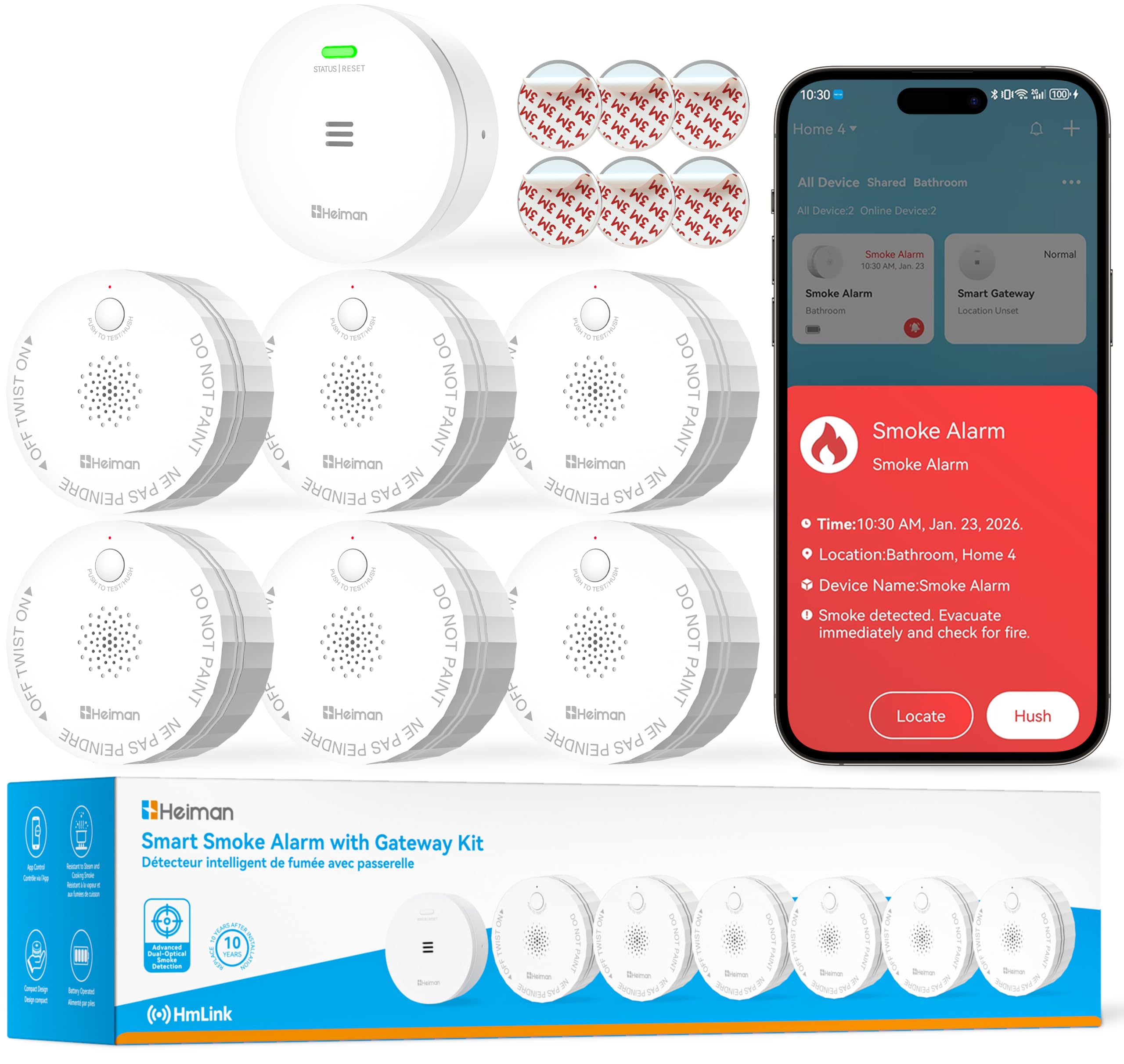
Connectivity: 2.4GHz Wi-Fi gateway with app
Alerts: Instant phone notifications
Detection: Photoelectric smoke
Certification: UL 217 10th Edition
Power Source: 10-year battery
Pack Size: 6 detectors plus gateway
The S1-R adds a Wi-Fi gateway, which pushes alerts off the ceiling and onto a phone. That matters for households away during the day, second-home owners, and anyone who wants to know about an alarm while traveling. The photoelectric sensor is the standard choice for smoldering fires, and the sealed battery keeps maintenance low. The bundle includes the gateway, so the network works out of the box.
This is the pick for buyers who treat remote awareness as part of the safety plan. It earns its place on connectivity alone. The trade-off is dependence on the home Wi-Fi network and the app — an internet outage or router change means the remote alerts stop until the gateway is back online.
4. X-Sense SD19-W 12-Pack — Best for Large Homes
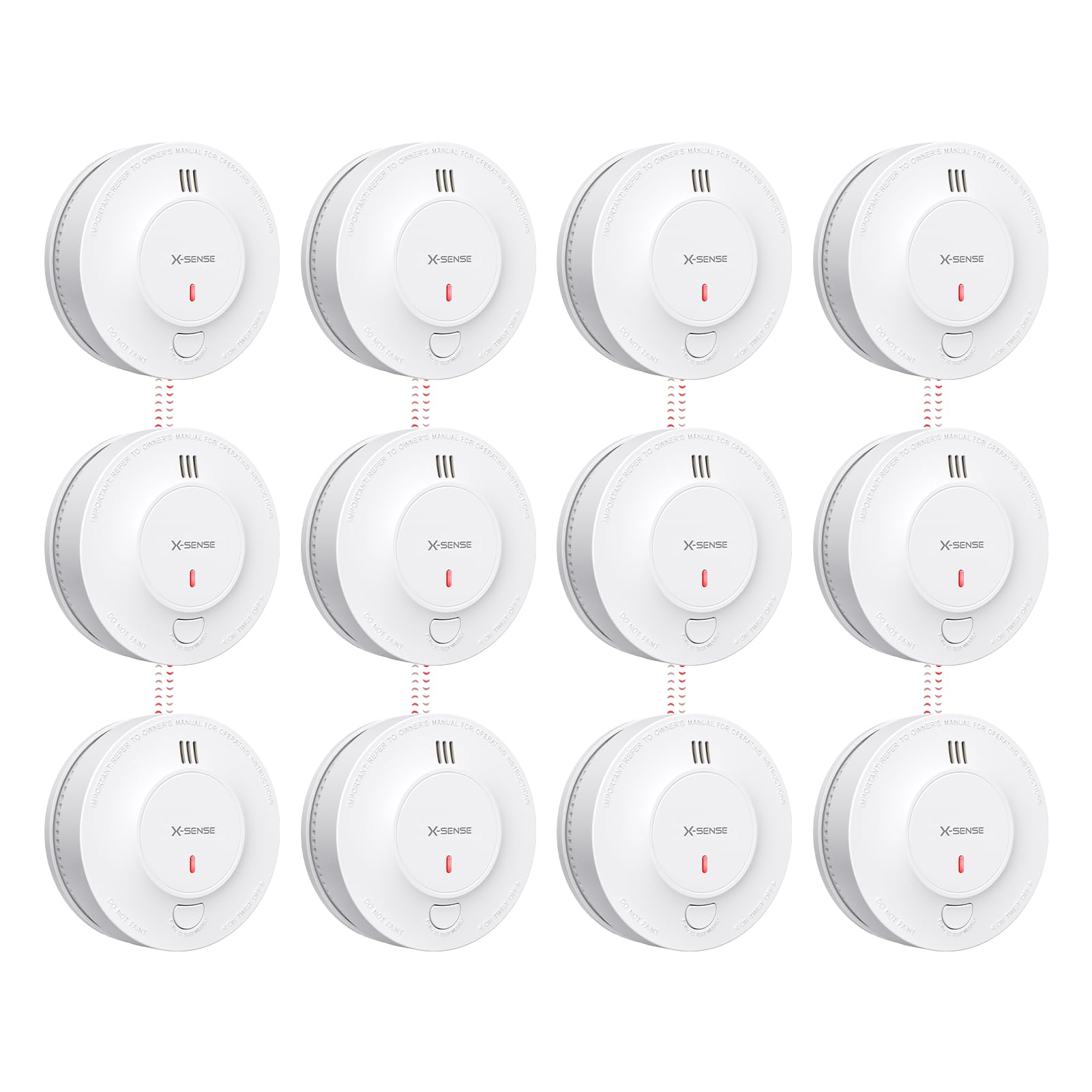
Network Capacity: Up to 18 wireless detectors
Alert Behavior: One alarm sounds all
False Alarm Control: Reduced false alarm design
Certification: UL 217
Power Source: 10-year battery
Pack Size: 12 detectors
The SD19-W is built around scale. A twelve-pack with capacity for up to eighteen linked units suits big floor plans, additions, finished basements and multi-level homes where six detectors leave gaps. The network links wirelessly, so expansion is a matter of adding units, not running cable. Smoke-only detection keeps the per-unit cost down when quantity matters more than dual sensing.
Buyers protecting a large property, or a house with several separate wings, get the most from this pack. It earns its place on capacity and value per detector. The trade-off is that smoke-only units leave carbon monoxide uncovered — a large home with gas appliances would need separate CO detectors or a different system.
5. X-Sense SD20-W 6-Pack — Best for Bedrooms
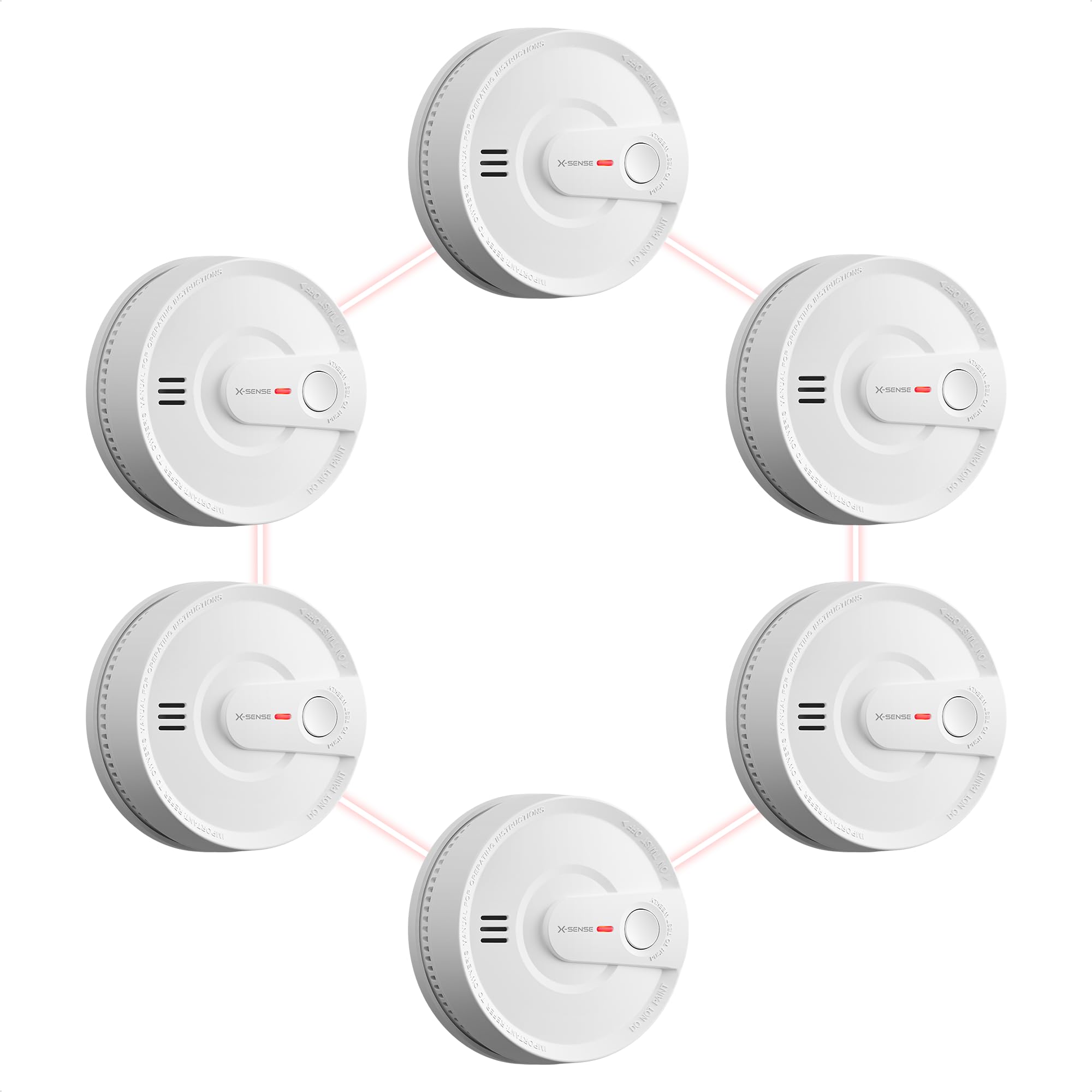
Network Capacity: Up to 18 Link+ alarms
Alert Behavior: All alarms sound together
Certification: UL 217
Convenience: Self-check and one-button hush
Power Source: 10-year battery
Pack Size: 6 detectors
The SD20-W targets the bedroom hallway and the rooms off it. All units in the Link+ network sound together, so an alarm in the basement wakes sleepers upstairs. The one-button hush silences a nuisance alarm without removing the unit, and the self-check routine takes the guesswork out of maintenance. Six units cover a typical sleeping floor plus the main living area.
This is the pick for buyers who want a quiet, low-fuss smoke network focused on where people sleep. It earns its place on the hush and self-check features at a budget tier. The trade-off is smoke-only detection — households with gas heat or attached garages should add carbon monoxide coverage separately.
Before You Buy
- Power source: Sealed 10-year batteries mean no annual swapping, but the whole unit is replaced when the battery ends. Confirm the disposal and replacement plan.
- Coverage count: Match pack size to rooms, not square footage alone. Hallways outside bedrooms, each level, and the kitchen perimeter all need a unit.
- Detection type: Smoke-only packs cost less per unit; combined smoke-and-CO units cover two hazards in one ceiling spot.
- Interconnect range: Check the maximum number of linked units before buying a large pack, especially for additions or separate structures.
- Connectivity: Wi-Fi gateway systems add phone alerts but depend on the router and app — decide whether remote monitoring is worth that dependency.
- Certification: Look for UL 217 on smoke units and UL 2034 on any carbon monoxide detection, and confirm both appear on combined models.
- Mounting: These are wire-free units, so installation is screw-and-twist. Check ceiling or wall compatibility before committing to a full pack.
Frequently Asked Questions
-
What does "interlinked" mean on a smoke alarm system?
Interlinked alarms communicate wirelessly so that when one detects smoke, every unit in the network sounds. That gives earlier warning anywhere in the house, not just near the fire. -
Do these systems need an electrician?
No. All five picks run on sealed batteries and link wirelessly, so installation is a DIY job with basic tools. No hardwiring or dedicated circuit is required. -
How many alarms does a typical home need?
One per bedroom, one in the hallway outside sleeping areas, and at least one per level including the basement. A six-pack covers a standard single-family home; larger layouts need the twelve-pack or expansion units. -
Is a smoke-and-CO combo better than smoke-only?
Combos cover two hazards from one ceiling point and simplify the network. Smoke-only packs cost less per unit, which matters when quantity is the priority — but CO coverage then has to come from separate detectors. -
Can the network be expanded later?
Yes, within each system’s stated limit. The X-Sense packs link up to eighteen units, so adding a detector later is possible as long as the cap isn’t reached. -
What maintenance do sealed-battery alarms need?
Regular testing with the test button and occasional dusting. There is no battery to change, but the sealed unit has a finite service life and is replaced as a whole when it expires.
Bottom Line
For most households, the X-Sense SC07-W 6-Pack is the best interlinked smoke alarm system here: it covers smoke and carbon monoxide in one sealed, wire-free unit and links a full home on a single network. Buyers who want phone alerts should step up to the Heiman gateway bundle, while large properties get the most value from the twelve-pack. Check the current price on the SC07-W and confirm the pack size against the floor plan before ordering.