Why there are Amazon links here: Brave Review is paid a commission for qualifying Amazon purchases made through the links below. Your price does not change, and using our links is entirely optional. How this works
Best Solar Battery for a House with a Shaded Roof
A shaded roof rarely produces enough solar to run a home on its own, so the battery becomes the center of the system rather than an add-on. The picks below split into three groups: whole-house off-grid kits for homes that want to leave the grid behind, mid-size expandable systems for partial backup, and a compact unit for outages and small loads. Buyers who want to size a system around limited panel output should start with the overview table, then read the review that matches their budget and ambition.
The Picks at a Glance
| Product | Key Spec | Best Use | Price Tier |
|---|---|---|---|
| ECO WORTHY 10000W Off-Grid Kit | 16.1kWh storage, 2950W PV | Whole-house off-grid with maximum storage | Premium |
| Jackery HomePower 3600 Plus | 3584Wh, expandable to 21kWh | Growing backup capacity over time | Upper mid-range |
| ECO-WORTHY 5KW Off-Grid Kit | 2340W PV, 48V 100AH battery | Balanced off-grid kit on a budget | Mid-range |
| 3000W 24V Complete Kit | 5.12kWh LiFePO4, 1440W PV | Smaller off-grid homes and cabins | Mid-range |
| Jackery Solar Generator 1000 v2 | 1070Wh, 1500W AC | Outages, off-grid living, RV | Budget |
The table shows the real trade-off in a shaded-roof setup. Panel wattage matters less than it normally would, because shade caps what the array can deliver, so storage capacity and inverter headroom do most of the work. The two ECO WORTHY kits lean on large battery banks to compensate for modest panel arrays, while the Jackery units favor modular storage that can grow as the budget allows.
ECO WORTHY 10000W Output Complete Off-Grid Solar Panel Kit for Home
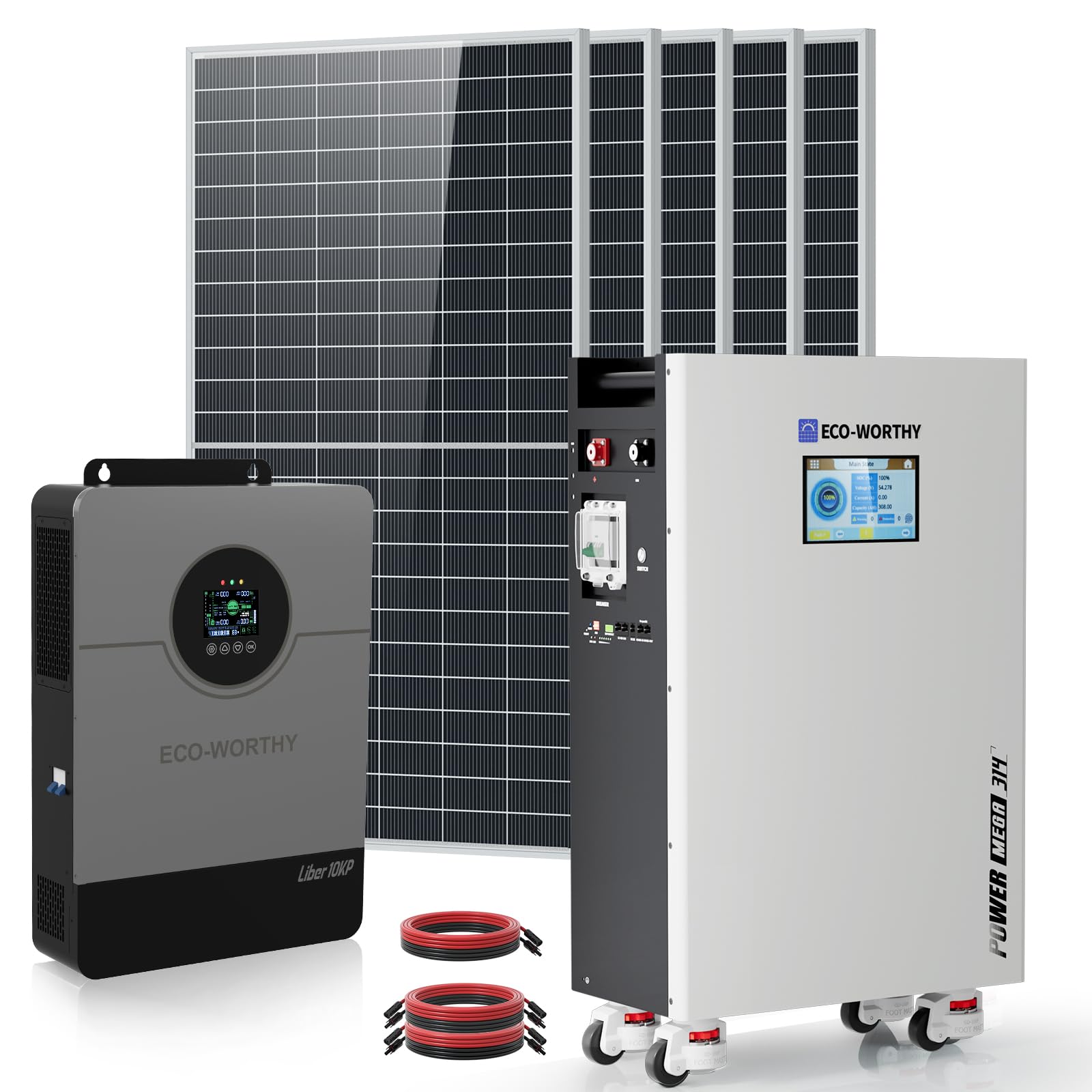
Output: 10000W split-phase inverter
Voltage: 120V/240V
Battery: 48V 314Ah LiFePO4
Storage Capacity: 16.1kWh
Solar Array: 2950W of panels
System Type: Complete whole-house off-grid kit
ECO WORTHY 10000W Output Complete Off-Grid Solar Panel Kit for Home
This is the largest system in the roundup and the one built for a house that wants to run entirely without a utility connection. The 16.1kWh battery bank is the headline figure, and it is the reason the kit suits a shaded roof: when panels underperform, a big lithium bank carries the house through the evening and the next morning. The split-phase inverter delivers both 120V and 240V circuits, which is what large appliances and well pumps need.
The 2950W panel array is modest next to the inverter’s rating, and that mismatch is deliberate in an off-grid design. Buyers get headroom to add panels later, or to run the array at a lower peak on a roof that only sees part sun. The 48V architecture keeps cable sizing sensible across a whole-house install.
Trade-off: The kit costs more than every other pick here, and the full battery bank only pays off if the home’s daily consumption is genuinely high.
Jackery HomePower 3600 Plus with 2x200W Solar Panels
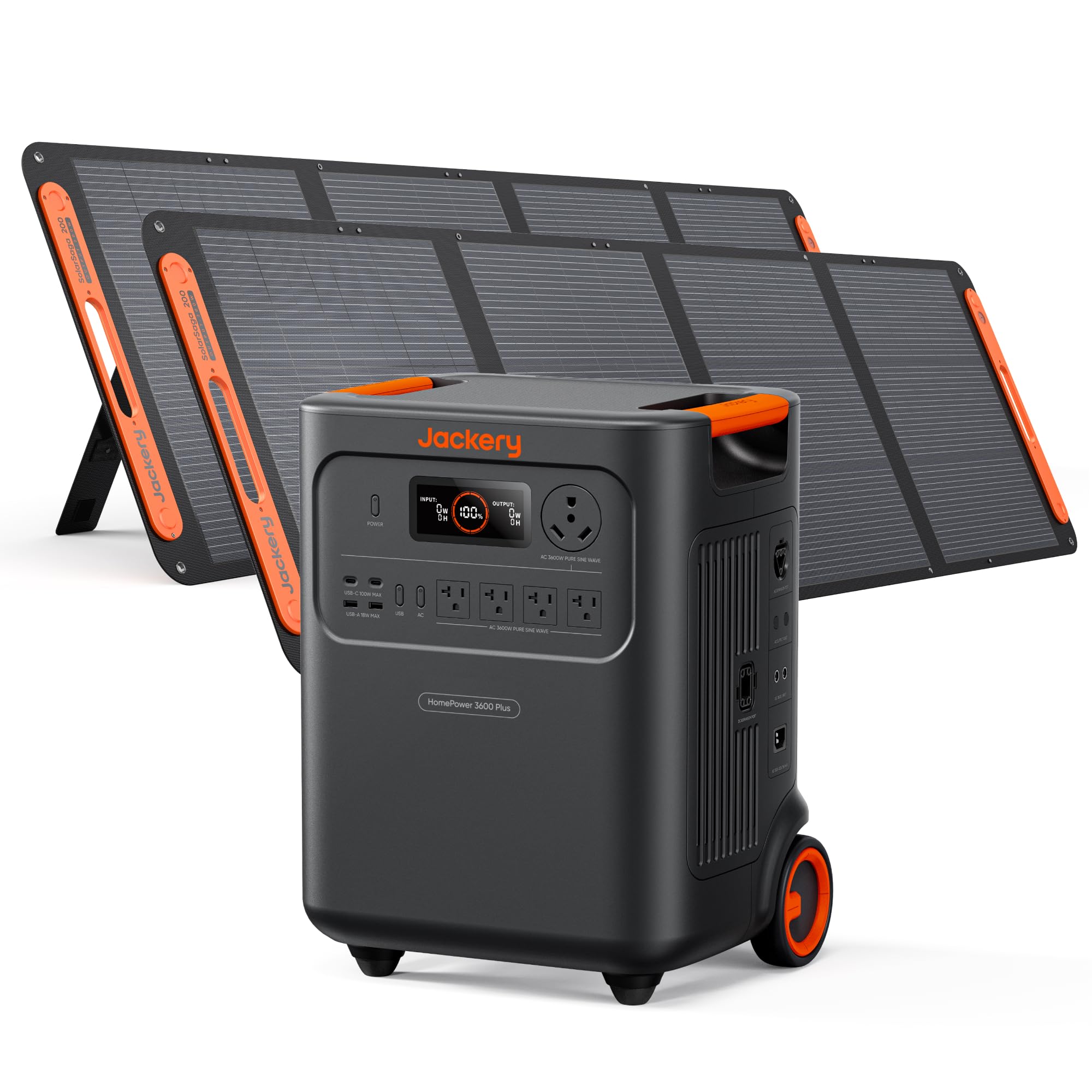
Battery Chemistry: LiFePO4
Capacity: 3584Wh
Expandable To: 21kWh
AC Output: 3600W
Included Panels: 2x200W
System Type: Expandable home backup
Jackery HomePower 3600 Plus & 2x200W Solar Panels
This is the most flexible option in the group and the one that makes most sense for a home that wants backup first and off-grid second. The base 3584Wh battery runs essential circuits during an outage, and the expandable design means capacity can be added later without replacing the unit. LiFePO4 chemistry is the right choice for a system that sits idle for long stretches between outages.
The two included 200W panels are a small array by whole-house standards, but they are enough to top the battery up between storms or during a long outage. For a shaded roof, that is the realistic job: the panels are a maintenance charge, not a primary power source. Buyers who want to scale into a larger system can do so incrementally.
Trade-off: Reaching the full 21kWh figure requires buying additional expansion batteries, so the advertised ceiling costs considerably more than the entry price suggests.
ECO-WORTHY 5KW Off Grid Solar System Complete Kit
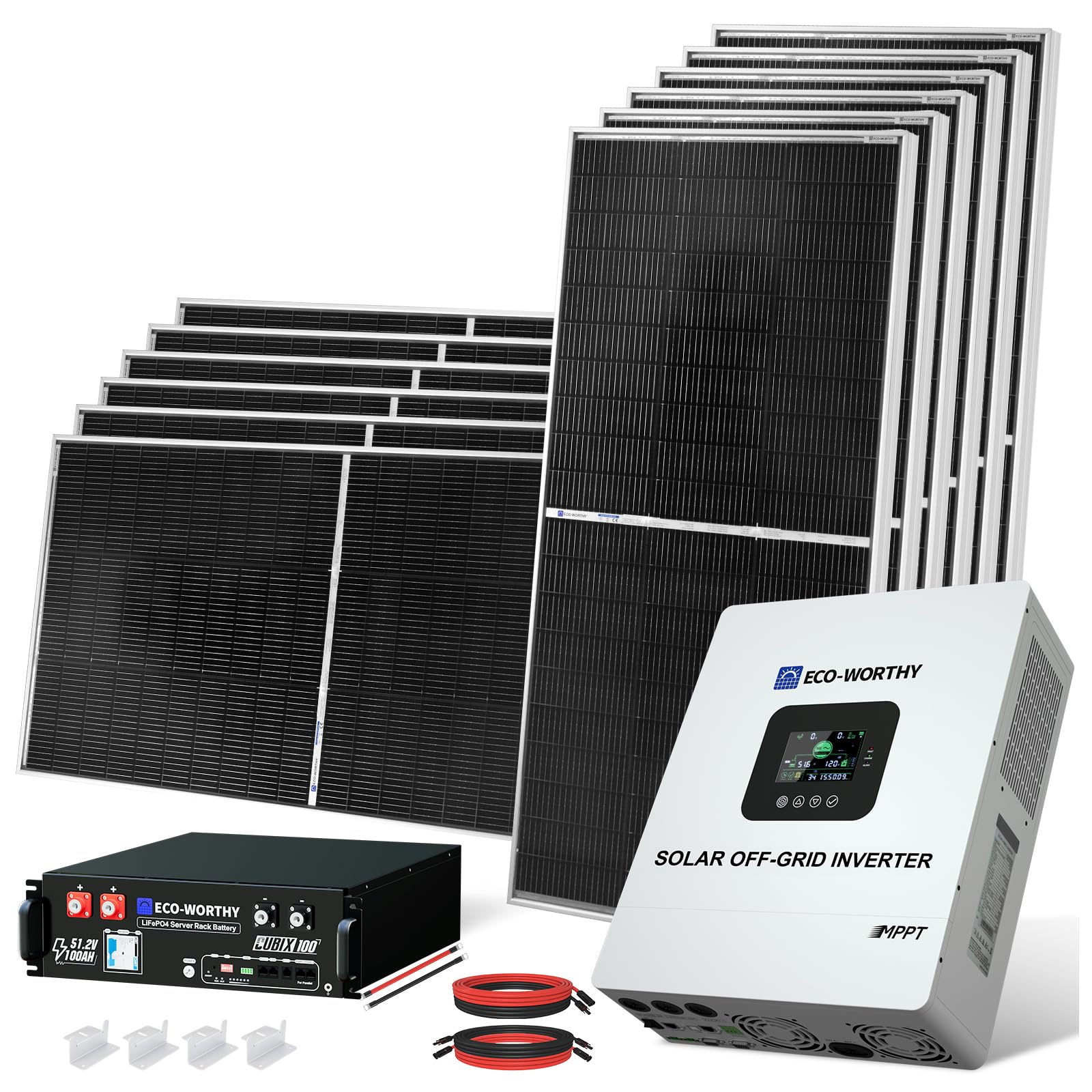
Solar Array: 12x195W panels (2340W)
Inverter: 48V 5000W
Battery: 48V 100AH Cubix LiFePO4
System Type: Complete off-grid kit
Architecture: 48V
ECO-WORTHY 5KW Off Grid Solar System Complete Kit
This kit sits in the middle of the range and offers the most balanced panel-to-inverter ratio of the three full off-grid systems. The 2340W array feeds a 5000W inverter through a 48V battery, which is a sensible pairing for a small home or a cabin with moderate loads. The Cubix LiFePO4 battery is a server-style unit, a format that stacks neatly in a utility area.
Twelve separate 195W panels give installation flexibility that a few large panels cannot match. On a partially shaded roof, that matters: panels can be spread across the roof’s sunnier sections and wired to limit the damage a single shaded panel does to the string.
Trade-off: The single 100AH battery leaves less reserve than the largest kit here, so a shaded roof and a high evening load will drain it faster than buyers might expect.
3000W 24V Solar Power System Complete Kit
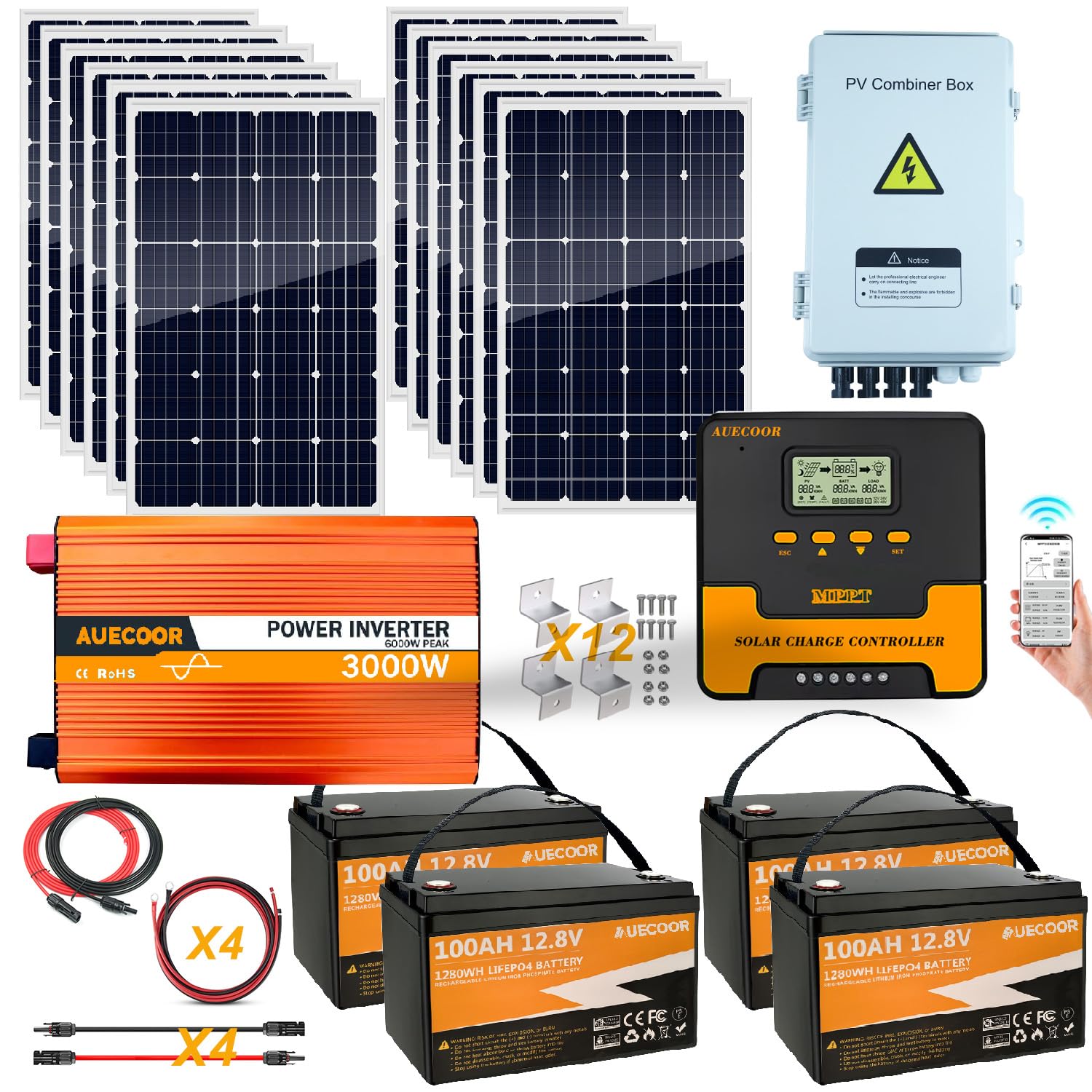
Inverter: 3000W continuous, 6KW peak pure sine wave
System Voltage: 24V
Battery Capacity: 5.12kWh LiFePO4
Solar Array: 1440W (12x120W panels)
Included Components: PV combiner box, MPPT solar controller
System Type: Off-grid home, RV and backup kit
3000W 24V Solar Power System Complete Kit
This kit is the entry point to a genuine off-grid install and the most complete package at its price level. The MPPT controller and PV combiner box are included, which removes two of the more confusing purchases a first-time installer faces. The 6KW peak rating on the pure sine wave inverter means motor loads like a fridge compressor or a small pump can start without tripping the unit.
The 24V architecture keeps the system simpler and cheaper to wire than a 48V build, at the cost of higher current and thicker cables. For a cabin, a workshop, or a home with modest demand, the 5.12kWh battery is a workable daily reserve when paired with careful load management.
Trade-off: The 1440W array is the smallest full-size array here, so on a shaded roof this kit will spend more time relying on the battery than on solar production.
Jackery Solar Generator 1000 v2 and 200W Solar Panel

Capacity: 1070Wh
AC Output: 1500W
Battery Chemistry: LiFePO4
Fast Charge: 1 hour
USB-C Output: 100W
Included Panel: 200W solar panel
Jackery Solar Generator 1000 v2 and 200W Solar Panel
The 1000 v2 is a portable power station rather than a home battery, and it earns its place here for the household that cannot justify a whole-house system. It runs a fridge, lights, a router and phone charging through a multi-day outage, and the 100W USB-C port charges laptops directly. The one-hour fast charge from a wall outlet is the standout feature for storm prep.
The included 200W panel gives the unit a way to recharge without grid power, which is the point for a shaded-roof home that may lose the grid for days. LiFePO4 chemistry gives it a long service life for a unit this size. It is light enough to move between rooms or take on a trip.
Trade-off: At 1070Wh it is a backup appliance, not a house battery, and it will not carry central air, a heat pump, or an electric water heater.
Before You Buy
- Capacity vs. array size: On a shaded roof, weight the battery capacity more heavily than panel wattage. Storage is what carries the home when production drops.
- Voltage architecture: 48V systems handle whole-house loads with thinner cable; 24V systems are simpler and cheaper for cabins and small loads.
- Expandability: Confirm whether the battery bank can grow later, since shade often forces buyers to add storage before they add panels.
- Included components: Full kits bundle the inverter, controller and combiner box; portable units bundle only what the box lists.
- Panel count and placement: More, smaller panels can be spread across sunnier roof sections, which limits shade losses better than a few large panels.
- Load audit: List the appliances that must run during an outage before choosing a system size, because that list sets the real requirement.
- Installation scope: Whole-house kits involve real electrical work and typically need a licensed installer, which belongs in the budget.
Frequently Asked Questions
-
Can a solar battery system work if the roof is shaded?
Yes, but the battery does more of the work. A shaded array produces less, so a larger battery bank and a modest array is a more realistic design than a large array alone. -
How much battery capacity does a shaded-roof home need?
It depends on which circuits must stay live. A small backup setup can run essentials on a few kilowatt-hours, while a whole-house off-grid system needs a bank in the mid-teens of kilowatt-hours or more. -
Are the included solar panels enough on their own?
For the full off-grid kits, the panels are sized to the system and can be supplemented later. For the portable Jackery units, the included panels are a recharge source, not a whole-home supply. -
Is LiFePO4 the right battery chemistry for home storage?
It is the standard choice for home and portable storage because it handles deep discharge and long idle periods well. Every pick in this roundup uses it. -
Can a portable power station replace a home battery?
It can cover an outage, not a whole house. The Jackery 1000 v2 is the right tool for essentials and short-term backup; it cannot run large 240V appliances. -
Do these kits require professional installation?
The whole-house off-grid kits involve panel mounting, DC wiring and inverter connection, which generally calls for a licensed electrician. Portable units plug in and need no installation.
Bottom Line
For a shaded roof, storage capacity decides everything, and the ECO WORTHY 10000W Off-Grid Kit carries the most of it with a 16.1kWh bank and a split-phase inverter built for a whole house. Buyers who want backup now and room to grow should look at the Jackery HomePower 3600 Plus instead, and anyone testing the waters can start with the portable Jackery 1000 v2.
