Why there are Amazon links here: Brave Review is paid a commission for qualifying Amazon purchases made through the links below. Your price does not change, and using our links is entirely optional. How this works
Best Carbon Monoxide Alarm for a Room with a Generator
A generator room needs a carbon monoxide alarm that keeps working when the power does not. The five models below range from a budget battery unit to a plug-in alarm with a digital display, and they cover three buyer profiles: homeowners running a standby generator, renters with a portable unit, and anyone who wants a spare alarm for a garage or shed. The overview table shows each pick’s key spec, best use and price tier, so a decision is possible in under a minute.
Overview of the Picks
| Product | Key Spec | Best Use | Price Tier |
|---|---|---|---|
| Kidde 5th Edition Plug-In (B0G1CPTKNQ) | Rotating plug, AA battery backup, 85 dB alarm | Best overall for generator rooms with outlets | Mid-range |
| First Alert CO606 (B000ND74XA) | Plug-in with 9V battery backup | Best value plug-in | Budget |
| First Alert CO400 (B000N8OYXI) | Battery powered | Best pure battery backup | Budget |
| Kidde Digital Display Plug-In (B00002N86A) | Digital display, 9V backup, 85 dB alarm | Best for reading CO levels | Premium |
| Kidde AA Battery Portable (B004Y6V5CI) | AA battery powered, portable | Best for sheds and temporary setups | Mid-range |
1. Kidde 5th Edition Plug-In Carbon Monoxide Detector
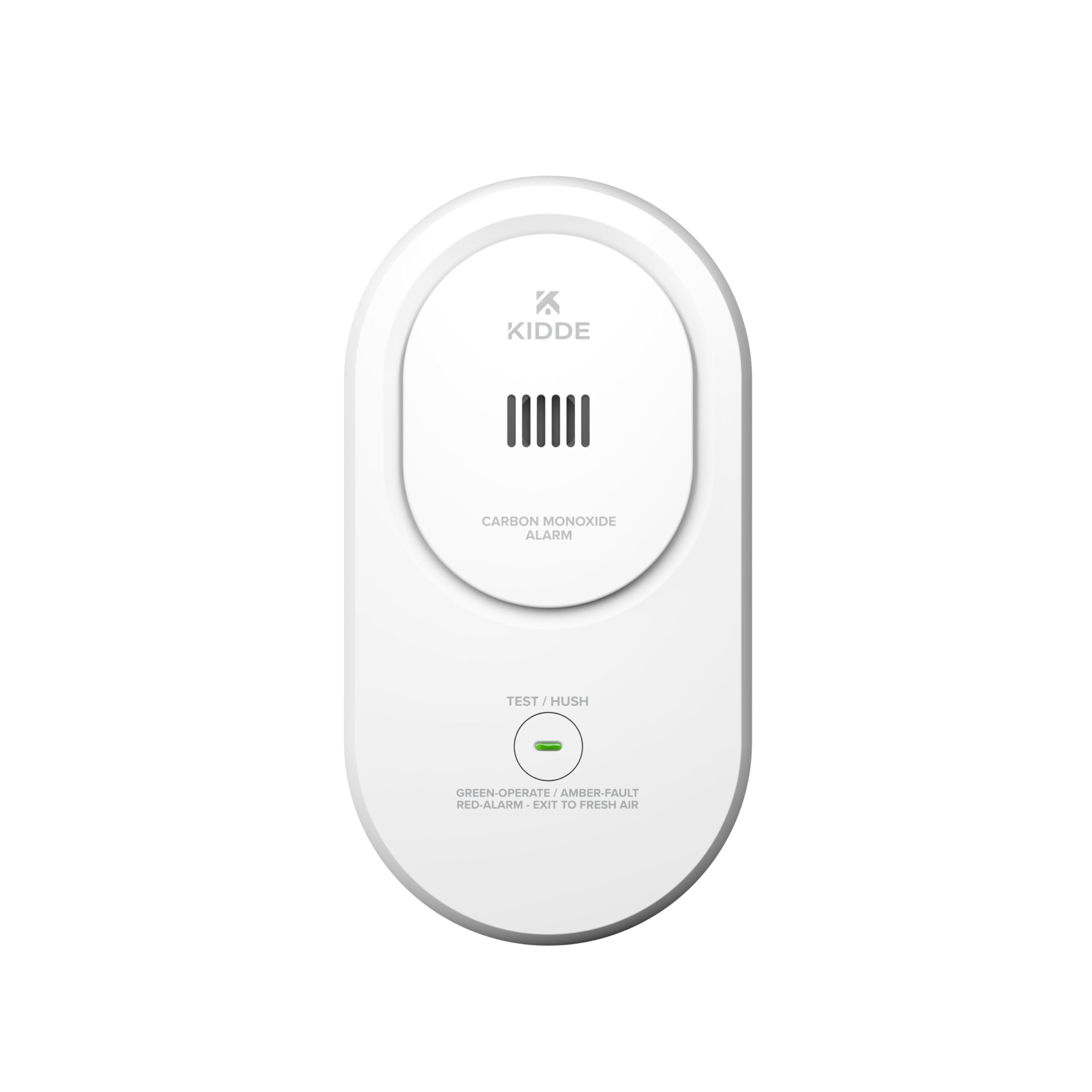
Type: Plug-in with battery backup
Alarm: 85 dB
Backup: AA batteries
Plug: Rotating
Status lights: LED indicators
Edition: 5th
The rotating plug is the feature that matters most in a generator room, because wall outlets there are often blocked by shelving or tucked behind equipment. The alarm twists to sit flush against the wall in either orientation, and the AA battery backup keeps it live through an outage. LED status lights give a quick visual check without pressing anything. The 85 dB alarm is loud enough to carry through a closed door.
This is the pick for homeowners with a standby generator and a nearby outlet. It suits a permanent installation where the alarm stays plugged in year-round and the backup cells only take over during a power cut. Buyers who want a display showing actual CO levels should look at the Kidde digital model instead.
Trade-off: The rotating plug adds bulk at the outlet, so a tight duplex receptacle shared with a freezer or sump pump may not fit both plugs side by side.
2. First Alert CO606 Plug-In Carbon Monoxide Alarm

Type: Plug-in
Backup: 9V battery
Power source: AC outlet with battery backup
Brand: First Alert
Model: CO606
This is the straightforward plug-in alarm: it draws power from the outlet, keeps a 9V battery as backup, and sounds when CO builds up. The design is simple and the footprint at the wall is small, which helps in a crowded generator room where every socket counts. First Alert builds it as a set-and-forget unit, so there are no menus or settings to learn.
It suits budget-conscious buyers who want a name-brand plug-in alarm and do not need a display. It also works well as a second alarm in a hallway outside the generator room. The main limitation is that the unit needs an outlet to run at full capability, so it is the wrong choice for a shed with no power.
Trade-off: Without a digital readout, the alarm only signals when levels are already a concern, so a buyer who wants to watch CO trends will find it basic.
3. First Alert CO400 Battery Carbon Monoxide Alarm
Type: Battery powered
Power source: Battery only
Brand: First Alert
Model: CO400
Installation: Wall or ceiling mount
The CO400 runs on battery alone, which makes it the right alarm for a generator room with no usable outlet or for a detached garage where wiring is impractical. It mounts to a wall or ceiling and needs no AC connection, so placement is limited only by where a screw can go. First Alert keeps the operation simple: one unit, one battery, one alarm.
This pick suits renters and anyone setting up a temporary generator location, such as a shed or covered porch during storm season. It is also a sensible spare for a guest room or basement. Buyers who want the alarm to survive a long outage without battery changes should pair it with a plug-in model rather than rely on it alone.
Trade-off: Battery-only operation means the alarm depends entirely on the cell inside it, so a dead battery takes the protection with it.
4. Kidde Digital Display Plug-In Carbon Monoxide Detector

Type: Plug-in with battery backup
Display: Digital
Alarm: 85 dB
Backup: 9V battery
Status lights: LED indicators
Edition: 3rd
The digital display is what separates this Kidde from the rest of the list: it shows a CO reading rather than just waiting to sound. In a generator room, that means a buyer can see a rising number and ventilate before the alarm ever trips. The 85 dB horn and LED status lights match the other Kidde units, and the 9V backup covers outages.
This is the premium pick for a homeowner who runs a generator often and wants early warning rather than a binary alarm. It suits a permanent wall location near the generator door. Buyers on a tight budget who only need the alarm to sound can save money with the First Alert CO606.
Trade-off: The display and extra electronics push the price above the simpler plug-ins, and the screen is only useful if the alarm sits at eye level.
5. Kidde AA Battery Portable Carbon Monoxide Alarm

Type: Battery powered, portable
Power source: AA batteries
Indicators: LEDs
Controls: Test-reset button
Alert: Low battery indicator
This Kidde runs on AA cells and is built to be carried, not just mounted. The test-reset button and low battery indicator cover the basics, and the LED lights confirm the unit is powered. Because it is portable, it can move from the generator room to a tent, RV or job site as needed.
It suits campers, renters and anyone who uses a generator in more than one place. It is also a good pick for a shed where the generator runs only occasionally. Buyers who want a fixed alarm with a continuous display should choose the plug-in Kidde instead.
Trade-off: Portability means the alarm can be left behind or knocked out of place, and AA cells drain faster in a unit that gets moved and tested often.
Before You Buy
- Power source: A generator room may lose AC power exactly when the generator runs, so battery backup is essential on any plug-in model.
- Outlet access: Check that the outlet is not blocked by shelving or a generator frame; a rotating plug helps in tight spots.
- Placement height: CO mixes with air, so an alarm at breathing height or on the wall near the generator door reads conditions a ceiling unit may miss.
- Display vs. alarm only: A digital model shows rising levels early; an alarm-only unit is cheaper but reacts later.
- Battery type: AA and 9V backups are easy to stock; match the cell to what the household already keeps on hand.
- Portability: A battery-only unit can move between a shed, garage and RV; a plug-in stays where it is installed.
- Test routine: A test-reset button makes monthly checks quick, which matters more in a room with an engine.
Frequently Asked Questions
-
Where should a CO alarm go in a room with a generator?
Mount it on a wall at roughly breathing height, within earshot of the generator but not directly above it, and keep it away from corners where air stagnates. -
Does a plug-in alarm still work during a power outage?
Only if it has a battery backup. Models with AA or 9V backup keep running when the outlet goes dead, which is the situation a generator room is most likely to create. -
Is a battery-only alarm enough for a generator room?
It can be, especially in a shed with no wiring. The catch is that protection lasts only as long as the cell, so the battery needs regular replacement. -
How loud is an 85 dB alarm?
85 dB is roughly the level of a loud truck passing nearby, loud enough to wake most people in an adjacent room. -
Can one alarm cover both the generator room and the house?
No. CO spreads, but a single unit cannot reliably protect two separate areas; one alarm near the generator and one inside the living space is the safer setup. -
Does a digital display replace the need for an alarm?
No. The display is an early-warning aid; the 85 dB horn is what protects the household once levels climb.
Bottom Line
For most generator rooms, the Kidde 5th Edition Plug-In is the best carbon monoxide alarm for the job: the rotating plug fits awkward outlets, AA backup covers outages, and the 85 dB alarm is loud enough to matter. Buyers who want to watch CO levels should step up to the Kidde digital display, while a shed with no power calls for the portable AA model.
