Why there are Amazon links here: Brave Review is paid a commission for qualifying Amazon purchases made through the links below. Your price does not change, and using our links is entirely optional. How this works
Tenda Nova Mesh WiFi System MW6: Whole-Home WiFi Without the Router Headache
The Tenda Nova Mesh WiFi System MW6 is a three-pack mesh kit built for homes large enough that a single router struggles to reach every room. It replaces the router and any WiFi extenders with a set of nodes that share one network name, so devices move between rooms without a manual reconnect. This review covers what the kit includes, how the mesh hardware works, where the AC1200 ceiling matters, and who should look elsewhere. Buyers who want a quick answer can check the price and move on.
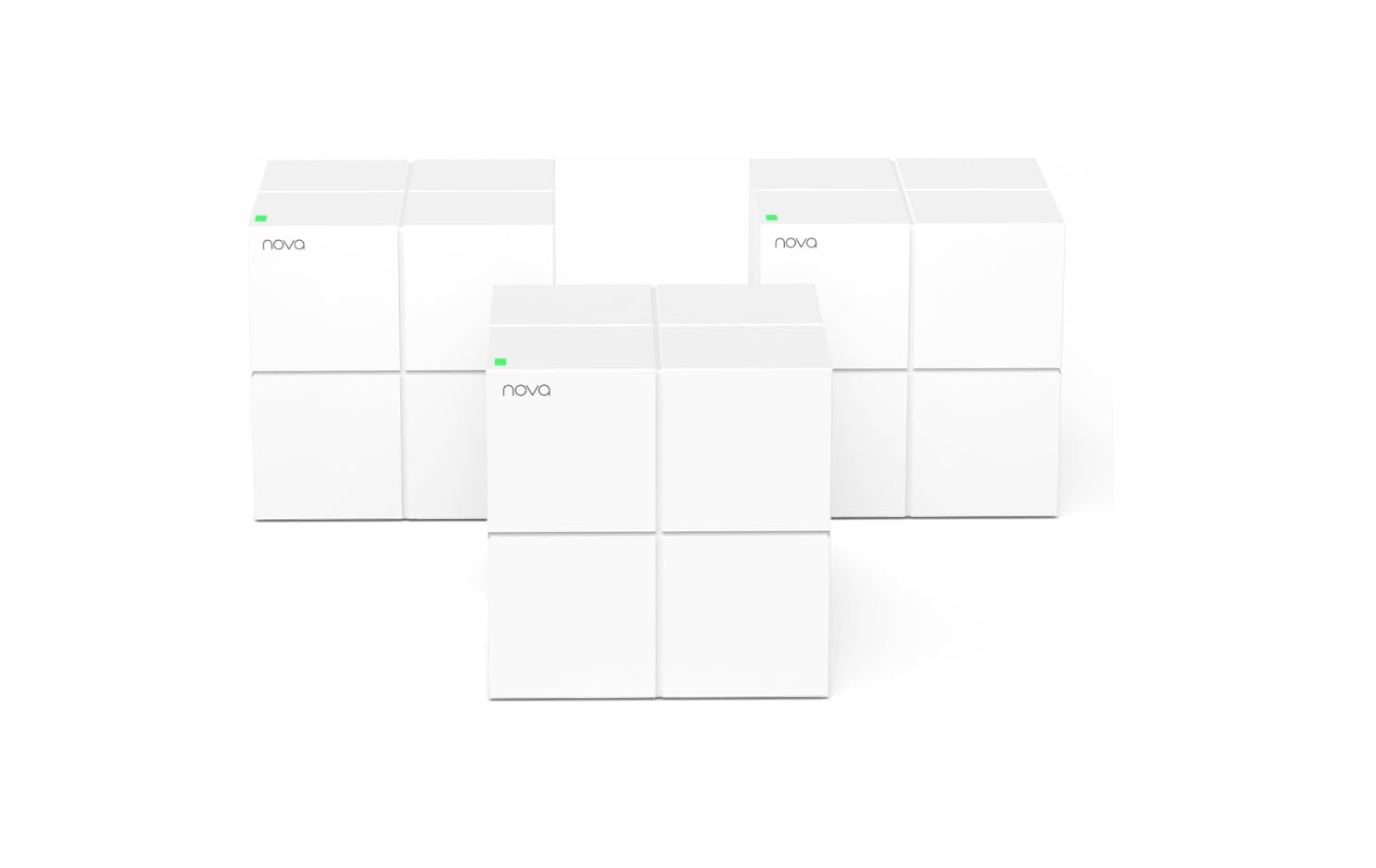
Features and Specifications
Type: Whole-home mesh WiFi system, three-pack
Coverage: Homes with 4-6 bedrooms
Wireless Standard: AC1200 dual-band
Network: Gigabit dual-band mesh
Replaces: Wireless router and WiFi extender
Ports: Gigabit Ethernet on the nodes
Setup: App-guided, single network name across nodes
The MW6 kit is a mesh system first and a router replacement second, and that order matters. One node connects to the modem and acts as the entry point; the other two extend the same network outward, handing devices off as they move. The AC1200 rating describes the combined dual-band throughput the radios are built around, which is a mid-tier figure rather than a flagship one.
Gigabit Ethernet is the detail that separates this kit from cheaper extenders. Wired backhaul between nodes keeps the mesh links off the wireless bands, and wired clients get a full-speed port at any node. The three-pack sizing points at a specific buyer: a multi-floor house or a long floor plan where one central router leaves dead zones at the edges.
Build, Coverage, and Capacity
Three nodes is the right count for the coverage claim. A mesh works by placing nodes within reasonable range of each other and letting them relay traffic, so a 4-6 bedroom house gets one node near the modem, one mid-house, and one at the far end. That layout is what closes the dead-zone problem a single router creates in a house with interior walls and a second floor.
The trade-off in the hardware is that the mesh links share airtime with client traffic on the same dual-band radios. A dedicated backhaul band would keep node-to-node traffic separate, and this kit does not have one. In practice that means placement matters more than it would on a tri-band system: nodes spaced too far apart force weaker links, and nodes packed too close waste coverage.
Capacity is the other limit worth naming. AC1200 is comfortable for streaming, browsing, video calls, and a house full of smart devices, but it is not built for several people pulling large files or gaming competitively at the same time. Buyers with heavy simultaneous load across many devices should treat this as a budget mesh kit, not a performance one.
Setup, Management, and Maintenance
Setup runs through the Tenda app, which walks through connecting the first node to the modem and then adding the others. The system broadcasts one network name, so phones and laptops join once and stay joined as they move around the house. That single-name behavior is the main practical upgrade over a router plus extender setup, where devices often cling to a weak signal instead of switching.
Day-to-day management is app-based: viewing connected devices, checking node status, and running basic network controls. There is no subscription attached to the core mesh features, which keeps the long-term cost at the purchase price. Firmware updates arrive through the app, and the nodes are small enough to sit on a shelf or side table without drawing attention.
Maintenance is minimal by design. The main ongoing task is node placement — if a room still drops out, moving a node rather than adding hardware is usually the fix. Buyers who want deep router-level configuration, VLANs, or advanced firewall rules will find the app-first interface limiting compared with a full router’s admin panel.
Trade-off: The AC1200 dual-band design and app-only controls keep the price low, but buyers with heavy simultaneous traffic or a need for advanced router settings will hit the ceiling quickly.
Check the price of the Tenda Nova MW6 3-Pack on Amazon
Who the Tenda Nova MW6 Suits — and Who It Does Not
The kit suits buyers in a mid-size to large house who want one network name, no dead zones, and no monthly fee. It also suits renters and first-time mesh buyers who want to solve coverage without spending flagship money. Anyone replacing an aging router and a couple of extenders gets the cleanest upgrade here.
It does not suit small apartments, where a single good router covers the space and a three-pack is overkill. It does not suit buyers on multi-gigabit internet plans, since the wireless ceiling sits well below that. And it does not suit tinkerers who want granular control over their network — the app-first design is a feature for most buyers and a limitation for that group.
FAQ
-
What is the Tenda Nova MW6 mesh WiFi system?
It is a three-pack mesh WiFi kit that replaces a wireless router and extenders with multiple nodes sharing one network name. One node connects to the modem and the others extend coverage through the house. -
How many bedrooms does the Tenda Nova MW6 cover?
The manufacturer rates the three-pack for homes with 4-6 bedrooms. Actual coverage depends on wall materials, floor count, and node placement, so a long or thick-walled house may need the nodes spaced carefully. -
Does the Tenda Nova MW6 replace a router?
Yes. The kit is designed to replace both the wireless router and any WiFi extenders, with the first node acting as the network’s entry point to the modem. -
Is the Tenda Nova MW6 good for gaming?
It handles casual gaming and streaming fine, but the AC1200 dual-band design is not aimed at competitive gaming or several heavy users at once. Buyers who need low latency under load should look at tri-band or newer systems. -
Can the Tenda Nova MW6 handle a large family with many devices?
It manages a typical household of phones, laptops, streaming boxes, and smart devices. The limit shows up when many people pull large amounts of data simultaneously, which is where the dual-band AC1200 ceiling becomes noticeable. -
Does the Tenda Nova MW6 need a subscription?
No. The core mesh features work without a recurring fee, and management runs through the Tenda app rather than a paid service. -
How many Ethernet ports does the Tenda Nova MW6 have?
The nodes carry Gigabit Ethernet ports, which allows wired connections at each node and wired backhaul between them. That wired option is a meaningful step up from a basic extender setup. -
Is the Tenda Nova MW6 good for apartments?
It is more coverage than most apartments need. A single router or a two-node setup usually suffices in a smaller space, and a three-pack adds cost and nodes without adding much benefit. -
Can the Tenda Nova MW6 work with an existing router?
The kit is built to replace the router rather than sit behind one. Buyers who want to keep an existing router should confirm compatibility before buying, since the intended setup is the mesh system as the primary network. -
What is the main drawback of the Tenda Nova MW6?
The dual-band design shares wireless capacity between mesh links and client devices, and the app-first interface limits advanced configuration. Buyers who need maximum throughput or deep router controls should weigh that against the low price.
Bottom Line
The Tenda Nova Mesh WiFi System MW6 is the practical pick for a 4-6 bedroom house that needs one network name and no dead zones without spending flagship money. Its Gigabit ports and three-node layout solve the coverage problem that routers and extenders leave behind. Buyers with heavy simultaneous traffic or a taste for advanced router settings should look higher up the range, but for everyone else this kit covers the house and keeps the cost down.
