Why there are Amazon links here: Brave Review is paid a commission for qualifying Amazon purchases made through the links below. Your price does not change, and using our links is entirely optional. How this works
Best Cold Alarm for a Loft Conversion with No Radiator
A loft conversion without a radiator is the room most likely to drop below freezing first: heat rises but has nothing to hold it, the roof loses warmth fast, and the pipes feeding the rest of the house often run through that same cold space. The five alarms below cover every practical way to get warned — app push, phone call, or a loud local siren — so the reader can pick in a minute. The overview table sorts them by price tier and best use, and each review explains who the unit fits and where it falls short. Anyone who wants remote alerts on a phone should read the Wi-Fi pick first; anyone who wants a no-internet siren should start at the bottom of the table.
The Picks at a Glance
| Product | Key Spec | Best Use | Price Tier |
|---|---|---|---|
| WiFi Thermometer Freezer Alarm | 2 wireless sensors, app + email alerts | Remote monitoring of a loft and its pipework | Mid |
| Intermediate FreezeAlarm FA-I-CCA | Voice call to up to 3 numbers | Phone-call warning with no app or hub | Premium |
| FreezeAlarm Dialer FA-700 | Voice dialer, low/high alerts | Landline-based dialing in a weak-signal loft | Highest |
| Freezer Alarm Monitor 120V | 105dB sound and light, no relay | Loud local siren, no phone setup | Mid |
| AcuRite Digital Wireless Thermometer 00515M | Max/min memory, wireless display | A simple indoor display and alarm | Budget |
1. WiFi Thermometer Freezer Alarm — Best for Remote Alerts
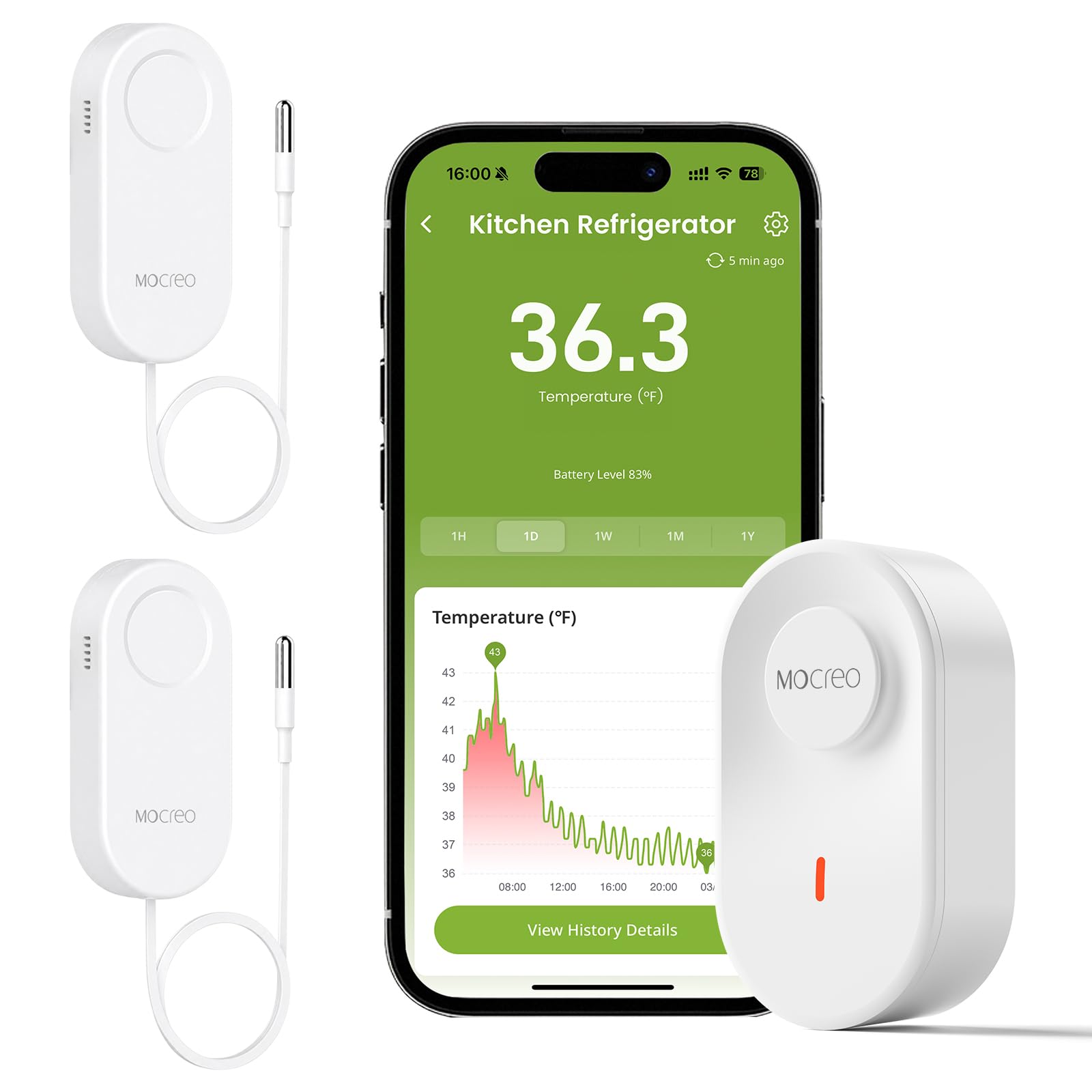

Type: Wi-Fi thermometer with app monitoring
Sensors: 2 remote wireless sensors
Alerts: App notification and email
Data: Record export, no subscription fee
Best for: Remote checks on a loft and its pipework
WiFi Thermometer Freezer Alarm
Check the current price on Amazon
The unit pairs two wireless sensors with a Wi-Fi base that pushes readings to a phone app and to email, so a temperature drop in an unheated loft reaches the reader wherever they are. Because the sensors are wireless, one can sit near the loft hatch and the other beside the cold-water tank or the pipe run that feeds the bathrooms below. The absence of a subscription fee matters here: a cold alarm needs to keep working for years, and a paid plan is the first thing people cancel. Data export is a quiet bonus for anyone who wants to prove how cold the space actually got during a snap freeze.
This pick suits owners who want a warning on their phone and are comfortable with a two-minute app setup. It is not for a loft with no Wi-Fi coverage, and it is not a substitute for a local siren — if the home internet drops, the alerts stop with it. The sensors also need to be placed where their radio signal reaches the base, which in a thick-walled conversion may mean testing positions before trusting them.
Trade-off: Two sensors cover only two spots, so a long loft with pipework at both ends may need a second unit.
2. Intermediate FreezeAlarm FA-I-CCA — Best for Phone-Call Alerts

Type: Dialer alarm with custom temperature and power-outage monitoring
Alerts: Voice message to up to 3 phone numbers
Extra: Quick status check
Best for: Owners who want a spoken warning without an app
Check the current price on Amazon
This is the pick for anyone who does not want to depend on an app or a smart-home hub. The unit dials out and plays a voice message to as many as three phone numbers, which means a neighbor or a family member can be looped in alongside the owner. It also watches for power loss, a real concern in a loft where the only heater may be a plug-in radiator or a trace-heating cable on the pipes. A quick status check lets the reader call in and hear current conditions rather than guess.
The custom temperature setting is the reason it earns a place: a loft conversion often needs its trigger set higher than a freezer would, and this model allows that. It is not for a property with no phone line or VoIP service the dialer can use, and it will not suit someone who wants readings on a screen. Setup is more involved than an app-based unit, and the spoken message is functional rather than informative.
Trade-off: It relies on a working phone connection, so a broadband-only household needs to confirm compatibility before buying.
3. FreezeAlarm Dialer FA-700 — Best for Landline Dialing

Type: Temperature dialer alarm
Alerts: Voice message by phone
Monitoring: Low and high temperature extremes
Fees: No monitoring fees
Best for: Unattended properties and lofts with a landline
Check the current price on Amazon
The FA-700 is the simplest version of the dialer idea: one phone voice message notification, low and high temperature limits, and no monitoring fees for as long as it runs. High-temperature alerts are more useful in a loft than they first appear — a conversion with large roof glazing can overheat in summer, and the same unit that warns of a freeze can warn of a heat spike that threatens plants or stored goods. There is no app, no account and no cloud service to lapse.
This is the choice for a loft in a house that still has a landline, or for an owner who wants a set-and-forget box on the wall. It is not for a reader who wants text or app alerts, and the single phone message is less flexible than the three-number dialing on the model above. It also costs more than the app-based units, so the premium buys simplicity rather than features.
Trade-off: The higher price buys reliability and no fees, not more capability — buyers wanting app data should look elsewhere.
4. Freezer Alarm Monitor 120V — Best Loud Local Siren
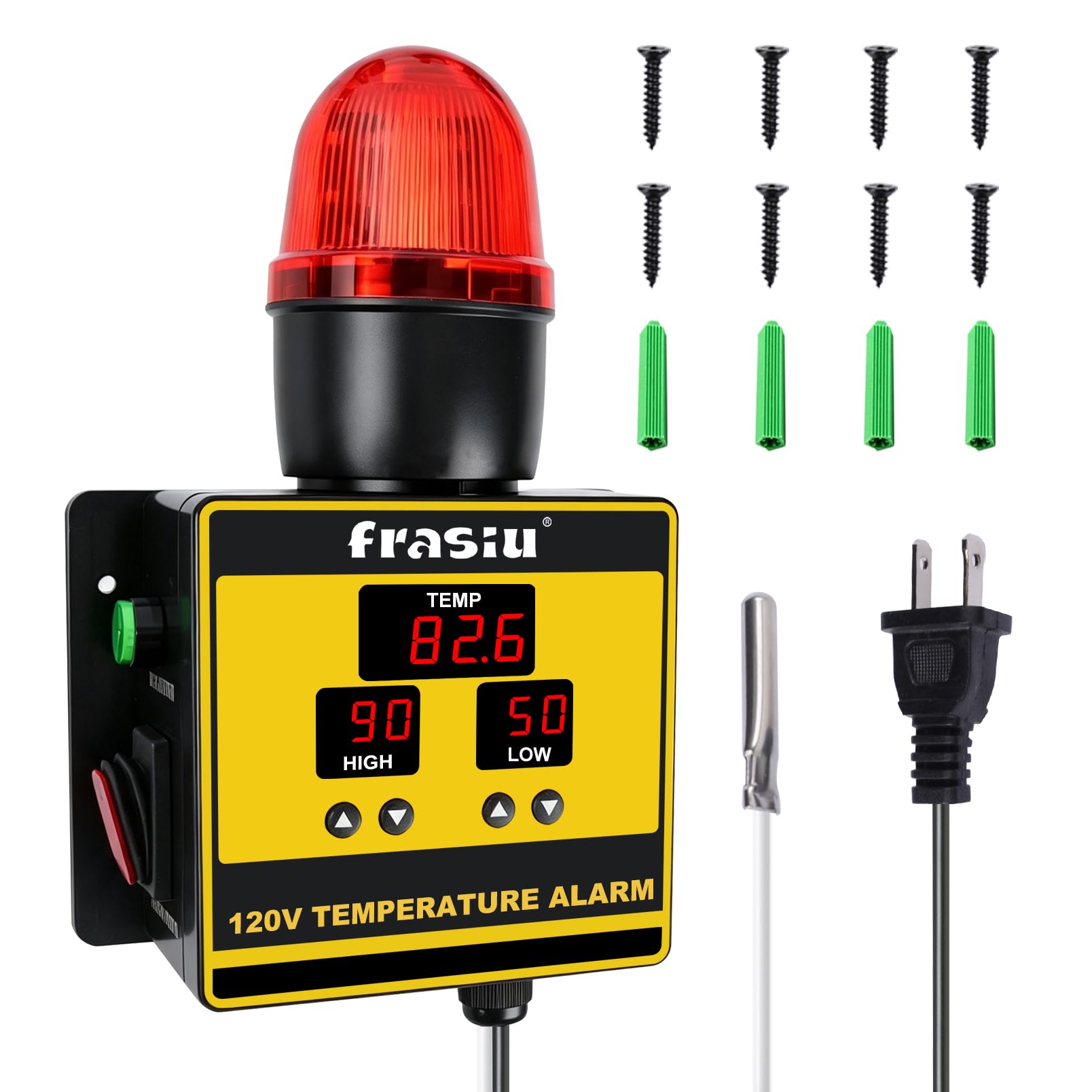
Type: Plug-in high/low temperature alarm
Alert: 105dB sound and light
Output: Alarm only, no relay output
Power: 120V
Best for: A loud warning inside the house, no phone setup
Freezer Alarm Monitor 120V, High/Low Temperature Alert, 105dB
Check the current price on Amazon
This unit does one job loudly. A 105dB siren plus a light alert is enough to be heard through a closed loft door and down a stairwell, which makes it the right pick for a household that is usually home and wants an immediate, unmissable warning. It plugs into a standard 120V outlet, so there is no battery to change and no pairing to do. The high/low alert covers both a freeze and an overheating loft.
It is not for anyone who needs to know about a cold snap while away from home: there is no app, no dialer and no relay output to trigger another device. The 120V plug also means the unit needs a socket in or near the loft, which some conversions lack. The siren is loud enough that testing it indoors is unpleasant, and it will not distinguish between a brief cold draft and a genuine emergency.
Trade-off: Without remote notification or a relay output, it only helps when someone is within earshot.
5. AcuRite Digital Wireless Thermometer 00515M — Best Budget Pick

Type: Wireless thermometer with display and alarm
Features: Max/min temperature memory
Use: Home and restaurant cold storage
Size: 4.25" x 3.75"
Best for: A cheap, visible temperature readout
Check the current price on Amazon
The AcuRite is the budget route: a wireless sensor sends readings to a compact display that shows current temperature plus the highest and lowest readings since the last reset. That max/min memory is the useful part for a loft, because it reveals whether the space dropped near freezing overnight even if it has warmed up by morning. The alarm sounds from the display unit, so it can sit on a bedside table or in a hallway below.
This pick suits a renter or a first-time loft owner who wants a cheap check on how cold the space gets before spending more on a connected alarm. It is not for remote monitoring and not for anyone who needs a phone call. The display is small, and the wireless range between a loft sensor and a downstairs display may not survive a solid masonry floor, so the two units need to stay reasonably close.
Trade-off: The alarm is local to the display, so it protects the room it sits in rather than the person away from home.
Before You Buy
- Notification type: Decide first whether the warning must reach a phone, a landline, or only the rooms inside the house — that single choice eliminates most of the list.
- Power and connection: Wi-Fi units need a strong signal in the loft; dialers need a working phone line; plug-in sirens need a 120V socket near the cold spot.
- Sensor placement: The sensor belongs low and near the pipework or water tank, not at eye level, because cold air settles and pipes freeze at the floor.
- Temperature range: A loft needs a trigger set well above freezing so there is time to act, and a unit that also alerts on high heat covers summer roof glazing.
- Battery backup: A power cut is the moment a cold alarm matters most, so a unit that keeps running without mains power is worth the extra cost.
- Ongoing costs: Confirm there is no subscription or monitoring fee before committing, since a paid plan is the most common reason an alarm gets switched off.
Frequently Asked Questions
-
What temperature should a loft cold alarm be set to?
Set the low trigger a few degrees above freezing so there is time to react — the point is an early warning, not a record of the exact moment pipes freeze. -
Will a Wi-Fi alarm still work if the internet goes down?
No. App and email alerts depend on the home connection, which is why a dialer or a loud local siren makes a sensible backup for a vulnerable loft. -
Is a freezer alarm suitable for a loft conversion?
Yes. These units measure air temperature and alert on low and high limits, so the same device that guards a freezer works in an unheated room. -
Do these alarms need a subscription?
The models here are sold without monitoring fees. Any unit that requires a monthly plan should be treated as a different product category. -
Where should the sensor go in a loft with no radiator?
Place it low, close to the pipe run or water tank, and away from the roof slope where warm air collects — that is where the temperature falls first. -
Can one alarm cover both the loft and the floor below?
Only if the wireless range reaches. A multi-sensor unit covers two spots, but a solid floor between sensor and base may need testing before it can be trusted.
Bottom Line
For most loft conversions with no radiator, the WiFi Thermometer Freezer Alarm is the best cold alarm: two wireless sensors, app and email alerts, and no subscription to lapse. Households without reliable Wi-Fi in the loft should take the FreezeAlarm FA-I-CCA instead, since a phone call gets through where an app cannot.
