Why there are Amazon links here: Brave Review is paid a commission for qualifying Amazon purchases made through the links below. Your price does not change, and using our links is entirely optional. How this works
Best Home Battery for a House with an Electric Shower
An electric shower is one of the hungriest loads in a home, and it switches on in a rush, so the best home battery for a house with an electric shower needs surge headroom, solid continuous output and enough stored energy to carry the morning routine. This roundup covers five battery systems that suit three kinds of buyer: the budget-first household that wants backup for a few circuits, the mid-range buyer who wants a tidy all-in-one unit, and the serious planner who wants capacity that expands over time. The overview table below puts the key numbers side by side; the reviews explain who each pick fits.
Overview of the Picks
| Product | Key Spec | Best Use | Price Tier |
|---|---|---|---|
| Jackery HomePower 3600 Plus and Extra Battery | 7168Wh, 3600W AC output | Whole-home backup with room to grow | Premium |
| ECO-WORTHY Powermega 48V 314Ah | 10kW hybrid inverter, 48V LiFePO4 | Off-grid and permanent installs | Premium |
| Jackery HomePower 3600 Pro Max Power Station | 3584Wh, 2000W 120V / 4000W 240V | Outage backup with 240V loads | Mid-range |
| Jackery HomePower 3000 and 2x200W Solar Panels | 3072Wh, 3600W AC output | Solar-ready outage kit | Mid-range |
| PECRON Portable Power Station F3000LFP | 3072Wh, 3600W LiFePO4 | Budget backup that expands later | Budget |
1. Jackery HomePower 3600 Plus and Extra Battery
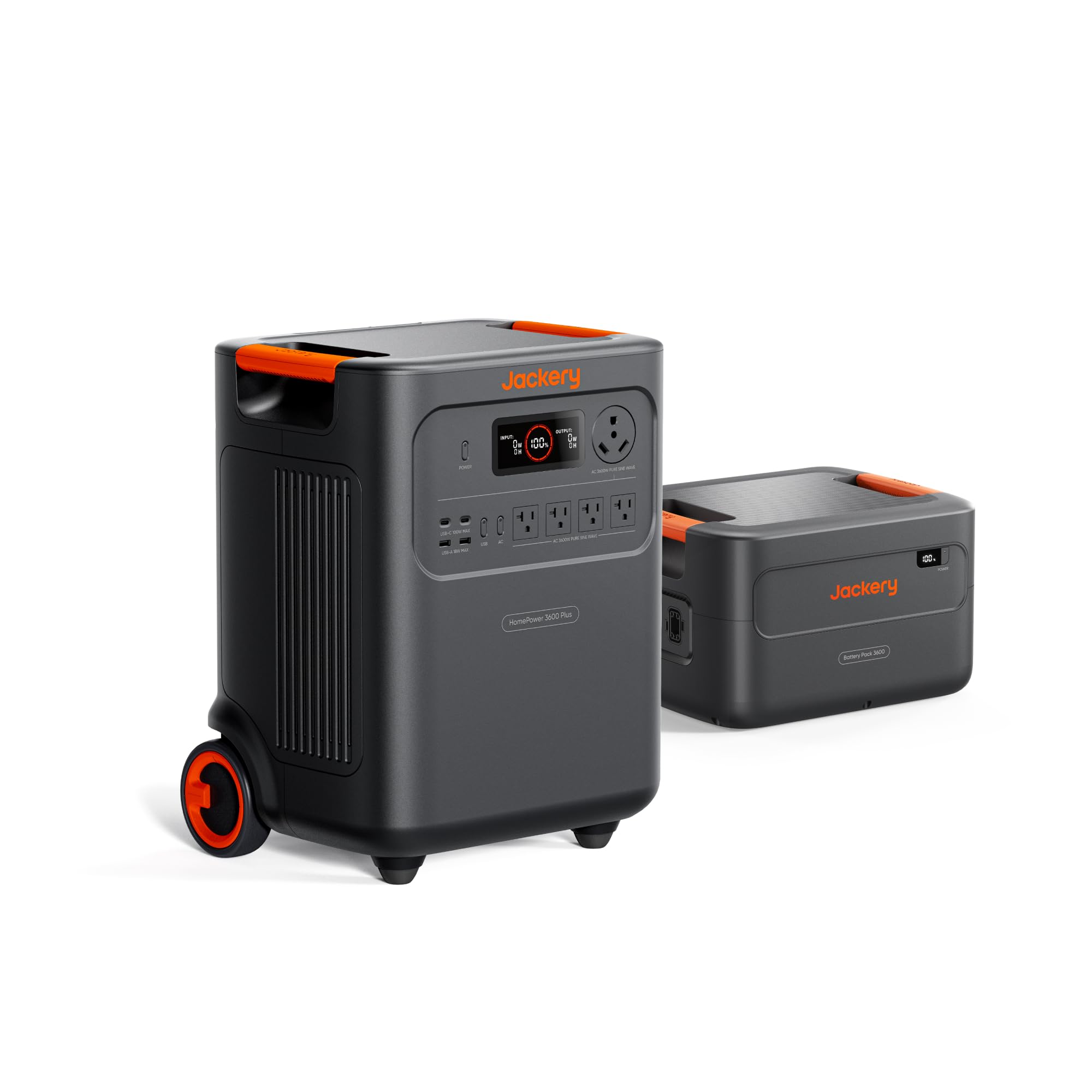
Type: LFP home battery and power station bundle
Capacity: 7168Wh with the included extra battery
Expandable To: 21kWh
AC Output: 3600W
Intended Use: Home backup and emergencies
Price Tier: Premium
This is the pick for a household that wants a single tidy box plus a matching battery rather than a rack of components. The LFP chemistry is the long-life, thermally stable type, and the 3600W AC output is the headline figure for anyone sizing a unit against a high-draw appliance. Because the bundle already ships with a second battery, the usable capacity starts high and the expansion path to 21kWh is the real selling point for a home that may add circuits later.
It suits buyers who want a self-contained system they can move, expand and manage without an electrician rebuilding a wall. The trade-off is that the premium price buys convenience and brand support rather than the lowest cost per stored kilowatt-hour, so a pure budget buyer will find cheaper routes to the same capacity.
Check the current price on Amazon
2. ECO-WORTHY Powermega 48V 314Ah Energy Storage System
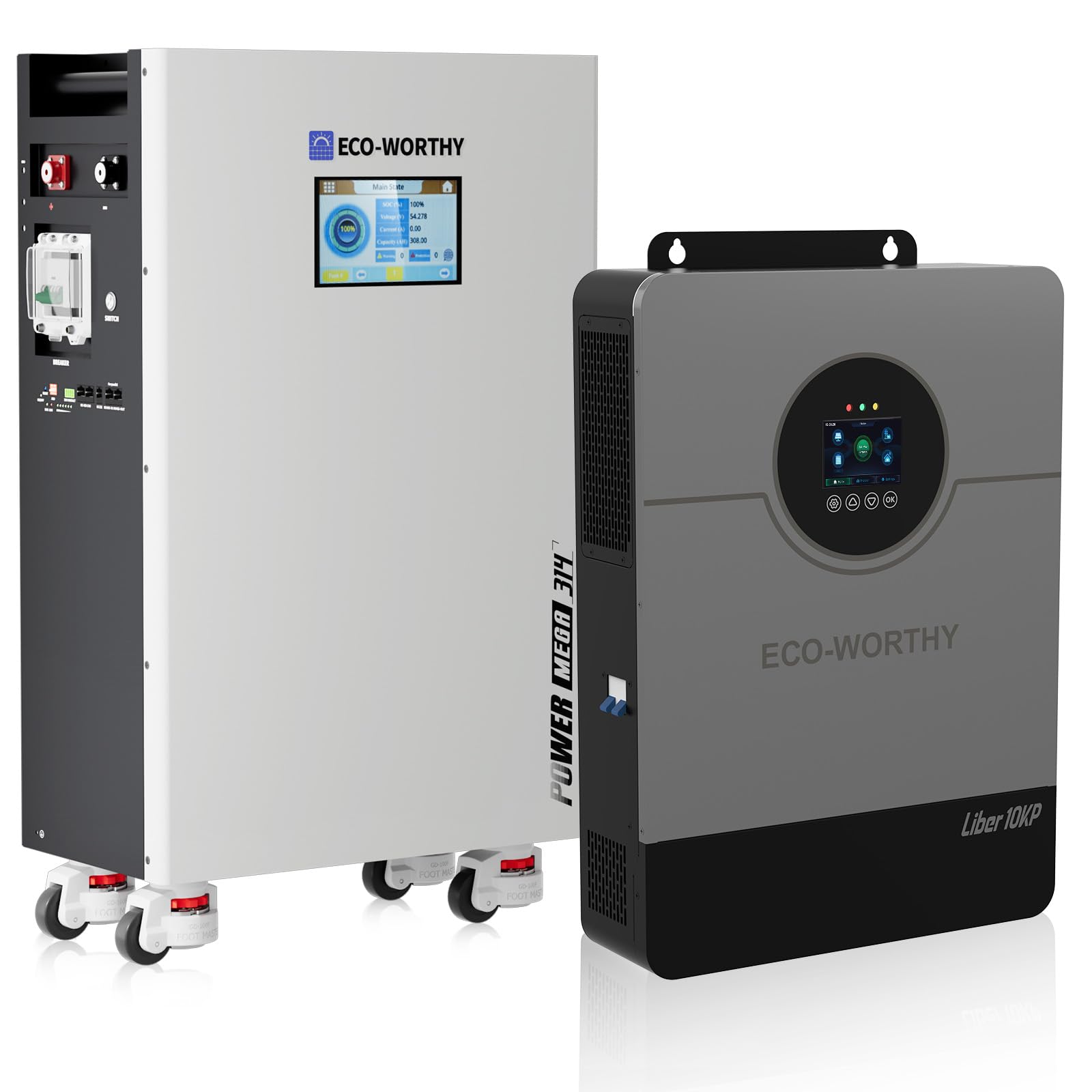
Type: 48V LiFePO4 energy storage system with hybrid inverter
Chemistry: LiFePO4, UL1973
Inverter: Liber 10KP 10kW hybrid
BMS: Active balancing, built-in Bluetooth and WiFi
Intended Use: Home backup and off-grid
Price Tier: Premium
This is the most install-oriented product in the roundup: a 48V battery paired with a 10kW hybrid inverter, sold as a system rather than a portable box. The 10kW inverter rating is the number that matters for a home with heavy simultaneous loads, and the active balancing BMS plus Bluetooth and WiFi monitoring point to a unit built for permanent, watched-over service. LiFePO4 chemistry keeps the cycle life long, which is what an off-grid household needs.
It suits buyers planning a fixed installation, an off-grid setup or a system that will be wired into a distribution board, and who are comfortable with that level of work. The trade-off is that this is not a plug-and-play appliance: it assumes installation knowledge or a hired installer, and the upfront cost is the highest here.
Check the current price on Amazon
3. Jackery HomePower 3600 Pro Max Power Station
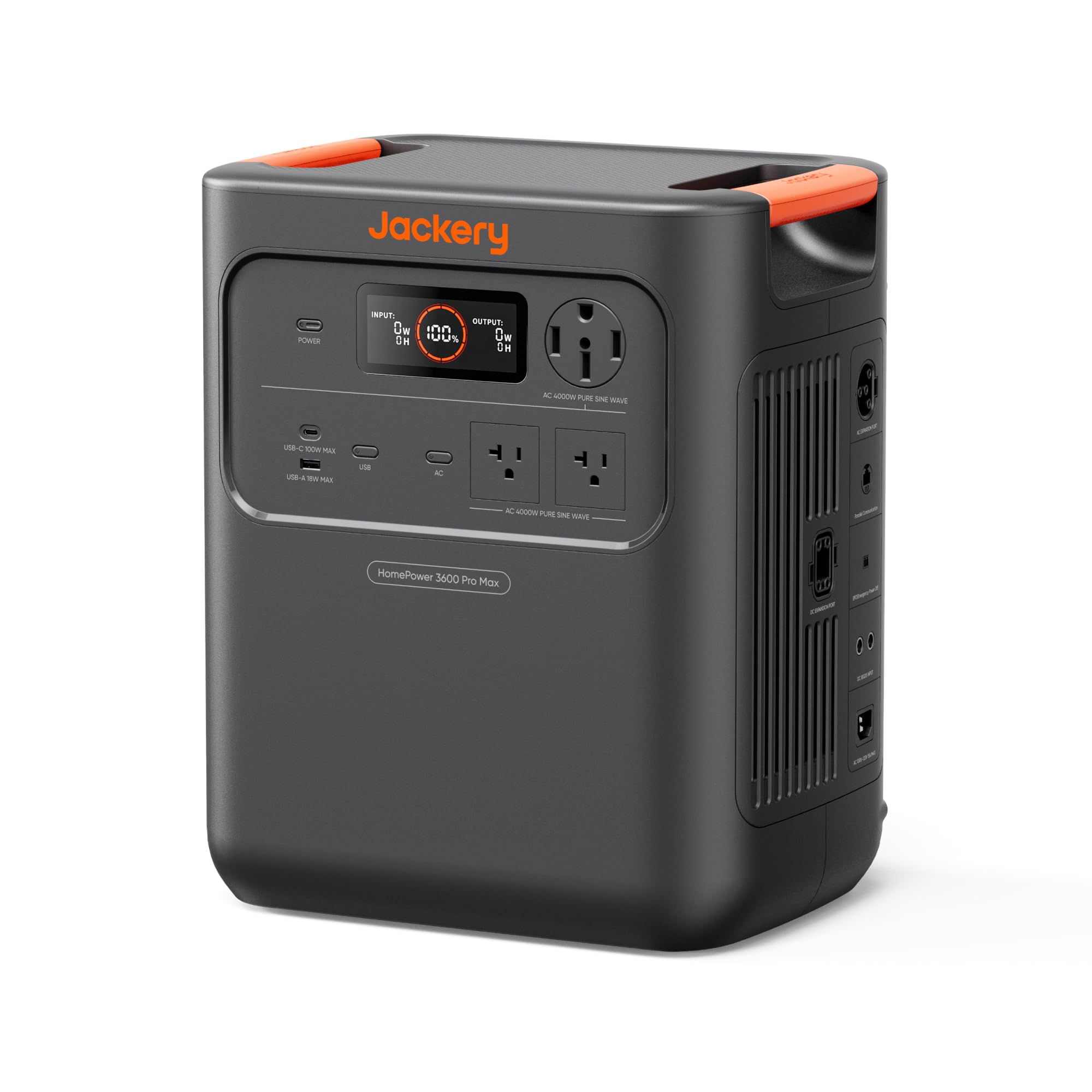
Type: LFP power station with expandable capacity
Capacity: 3584Wh
Expandable To: 43kWh
AC Output: 2000W at 120V, 4000W at 240V
Intended Use: Outages, emergencies and RV use
Price Tier: Mid-range
The Pro Max is the flexible middle child: a 3584Wh LFP station with 240V output and an expansion ceiling that runs all the way to 43kWh. That 4000W at 240V figure is the one that matters for a home with a high-draw appliance wired for 240V, and the optional solar panel keeps the door open for recharging without mains power. It is a station first and a home battery second, which suits households that also want to take it camping or on the road.
It suits buyers who want 240V capability and a clear upgrade path without jumping straight to a permanent install. The trade-off is that the base capacity is modest for whole-home coverage, so most households will end up adding batteries to make the 43kWh ceiling meaningful.
Check the current price on Amazon
4. Jackery HomePower 3000 and 2x200W Solar Panels
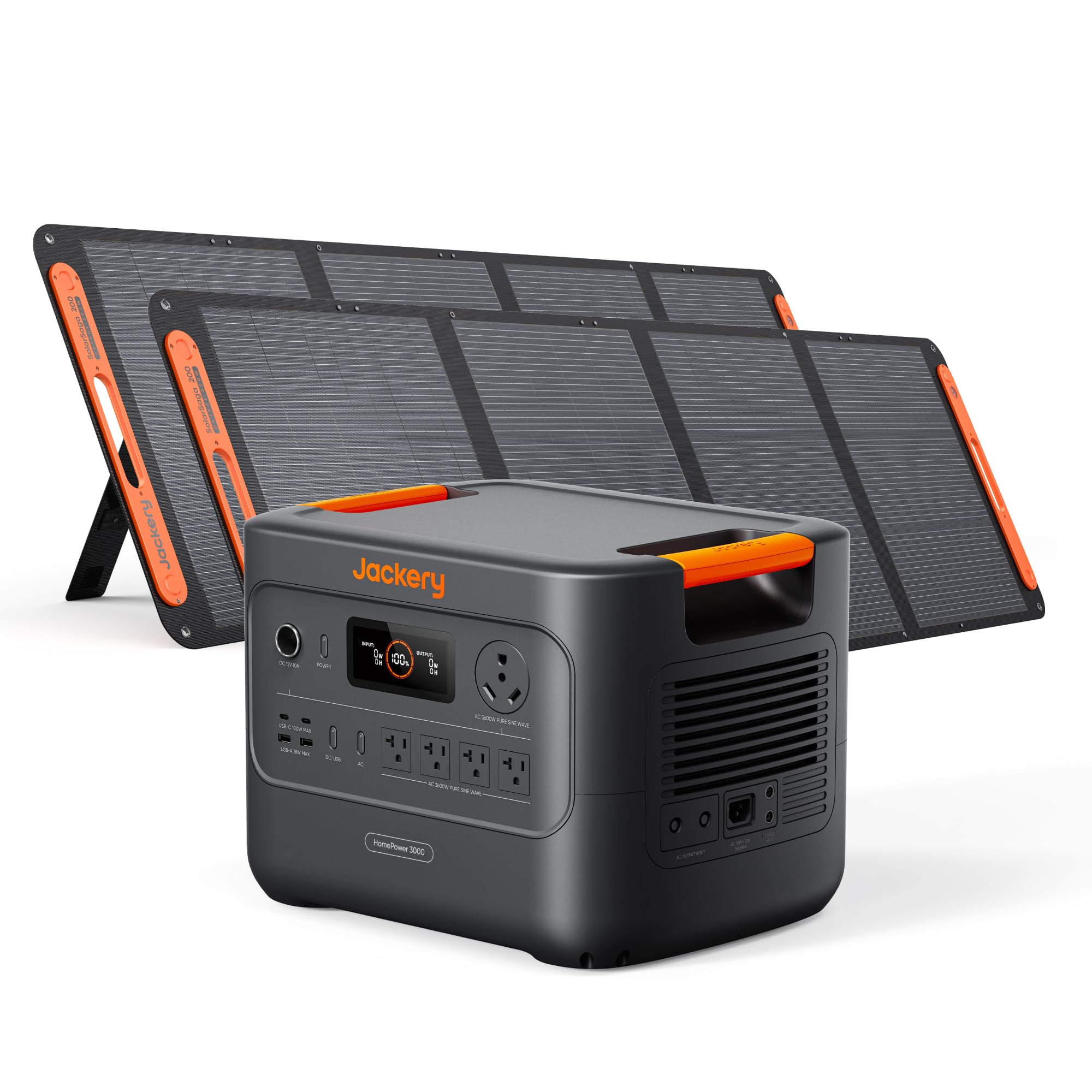
Type: LFP solar generator kit with panels
Capacity: 3072Wh
AC Output: 3600W
Surge: 7200W
Included: Two 200W solar panels
Intended Use: Home backup, outages, RV and emergencies
Price Tier: Mid-range
This kit pairs a 3072Wh LFP station with two 200W solar panels, so it arrives ready to recharge off-grid rather than needing panels bought separately. The 7200W surge rating is the figure worth flagging for shower and motor loads, because surge headroom is what stops a unit tripping when a heavy appliance kicks in. The 3600W continuous output is respectable for a station at this level.
It suits buyers who want a complete solar-plus-battery kit in one purchase and who value being able to recharge during a long outage. The trade-off is that 3072Wh goes fast once a high-draw appliance is in the mix, so this works best as a circuit-level backup rather than a whole-home solution.
Check the current price on Amazon
5. PECRON Portable Power Station F3000LFP
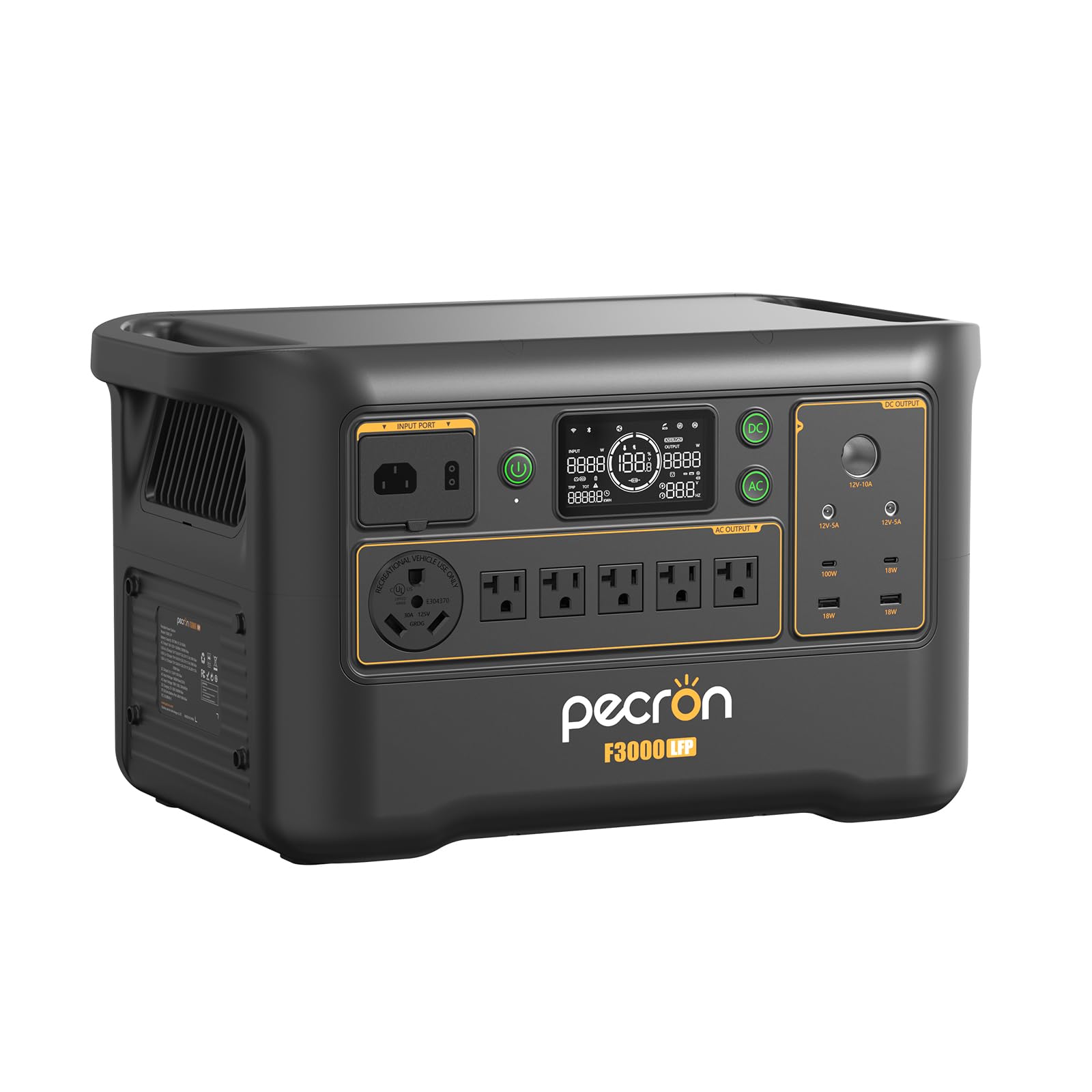
Type: Portable LFP power station
Capacity: 3072Wh
AC Output: 3600W
Expandable To: 10752Wh
Charging: Fast charging
Intended Use: Home backup, camping and RV
Price Tier: Budget
The PECRON undercuts the field on price while still offering a 3072Wh LiFePO4 battery, 3600W AC output and an expansion path to 10752Wh. Fast charging is a genuine convenience for a household that wants the unit topped up between outages rather than sitting flat. The LFP chemistry is the same durable type used by the pricier picks, which is what makes the low price tier notable.
It suits budget-conscious buyers who want real capacity and expansion room without paying premium-brand money, and who can live with a portable format. The trade-off is that a budget unit typically trims on fit and finish, app polish and after-sales support compared with the premium picks, so buyers who want a hands-off installed system should look higher up this list.
Check the current price on Amazon
Before You Buy
- Surge headroom: An electric shower draws hard the moment it starts, so check the surge rating, not just the continuous output.
- Continuous output: Match the continuous AC output to the appliances that will run at the same time; a shower plus a kettle plus lighting adds up fast.
- Capacity and expansion: Base capacity decides how long backup lasts; the expansion ceiling decides whether the system can grow with the house.
- Voltage: Confirm whether the home’s heavy loads are wired for 120V or 240V before choosing a unit with the wrong output.
- Installation: Portable stations plug in; systems with a hybrid inverter need wiring work, so budget for an installer.
- Recharge options: A unit with solar input or fast mains charging recovers between outages far better than one relying on a slow wall charger.
- Placement and ventilation: Batteries need a dry, ventilated spot away from damp, which matters in homes where the utility space is tight.
Frequently Asked Questions
-
Can a home battery run an electric shower?
Yes, provided the battery’s continuous and surge output covers the shower’s draw and the unit is wired or plugged in correctly. The shower is usually the deciding load when sizing a system. -
How much capacity is needed for shower backup?
It depends on shower length and how many other loads run at once. A larger capacity such as the 7168Wh bundle lasts noticeably longer than a 3072Wh station under the same load. -
Is 120V or 240V better for a shower setup?
Heavy fixed appliances are often wired for 240V, so a unit with 240V output like the HomePower 3600 Pro Max is the safer match. Confirm the circuit before buying. -
Do these systems need a professional installer?
Portable stations do not, but the ECO-WORTHY system with its hybrid inverter is designed for a fixed installation and should be fitted by someone qualified. -
Can the capacity be expanded later?
Most picks here can be expanded, with ceilings ranging from 10752Wh to 43kWh. Buying a unit with expansion room avoids replacing the whole system later. -
Will a battery keep the shower running during a long outage?
Only for as long as stored capacity lasts, which is why solar input or fast recharging matters. Pairing a battery with panels extends coverage through multi-day outages.
Bottom Line
For most homes with an electric shower, the Jackery HomePower 3600 Plus and Extra Battery is the strongest starting point: 7168Wh out of the box, 3600W of continuous AC output and a clear path to 21kWh make it the least compromised pick for shower-heavy backup. Budget buyers should look hard at the PECRON F3000LFP, and anyone planning a permanent off-grid install should go straight to the ECO-WORTHY system.
