Why there are Amazon links here: Brave Review is paid a commission for qualifying Amazon purchases made through the links below. Your price does not change, and using our links is entirely optional. How this works
Leviton T5635 vs NEO Z-Wave Plus Smart Mini Plug: Charging vs Automation
The Leviton T5635 and the NEO Z-Wave Plus Smart Mini Plug are not rivals in the usual sense. One is a wall outlet with built-in USB-C charging; the other is a small plug-in module that adds remote on/off control to whatever is plugged into it.
Buyers comparing the two are really deciding between two jobs: fast charging at the wall, or voice and app control of a lamp, fan or small appliance. The sections below lay out the difference dimension by dimension, then a short buying guide settles which one fits.
Leviton T5635: The In-Wall Charging Outlet

Type: In-wall electrical outlet with integrated USB charging
USB Output: Dual Type-C ports, 30W (6A) Power Delivery
AC Outlet: 15A tamper-resistant receptacle
Color: White
Intended Use: Smartphones, tablets, laptops
Installation: Replaces a standard wall outlet
The Leviton T5635 is a replacement wall receptacle, not a plug-in accessory. It combines a standard 15A tamper-resistant outlet with two USB-C ports that support Power Delivery, so a phone, tablet or USB-C laptop can charge without a separate adapter block. The 30W rating is the figure that matters here: it is enough to fast-charge most phones and tablets, and enough to top up a smaller USB-C laptop.
Because it is built into the wall, the Leviton does its work without occupying an outlet or cluttering a countertop. The tamper-resistant shutters are the standard safety feature for households with children. The catch is installation: this is a hardwired device, so buyers need to be comfortable cutting power at the breaker and swapping a receptacle, or need to budget for an electrician. That is a real cost and a real barrier, and it is the main reason some shoppers look elsewhere.
Trade-off: Installation is a wiring job, not a plug-in, and the 30W output will not match a dedicated high-wattage laptop charger.
Check the Leviton T5635 price on Amazon
NEO Z-Wave Plus Smart Mini Plug: The Automation Module
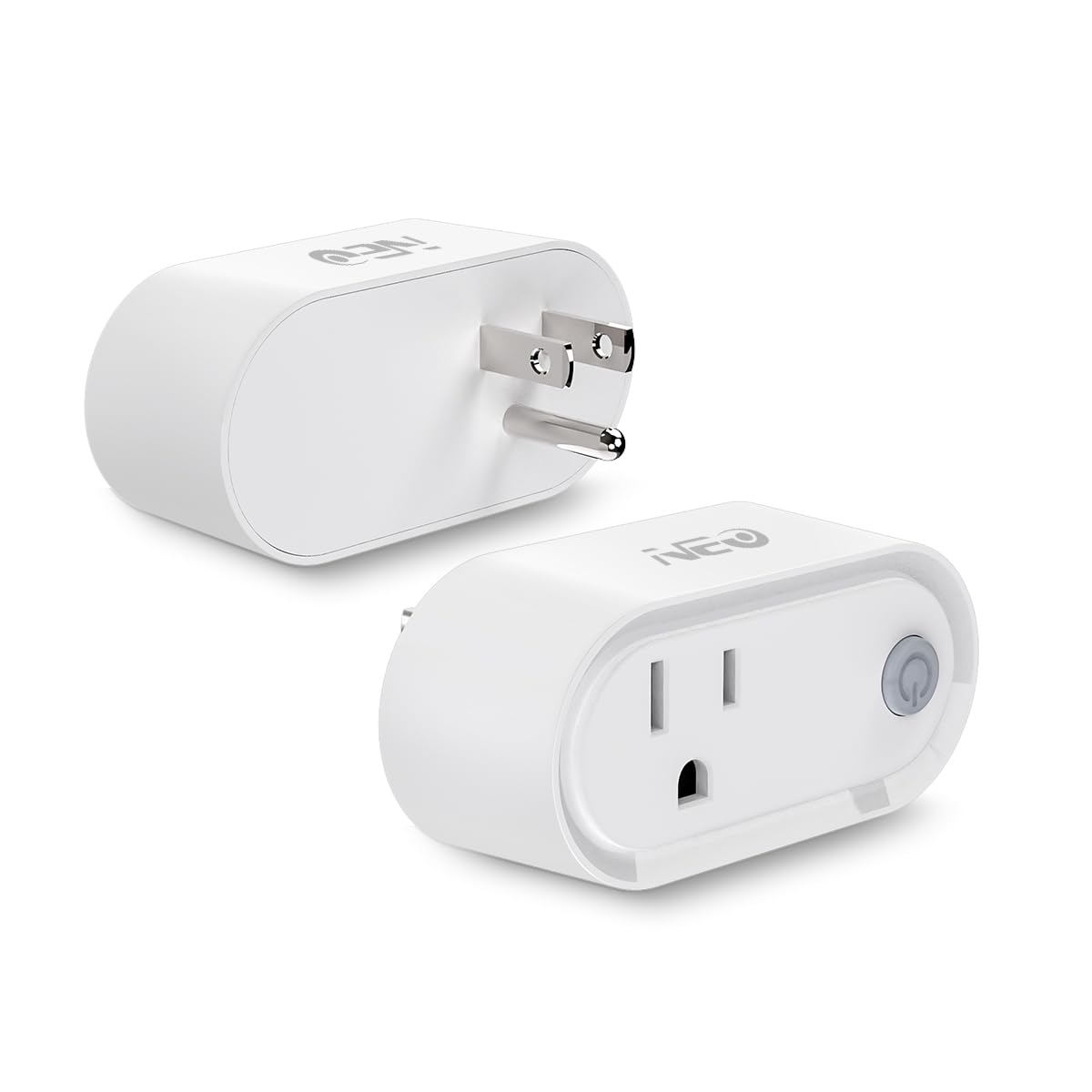
Type: Plug-in smart outlet module
Protocol: Z-Wave Plus, 500 series, S2 security
Function: Basic on/off control
Compatibility: Works with SmartThings
Form Factor: Compact mini plug
Intended Use: Home automation of plugged-in devices
The NEO Z-Wave Plus Smart Mini Plug is a small module that sits between a wall outlet and a device. It uses Z-Wave Plus on the 500 series with S2 security, and it works with SmartThings, which means lamps, fans, holiday lights and similar plug-in loads can be switched from an app, a schedule or a voice assistant routed through the hub. The compact body is the selling point: it is sized to leave the second socket of a duplex outlet usable, which many older smart plugs do not.
The feature set is deliberately basic. This is an on/off switch, not a dimmer and not a power meter, so buyers who want brightness control or energy tracking need a different product. It also requires a Z-Wave hub, so a household with no SmartThings setup or comparable controller has an extra purchase to make before the plug does anything smart.
Trade-off: It needs a Z-Wave hub to be useful and offers only on/off control, with no dimming or energy monitoring.
Check the NEO Z-Wave Plus Smart Mini Plug price on Amazon
Side-by-Side Comparison
| Feature | Leviton T5635 | NEO Z-Wave Plus Smart Mini Plug |
|---|---|---|
| Type | In-wall outlet with USB charging | Plug-in smart outlet module |
| Primary Job | Fast charging devices | Remote on/off automation |
| Power Output | 30W (6A) USB Power Delivery | Passes through to connected load |
| Ports / Sockets | Dual USB-C plus 15A AC outlet | Single controlled socket |
| Smart Control | None | Yes, via Z-Wave Plus hub |
| Hub Required | No | Yes |
| Installation | Hardwired, replaces wall outlet | Plug in, no wiring |
| Form Factor | Standard wall plate footprint | Compact mini plug |
Reading the Differences
The first difference is what each device actually does. The Leviton replaces a wall outlet and charges devices directly through USB-C; it has no radio, no app and no automation. The NEO controls whatever is plugged into it but charges nothing on its own. A buyer who wants a lamp to turn on at sunset needs the NEO; a buyer who wants a phone charged without a wall adapter needs the Leviton.
The second difference is the setup burden, and it lands in opposite places. The Leviton asks for wiring work once and then runs forever with no hub, no pairing and no app. The NEO plugs in seconds but needs a Z-Wave controller before it does anything, so the true cost includes a hub for households that do not already own one.
The third difference is the feature ceiling. Both are entry-level devices in their categories: the Leviton tops out at 30W and the NEO offers only basic on/off. Neither is the premium option in its class, and both are priced accordingly. Buyers who need more — higher USB wattage, dimming, energy monitoring — will have to look above these two.
Which Should You Buy?
Choose the Leviton T5635 if the goal is charging. It suits a kitchen, bedroom or home office outlet where phones, tablets and a USB-C laptop land every day, and it suits households that already have an electrician or are comfortable with basic wiring. It is also the pick for anyone who does not want another hub in the house.
Choose the NEO Z-Wave Plus Smart Mini Plug if the goal is automation. It suits a SmartThings household that wants a lamp, fan or seasonal lights to respond to schedules and voice commands, and it suits renters who cannot change wiring. The compact body keeps the second socket free, which matters in older homes with few outlets.
FAQ
-
Is the Leviton T5635 a smart outlet? No. It is a charging outlet with USB-C Power Delivery and a standard 15A receptacle. It has no wireless radio and does not connect to an app or hub.
-
Does the NEO Z-Wave Plus Smart Mini Plug work without a hub? No. It is a Z-Wave Plus device and needs a compatible controller such as SmartThings to pair and control it.
-
Can the Leviton T5635 charge a laptop? The 30W USB-C Power Delivery output is enough for smaller USB-C laptops and tablets. Larger laptops with higher power demands will charge slowly or need their own adapter.
-
Does the NEO plug dim lights? No. It provides basic on/off control only, so dimmable bulbs will not change brightness through this module.
-
Which one is better for a rental? The NEO. It plugs in and comes back out, while the Leviton requires replacing the wall receptacle, which usually needs the landlord’s approval.
-
Can both be used in the same room? Yes. They serve different jobs, and a household could install the Leviton for charging and use the NEO to automate a lamp on another outlet.
-
Does the NEO plug block the second outlet? The compact mini-plug body is designed to leave the neighboring socket accessible, which is the main reason to choose it over a full-size smart plug.
Bottom Line
These two solve different problems, so the decision comes down to the job at hand. For fast USB-C charging built into the wall with no hub and no app, the Leviton T5635 is the straightforward pick. For app and voice control of a plugged-in device in a SmartThings home, the NEO Z-Wave Plus Smart Mini Plug is the better fit, provided a Z-Wave hub is already in place.
