Why there are Amazon links here: Brave Review is paid a commission for qualifying Amazon purchases made through the links below. Your price does not change, and using our links is entirely optional. How this works
Best Water Leak Detector for a Rental with No WiFi
A rental with no WiFi — or a lease that forbids new network gear — does not have to mean no leak protection. The picks below are standalone water alarms and long-range sensors that work without a router in the unit: they sound a loud siren at the leak, or they reach a gateway over their own radio link. This guide covers five options, from a single budget sensor to a five-pack that protects a whole apartment. Three buyer profiles fit here: renters who want one cheap alarm under a sink, tenants covering several rooms at once, and anyone with a basement or utility closet far from the router. The overview table below narrows the field in under a minute.
The Picks at a Glance
| Product | Key Spec | Best Use | Price Tier |
|---|---|---|---|
| SwitchBot WiFi Water Leak Detector (1-Pack) | 100dB alarm, App & email alerts, 2.4GHz, 1m cable | One spot near the router, with phone alerts | Budget |
| GoveeLife Upgraded Water Leak Detector, 5 Pack | Dual probes, 105dB adjustable alarm, 5-year battery | Whole-apartment coverage, loud local siren | Mid |
| Stechro 5 Pack Water Leak Detectors | 4-level adjustable alarm, 0-120dB, IP66 | Five rooms, tunable siren volume | Mid |
| Smart Water Leak Detector, LoRa Long-Range | 1640 ft LoRa, no WiFi required, 1-year battery | Basements and far rooms, valve pairing | Mid |
| SwitchBot 4 Pack Water Leak Detector | App & email alerts, 100dB, IP67, 2.4GHz | Four sensors with alerts, hub-free setup | Mid |
SwitchBot WiFi Water Leak Detector, 1-Pack

Alarm: 100dB
Connectivity: 2.4GHz WiFi, no hub
Rating: IP67 waterproof
Battery Life: 2 years
Cable: 1m
Detection: Leaks, drips, water levels
SwitchBot WiFi Water Leak Detector, 1-Pack
This is the entry point for a renter who does have WiFi but does not want a hub on the counter. The sensor pairs straight to a 2.4GHz network, pushes app and email alerts, and still screams at 100dB on the spot. The IP67 housing shrugs off splashes, and the 1m cable lets the sensor body sit out of the puddle while the probe end takes the water. Two years on a battery means it is a set-and-forget item for a utility closet or under-sink cabinet.
It earns its place as the cheapest way to get phone alerts without a bridge, and the small footprint suits a single trouble spot. The caution is network dependence: with no WiFi in the unit, the app side goes dark and only the local siren remains, so this is not the pick for a truly offline rental.
Trade-off: A single sensor covers one spot, and the smart features depend on a 2.4GHz network the rental may not have.
Check the current price on Amazon
GoveeLife Upgraded Water Leak Detector, 5 Pack
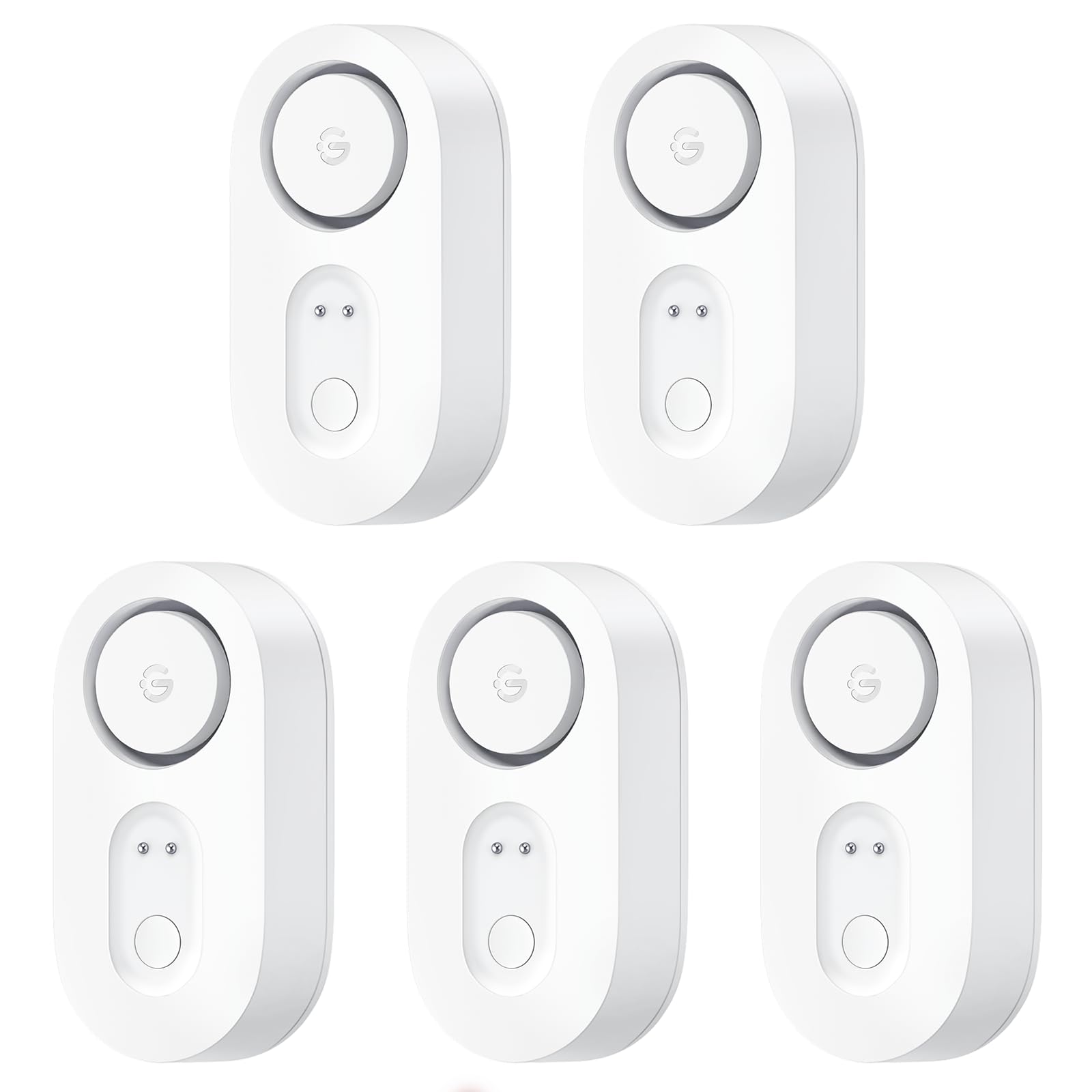
Alarm: 105dB, adjustable
Detection: Dual probes for leaks
Rating: IP67
Battery Life: 5 years
Pack Size: 5
Connectivity: Standalone, no direct WiFi
GoveeLife Upgraded Water Leak Detector, 5 Pack
This five-pack is the offline-friendly workhorse: each unit runs on its own and sounds a 105dB alarm when its dual probes touch water, with no router involved. The dual-probe design gives two contact points per sensor, which helps in shallow drips and uneven floors. Five years on a battery is the standout number here — a renter can stick these down and forget them for the length of a typical lease. IP67 sealing means a flooded cabinet will not kill the unit.
It suits a tenant covering kitchen, bath, laundry, water heater, and one spare closet in a single order. The trade-off is the lack of app alerts: the name is explicit that these cannot connect to WiFi directly, so the siren is the only notification. That is fine for anyone home most days, less so for a frequent traveler.
Trade-off: No phone alerts — protection is limited to whoever is within earshot of the 105dB siren.
Check the current price on Amazon
Stechro 5 Pack Water Leak Detectors
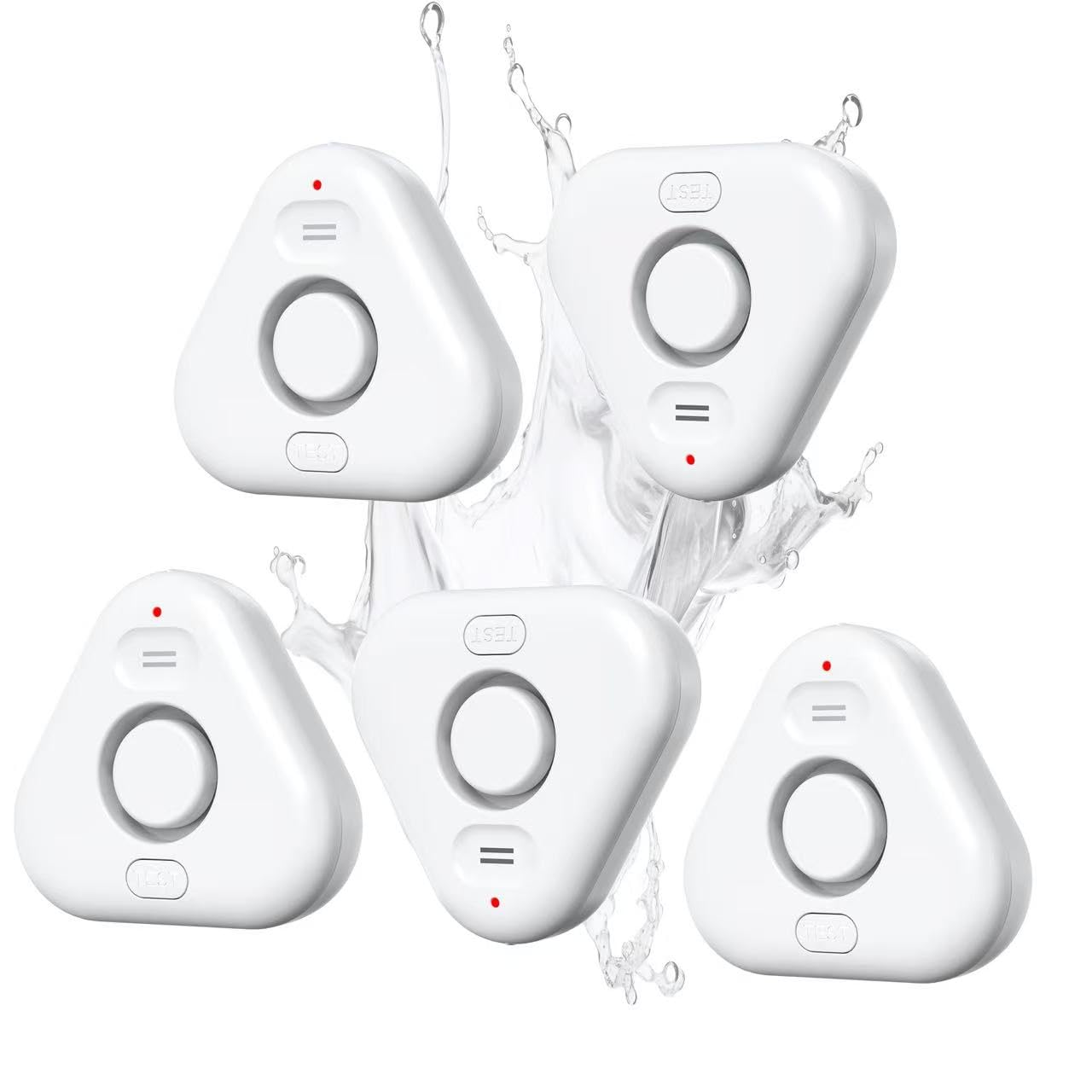
Alarm: 0-120dB, 4 adjustable levels
Rating: IP66
Pack Size: 5
Detection: Leak and drip alert
Intended Use: Basements, kitchen sink, laundry
Connectivity: Standalone
Stechro 5 Pack Water Leak Detectors
The Stechro set stands out for one reason: a siren that can be dialed from quiet to 120dB across four levels. In a thin-walled rental, that adjustability matters — a full-volume alarm in a hallway closet can be heard through the building, while a lower setting still covers the apartment. Five units cover the usual leak points, and IP66 sealing handles splashes and damp basements. Leak and drip alerting means it reacts to slow seeps, not just standing water.
It is the pick for a renter who wants loud local coverage without paying for smart features, and the tunable volume makes it the most neighbor-friendly option here. The caution is the same as any standalone alarm: no remote notification, so a leak while away goes unheard until someone returns.
Trade-off: Purely local alerting — no app, no email, and nothing to check remotely.
Check the current price on Amazon
Smart Water Leak Detector, LoRa Long-Range

Range: 1640 ft LoRa
Connectivity: No WiFi required
Battery Life: Up to 1 year
Detection: Real-time leak detection
Compatibility: AIWSH auto shut-off valve
Intended Use: Whole-home protection
Smart Water Leak Detector, LoRa Long-Range
This is the one for the rental where the router is nowhere near the risk. LoRa radio reaches up to 1640 ft, so a basement, garage, or back utility room stays connected without WiFi and without dragging the network into it. Real-time detection plus compatibility with an AIWSH auto shut-off valve means it can feed a whole-home protection setup rather than just beep. Up to a year on a battery is shorter than the five-year standalone units, but reasonable for a radio that is actively transmitting.
It suits a renter in a house or a large unit with a distant water heater or laundry room, especially anyone who already owns or plans to add the matching shut-off valve. The caution: it needs its own LoRa gateway or compatible hub to deliver alerts, so it is not a plug-and-play standalone — check that the receiving end is in place before buying.
Trade-off: Not a standalone alarm — it needs a LoRa gateway or compatible hub to report, which adds cost and setup.
Check the current price on Amazon
SwitchBot 4 Pack Water Leak Detector

Alarm: 100dB
Connectivity: 2.4GHz WiFi, no hub
Rating: IP67
Battery Life: 2 years
Pack Size: 4
Detection: 0.5mm leaks, drips, water levels
SwitchBot 4 Pack Water Leak Detector
The four-pack version of the SwitchBot sensor spreads the app-alert setup across the whole apartment. Each unit detects leaks down to 0.5mm, so slow drips under a sink get caught early, and the 100dB siren still works locally. No hub is needed — each sensor talks to a 2.4GHz network on its own — and IP67 sealing plus a two-year battery keep maintenance low. Four units is a sensible number for kitchen, bath, laundry, and water heater.
It is the pick for a renter with WiFi who wants remote alerts in several rooms without buying a bridge, and the fine 0.5mm detection is the best in this group for slow seeps. The caution mirrors the single-pack: the smart side needs a 2.4GHz network, so a truly offline rental loses the app and email alerts entirely.
Trade-off: App and email alerts require a 2.4GHz WiFi network, so offline rentals get only the local siren.
Check the current price on Amazon
Before You Buy
- Connectivity: Decide first whether the rental has WiFi. If not, standalone alarms (GoveeLife, Stechro) or the LoRa sensor are the only workable options.
- Alert method: Local siren only, or app and email too? Remote alerts need either WiFi or a LoRa gateway.
- Coverage: One sensor covers one spot. Count the risk points — under-sink, water heater, laundry, bathroom — and buy a pack sized to match.
- Water rating: IP66 and IP67 both handle splashes and damp cabinets; choose sealed units for basements and laundry rooms.
- Battery life: Ranges from about a year (LoRa) to five years (GoveeLife). Longer life means less reaching behind appliances.
- Lease rules: Standalone stick-on sensors need no drilling and no landlord approval; hub-based systems may need a spot for the gateway.
- Volume: Adjustable sirens suit thin-walled apartments; fixed high-volume units are best for houses or detached rooms.
Frequently Asked Questions
-
Can a water leak detector work without WiFi?
Yes. Standalone alarms sound a local siren when water bridges their probes and need no network at all. The GoveeLife and Stechro packs work this way, and the LoRa sensor uses its own radio link instead of WiFi. -
What is the best water leak detector for a rental with no WiFi?
For most renters, the GoveeLife 5 Pack — five standalone units, a 105dB adjustable siren, and a five-year battery — covers an apartment without any network. The Stechro pack is the alternative if adjustable volume matters more. -
Do these detectors need a hub?
The standalone alarms do not. The SwitchBot units connect straight to 2.4GHz WiFi with no hub. The LoRa sensor is the exception — it needs a LoRa gateway or compatible hub to deliver alerts. -
Will a landlord allow stick-on leak sensors?
Standalone sensors typically sit on the floor or stick under a cabinet and leave no permanent damage, which makes them easy to justify in a lease. Check the lease for rules on adhesives before mounting. -
How many detectors does a rental need?
Four to five covers the usual risk points: kitchen sink, dishwasher, bathroom, laundry, and water heater. A single sensor is enough only for one known trouble spot. -
Can these detectors shut off the water automatically?
Only the LoRa sensor lists compatibility with an AIWSH auto shut-off valve. The standalone alarms and the WiFi units alert only — they do not close a valve.
Bottom Line
For a rental with no WiFi, the safest buy is the GoveeLife 5 Pack: five standalone alarms, dual probes, a 105dB adjustable siren, and a five-year battery that outlasts most leases — no router, no hub, no landlord conversation. Renters who do have WiFi and want phone alerts should step up to the SwitchBot 4 Pack for its 0.5mm detection and app alerts. Either way, the decision comes down to one question: does the unit have a network, or does it not?
