Why there are Amazon links here: Brave Review is paid a commission for qualifying Amazon purchases made through the links below. Your price does not change, and using our links is entirely optional. How this works
HOWEASY Portable Power Station 135W: Small Backup Power for Camping and Outages
The HOWEASY Portable Power Station 135W is a compact, budget-friendly battery box for keeping phones, lights, and small electronics running when the wall outlet is out of reach. It suits campers, weekend tailgaters, and households that want a lightweight emergency backup rather than a whole-home generator. This review breaks down its capacity, its AC output, and the limits that come with a unit this small, so the reader can decide quickly whether it fits.
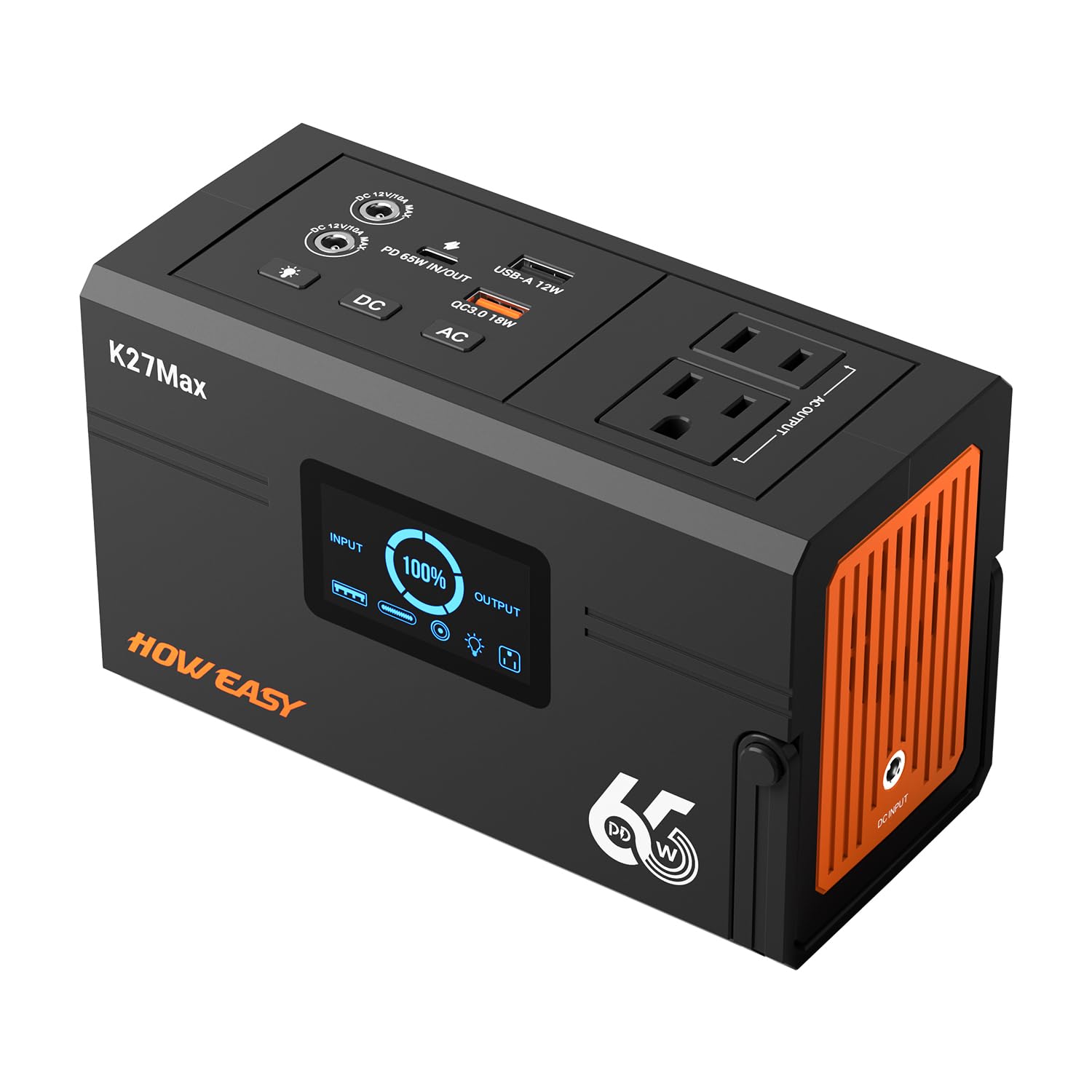
Features and Specifications
- Product: HOWEASY Portable Power Station 135W(270W Peak)
- Battery Capacity: 98Wh (26,400mAh)
- AC Output: 110V outlets, 135W continuous, 270W peak
- Power Source: Rechargeable lithium battery; solar panel not included
- Intended Use: Outdoor camping, emergency backup
- Type: Portable power station / solar generator
Check the current price on Amazon
The headline numbers tell most of the story here. A 98Wh battery and a 135W inverter put this unit in the small-format class: enough to top up personal devices and run a few low-draw appliances, not enough to carry a fridge or a space heater. Buyers who need to keep a laptop and a couple of lights alive through an evening will find it adequate; buyers planning to run power tools will not.
The "solar generator" label describes capability, not contents. The unit accepts a solar panel for off-grid recharging, but no panel ships in the box, so a buyer who wants solar input has to budget for one separately. Wall charging remains the default way to fill the battery.
Build and Portability
The 26,400mAh battery pack sits inside a compact housing designed to be carried by hand, which is the whole point of the category. At this capacity the unit stays light enough for one person to move from a car trunk to a campsite table without help. Buyers shopping for a grab-and-go emergency box will find the size is the main selling point.
That portability comes at a cost. A small housing leaves little room for large cooling hardware or heavy-duty internal wiring, so the unit is built for light, intermittent loads rather than sustained high-draw work. The 110V AC outlets are the practical connection point for small electronics, and the layout favors quick access over ruggedized, weather-sealed construction.
Trade-off: The compact, budget-tier build is not designed to survive rough handling or wet conditions, so it belongs on a shelf or a picnic table rather than in the back of a pickup bed.
Capacity and Runtime
The 98Wh figure is the number that decides most purchases. It translates to a modest reserve: enough for several phone charges, a laptop top-up, or a few hours of LED lighting, but not enough to run anything with a heating element or a compressor. Buyers should think in terms of topping devices up, not powering a household.
The 26,400mAh rating is the same capacity expressed the way phone-battery shoppers recognize it, which helps set expectations. A buyer used to a 10,000mAh phone power bank will see roughly two and a half times that reserve, delivered through AC outlets instead of USB alone. That is a meaningful step up for camping, and still a small fraction of what a mid-size home backup unit holds.
Runtime shrinks fast as the load grows. A phone or a light draws little; a small fan or a mini cooler draws considerably more, and the battery drains in proportion. The unit rewards buyers who plan their loads carefully and punishes those who plug in the first appliance they see.
Trade-off: The 98Wh reserve is small by design, so buyers who need to run a CPAP machine all night or keep a cooler cold for a full day should look at a larger capacity class.
Power Output and AC Outlets
The 135W continuous rating sets a hard ceiling on what the 110V outlets can supply. Laptops, phone chargers, LED lamps, small fans, and compact electronics fall comfortably under that line. Anything with a motor or a heating element will either refuse to start or trip the unit’s protection.
The 270W peak rating covers brief startup surges, which is the figure that matters for devices that spike when switched on. A small device that pulls a short burst at startup can often run on this unit even though its running draw sits well under the continuous limit. The peak figure does not turn the station into a high-wattage power source; it simply absorbs momentary spikes.
Buyers should check the wattage printed on every device they plan to run before buying. A single appliance above the continuous rating will not work, no matter how short the session. The AC outlets are the flexible part of the unit; the inverter behind them is the constraint.
Trade-off: The 135W continuous limit rules out kettles, heaters, hair dryers, and most power tools, so the station is a device charger rather than an appliance runner.
Recharging and Maintenance
Wall charging is the straightforward path, and the small battery means a full top-up takes far less time than a large home backup unit would. Buyers who store the station for emergencies should recharge it on a regular schedule, since lithium packs lose charge slowly when left idle for long stretches.
Solar recharging is possible but optional, and the panel is sold separately. A buyer planning off-grid trips needs to match a panel to the unit’s input and accept that solar charging is slow and weather-dependent. For car camping with a panel on the dashboard, the setup works; for a week-long backcountry trip, the math gets tight.
Maintenance is minimal: keep the unit dry, keep it out of extreme heat, and top it up every few months. The battery is sealed and not user-serviceable, which is normal for the category. Buyers who want a station they can open and repair should look elsewhere.
Trade-off: Solar charging requires an extra purchase and delivers slow top-ups, so the unit’s off-grid appeal depends on a panel the buyer supplies.
Who It Suits and Who It Does Not
This station fits campers who want to charge phones, cameras, and lights; tailgaters running a small speaker and a fan; and households that want a light emergency box for phone charging during an outage. It also suits buyers on a tight budget who need AC outlets in a portable format and can live with modest capacity.
It does not fit buyers who need to run medical devices overnight, keep food cold, or power tools. It also does not suit anyone expecting a solar panel in the box or a unit that can survive being dropped in the rain. Buyers with those needs should step up to a larger capacity class with a higher continuous wattage.
FAQ
-
How long does the HOWEASY 135W power station last on a full charge?
Runtime depends entirely on the load. A phone charge draws very little and leaves most of the 98Wh reserve intact, while a small fan or light drains it faster. Buyers should estimate by adding up the wattage of everything they plan to run. -
Can the HOWEASY 135W run a CPAP machine?
Most CPAP machines draw more than this unit’s 135W continuous limit once humidifiers are involved, and even bare units can run close to the ceiling. Buyers who need overnight medical power should choose a larger station. -
Does it come with a solar panel?
No. The product name states that the solar panel is not included. The station accepts solar input, but the panel is a separate purchase. -
What can the 110V AC outlets power?
Laptops, phone chargers, LED lamps, small fans, cameras, and similar low-draw electronics. Anything above 135W continuous will not run. -
What does 270W peak mean?
It is the brief surge the inverter can handle when a device first switches on. It does not raise the continuous limit, so devices that draw more than 135W while running still will not work. -
How is the battery capacity measured?
The unit is rated at 98Wh, which is the same as 26,400mAh. The watt-hour figure is the more useful one for estimating runtime. -
Can it be charged from a car outlet?
The station is designed for wall charging and solar input. Buyers planning to recharge on the road should confirm the available charging options before relying on a car outlet. -
Is it safe to leave plugged in?
Lithium power stations are generally stored partially charged and topped up periodically. Buyers should follow the manufacturer’s charging guidance and keep the unit away from extreme heat. -
How often should it be recharged in storage?
A top-up every few months keeps the battery healthy during long storage periods. Leaving it fully drained for extended stretches is hard on lithium cells. -
Who should not buy this unit?
Buyers who need to run appliances, power tools, coolers, or medical devices overnight should choose a higher-capacity station with a higher continuous wattage.
Bottom Line
The HOWEASY Portable Power Station 135W is a sensible small backup for campers and emergency kits that need AC outlets without bulk or a big spend. Its 98Wh battery and 135W output cover phones, lights, and laptops, and the 270W peak handles brief startup surges. Buyers who need to run appliances or survive multi-day outages should size up, but for light device charging on the go, this unit does the job at a budget-tier price.
