Why there are Amazon links here: Brave Review is paid a commission for qualifying Amazon purchases made through the links below. Your price does not change, and using our links is entirely optional. How this works
Kidde Smoke Detector vs SMI100 AC 9120B: Which Hardwired Alarm Fits a Home
This comparison covers two hardwired smoke detector 3-packs that look similar on the shelf but split on one key point: how the battery backup works. The Kidde 20SA10 3-pack suits buyers replacing a full set of alarms and wanting a sealed, long-life backup, while the First Alert 9120B / SMI100-AC 3-pack suits budget-minded buyers who want standard hardwired coverage and replaceable batteries. The side-by-side table and the dimension-by-dimension read below settle the choice in under a minute.
Kidde 20SA10 3-Pack
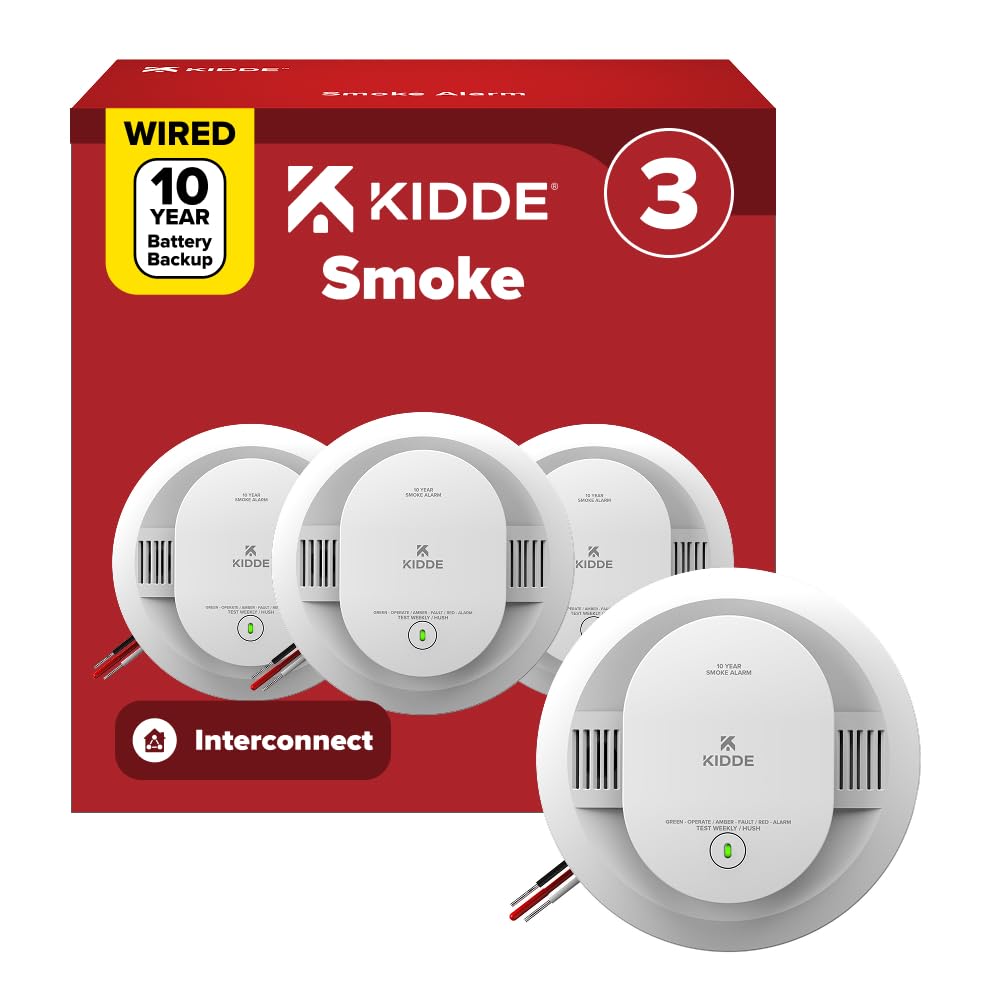
Type: Hardwired smoke detector
Battery Backup: 10-year sealed battery
Interconnect: Wired interconnect capability
Status Indicators: LED status lights
Pack Size: 3 pack
Intended Use: Homes and apartments
The Kidde 20SA10 is built around a sealed 10-year battery, which means the unit is designed to run its full service life without a battery swap. That removes the low-battery chirp from the maintenance list, a real quality-of-life gain for anyone who has chased a beeping alarm at 2 a.m. Wired interconnect capability means multiple units in the home can be tied together so one alarm triggers the rest, which matters in a multi-bedroom house.
The 3-pack format fits a whole-floor or whole-home replacement rather than a single-unit swap. LED status lights give a quick visual read on each unit. Buyers who want a set-and-forget hardwired system will find the sealed backup the headline feature here.
Trade-off: The sealed battery and interconnect wiring push this pack into the higher price tier, and the backup cannot be serviced or swapped by the owner, so the whole unit reaches end of life together.
Check the current price on Amazon
First Alert 9120B / SMI100-AC 3-Pack

Type: Hardwired smoke detector
Battery Backup: Yes, battery backup
Power Source: Hardwired AC with battery backup
Pack Size: 3 pack
Model: 9120B / SMI100-AC
The First Alert 9120B / SMI100-AC is a straightforward hardwired alarm with a standard battery backup. It covers the same core job as the Kidde — AC-powered detection with backup power during an outage — at the lower price tier of the two. The 3-pack format again suits a multi-unit replacement.
This is the pick for buyers who want basic, proven hardwired coverage and do not need a sealed long-life battery or interconnect wiring. The battery backup is the conventional type, so the owner handles battery replacement on a normal schedule. Nothing here is fancy, and that is the point: it is the value option for a full set.
Trade-off: The backup battery is a replaceable type, so low-battery chirps and periodic battery swaps are part of ownership, and this model does not advertise the interconnect capability the Kidde carries.
Check the current price on Amazon
Kidde vs First Alert: Side-by-Side Specs
| Feature | Kidde 20SA10 3-Pack | First Alert 9120B / SMI100-AC 3-Pack |
|---|---|---|
| Type | Hardwired smoke detector | Hardwired smoke detector |
| Battery Backup | 10-year sealed battery | Standard battery backup |
| Interconnect | Wired interconnect capability | Not advertised |
| Status Indicators | LED status lights | Not advertised |
| Pack Size | 3 pack | 3 pack |
| Intended Use | Homes and apartments | General hardwired use |
The Differences That Matter
The battery backup is the dimension that separates these two most cleanly. The Kidde carries a sealed 10-year battery, which is designed to last the life of the unit without a swap. The First Alert uses a conventional backup battery the owner replaces on a schedule. For a buyer who hates maintenance and low-battery chirps, the Kidde wins that dimension outright; for a buyer watching the budget, the First Alert keeps the entry cost down.
Interconnect capability is the second split. The Kidde advertises wired interconnect, so units can be linked to sound together. The First Alert does not advertise that feature, so a buyer who wants whole-home linked alarms should lean Kidde. A buyer replacing standalone units one-for-one will not miss it.
Pack size is a wash — both ship as 3-packs, so the per-unit math is the real comparison. The Kidde sits in the higher price tier, the First Alert in the lower, and that gap buys the sealed battery and the interconnect wiring. Neither is a bad buy; the question is whether those two features are worth the premium for a given home.
LED status lights on the Kidde give a visible per-unit read, a small convenience the First Alert does not advertise. On build and core function the two are close cousins: both are AC hardwired alarms with backup power, both cover the same detection job. The decision comes down to maintenance style and whether linked alarms matter.
Which Should You Buy?
Choose the Kidde 20SA10 3-pack if the priority is a sealed, long-life backup with no battery swaps or chirps, and if wired interconnect for linked alarms across the home is wanted. It is the pick for a full-home replacement where set-and-forget matters more than the entry price.
Choose the First Alert 9120B / SMI100-AC 3-pack if the goal is basic, proven hardwired coverage at the lower price tier and the owner is fine handling routine battery replacement. It suits a straightforward one-for-one swap of existing standalone alarms.
FAQ
-
What is the main difference between the Kidde smoke detector and the SMI100 AC 9120B?
The Kidde uses a sealed 10-year battery backup and advertises wired interconnect, while the First Alert 9120B / SMI100-AC uses a standard replaceable backup battery and does not advertise interconnect. -
Do both come as 3-packs?
Yes. Both the Kidde 20SA10 and the First Alert 9120B / SMI100-AC ship as 3-packs, so both suit multi-unit replacement. -
Which one is better for avoiding low-battery chirps?
The Kidde, because its 10-year sealed battery is designed to last the unit’s life without a swap. The First Alert’s replaceable backup means normal battery-replacement cycles. -
Does the First Alert 9120B / SMI100-AC interconnect with other alarms?
Interconnect capability is not advertised on this model. Buyers who want linked alarms across the home should look to the Kidde, which advertises wired interconnect. -
Are both hardwired?
Yes. Both are hardwired alarms with battery backup, so both need AC wiring at the install point. -
Which is the budget pick?
The First Alert 9120B / SMI100-AC 3-pack sits in the lower price tier; the Kidde 20SA10 3-pack sits higher, reflecting its sealed battery and interconnect feature. -
Which suits an apartment versus a house?
The Kidde is described for homes and apartments and its interconnect suits a multi-room house; the First Alert is a general hardwired alarm well suited to a simple one-for-one swap.
Bottom Line
For most buyers replacing a full set of hardwired alarms, the Kidde 20SA10 3-pack is the stronger pick: the sealed 10-year backup and wired interconnect remove maintenance chores and add whole-home linking for the higher price. The First Alert 9120B / SMI100-AC 3-pack remains the value choice for basic coverage where routine battery swaps are acceptable.
