Why there are Amazon links here: Brave Review is paid a commission for qualifying Amazon purchases made through the links below. Your price does not change, and using our links is entirely optional. How this works
Best Smoke Alarm for a Loft Bedroom: 5 Picks That Fit Sloped Ceilings and Tight Spaces
A loft bedroom asks more of a smoke alarm than a standard hallway does: the ceiling is often sloped, the space is small, and wiring a new interconnect line up there is a job most homeowners would rather skip. The five alarms below all run on batteries, mount without an electrician, and suit the tight footprint of a loft. Renters, DIY installers, and anyone finishing a converted attic will find a match in the overview table. From there, each review covers power source, mounting style, and the one drawback worth knowing before checkout.
Overview of the Picks
| Product | Key Spec | Best Use | Price Tier |
|---|---|---|---|
| SMI100 First Alert Battery Smoke Alarm | Battery-powered, 1-pack | Simple like-for-like replacement | Budget |
| X-Sense SD2J0AX Photoelectric Smoke Alarm | 10-year battery, UL 217 certified | Set-and-forget loft installs | Mid-range |
| Kidde 10SDR Compact Smoke Detector | 4-inch body, 85 dB alarm | Small or awkward ceiling spots | Budget |
| SMI100-AC First Alert Hardwire Smoke Alarm | Hardwired with 9V backup | Lofts with existing wiring | Mid-range |
| SITERWELL 2-Pack Smoke Detector | 9V battery, 2-pack | Covering two rooms at once | Value multi-pack |
SMI100, 1-Pack First Alert Battery Smoke Alarm
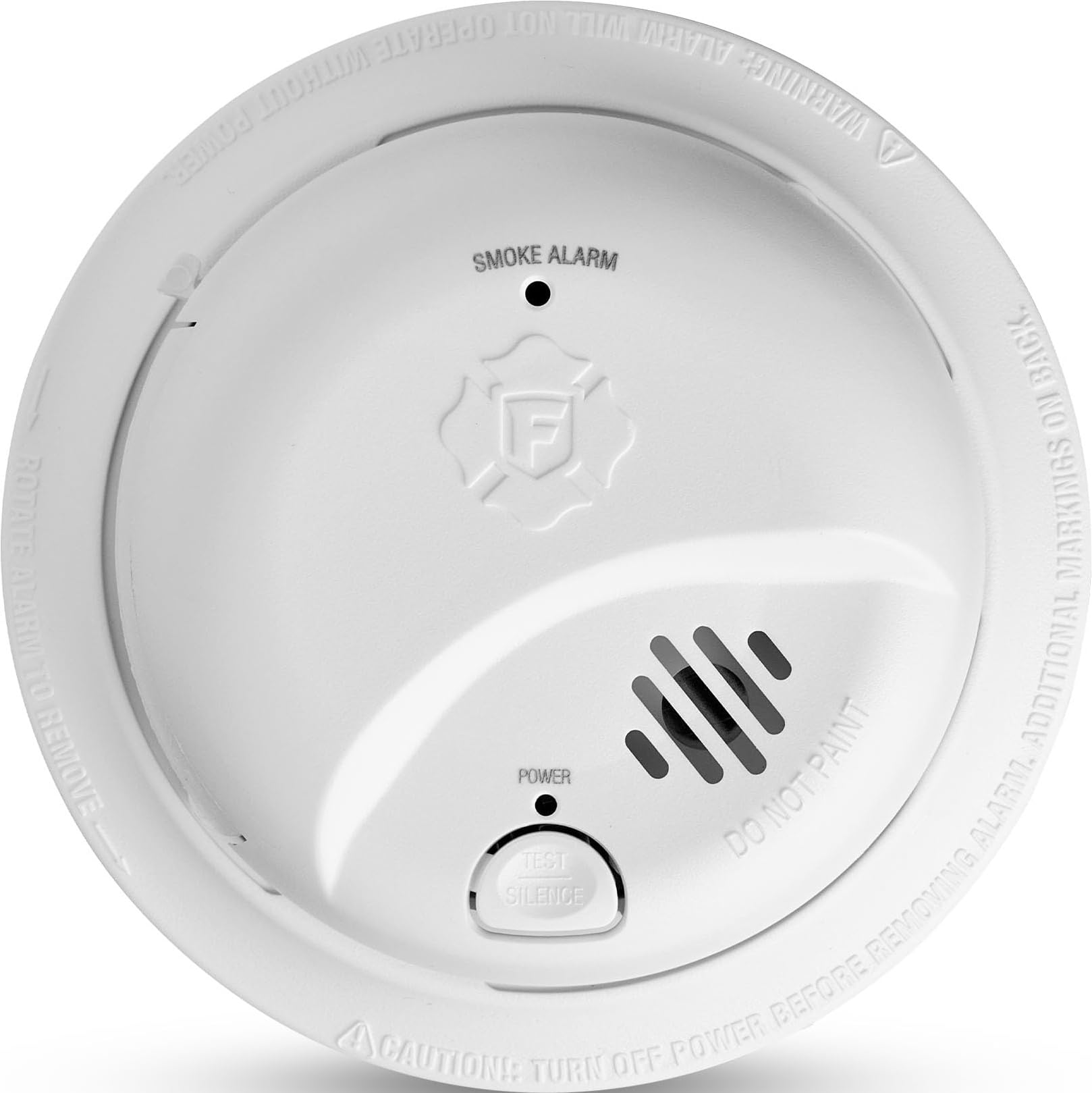
Type: Battery smoke alarm
Pack Size: 1-pack
Power Source: Battery
Brand: First Alert
Best For: Straightforward replacements
SMI100, 1-Pack First Alert Battery Smoke Alarm
This is the kind of alarm a homeowner grabs when the old unit in a loft has finally chirped its last warning. It runs on battery alone, so there is no junction box to chase and no electrician to book — the unit mounts flat and starts protecting the room the same afternoon. First Alert is a name most buyers recognize from hardware aisles, which makes this an easy default for a replacement rather than a first-time install.
The appeal here is simplicity and price. A single battery alarm at the entry level keeps the cost of protecting a small loft low, and the one-pack format suits a room with exactly one mounting point. Buyers who want a matching unit for a second room will need to order twice, though.
Trade-off: A budget battery alarm means battery changes are part of ownership, and there is no interconnect to wake the rest of the house if this one sounds.
Photoelectric Smoke Alarm, Fewer Cooking Nuisance Alarms, X-Sense SD2J0AX

Type: Photoelectric smoke alarm
Power Source: 10-year sealed battery
Certification: UL 217
Features: One-button hush, self-test
Installation: No-wire
Pack Size: 1-pack
Photoelectric sensing is the reason this unit earns its place in a loft: it responds to smoldering fires and is less prone to tripping on steam and cooking fumes than ionization types. The 10-year battery is sealed in, so there are no annual battery swaps and no late-night chirping to chase up a ladder. A one-button hush handles the occasional false alarm, and the self-test lets a buyer confirm the unit is live without climbing to the ceiling.
No-wire installation is the other headline. A loft bedroom with a finished sloped ceiling usually has no accessible wiring, and this alarm sidesteps that entirely. It suits anyone who wants to install once and forget for a decade.
Trade-off: The sealed battery cannot be replaced, so the whole unit gets retired at end of life rather than refreshed with a cheap cell.
4-Inch Smoke Alarm with LED Status Lights, Kidde 10SDR
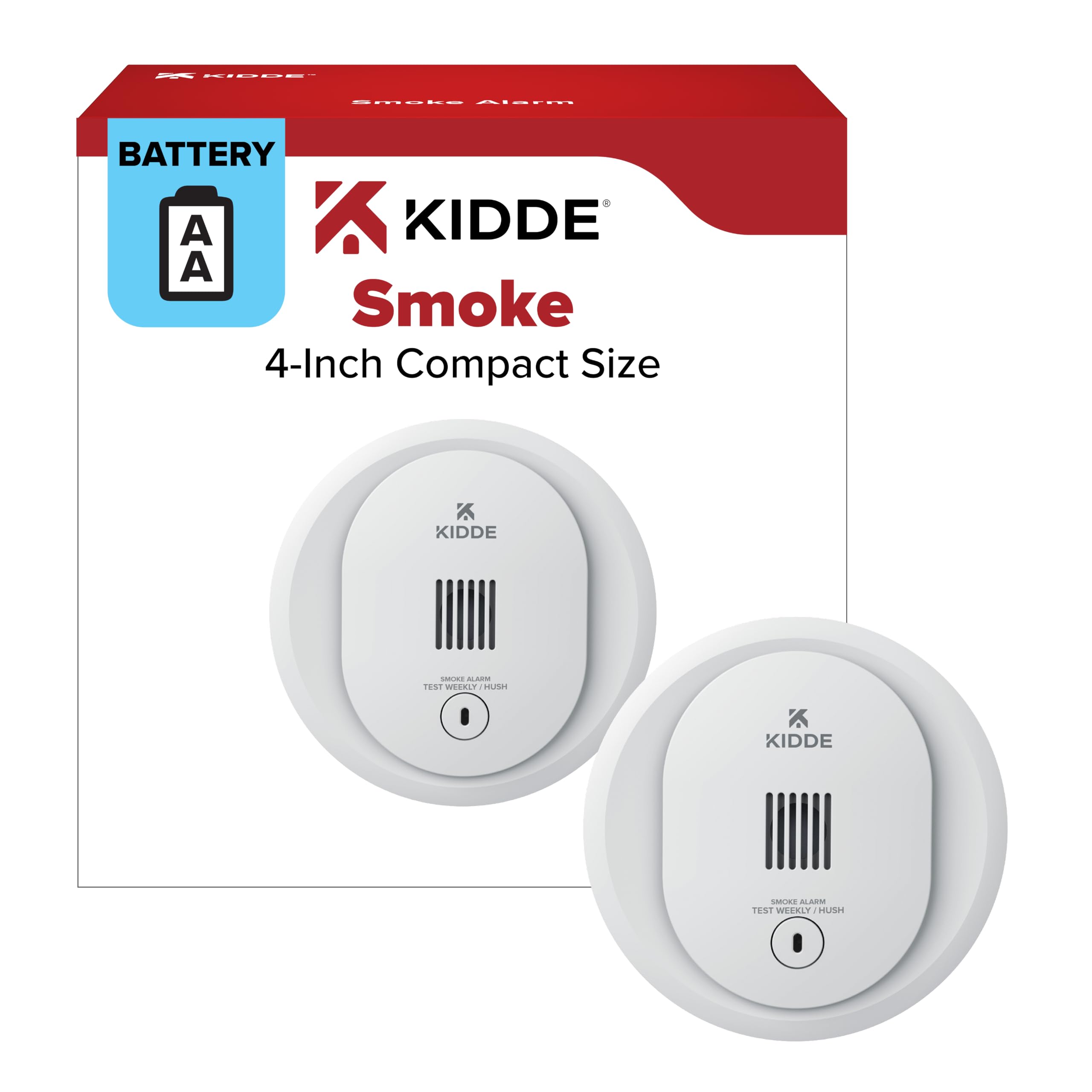
Type: Compact smoke detector
Body Size: 4-inch
Alarm Volume: 85 dB
Power Source: AA batteries
Features: LED status lights
Best For: Small spaces
The 4-inch footprint is the selling point. Loft ceilings are often broken up by beams, skylights, and sloped planes, and a compact body fits into the usable flat patches where a full-size alarm would crowd the edge. Kidde builds this one around AA batteries, which are cheap and easy to source when replacement time comes.
The 85 dB alarm is loud enough to pull a sleeping occupant out of a loft, and the LED status lights give a quick visual confirmation that the unit is powered. Buyers with a small room and a fussy ceiling should start here.
Trade-off: The compact body and AA power keep the price down, but the smaller unit offers fewer features than the photoelectric models above — expect basic protection, not extras.
SMI100-AC, 9V Battery Backup, First Alert Hardwire Smoke Alarm
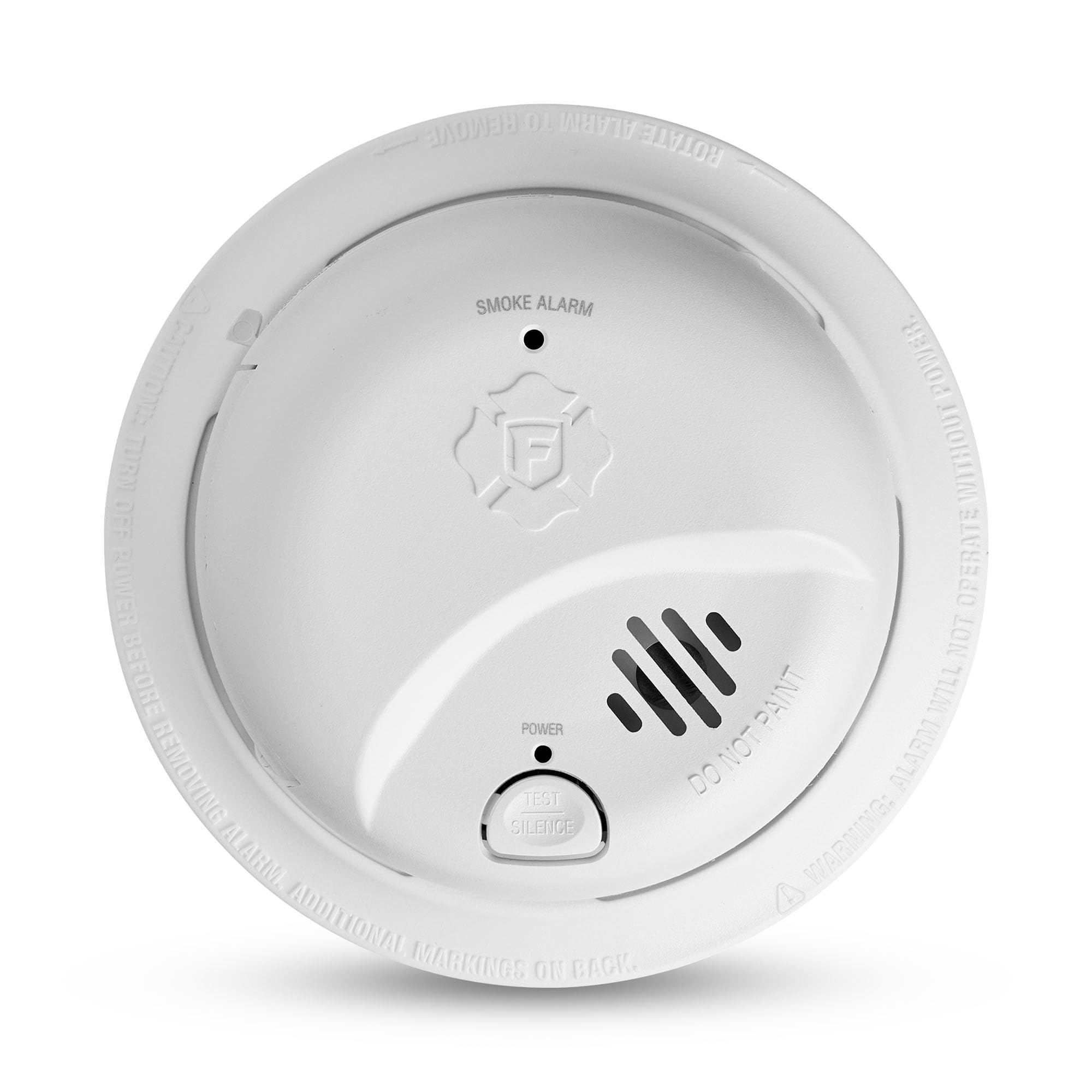
Type: Hardwired smoke alarm
Power Source: Hardwired with 9V battery backup
Pack Size: 1-pack
Brand: First Alert
Best For: Lofts with existing wiring
SMI100-AC, 9V Battery Backup, 1-Pack First Alert Hardwire Smoke Alarm
Not every loft is a wiring dead zone. Where a ceiling box already exists — common in converted attics that were once wired for a light — a hardwired alarm is the better long-term choice. This First Alert unit draws its primary power from the household circuit and keeps a 9V battery as backup, so protection continues through a breaker trip or outage.
It is the pick for anyone replacing an existing hardwired alarm in a loft, since the mounting and wiring are already in place. The 9V backup is a standard, widely available cell, which keeps maintenance simple.
Trade-off: This is the wrong alarm for a loft with no existing wiring — installing it from scratch means running a circuit, which turns a ten-minute job into an electrician’s visit.
Photoelectric Smoke Alarm with Silence Button & Low Battery Warning, SITERWELL 2-Pack
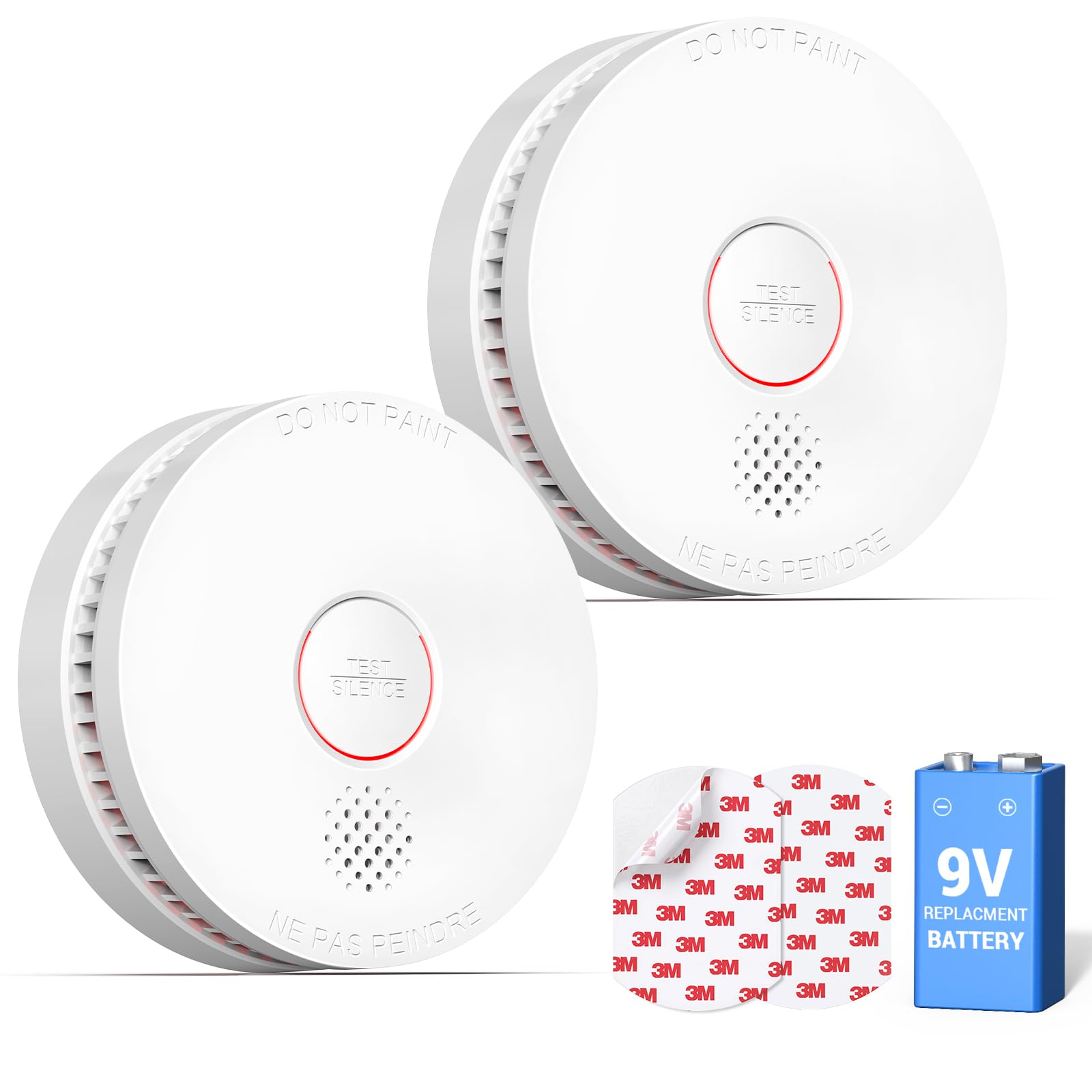
Type: Photoelectric smoke alarm
Power Source: 9V battery
Features: Silence button, low battery warning
Installation: Easy install
Pack Size: 2-pack
This two-pack covers a loft bedroom plus the stairwell or landing below it in one purchase, which is a sensible pairing for a converted upper floor. Photoelectric sensing again means fewer nuisance alarms from cooking and shower steam, a real concern when the loft sits above a kitchen. The silence button handles the occasional false trigger, and the low battery warning gives notice before the unit goes quiet.
Installation is bracket-and-screw simple, and 9V batteries are the most common smoke alarm cell on the market. For a buyer protecting two connected spaces on a budget, the multi-pack math works in its favor.
Trade-off: The lower purchase volume compared with the single-unit picks means less real-world feedback to lean on, and 9V batteries still need periodic replacement.
Before You Buy
- Power source: Battery-only alarms install anywhere; hardwired units need an existing ceiling box and circuit.
- Ceiling shape: A sloped loft ceiling limits usable mounting area — a compact 4-inch body fits where a full-size alarm will not.
- Battery type: Sealed 10-year cells mean no swaps but a full unit replacement at end of life; AA and 9V cells are cheap and user-replaceable.
- Sensing type: Photoelectric models are less prone to nuisance alarms near kitchens and bathrooms, which matters in an open loft.
- Coverage: One alarm per loft bedroom is the minimum; a two-pack covers the room and the landing in one order.
- Installation: No-wire models avoid the cost and disruption of running new cable to an upper floor.
Frequently Asked Questions
-
Where should a smoke alarm go in a loft bedroom?
Mount it on the highest usable flat section of ceiling, ideally near the center of the room and away from skylights and beams that block airflow. -
Is a battery alarm good enough for a loft?
Yes, for most lofts. Battery alarms need no wiring and protect the room just as well, provided the battery is maintained or the unit uses a sealed 10-year cell. -
Why choose photoelectric over other sensing types in a loft?
Photoelectric sensors respond well to smoldering fires and are less likely to trip on cooking steam, which helps in lofts that sit above a kitchen. -
Can a hardwired alarm go in a loft without existing wiring?
It can, but a new circuit has to be run to the ceiling, which is an electrician’s job. A battery model avoids that entirely. -
How often does a loft smoke alarm need attention?
Test it monthly, and replace user-replaceable batteries on the schedule the unit specifies. Sealed 10-year models only need testing until the unit reaches end of life.
Bottom Line
For most loft bedrooms, the X-Sense SD2J0AX is the best smoke alarm for the job: photoelectric sensing cuts nuisance alarms, the sealed 10-year battery means no ladder trips for a decade, and no-wire installation fits a finished sloped ceiling. Buyers with existing wiring should take the First Alert hardwire model instead, while anyone on a tight budget can start with the compact Kidde 10SDR. Check the current price on the X-Sense SD2J0AX before ordering.
