Why there are Amazon links here: Brave Review is paid a commission for qualifying Amazon purchases made through the links below. Your price does not change, and using our links is entirely optional. How this works
Best Heating Schedule for a House with Electric Panel Heaters
The best heating schedule for a house with electric panel heaters is a zoned, setback schedule: warm only the rooms in use, drop the temperature overnight and while the house is empty, and let a programmable thermostat do the switching. This guide covers five controls and heaters that make that schedule practical, from a budget thermostat to app-driven panel heaters. It suits renters replacing a dumb dial, homeowners adding room-by-room control, and anyone tired of paying to heat empty rooms. The overview table below narrows the field fast.
Overview of the Picks
| Product | Key Spec | Best Use | Price Tier |
|---|---|---|---|
| Honeywell Home X2P Programmable Thermostat | 5-2 day schedule, 1 heat/1 cool | Budget whole-house scheduling | Budget |
| Honeywell Home RTH7600D Touchscreen Thermostat | 7-day programmable, touchscreen | Flexible daily schedules | Mid-range |
| DREO Smart Wall Heater | 1500W, 120° oscillation, Alexa | Bedroom or office zone heating | Mid-range |
| Pasapair Smart Convection Panel Heater | 1500W, WiFi and Alexa, IP24 | Bathroom or damp-room panel heat | Mid-range |
| JNDRO Wall-Mounted Space Heater | 1500W, 60/90/120° oscillation, ECO | Cheap zoned spot heating | Budget |
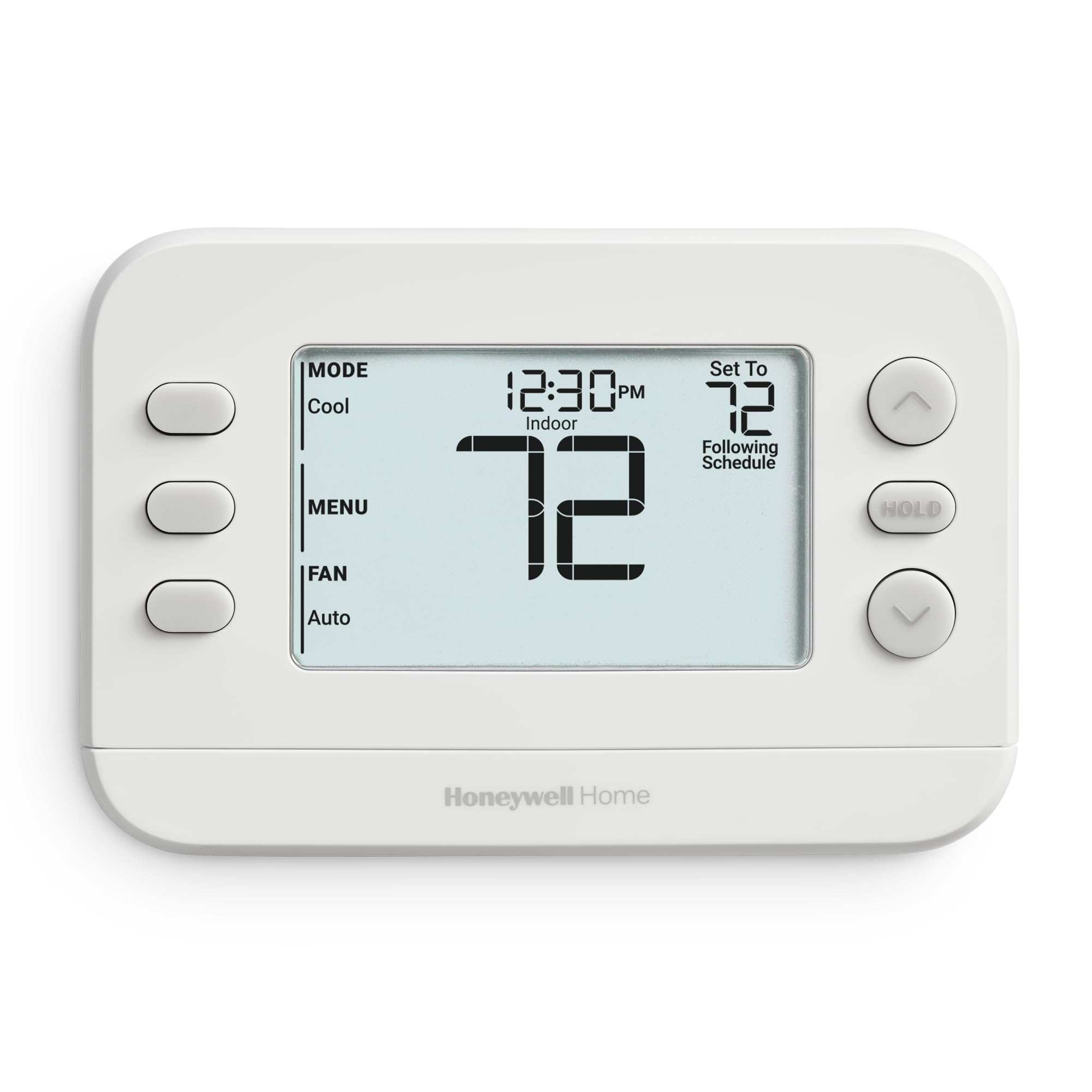
Honeywell Home X2P Programmable Thermostat
Type: Programmable thermostat
Schedule: 5-2 day (weekday/weekend)
Compatibility: Single-stage, 1 heat/1 cool
Mounting: Wall-mounted
Color: White
The X2P is the cheapest route to a real schedule. It replaces a manual thermostat and runs a 5-2 day program, so weekdays share one set of wake, leave, return and sleep periods while weekends run their own. That matches how most households actually live, and it means the panel heaters stop running at full tilt through an empty afternoon.
It suits a house with a single heating zone and a conventional single-stage system, where the goal is a simple setback routine without paying for smart features. The catch is the fixed weekday block: households with shifting shift patterns or irregular days at home will find the 5-2 split too rigid, and the unit is not built for multi-stage or heat-pump setups.
Honeywell Home X2P Programmable Thermostat — check price on Amazon
Trade-off: The 5-2 day format forces one weekday pattern on every day of the week, which frustrates households with irregular schedules.
Honeywell Home RTH7600D Touchscreen Thermostat
Type: Programmable thermostat
Schedule: 7-day programmable
Display: Touchscreen
Mounting: Wall-mounted
Color: White
The RTH7600D upgrades the schedule to seven independent days. Each day gets its own program, which is the right fit for a household where someone is home on Tuesday and out on Wednesday, or where a home office needs heat on a different rhythm from the rest of the house.
The touchscreen makes setup and temporary overrides quicker than a button-and-dial interface, and a seven-day program is the most flexible scheduling a non-smart thermostat offers. It costs roughly double the budget pick, which is the main reason to think twice: buyers who would be happy with one weekday routine are paying for flexibility they will never use.

Honeywell Home RTH7600D Touchscreen Thermostat — check price on Amazon
Trade-off: The extra cost over a 5-2 model only pays off if the household genuinely needs a different schedule most days.
DREO Smart Wall Heater
Power: 1500W
Oscillation: 120°
Modes: ECO, adjustable thermostat
Timer: 24-hour
Control: Remote, works with Alexa
Mounting: Easy-mount wall unit
Color: White
The DREO is a heater rather than a thermostat, and that changes the scheduling conversation. It mounts on a wall, oscillates through 120 degrees to spread warmth across a room, and carries its own adjustable thermostat, ECO mode and 24-hour timer. Used as a zone heater in a bedroom or office, it lets the central panel heaters stay low while one room gets targeted warmth.
It suits buyers building a room-by-room schedule rather than a whole-house one, and Alexa support means voice control fits a morning routine. The limitation is coverage: a single 1500W wall unit warms the room it is in, not a floor, so a house-wide schedule still needs the main system set back rather than switched off.

DREO Smart Wall Heater — check price on Amazon
Trade-off: One 1500W unit cannot carry a whole house, so it works as a zone supplement rather than a replacement for the main heating schedule.
Pasapair Smart Convection Panel Heater
Power: 1500W
Control: WiFi, app and remote, Alexa
Thermostat range: 41–95°F
Heating modes: 3
Protection: IP24 splash-proof, overheat and tip-over protection
Mounting: Wall or floor mount
Timer: 24-hour
The Pasapair is the pick for rooms where moisture is a factor. IP24 splash-proofing makes it suitable for a bathroom or utility room, and the convection design heats air quietly and evenly rather than blasting a narrow cone. Three heating modes and a wide thermostat range give fine control over how warm a room gets and when.
App and WiFi control is the scheduling advantage: a bathroom can be brought up to temperature shortly before a morning shower and dropped the rest of the day, without touching the main thermostat. It suits buyers who want per-room timing through a phone. The caution is that convection heat is slow to build, so a schedule needs to switch it on well before the room is needed rather than at the moment of use.

Pasapair Smart Convection Panel Heater — check price on Amazon
Trade-off: Convection panels warm up gradually, so a tight schedule that switches heat on minutes before use will leave the room feeling cold.
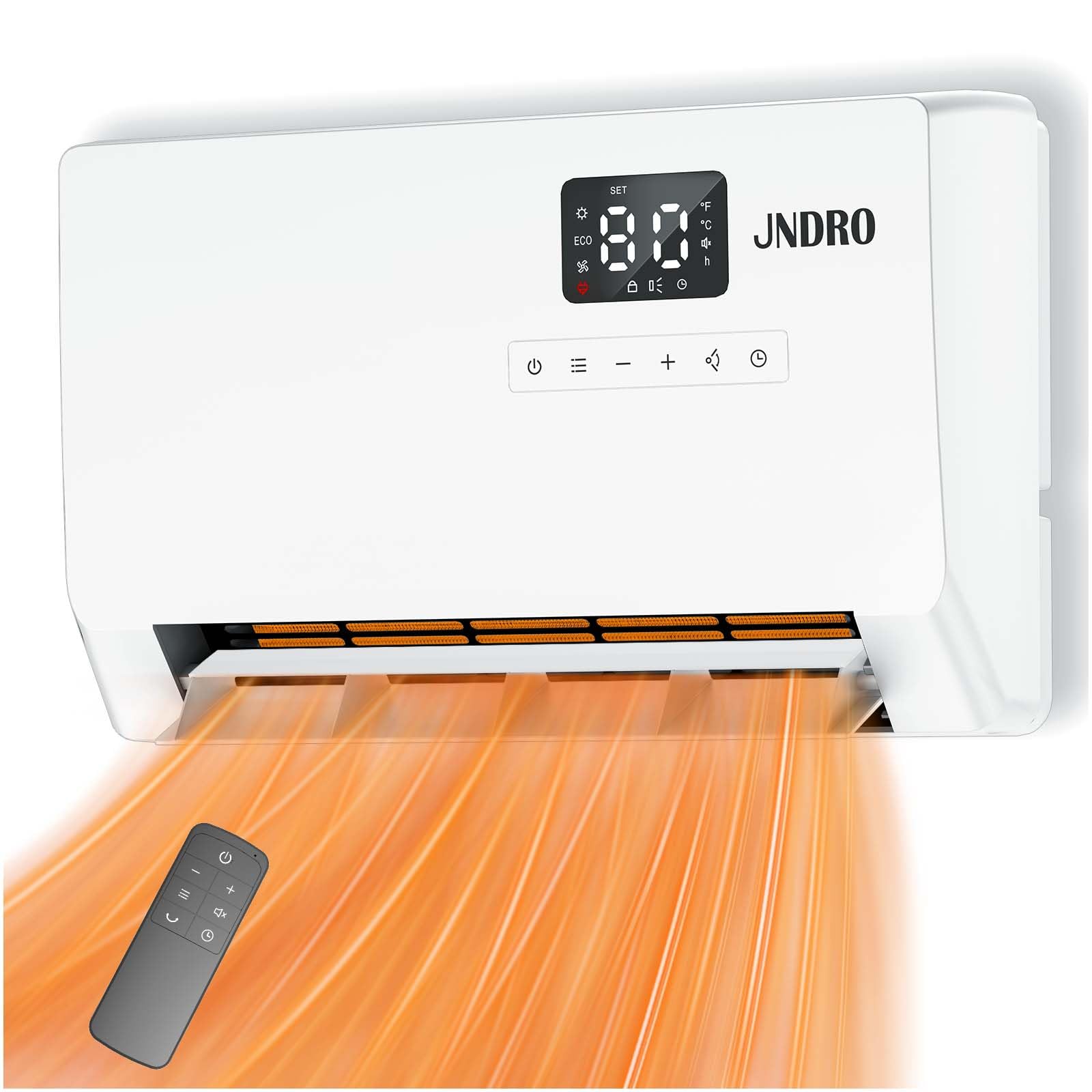
JNDRO Wall-Mounted Space Heater
Power: 1500W
Oscillation: 60°, 90°, 120°
Modes: ECO
Display: LED
Timer: 24-hour
Control: Thermostat and remote
Mounting: Easy-mount wall unit
The JNDRO is the value option for zoned spot heat. Three selectable oscillation angles let a buyer aim coverage at a desk, a seating area or a wider room, and the LED display plus remote make the thermostat and 24-hour timer easy to adjust without climbing to reach the unit.
It suits a buyer who wants one warm room on a schedule without paying smart-heater prices, and the ECO mode helps keep running costs in check during long evening sessions. The trade-off is the lack of app or voice control: scheduling is done at the unit or with the remote, so a household used to setting routines from a phone will find it manual by comparison.
JNDRO Wall-Mounted Space Heater — check price on Amazon
Trade-off: Without app or voice control, every schedule change has to be made at the unit or on the remote.
Before You Buy
- Compatibility: A thermostat must match the system it controls — the X2P is single-stage 1 heat/1 cool only, so check the existing wiring before buying.
- Schedule flexibility: A 5-2 day program suits a fixed routine; a 7-day program suits households whose days differ.
- Zone coverage: A 1500W panel heater warms one room, so plan a schedule per room rather than one setting for the house.
- Mounting: Wall-mount heaters need a suitable wall position and clearance; floor-mount options suit rooms where wall space is tight.
- Moisture: Only splash-proof units such as the IP24-rated Pasapair belong in a bathroom or damp room.
- Control: App and voice control make frequent schedule changes easy; remote-only units are better for a set-and-forget routine.
Frequently Asked Questions
-
What is the best heating schedule for a house with electric panel heaters?
Heat only occupied rooms, set back overnight and during empty hours, and use a programmable thermostat or per-room timers to automate the changes. -
Is it cheaper to leave panel heaters on low all day or switch them on and off?
For well-insulated rooms, a setback schedule usually costs less than continuous low heat, because empty rooms are not being warmed. -
Do electric panel heaters work with a programmable thermostat?
Panel heaters with their own thermostat and timer can be scheduled individually; a wall thermostat such as the Honeywell models controls a compatible central system. -
How long before use should a convection panel heater be switched on?
Convection models warm gradually, so allow a lead time of roughly half an hour before the room is needed rather than switching on at the moment of use. -
Can a wall heater replace central heating in one room?
Yes — a 1500W wall unit can carry a single room, which lets the main system stay set back in the rest of the house.
Bottom Line
The fastest win is a real schedule rather than a better heater: the Honeywell Home X2P Programmable Thermostat delivers a 5-2 day setback routine for the least money, and it is the top pick for most houses with electric panel heaters. Households needing per-day flexibility should step up to the RTH7600D, while anyone heating individual rooms should pair the main setback with a zoned unit such as the DREO or Pasapair.
