Why there are Amazon links here: Brave Review is paid a commission for qualifying Amazon purchases made through the links below. Your price does not change, and using our links is entirely optional. How this works
VIMTAG Cameras vs SeeVision Solar Security Cameras: Wired Power Against Solar Freedom
The choice between VIMTAG cameras and SeeVision solar security cameras comes down to one practical question: where the camera will live and how it gets power. VIMTAG’s two-camera kit suits indoor rooms and covered outdoor spots near an outlet, while SeeVision’s solar PTZ unit suits open outdoor walls with direct sun and no wiring. This comparison reads both on the dimensions that actually separate them — power, resolution, coverage, and storage — so a buyer can pick in a minute.
VIMTAG 2.5K Cameras for Home Security Outdoor/Indoor (2-Pack)
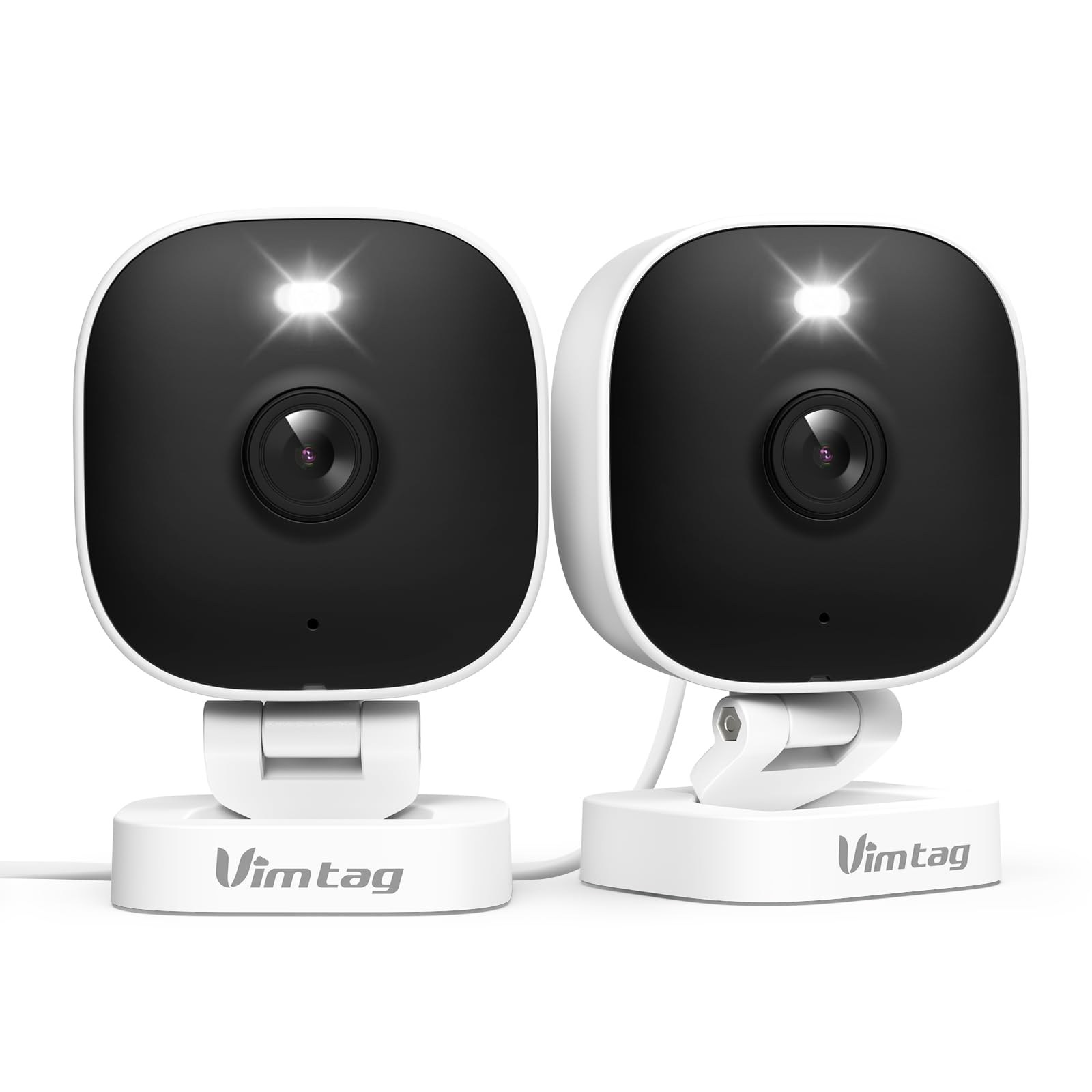
Type: Indoor/outdoor security camera, two-camera pack
Resolution: 2.5K
Night Vision: Color
Audio: Two-way
Alerts and Deterrence: Motion detection, light, siren
Smart Home: Works with Alexa
Storage: Cloud or memory card
The VIMTAG kit is built for buyers who want more than one viewpoint without paying per camera at a premium. The 2.5K sensor gives a sharper image than the 2K class below it, which matters when the camera is watching a nursery, a pet area, or a driveway where faces and details need to be readable. Color night vision and the built-in light work together after dark, and the siren adds a deterrent layer that plain indoor cams lack.
Two-way audio and Alexa support round out the package for everyday check-ins, and storage flexibility means a buyer can run it without a subscription by using a memory card. The trade-off is that this is a wired unit: it needs a nearby outlet, which limits where the outdoor camera can realistically go.
Check the current price on Amazon
SeeVision Solar Security Cameras Wireless Outdoor

Type: Wireless outdoor PTZ camera
Resolution: 2K, 3MP
Power: Solar
Motion Detection: PIR
Night Vision: Color, with spotlight
Audio: Two-way talk
Storage: SD card or cloud
The SeeVision unit is a pan-tilt-zoom camera that runs on solar power, which removes the outlet problem entirely. A PTZ head sweeps a wider area than a fixed lens, so one camera can cover a yard, a gate, or a side passage that would otherwise need two. PIR motion detection is the right sensor for outdoor use because it responds to body heat rather than every passing shadow, and the spotlight plus color night vision keeps footage useful after sunset.
The 2K resolution is a step below the VIMTAG kit on paper, though the PTZ reach often compensates by putting the subject closer in frame. Two-way talk and SD or cloud storage keep the setup flexible. The trade-off is sunlight dependence: a shaded mount or a run of overcast days will strain the battery, so placement in direct sun is close to mandatory.
Check the current price on Amazon
Side-by-Side Comparison
| Feature | VIMTAG 2.5K (2-Pack) | SeeVision Solar PTZ |
|---|---|---|
| Resolution | 2.5K | 2K, 3MP |
| Power Source | Wired, outlet required | Solar |
| Cameras Included | Two | One |
| Field of View | Fixed per camera | Pan-tilt-zoom |
| Motion Detection | Motion detection | PIR |
| Night Vision | Color | Color with spotlight |
| Two-Way Audio | Yes | Yes |
| Smart Home | Works with Alexa | Not stated in name |
| Storage | Cloud or card | SD or cloud |
| Best Placement | Indoor rooms, covered outdoor | Open outdoor walls in sun |
The table shows two cameras solving different problems. VIMTAG wins on raw image detail and on count — two 2.5K views for less than the price of many single premium cams. SeeVision wins on placement freedom and coverage per camera, because solar power and a moving lens mean no electrician and no second unit for a wide yard.
Resolution is the closest call. A 2.5K fixed camera produces a more detailed still, but a 2K PTZ can zoom and track, which often produces a more useful clip of a moving subject. Buyers who want crisp identification of faces at a known doorway lean VIMTAG; buyers who want to watch a whole side yard lean SeeVision.
Storage and ecosystem split the rest. VIMTAG’s Alexa support matters to households already running Echo devices, and its two-camera kit covers a front room and a porch in one purchase. SeeVision keeps things simple with SD or cloud and does not lean on a smart-home hub, which suits buyers who just want the camera to record and alert.
Which Should You Buy?
Choose VIMTAG if the cameras will sit indoors or under cover, an outlet is within reach, and sharp 2.5K detail across two viewpoints matters more than wireless freedom. It is the stronger pick for baby, pet, and nanny monitoring, and for a porch or garage that already has power.
Choose SeeVision if the camera must go on a fence, a shed, or a wall with no wiring, and the mount gets direct sun. The PTZ head and solar panel make it the better fit for covering a wide outdoor area with a single unit.
Buyers who need both — indoor coverage and a far outdoor corner — are not wrong to consider one of each rather than forcing a single model to do both jobs.
FAQ
-
Which camera has the better resolution?
VIMTAG lists 2.5K, which is higher than SeeVision’s 2K. In practice the VIMTAG image carries more detail, while SeeVision’s PTZ zoom can close the gap on distant subjects. -
Do the SeeVision cameras need an outlet?
No. The SeeVision unit is solar powered and wireless, so it needs sunlight rather than wiring. A shaded installation will hurt performance. -
Can the VIMTAG cameras be used outdoors?
Yes. The name lists outdoor and indoor use, though the wired power requirement means a covered spot near an outlet is the realistic outdoor placement. -
Do either of these require a subscription?
Both support local storage — card on VIMTAG, SD on SeeVision — alongside cloud options, so a subscription is optional rather than required. -
Which is better for a baby or pet monitor?
VIMTAG. Two cameras, 2.5K detail, two-way audio, and Alexa support suit indoor monitoring better than a solar outdoor PTZ. -
Which covers a wider outdoor area?
SeeVision. The pan-tilt-zoom head sweeps a broader field than a fixed lens, so one unit can watch more ground. -
Does either work with a smart home system?
VIMTAG states Alexa compatibility. SeeVision’s name does not list a smart-home integration, so buyers should not assume one.
Bottom Line
For most households the decision is about power and placement, not brand. The VIMTAG 2.5K two-camera kit is the better buy for indoor monitoring and covered outdoor spots where an outlet is available, and it delivers the sharper image across two viewpoints. The SeeVision solar PTZ earns its place when wiring is impossible and the sun hits the mount — that is the case where its solar panel and moving lens outweigh the resolution gap.
