Why there are Amazon links here: Brave Review is paid a commission for qualifying Amazon purchases made through the links below. Your price does not change, and using our links is entirely optional. How this works
Best Router for a House With a Dead Spot in a Garage
A garage dead spot usually comes down to distance, a metal door, and a router that cannot push signal through both. The five routers here range from a budget single unit to a three-piece mesh system built for large homes, and each one suits a different buyer: the renter who just needs one box, the homeowner who wants a mesh they can grow, and the tech-forward buyer with a fast internet plan. The overview table below ranks all five by key spec and best use, so a pick is possible in under a minute.
Overview of the Picks
| Product | Key Spec | Best Use | Price Tier |
|---|---|---|---|
| TP-Link Archer AX21 V5 | WiFi 6, EasyMesh, Gigabit | Budget single-router fix | Budget |
| Amazon eero 6 (1-pack) | Mesh, up to 1,500 sq. ft., 75+ devices | Small-home mesh starter | Mid-range |
| NETGEAR Orbi 370 (3-pack) | WiFi 7, up to 6,000 sq. ft., 2.5G port | Large homes with a detached garage | Premium |
| Amazon eero 7 (1-pack) | WiFi 7, up to 2,000 sq. ft., 2.5 Gbps plans | Future-proof single mesh node | Upper mid-range |
| NETGEAR Nighthawk RS90 | WiFi 7, BE3600, 2.5G + 3 Gigabit ports | Wired-device heavy setups | Mid-range |
Best Budget Pick: TP-Link Archer AX21 V5
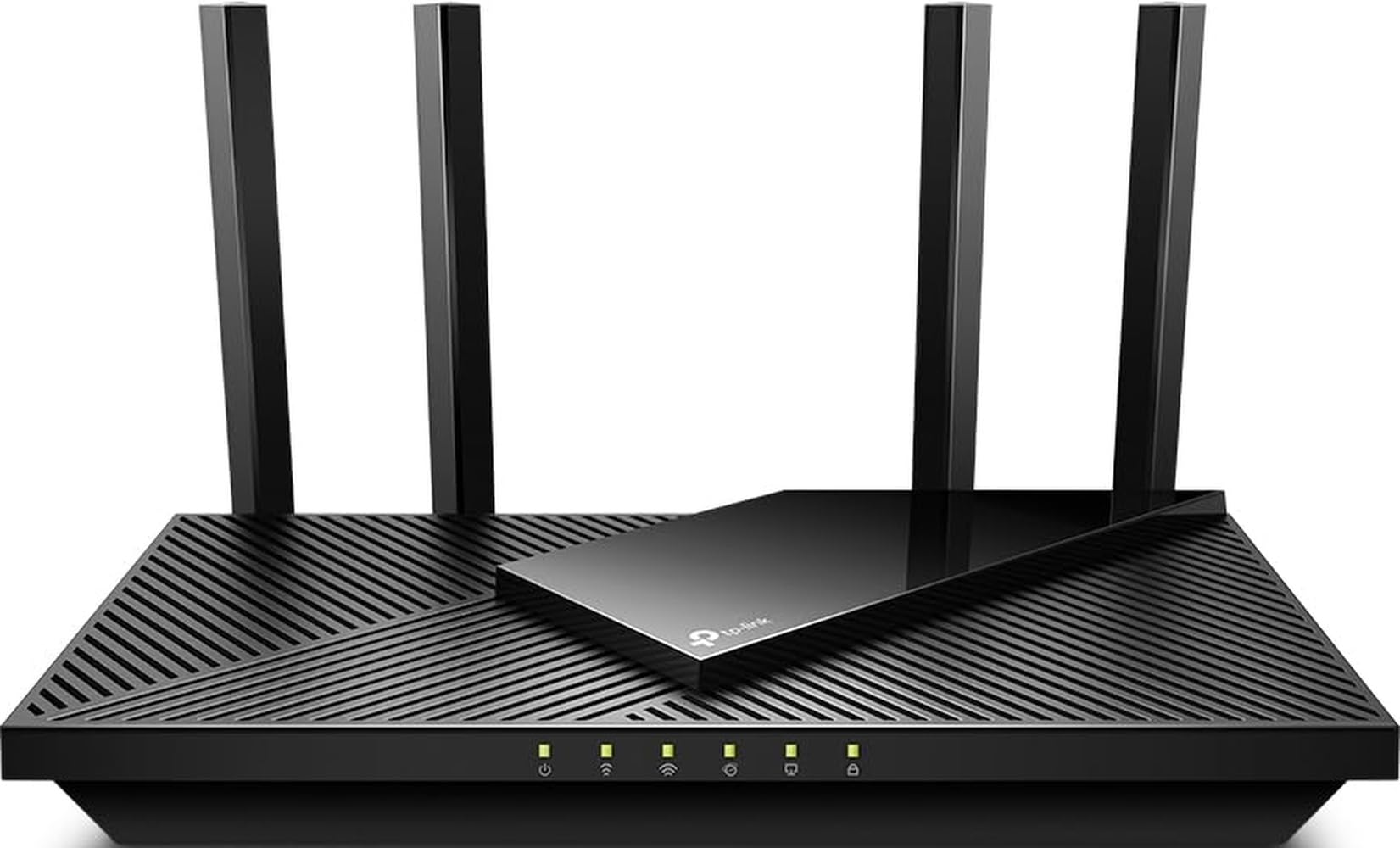
Type: Dual-band WiFi 6 router
Speed class: AX1800
Ports: Gigabit
Mesh: EasyMesh compatible
Voice control: Works with Alexa
Certification: Certified for Humans
TP-Link AX1800 WiFi 6 Router (Archer AX21 V5)
The Archer AX21 is a single dual-band WiFi 6 router with gigabit ports and EasyMesh support, which means it can be paired later with a compatible extender if one box is not enough for the garage. Setup is pitched at non-technical buyers under the Certified for Humans label, and Alexa compatibility covers basic voice queries. It is the lowest-cost way into WiFi 6 here and the natural first try for a garage dead spot caused by an aging router rather than by distance.
This pick suits renters and buyers on a tight budget who want one device and no subscription. It also works for a garage attached to a small house, where a single strong router can usually reach. Trade-off: A single budget router still fights distance and a metal garage door, so a detached or far-off garage will likely need an added mesh node.
Check the current price on Amazon
Best Mesh Starter: Amazon eero 6 (1-Pack)

Type: Mesh WiFi router
Coverage: Up to 1,500 sq. ft.
Device load: 75+ devices
Internet plan support: Up to 900 Mbps
Pack size: 1-pack
The eero 6 is a mesh router sold as a single unit, sized for homes up to 1,500 square feet and internet plans up to 900 Mbps. Mesh hardware hands devices between nodes instead of forcing them to cling to one signal, which is exactly the behavior that fixes a garage that drops out. The 75+ device rating covers a modern household of phones, cameras, and a garage door opener without strain.
This pick suits buyers in a small-to-mid home who want an easy app-managed mesh and room to add a second eero later for the garage. It is the least intimidating route into mesh networking. Trade-off: One node covers only 1,500 square feet, so a garage at the far end of the property will need a second unit to see real improvement.
Check the current price on Amazon
Best for Large Homes: NETGEAR Orbi 370 Series WiFi 7 Mesh System (3-Pack)

Type: WiFi 7 mesh system
Coverage: Up to 6,000 sq. ft.
Pack size: Router + 2 satellite extenders
Speed: Up to 5 Gbps
Ports: 2.5 Gig port
Device load: 70 devices
Security: Built-in security features
NETGEAR Orbi 370 Series WiFi 7 Mesh System, Up to 6,000 sq ft., 3 Pack
The Orbi 370 is a three-piece WiFi 7 mesh system: one router and two satellite extenders rated for up to 6,000 square feet and 70 devices. The 2.5 Gig port and 5 Gbps ceiling mean it will not bottleneck a fast fiber plan, and the satellites can be placed to push signal into a detached garage. Security features are built in rather than sold as an add-on.
This pick suits owners of large or multi-building properties where the garage sits well away from the main router. The two satellites give placement options that a single router cannot match. Trade-off: This is the premium pick here, and a buyer with a small home and a slow internet plan would be paying for coverage and speed that never get used.
Check the current price on Amazon
Best Future-Proof Single Node: Amazon eero 7 (1-Pack)
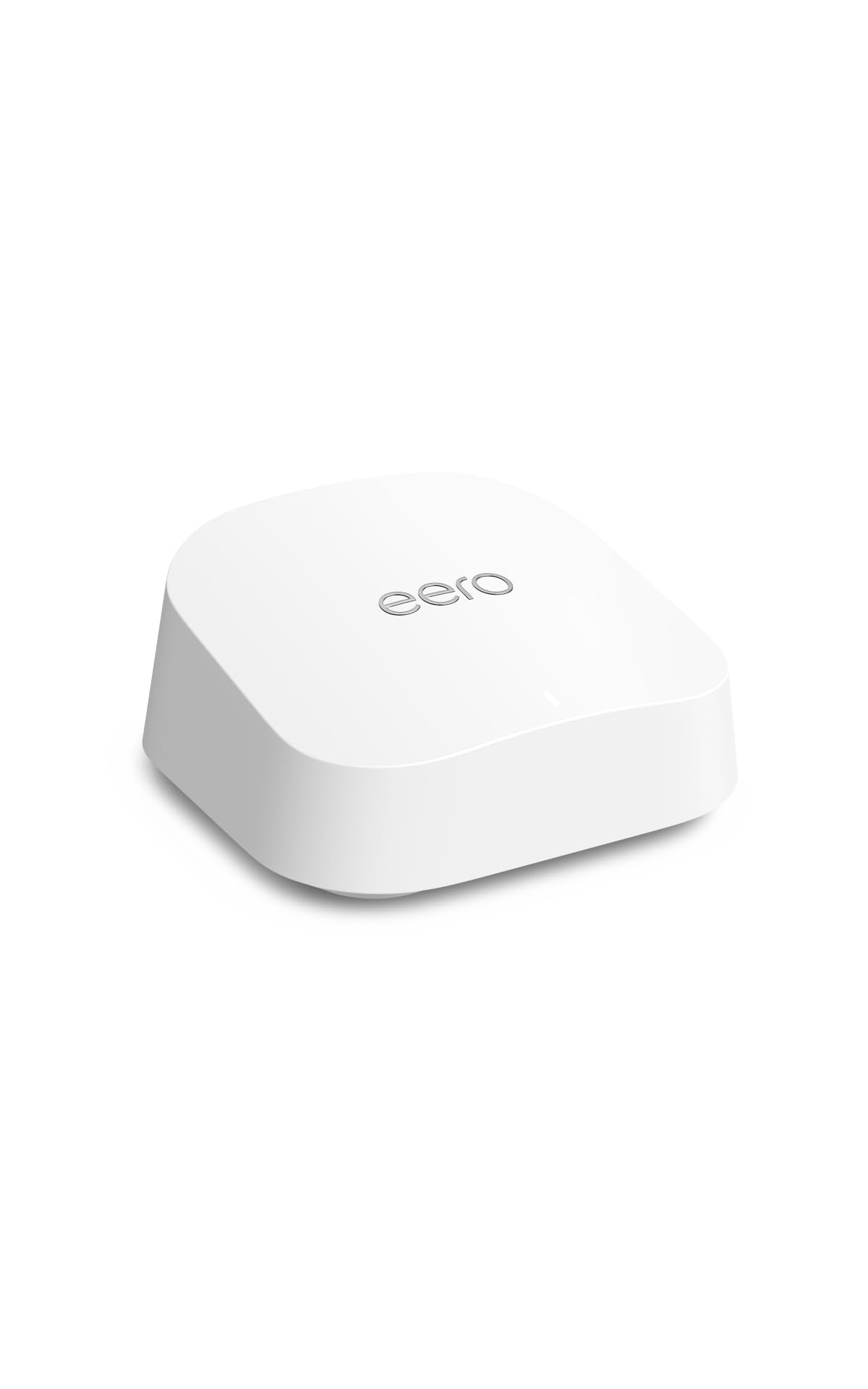
Type: Mesh WiFi 7 router
Coverage: Up to 2,000 sq. ft.
Internet plan support: Up to 2.5 Gbps
Pack size: 1-pack
Model status: Newest model
The eero 7 is a single mesh node on the newest WiFi 7 standard, rated for 2,000 square feet and internet plans up to 2.5 Gbps. That is 500 square feet more reach than the eero 6 from one box, which often closes the gap to an attached garage on its own. It keeps the same mesh architecture, so a second node can be added later if the garage still struggles.
This pick suits buyers who want one device now and a clear upgrade path, and who have or plan to get a fast internet plan. It is the middle ground between the budget router and the full three-piece system. Trade-off: It is a single node, so a detached garage at the edge of the property may still need a companion unit before the dead spot disappears.
Check the current price on Amazon
Best for Wired Garages: NETGEAR Nighthawk RS90

Type: Dual-band WiFi 7 router
Speed class: BE3600
Coverage: Up to 2,000 sq. ft.
Ports: 1× 2.5G + 3× Gigabit
Device load: 50 devices
Setup: Easy set up
NETGEAR Nighthawk WiFi 7 Router RS90, Up to 2,000 sq ft, 3.6 Gbps
The Nighthawk RS90 is a dual-band WiFi 7 router rated for 2,000 square feet and 50 devices, with a 2.5G port plus three Gigabit ports. The port count is the standout: a garage with a wired access point, a security camera hub, or a shop computer can be fed over Ethernet while wireless handles the rest. It is a single router, not a mesh, so setup stays simple.
This pick suits buyers who can run a cable to the garage or who have several wired devices and want one router to serve them all. The 2.5G port keeps it ready for a fast plan. Trade-off: The 50-device rating is the lowest in this group, so a smart-home-heavy household may outgrow it before the coverage does.
Check the current price on Amazon
Before You Buy
- Distance: Measure from the router to the garage. A single node suits an attached garage; a detached one usually needs mesh satellites or a wired access point.
- Construction: Metal garage doors and foil-backed insulation block signal. A mesh node placed inside the garage beats a stronger router in the house.
- Internet plan speed: Match the router to the plan. A 900 Mbps plan does not need a 5 Gbps system, and a fast plan deserves a 2.5G port.
- Wired options: If a cable can reach the garage, a router with multiple Gigabit ports is often more reliable than any wireless fix.
- Device count: Count phones, cameras, thermostats, and the garage door opener. Mesh systems here range from 50 to 75+ devices.
- Expandability: EasyMesh or a mesh ecosystem lets a buyer add a node later instead of replacing the router.
- Budget: A budget single router fixes an aging-router problem; a mesh system fixes a distance problem. Diagnose before spending.
Frequently Asked Questions
-
Will a new router alone fix a garage dead spot?
Sometimes. If the old router is the weak link, a modern WiFi 6 or WiFi 7 router can reach further. If the garage is detached or shielded by metal, a mesh node or wired access point is the reliable fix. -
Is mesh better than a single router for a garage?
Mesh is better when distance is the problem, because satellites can be placed closer to the garage and hand devices off cleanly. A single router wins on simplicity and price when the garage is attached and close. -
How many square feet of coverage does a garage need?
Treat the garage as extra square footage. A 1,500 square foot system covers a small home, while a 6,000 square foot system leaves room for a large house plus a detached garage. -
Do metal garage doors block Wi-Fi?
Yes. Metal is one of the hardest materials for Wi-Fi to pass through, which is why placing a mesh node inside the garage often works better than boosting power from the house. -
Can a wired connection to the garage help?
Yes. A router with several Gigabit ports, like the Nighthawk RS90, can feed a wired access point or camera in the garage for a stable signal that wireless cannot match. -
Does WiFi 7 matter for a garage dead spot?
Not for range alone, but WiFi 7 routers here also carry more capacity and faster ports. Buyers with a fast internet plan get more value from it than buyers on a basic plan.
Bottom Line
For most homes, the Amazon eero 7 (1-pack) is the best router for a house with a dead spot in a garage: 2,000 square feet of mesh coverage, WiFi 7, and room to add a node if the garage still needs help. Buyers on a tight budget should start with the TP-Link Archer AX21, and large properties with a detached garage should go straight to the NETGEAR Orbi 370 three-pack.
