Why there are Amazon links here: Brave Review is paid a commission for qualifying Amazon purchases made through the links below. Your price does not change, and using our links is entirely optional. How this works
Best Robot Vacuum for Homes With Pet Bowls on the Floor
Pet bowls sit low, hold loose kibble, and spill water — a bad combination for a robot that maps by bumping into things. The picks below range from budget bump-and-run models to LiDAR navigators with self-emptying docks, and each is judged on whether it can work around a feeding station without dragging a bowl across the kitchen. Three buyer profiles are covered: households on a tight budget, pet owners who want hands-free emptying, and homes with mixed hard floor and carpet. The overview table below gives the fastest path to a shortlist.
Overview of the Picks
| Product | Key Spec | Best Use | Price Tier |
|---|---|---|---|
| Tikom G8000 Max | 5000Pa suction, 150 min max | Budget combo for hard floor and pet hair | Budget |
| Tikom L8000 Plus | 6000Pa suction, 90-day capacity, LiDAR | Hands-free emptying with mapping | Mid-range |
| 3-in-1 Self-Emptying Robot Vacuum and Mop | 11500Pa suction, 160-min runtime | Pet owners wanting maximum suction | Mid-range |
| DREAME L40 Ultra Gen 2 | 25,000Pa suction, extendable side brush, 10.5mm mop lifting | Mixed floors with rugs and tight edges | Premium |
| ROPVACNIC Robot Vacuum and Mop Combo | 5200Pa suction, advanced obstacle avoidance | First-time buyers wanting app control | Budget |
Tikom Robot Vacuum and Mop Combo (G8000 Max)
Suction: 5000Pa
Runtime: 150 min max
Control: App and remote
Cleaning type: Vacuum and mop combo
Best for: Hard floor, carpet, pet hair

Check the current price on Amazon
The G8000 Max is a straightforward combo unit built for daily upkeep rather than deep cleaning. Its 5000Pa suction is enough to lift kibble and loose pet hair from hard floor, and the 150-minute maximum runtime means a full pass over an average apartment without a recharge. App and remote control give two ways to start a run, which matters in a household where not everyone carries a phone into the kitchen. The self-charge behavior returns the unit to its dock when the battery drops.
This is the pick for a renter or a first-time buyer who wants a mop and a vacuum in one body without paying for a dock. It suits homes where the pet bowls sit against a wall and the floor is mostly hard surface.
Trade-off: Without a self-emptying base, the dustbin needs manual emptying after most runs, and the mop function is a basic pad rather than a scrubbing system.
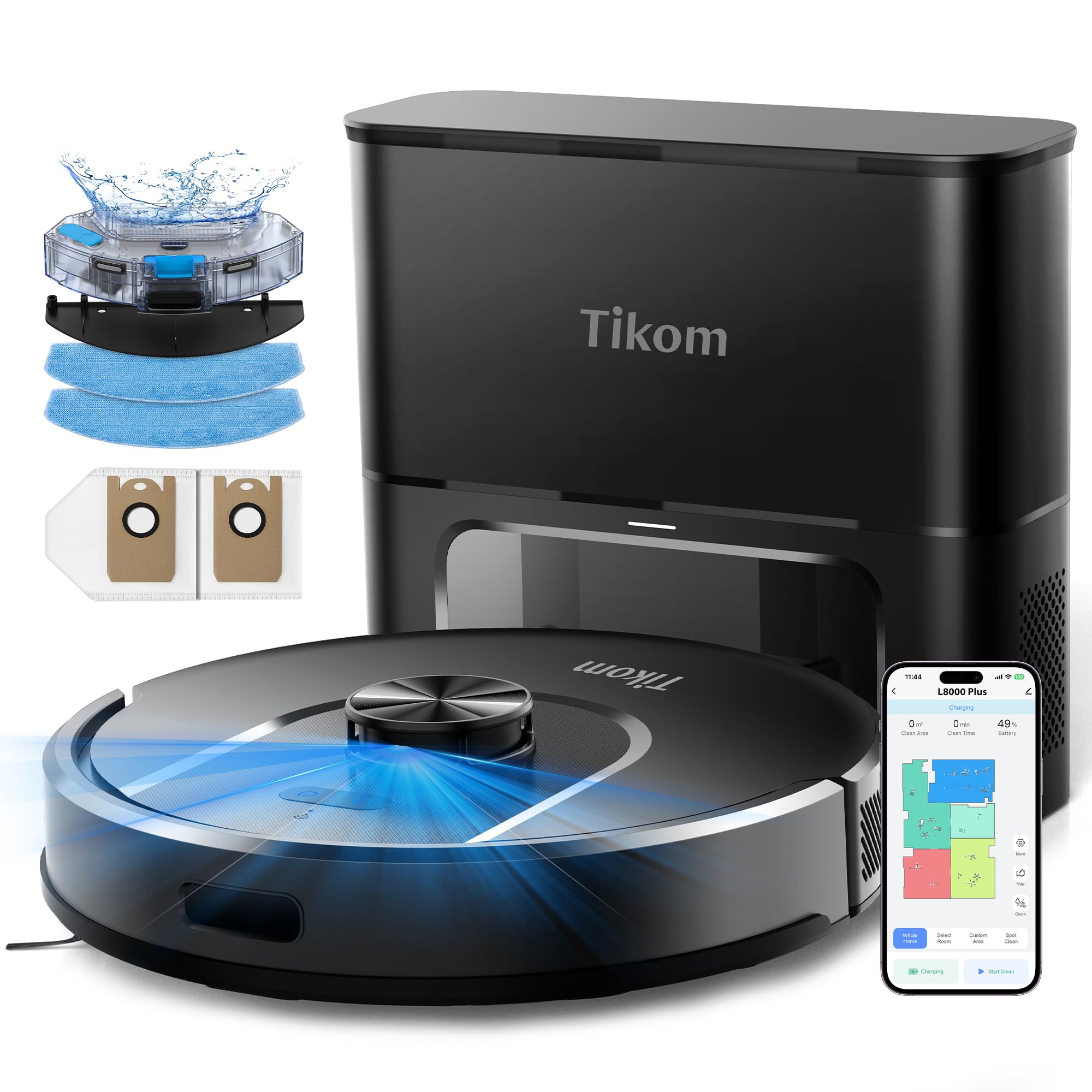
Tikom Robot Vacuum and Mop (L8000 Plus)
Suction: 6000Pa
Dust capacity: 90 days
Navigation: LiDAR with home mapping
Cleaning type: Vacuum and mop combo
Dock: Self-emptying base
Check the current price on Amazon
The L8000 Plus steps up to LiDAR navigation and home mapping, which changes how the unit behaves near a feeding station. Instead of finding the bowls by contact, it builds a map of the room and can be told where not to go. The self-emptying base holds debris for up to 90 days, so the dustbin stops being a daily chore, and 6000Pa of suction covers pet hair on both hard floor and carpet.
This is the sensible middle pick for a pet owner who is tired of emptying a bin every morning but does not want to pay flagship prices. It fits homes with a stable floor plan where a saved map is worth having.
Trade-off: The self-emptying base adds footprint and needs its own bag or bin changes, so the "90 days" figure depends on how much the pet sheds.
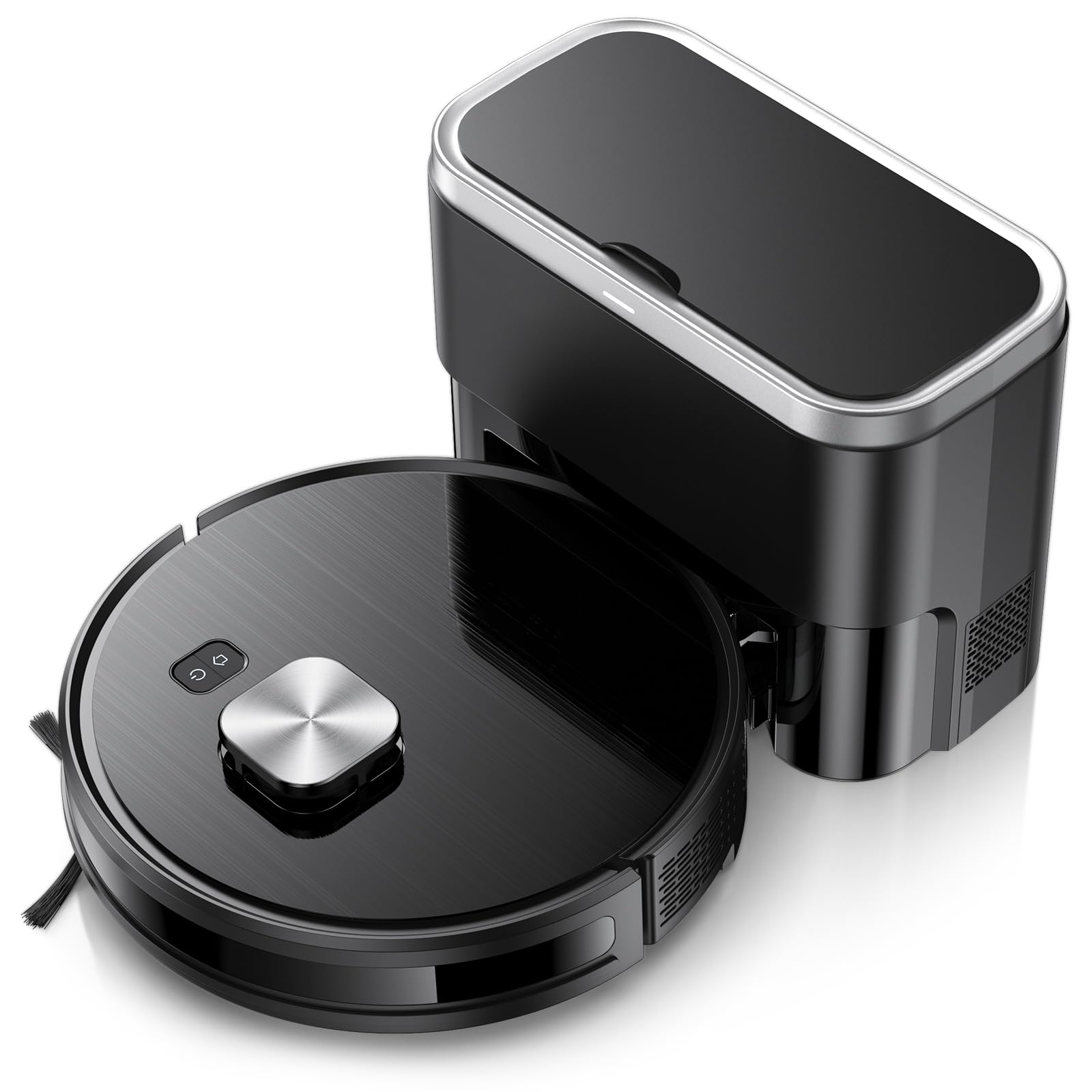
3-in-1 Self-Emptying Robot Vacuum and Mop
Suction: 11500Pa
Runtime: 160 minutes
Dust capacity: 90 days
Navigation: LiDAR
Control: Alexa and Google Assistant
Cleaning type: 3-in-1 vacuum and mop
Check the current price on Amazon
This unit pairs the highest suction in the mid-range group with the longest runtime, and it is aimed squarely at pet owners. The 11500Pa figure is well above what a basic combo offers, which helps on carpet where hair works its way into the pile. LiDAR navigation and a 90-day self-emptying base mean the run happens without supervision, and voice control through Alexa or Google Assistant lets a household start a clean without opening an app.
It earns its place for homes with a heavy shedder and a mix of rugs and hard floor. The 160-minute runtime covers larger floor plans in one pass.
Trade-off: High suction and a large dock usually come with more noise and a bigger footprint than a budget combo, and the mop side is still a pad system rather than a scrubbing brush.
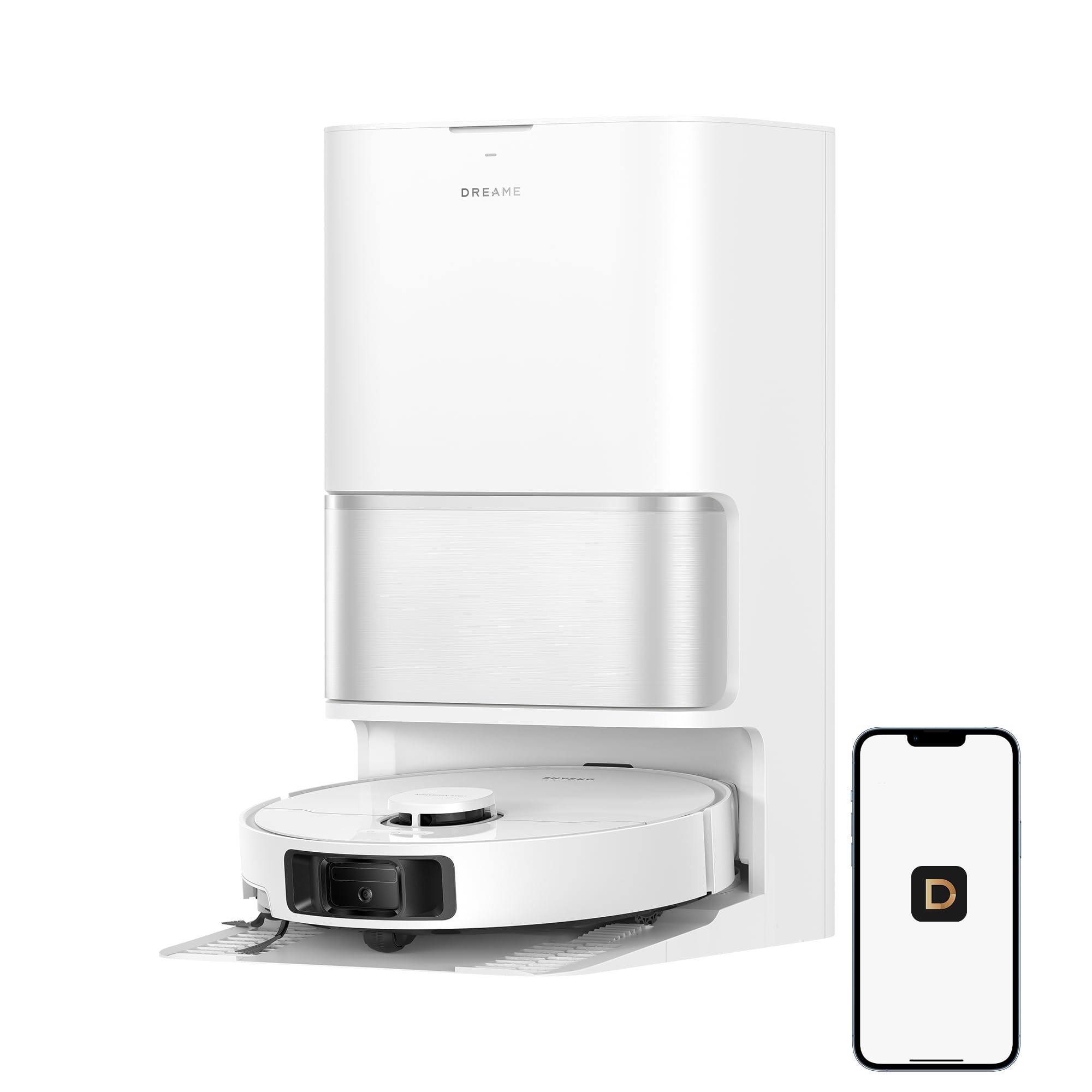
DREAME L40 Ultra Gen 2 Robot Vacuum and Mop
Suction: 25,000Pa
Side brush: Extendable
Mop lifting: 10.5mm
Dock: All-in-one self-emptying and cleaning
Navigation: Obstacle avoidance
Control: App
Check the current price on Amazon
The L40 Ultra Gen 2 is the premium pick and the only one here with an extendable side brush and mop, which lets it reach into the gap between a bowl and the wall. Mop lifting of 10.5mm means the pad raises when the unit crosses a rug, so a wet mop does not get dragged onto carpet. The all-in-one dock handles emptying and cleaning, and obstacle avoidance is the feature that matters most around a feeding station.
This suits a household with rugs, tight corners, and a pet that leaves a mess near the bowls. It is the pick for buyers who want the robot to handle the whole job rather than just the open floor.
Trade-off: The dock is large and the machine is the most expensive pick here, so it only makes sense where the floor plan justifies the extra capability.
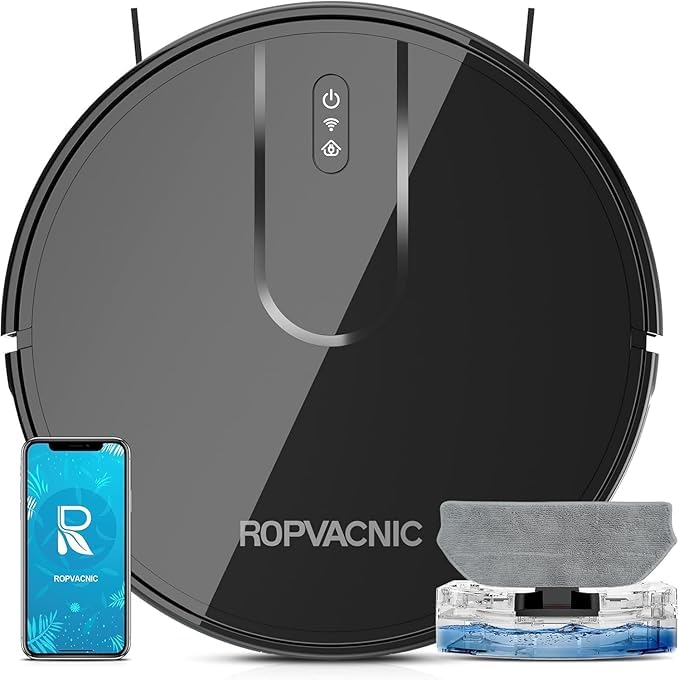
ROPVACNIC Robot Vacuum and Mop Combo
Suction: 5200Pa
Control: App
Features: Personalized cleaning adjustments, advanced obstacle avoidance
Power: Self-charging
Cleaning type: Vacuum and mop combo
Check the current price on Amazon
The ROPVACNIC combo offers 5200Pa of suction and app control with personalized cleaning adjustments, which lets a household tune suction and cleaning passes per room. Advanced obstacle avoidance is the headline feature for pet owners, since it is what keeps the unit from pushing a bowl across the floor. Self-charging keeps it ready between runs, and the mop function covers light surface cleaning on hard floor.
It is the pick for a first-time buyer who wants app control and bowl avoidance without spending mid-range money. It fits smaller homes where a single run covers the main floor.
Trade-off: Without a self-emptying dock, the bin is a manual job, and obstacle avoidance at this price tier is unlikely to match the precision of a LiDAR-mapped premium unit.
Before You Buy
- Navigation: LiDAR mapping lets a household set a no-go zone around the bowls; bump-based navigation relies on contact and is more likely to nudge a bowl.
- Suction: Higher Pa helps on carpet and with embedded hair, but hard floor and loose kibble are handled well by mid-range figures.
- Dock footprint: A self-emptying base needs clear wall space and a power outlet, and it is the main reason to measure before buying.
- Mop lifting: If the home has rugs, mop lifting keeps a wet pad off the carpet; without it, the mop should be removed before a carpet run.
- Bin capacity: A 90-day capacity rating assumes average debris; a heavy shedder will fill it faster.
- Runtime: Longer runtime matters in larger floor plans, since a unit that runs out mid-pass returns to the dock and resumes later.
- Bowl placement: Raising bowls on a mat or stand, or setting a no-go zone, is the cheapest way to protect a feeding station.
Frequently Asked Questions
-
Will a robot vacuum push pet bowls around? A bump-navigation model can nudge a light bowl, while a LiDAR model with no-go zones avoids the area entirely. A non-slip mat under the bowls adds a second layer of protection.
-
Can a robot vacuum pick up loose kibble? Yes — dry kibble is well within the range of the suction figures here. The bigger risk is a bowl tipping, so keeping the unit on a mapped route away from the station is the safer approach.
-
Is a self-emptying dock worth it with pets? For a heavy shedder, yes: it removes the daily bin empty and holds debris for up to 90 days. The trade-off is a larger dock and replacement bags or bins.
-
Does mop lifting matter around pet bowls? It matters more for rugs than for bowls. A lifted mop crosses a rug without wetting it, which keeps a carpet dry after a spill near the feeding station.
-
How often should the mop pad be cleaned? After every mopping run is the safe rule, since a wet pad left in the unit holds odor. Most pads here are removable and machine washable.
-
Can a robot vacuum handle a water spill near the bowls? No — a wet spill should be wiped up by hand first. A robot mop spreads water rather than extracting it, and liquid in the bin is a mess to clean.
Bottom Line
For most homes with pet bowls on the floor, the Tikom L8000 Plus is the pick that balances cost and hands-free convenience: LiDAR mapping protects the feeding station, and the self-emptying base removes the daily bin chore. Buyers with rugs and tight corners should step up to the DREAME L40 Ultra Gen 2, while a tight budget points to the Tikom G8000 Max. Check the current price on the Tikom L8000 Plus before deciding.
