Why there are Amazon links here: Brave Review is paid a commission for qualifying Amazon purchases made through the links below. Your price does not change, and using our links is entirely optional. How this works
Best WiFi Extender for a Dead Spot in a Bedroom
A bedroom dead spot is usually a distance problem, not a speed problem: the router is too far away and the signal has to push through walls and floors to get there. The five extenders below are ranked for that job, from a compact budget unit that fits any outlet to high-coverage models built for larger homes. Three buyer profiles are covered here: renters who want a plug-in fix with no drilling, households with several devices in one room, and anyone who needs a wired connection at the far end of the house. The overview table below puts the key differences side by side so a pick can be made in under a minute.
Overview of the Picks
| Product | Key Spec | Best Use | Price Tier |
|---|---|---|---|
| TP-Link AC1200 WiFi Extender (RE315) | Dual band, up to 1600 Sq.ft, EasyMesh compatible | Small bedrooms close to the router | Budget |
| TP-Link AC1900 WiFi Range Extender (RE550) | Up to 2200 Sq. Ft., Gigabit Ethernet port | Faster throughput and wired devices | Mid-range |
| WiFi Extender Signal Booster for Home (18,000 Sq Ft) | 65+ devices, Ethernet port, 1-tap setup | Large homes with many devices | Budget |
| 2026 WiFi Extender Signal Booster (15,588 Sq Ft) | 6X faster repeater, Ethernet port, 1-tap setup | Simple plug-in coverage boost | Budget |
| 2026 New WiFi Extender, WiFi Booster 1200Mbps | Dual band, 115+ devices, Ethernet port | Crowded rooms with lots of gadgets | Budget |
TP-Link AC1200 WiFi Extender (RE315)

Type: Dual-band wall-plug WiFi extender
Speed Class: AC1200 (1.2Gbps)
Coverage: Up to 1600 Sq.ft
Device Load: Up to 32 devices
Ports: One Ethernet port
Mesh: EasyMesh compatible
The RE315 is the classic plug-in extender: a compact body that goes straight into a wall outlet, dual-band radios, and a single Ethernet port for a wired device. It repeats the existing network rather than creating a new one, so phones and laptops in the bedroom keep the same network name and connect automatically. EasyMesh compatibility means it can also join a mesh system if the household upgrades later.
It earned its place as the budget pick because it covers a single bedroom comfortably and handles a normal device load without fuss. Buyers with a very large room, thick stone walls, or a router on another floor should look at the higher-coverage picks instead, since a compact unit has less antenna gain to work with.
Trade-off: The single Ethernet port limits wired devices to one, and throughput drops on the extended network compared with a direct router connection.
Check the current price on Amazon
TP-Link AC1900 WiFi Range Extender (RE550)
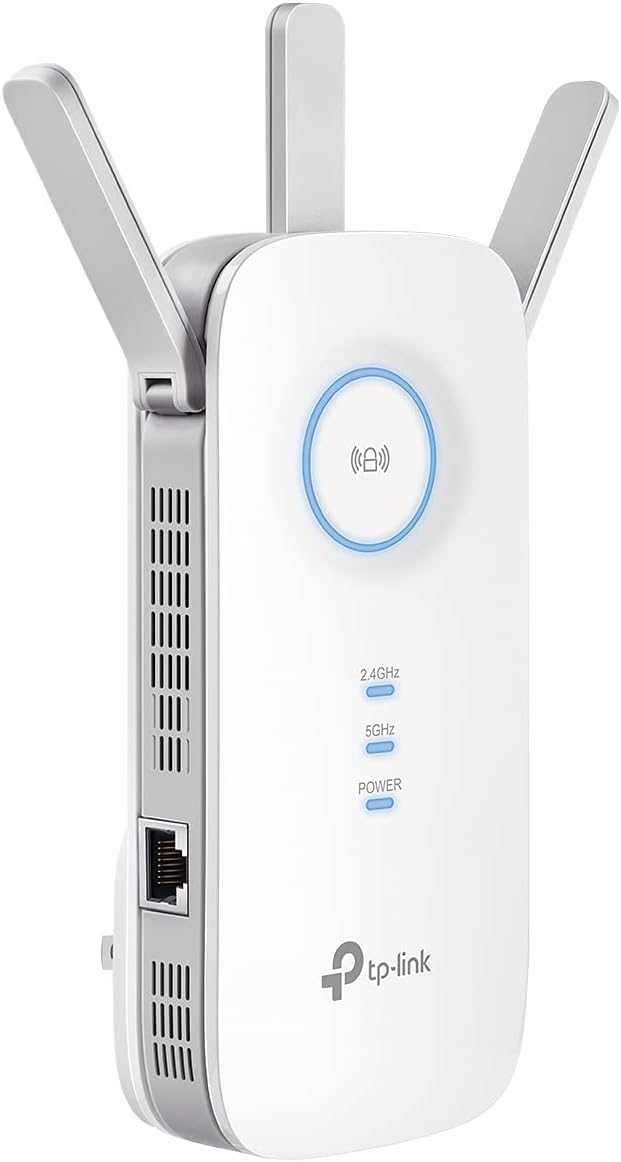
Type: Dual-band wall-plug WiFi range extender
Speed Class: AC1900
Coverage: Up to 2200 Sq. Ft.
Device Load: Up to 32 devices
Ports: Gigabit Ethernet port
Setup: App-based
Mesh: EasyMesh compatible
The RE550 steps up to a faster wireless class and a Gigabit Ethernet port, which matters for a bedroom with a desktop, console, or TV that needs a stable wired link. App-based setup walks through placement and pairing, and EasyMesh support lets it work alongside a compatible router instead of fighting it. The higher speed class also gives more headroom when several people stream in the same room.
This is the pick for buyers who want the extender to do more than rescue a phone signal — it suits a home office setup or a bedroom that doubles as a media room. The caution is placement: like every repeater, it performs best roughly halfway between the router and the dead spot, and a Gigabit port only helps if the extended signal itself is strong.
Trade-off: The extender must sit within decent range of the router to help, so a bedroom at the far end of a long house may still need a mesh node instead.
Check the current price on Amazon
WiFi Extender Signal Booster for Home, Covers Up to 18,000 Sq Ft
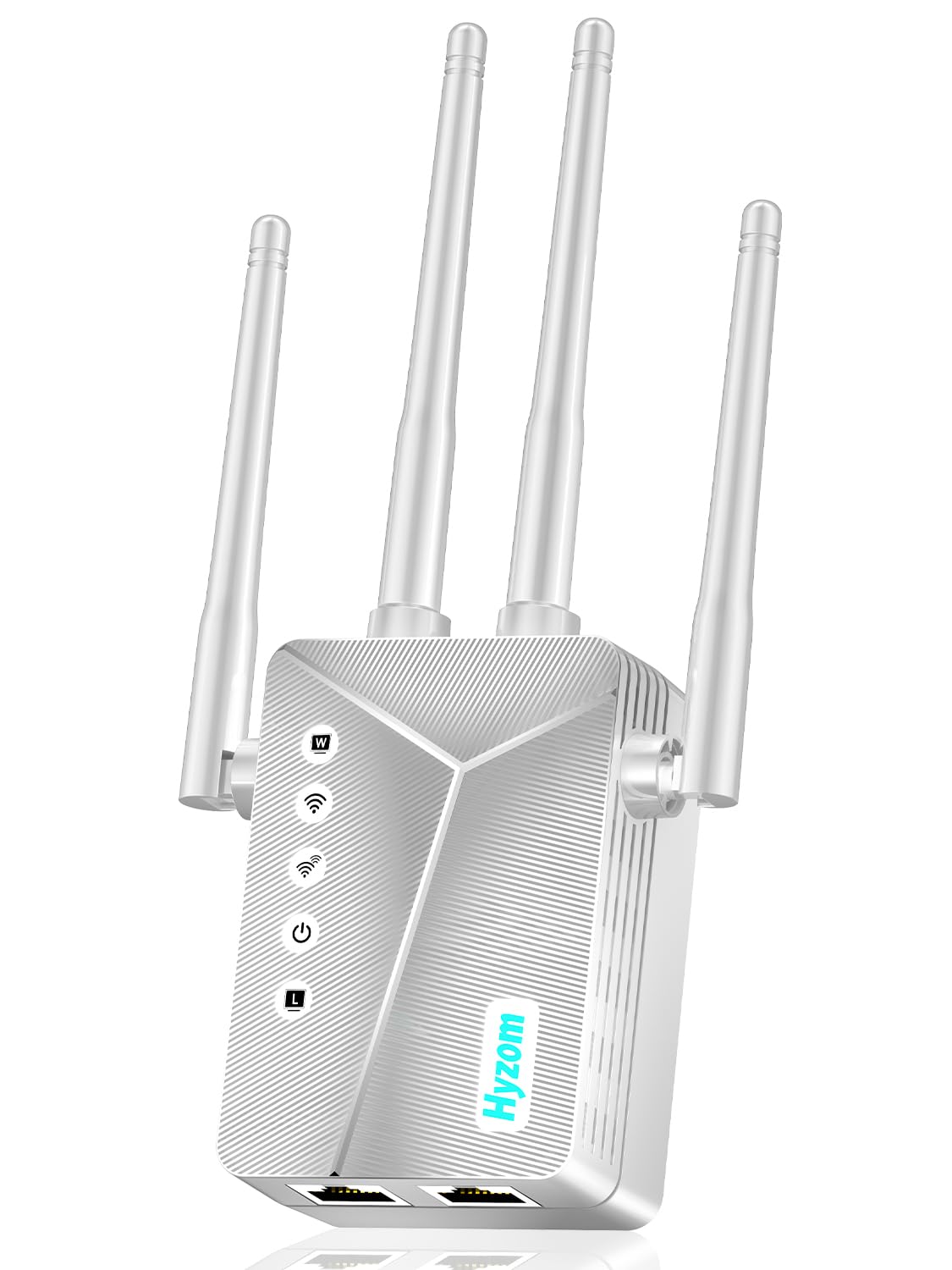
Type: Plug-in wireless repeater
Coverage Claim: Up to 18,000 Sq Ft
Device Load: 65+ devices
Ports: Ethernet port
Setup: 1-tap setup
Focus: Eliminating dead zones and reducing buffering
This unit is marketed at whole-home coverage, with a device load rating that suits a busy household of tablets, phones, and smart plugs. One-tap setup keeps installation simple for buyers who do not want to dig through menus, and the Ethernet port allows one wired connection at the far end. The form factor is a straightforward wall plug, so no cabling or mounting is required.
It suits a large home where the bedroom dead spot is one of several problem areas and many devices compete for bandwidth. The realistic caveat is that coverage claims of this size assume open space; in a normal house with interior walls, expect a fraction of the advertised area, and treat the extender as a room-and-hallway fix rather than a whole-property solution.
Trade-off: Very large coverage numbers are measured in ideal conditions, so buyers in dense homes should expect far less real-world reach than the box suggests.
Check the current price on Amazon
2026 WiFi Extender Signal Booster, Long Range up to 15,588 Sq Ft
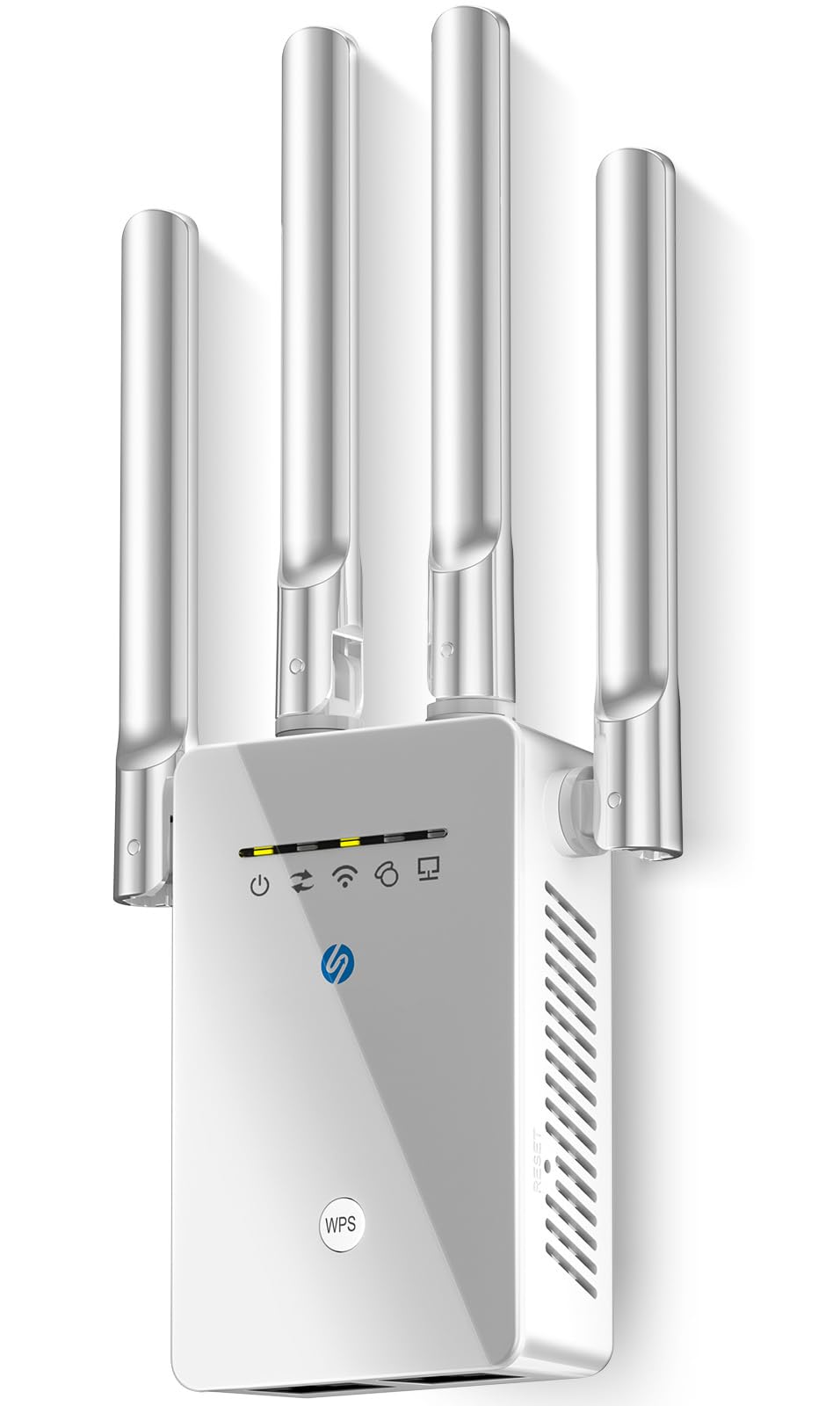
Type: Plug-in WiFi repeater
Coverage Claim: Up to 15,588 Sq Ft
Speed Claim: 6X faster repeater
Ports: Ethernet port
Setup: 1-tap setup
Compatibility: Works with wireless routers
This model leans on ease of use: one-tap pairing, broad router compatibility, and a plug-in body that needs no tools. The Ethernet port gives a bedroom TV or console a wired option, and the speed claim targets the buffering that usually annoys people in a dead-spot room. It is positioned as a general-purpose booster for homes that just need the signal to reach further.
It fits buyers who want a low-effort fix and do not need mesh features or app-based management. The trade-off is transparency: the "6X faster" figure is a relative marketing claim rather than an absolute speed, and the extender still inherits whatever signal it receives from the router, so a weak source location caps the result.
Trade-off: Relative speed claims say nothing about actual throughput, and performance depends heavily on where the unit is plugged in.
Check the current price on Amazon
2026 New WiFi Extender, WiFi Booster 1200Mbps Dual Band
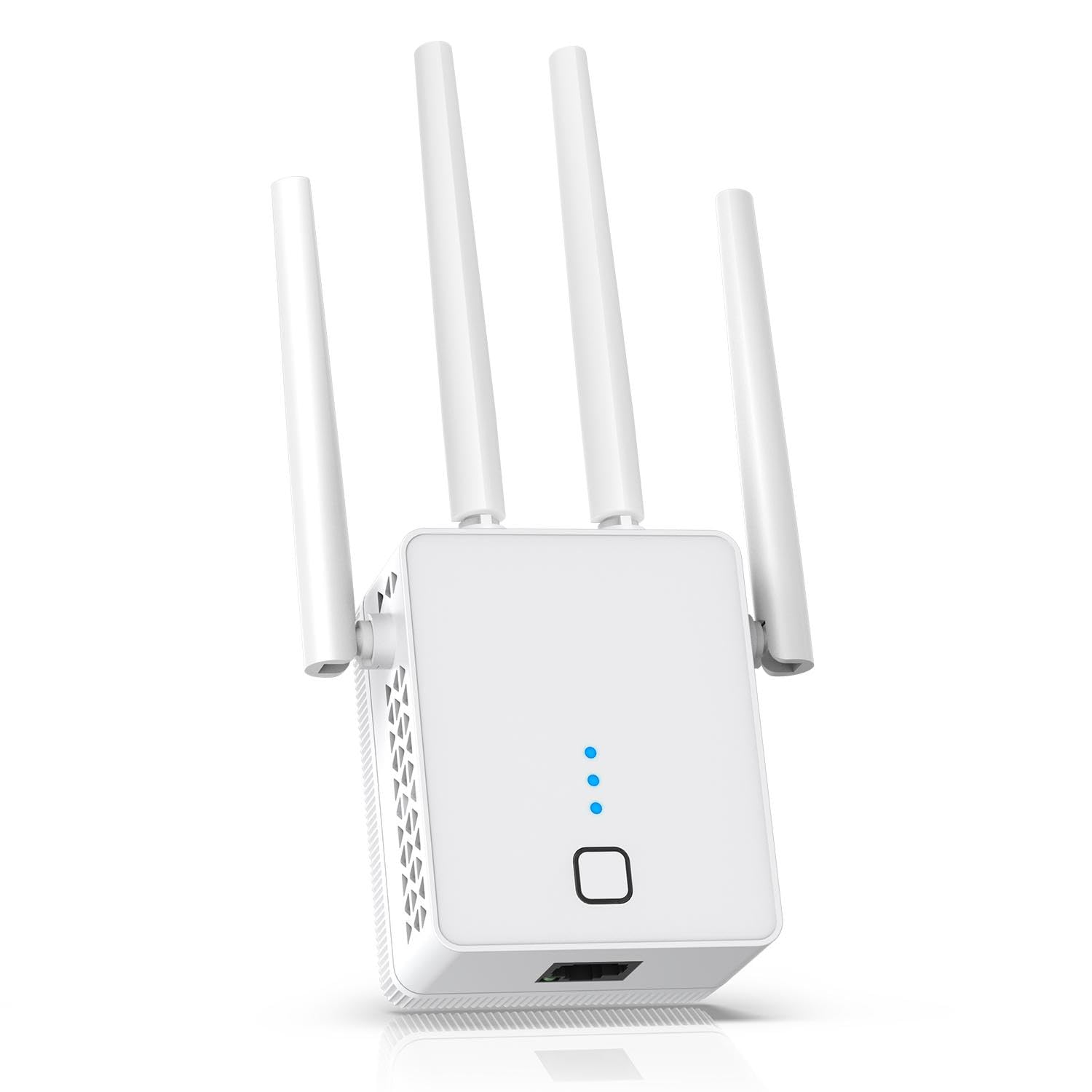
Type: Dual-band plug-in WiFi extender
Speed Class: 1200Mbps
Bands: 5.8GHz / 2.4GHz
Coverage Claim: Up to 18,999 sq.ft
Device Load: 115+ devices
Ports: Ethernet port
Color: White
This extender pairs a 1200Mbps dual-band radio with the highest device-load rating in the group, which makes it the pick for a bedroom packed with gadgets — smart displays, phones, a streaming stick, and a gaming handheld all at once. The white housing blends into a wall, and the Ethernet port covers one wired device. It runs on both the 5.8GHz and 2.4GHz bands, so older devices stay compatible.
It suits crowded rooms and buyers who care more about connecting many devices than about raw speed. The honest caution is that a high device count spreads the available bandwidth thin, and the very large coverage figure is again an open-space number that a typical bedroom wall will cut down.
Trade-off: Supporting 115+ devices does not mean each one gets fast service; heavy simultaneous use in one room will still feel the shared limit.
Check the current price on Amazon
Before You Buy
- Placement: An extender must sit where the router signal is still usable — roughly midway to the dead spot — or it repeats a weak signal.
- Coverage claims: Advertised square footage assumes open space; interior walls, floors, and appliances reduce real reach substantially.
- Compatibility: EasyMesh models pair with compatible routers for seamless roaming; generic repeaters create a separate extended network name.
- Ports: A Gigabit Ethernet port matters for consoles and desktops; a standard port is fine for a single streaming device.
- Device load: Match the rated device count to the room — a bedroom with a handful of gadgets does not need a 100+ device unit.
- Band support: Dual-band models are needed for modern 5GHz devices; 2.4GHz alone suits smart home gear but not video.
- Setup method: App-based setup offers more control over placement and naming; one-tap setup is faster but less adjustable.
Frequently Asked Questions
-
Will an extender fix a bedroom dead spot?
Yes, if it is placed where the router signal is still reasonably strong. An extender repeats an existing signal, so it cannot create coverage where none arrives. -
Where should the extender be plugged in?
About halfway between the router and the dead spot, ideally in an open hallway or doorway rather than behind furniture or in a closed cabinet. -
Does an extender slow down the connection?
Extended networks typically deliver less throughput than a direct router connection because the signal is received and retransmitted. A faster speed class reduces the gap. -
What is EasyMesh compatibility for?
It allows the extender to join a compatible mesh network so devices roam between nodes under one network name instead of switching manually. -
Is a Gigabit Ethernet port worth it?
For a console, desktop, or TV in the bedroom, yes — it provides a stable wired link. For phones and tablets only, a standard port is sufficient. -
Can one extender cover an entire house?
Rarely. Whole-home coverage usually needs a mesh system with multiple nodes; a single extender is best treated as a room-and-adjacent-space solution.
Bottom Line
For most bedroom dead spots, the TP-Link AC1200 WiFi Extender (RE315) is the safest first buy: it is compact, simple to place, EasyMesh compatible, and sized correctly for one room and a normal device load. Buyers who need a wired desktop or console in that room should step up to the TP-Link AC1900 (RE550) for its Gigabit port and faster class. The remaining three picks make sense when device count or a large floor plan is the priority — just discount the headline coverage numbers and place the unit carefully.
