Why there are Amazon links here: Brave Review is paid a commission for qualifying Amazon purchases made through the links below. Your price does not change, and using our links is entirely optional. How this works
Best WiFi Extender for a Brick House: 5 Picks That Push Signal Through Walls
Brick and masonry walls absorb and reflect WiFi signals far more than drywall, so a router that covers an open-plan home can leave back rooms, garages, and upstairs bedrooms stranded. The five extenders here are the realistic fixes for that problem, sorted by budget, whole-home coverage, and easy setup. Budget-conscious households will find solid picks at the top, while large multi-room brick homes should look at the higher-coverage units lower down. The overview table below shows every pick side by side before the detailed reviews.
The Picks at a Glance
| Product | Key Spec | Best Use | Price Tier |
|---|---|---|---|
| TP-Link AC1200 WiFi Extender (RE315) | Dual-band, up to 1600 sq. ft., 32 devices, EasyMesh | Small brick homes and single dead zones | Budget |
| TP-Link AC1900 WiFi Range Extender (RE550) | Dual-band, up to 2200 sq. ft., 32 devices, Gigabit port | Medium homes needing wired speed at the edge | Mid-range |
| 2026 WiFi Extender Signal Booster for Home | Up to 15000 sq. ft., Ethernet port, 1-tap setup | Large homes wanting broad coverage on a budget | Budget |
| 2026 Upgraded WiFi Extender for Home | Up to 18000 sq. ft., Ethernet port, 15X faster amplifier | Very large brick homes and multi-floor layouts | Mid-range |
| 2026 New WiFi Extender (5.8GHz/2.4GHz) | Dual-band 1200Mbps, up to 18999 sq. ft., 115+ devices | Crowded homes with many connected devices | Mid-range |
TP-Link AC1200 WiFi Extender (RE315)

Type: Dual-band wall-plug range extender
Speed Class: AC1200 (5GHz/2.4GHz)
Coverage: Up to 1600 sq. ft.
Device Load: Up to 32 devices
Ports: One Ethernet port
Mesh: EasyMesh compatible
TP-Link AC1200 WiFi Extender (RE315)
This compact TP-Link plugs straight into a wall outlet and rebroadcasts the existing network into a room the router cannot reach. The dual-band design lets it pass traffic on both the 5GHz and 2.4GHz channels, and the single Ethernet port gives a wired device a stable connection at the far end of the run. EasyMesh compatibility means it can join a mesh setup rather than sitting alone as a repeater. It is the sensible starting point for a small brick home with one or two stubborn dead zones.
This pick suits renters and owners in compact brick houses who just need the back bedroom or kitchen covered without spending much. It earns its place as the value option because the AC1200 class handles everyday browsing, streaming, and video calls comfortably. The trade-off is that a single compact unit will not blanket a large multi-floor brick home, so bigger layouts need one of the higher-coverage picks below. Buyers with a house full of heavy 4K streams and dozens of devices should also look up the list.
TP-Link AC1900 WiFi Range Extender (RE550)
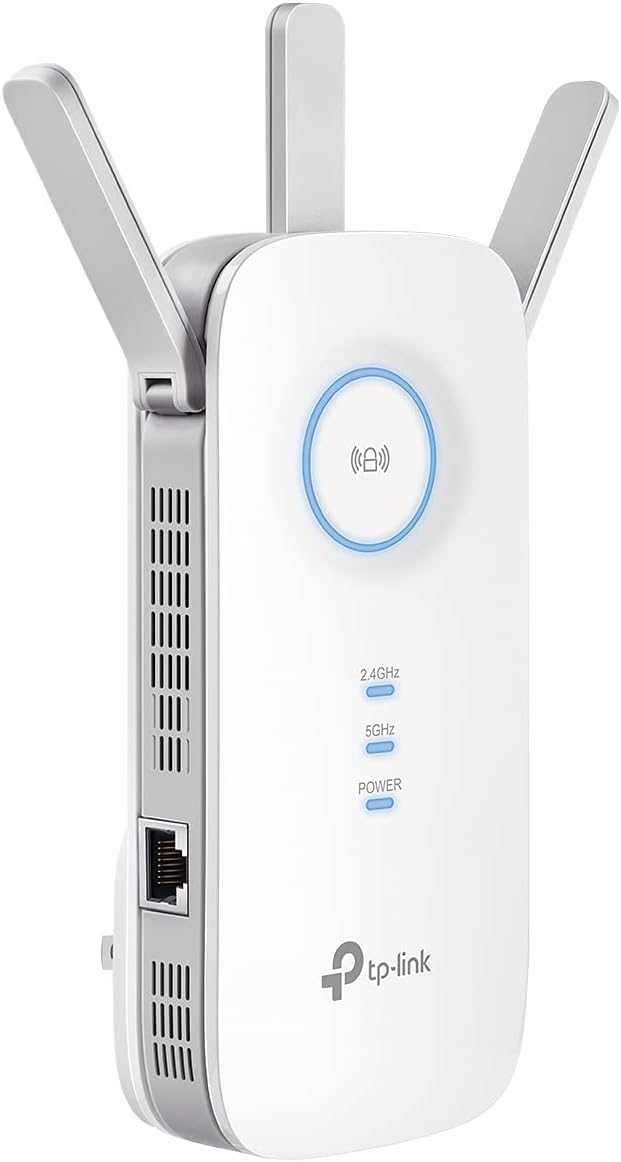
Type: Dual-band wall-plug range extender
Speed Class: AC1900
Coverage: Up to 2200 sq. ft.
Device Load: Up to 32 devices
Ports: Gigabit Ethernet
Mesh: EasyMesh compatible
Setup: App-based
TP-Link AC1900 WiFi Range Extender (RE550)
The RE550 steps up to the AC1900 class and adds a Gigabit Ethernet port, which matters in a brick house where the extender sits far from the router and a wired device needs full-speed backhaul. The higher throughput helps when the signal has to fight through thick walls and still carry HD video on the far side. App-based setup keeps installation simple for buyers who do not want to fiddle with browser menus. EasyMesh compatibility means it can also extend a mesh network rather than working as a lone repeater.
This is the pick for medium brick homes where a single budget extender is not quite enough but a full mesh system is overkill. The Gigabit port makes it a strong choice for a home office or console in a back room that needs a dependable wired link. The trade-off is that AC1900 still tops out at the 32-device load of the cheaper model, so a household with a large device count may want more headroom. Buyers on the tightest budget can save by dropping to the RE315 instead.
2026 WiFi Extender Signal Booster for Home
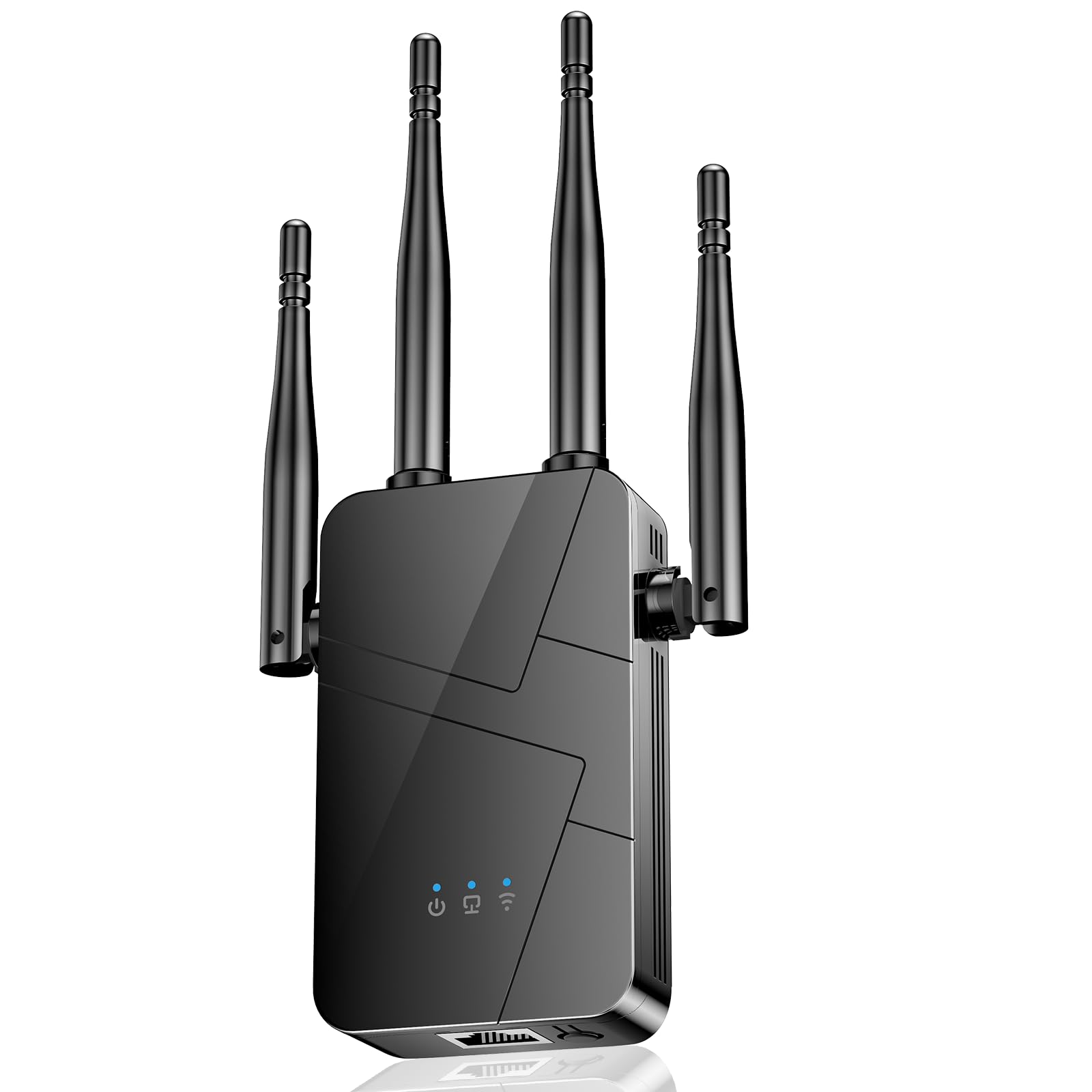
Type: Long-range WiFi repeater
Coverage: Up to 15000 sq. ft.
Ports: Ethernet port
Setup: 1-tap setup
Compatibility: Works with 99% of devices
2026 WiFi Extender Signal Booster for Home
This unit is marketed for very large coverage, and the 1-tap setup is aimed at buyers who want the extender running in minutes without reading a manual. The Ethernet port lets a wired device join the extended network, and the broad device compatibility claim covers most routers and gadgets in a typical home. It is a budget-friendly way to chase coverage across a big brick house that a small plug-in unit cannot reach. The design is clearly pitched at households prioritizing range over premium build.
This pick suits owners of large brick homes who want maximum coverage for the least money and do not need mesh features. It earns its spot as the range-per-dollar option for a sprawling single-floor layout or a long house with a distant wing. The trade-off is that budget long-range units typically prioritize reach over raw throughput and polish, so buyers who need guaranteed high speed at the far end should consider the TP-Link models. Homes with dozens of smart devices may also find the higher device-load pick below a better match.
2026 Upgraded WiFi Extender for Home

Type: Long-range WiFi repeater
Coverage: Up to 18000 sq. ft.
Ports: Ethernet port
Amplifier: 15X faster signal amplification
Compatibility: Works with 99% of routers
2026 Upgraded WiFi Extender for Home
The upgraded version pushes the coverage claim higher and emphasizes a stronger amplifier, which is the part that matters when signal has to survive brick and masonry. The Ethernet port supports a wired device at the edge of the network, and the wide router compatibility keeps installation straightforward for most households. It is aimed at buyers with large or multi-floor brick homes who want broad reach without a mesh system. The "upgraded" label signals this is the step-up model in its family.
This pick suits owners of very large brick homes or multi-floor layouts where the far rooms are the real problem. It earns its place as the higher-coverage alternative to the 15000 sq. ft. unit for buyers who want a little more reach and amplifier headroom. The trade-off is that a single repeater, however strong its amplifier, still depends on a decent signal at its own location, so placement near the edge of the router’s range is essential. Buyers who need consistent speed across many rooms may be better served by a mesh-capable TP-Link unit.
2026 New WiFi Extender (5.8GHz/2.4GHz)
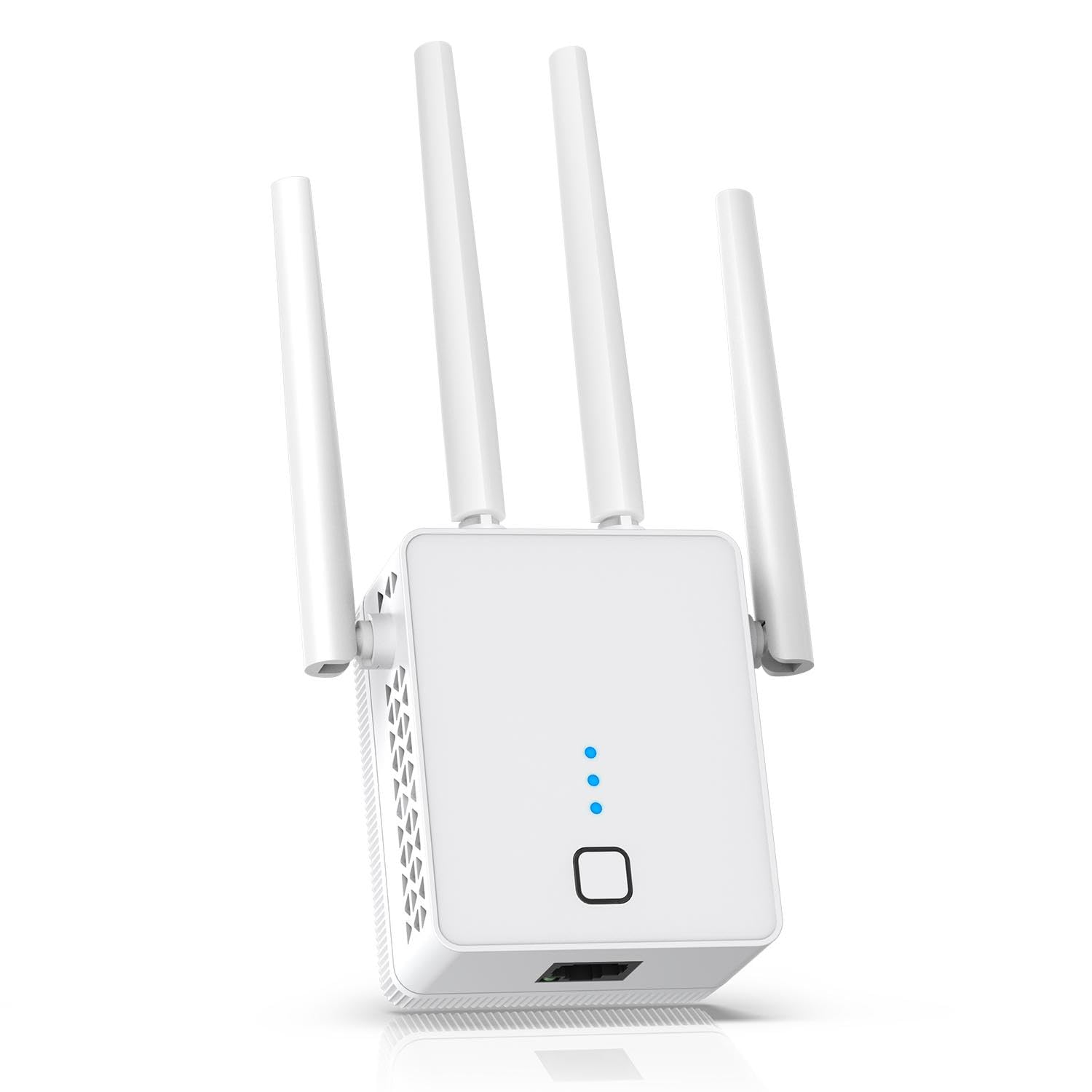
Type: Dual-band WiFi repeater
Bands: 5.8GHz and 2.4GHz
Speed Class: 1200Mbps
Coverage: Up to 18999 sq. ft.
Device Load: 115+ devices
Ports: Ethernet port
Color: White
2026 New WiFi Extender (5.8GHz/2.4GHz)
This model pairs the highest device-load claim on the list with dual-band operation on 5.8GHz and 2.4GHz, which helps spread traffic when many gadgets share the network. The 1200Mbps class covers everyday streaming and browsing, and the Ethernet port adds a wired option at the far end. The white housing blends into most wall setups. It is pitched at busy households where the number of connected devices is as much a problem as the wall thickness.
This pick suits crowded brick homes with lots of phones, smart plugs, cameras, and streaming boxes competing for bandwidth. It earns its place as the high-device-count option, and the dual-band design helps keep the 2.4GHz band free for the devices that need range through brick. The trade-off is that a repeater handling 115+ devices will still share the router’s single backhaul, so the real-world speed at the far end depends heavily on where the unit sits. Buyers who prioritize raw throughput over device count should weigh the AC1900 TP-Link instead.
Before You Buy
- Wall material: Brick and masonry block signal more than drywall, so place the extender in a hallway or doorway line of sight rather than behind a thick wall.
- Placement: The extender needs a strong existing signal at its own outlet, so it belongs roughly halfway between the router and the dead zone, not in the dead zone itself.
- Coverage claims: The square-footage figures are maximums under ideal conditions; real brick-home coverage runs lower, so size up rather than down.
- Compatibility: Check that the extender supports the router’s bands and security type; the TP-Link units add EasyMesh for mesh networks.
- Device load: Count phones, TVs, cameras, and smart devices; a household with many gadgets needs the higher device-load pick.
- Ports: An Ethernet port lets a wired device, console, or access point connect at the far end, which is often more reliable than repeating WiFi.
- Setup method: App or one-tap setup suits most buyers, but a unit with a web interface gives more control over band and channel settings.
Frequently Asked Questions
-
Will a WiFi extender work through brick walls?
Yes, but less effectively than through drywall. Brick absorbs and reflects signal, so the extender must sit where it still receives a usable signal from the router, and coverage in the far room will be lower than the box claims. -
Where should the extender go in a brick house?
Roughly halfway between the router and the dead zone, ideally with a doorway or hallway in the line of sight. Placing it inside the dead zone gives it a weak signal to repeat. -
Is a mesh system better than an extender for a brick house?
A mesh system generally handles large multi-room brick homes better, but a single extender is far cheaper and enough for one or two dead zones. The EasyMesh-compatible TP-Link picks can later join a mesh network. -
Does an Ethernet port on the extender matter?
It does when a device at the far end needs stable speed, such as a console, TV, or work computer. The wired port avoids a second wireless hop through the brick wall. -
How many devices can one extender handle?
The picks here range from 32 devices up to 115+, but real performance depends on how much bandwidth each device uses. A crowded smart home should favor the higher device-load model. -
Do these extenders work with any router?
The long-range models claim compatibility with the vast majority of routers, and the TP-Link units add EasyMesh support. Checking the router’s bands and security settings before buying avoids surprises.
Bottom Line
For most brick homes, the TP-Link AC1900 WiFi Range Extender (RE550) is the safest single purchase: the Gigabit port and EasyMesh support give it the flexibility to handle a wired device at the far end and to grow into a mesh setup later. Buyers on a tight budget with one small dead zone should start with the TP-Link AC1200 (RE315), while very large or device-heavy brick homes can look to the long-range 2026 models for maximum coverage. Whichever pick fits, confirm the current price at the link before ordering.
