Why there are Amazon links here: Brave Review is paid a commission for qualifying Amazon purchases made through the links below. Your price does not change, and using our links is entirely optional. How this works
Best Leak Detector for a Downstairs Toilet with No Socket
A downstairs toilet often sits away from the nearest outlet, which rules out mains-powered leak alarms and narrows the field to battery-operated sensors and simple dye tests. The picks below cover both approaches: standalone alarms that need no wiring, reusable multi-packs for covering the whole room, and low-cost dye tablets for a quick tank check. Buyers who want permanent protection should look at the battery alarms; buyers chasing a silent tank leak should start with the tablets. The overview table below lines up every option so the choice takes seconds.
Overview of the Picks
| Product | Key Spec | Best Use | Price Tier |
|---|---|---|---|
| 6000 Toilet Leak Detector | Visual and audible alerts, no tools | Single-toilet install | Budget |
| Flood Buzz Water Leak Alarms, Small Model – 6-Pack | Reusable, no setup, six units | Whole-home coverage | Mid-range |
| Demissle Toilet Leak Detection Tablets, 30 Pcs | Dye-based tank check | Diagnosing silent leaks | Budget |
| GoveeLife Upgraded Water Leak Detector, 5 Pack | 105dB alarm, IP67, 5-year battery | Long-term room protection | Mid-range |
| 5 Pack Water Leak Detectors for Home | 100dB alarm, five units | Budget multi-room cover | Budget |
6000 Toilet Leak Detector

Type: Toilet-mounted leak detector
Installation: No tools required, seconds to fit
Alerts: Visual and audible
Power source: Battery
Intended use: Toilets and running-tank faults
Price tier: Budget
6000 Toilet Leak Detector – Installs in Seconds, No Tools Required
This unit is built around the toilet itself rather than the floor, so it watches the tank and bowl behaviour that drives high water bills. The no-tools fitting means a homeowner can mount it without shutting off the supply or calling a plumber. Visual and audible alerts together suit a downstairs room that is used less often than the main bathroom. It is a single-purpose device, aimed squarely at the toilet rather than general flooding.
The pick earns its place for buyers who suspect a running or leaking toilet and want a dedicated monitor rather than a floor sensor. It is not for buyers who need coverage under a sink or water heater as well, since the design is toilet-specific. Trade-off: A single-purpose unit leaves the rest of the room unmonitored, so a bathroom with multiple risk points may need a second device.
Flood Buzz Water Leak Alarms, Small Model – 6-Pack
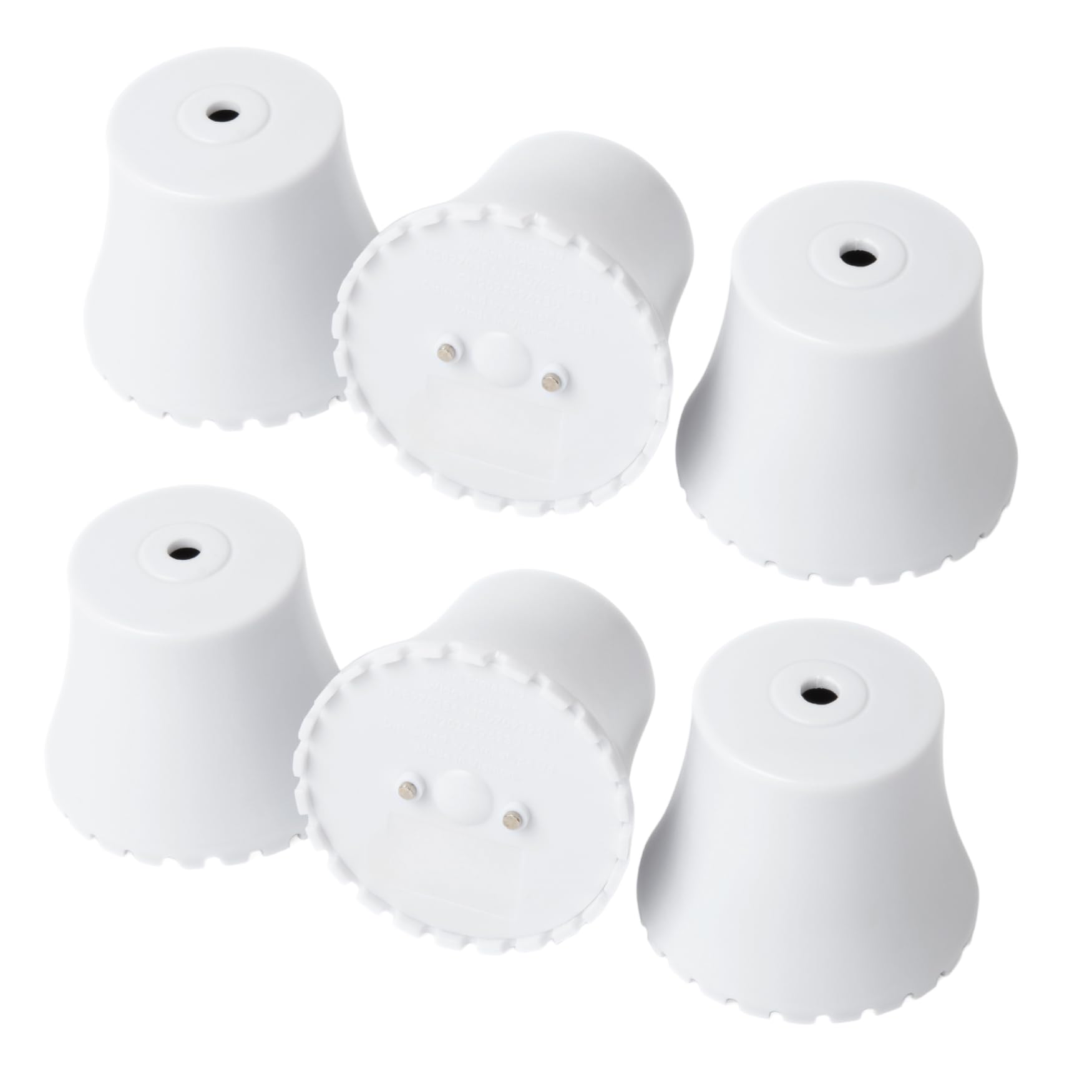
Type: Reusable floor leak alarm
Setup: None required, patented design
Pack size: Six units
Intended use: Under sink, toilet, basement, RV, water heater, dishwasher
Reusability: Reusable after drying
Price tier: Mid-range
No Setup Required – Patented Design – Flood Buzz Water Leak Alarms, Small Model – 6-Pack
The small footprint lets these alarms tuck into the tight gap behind a toilet base or under a pedestal sink where a larger sensor will not sit flat. Six units in one box mean a buyer can cover the downstairs toilet, the kitchen sink, and the water heater without buying twice. The reusable design matters in a room that sees occasional splashes, since a damp unit can be dried and put back into service. No setup means they work straight out of the box, with no pairing or app.
These suit buyers who want broad coverage at a modest outlay and do not need smartphone alerts. They are not for anyone expecting remote notifications while away from home, because these are local alarms only. Trade-off: The small model favours a low profile over a loud, room-filling siren, so it is best placed where someone will be nearby to hear it.
Demissle Toilet Leak Detection Tablets, 30 Pcs

Type: Dye-based leak detection tablets
Check time: Five-minute silent tank check
Tools required: None
Pack size: 30 tablets
Intended use: Homes, hotels, professional toilet repair
Price tier: Budget
These tablets are a diagnostic tool rather than an alarm, dropping into the tank to tint the water so a silent flapper leak shows up in the bowl within minutes. A downstairs toilet with no socket is exactly the case where this approach shines, since no power is involved at any stage. Thirty tablets give a homeowner plenty of repeat checks across a year of seasonal testing. The method is the same one many plumbers use on a service call.
The pick suits buyers who want to confirm whether a toilet is leaking before spending on hardware, and it is the cheapest way to start. It is not for buyers who want automatic alerts, because a tablet only reveals a leak at the moment of testing. Trade-off: Dye tablets diagnose a problem but do not monitor it, so a confirmed leak still needs a repair or a permanent alarm.
GoveeLife Upgraded Water Leak Detector, 5 Pack
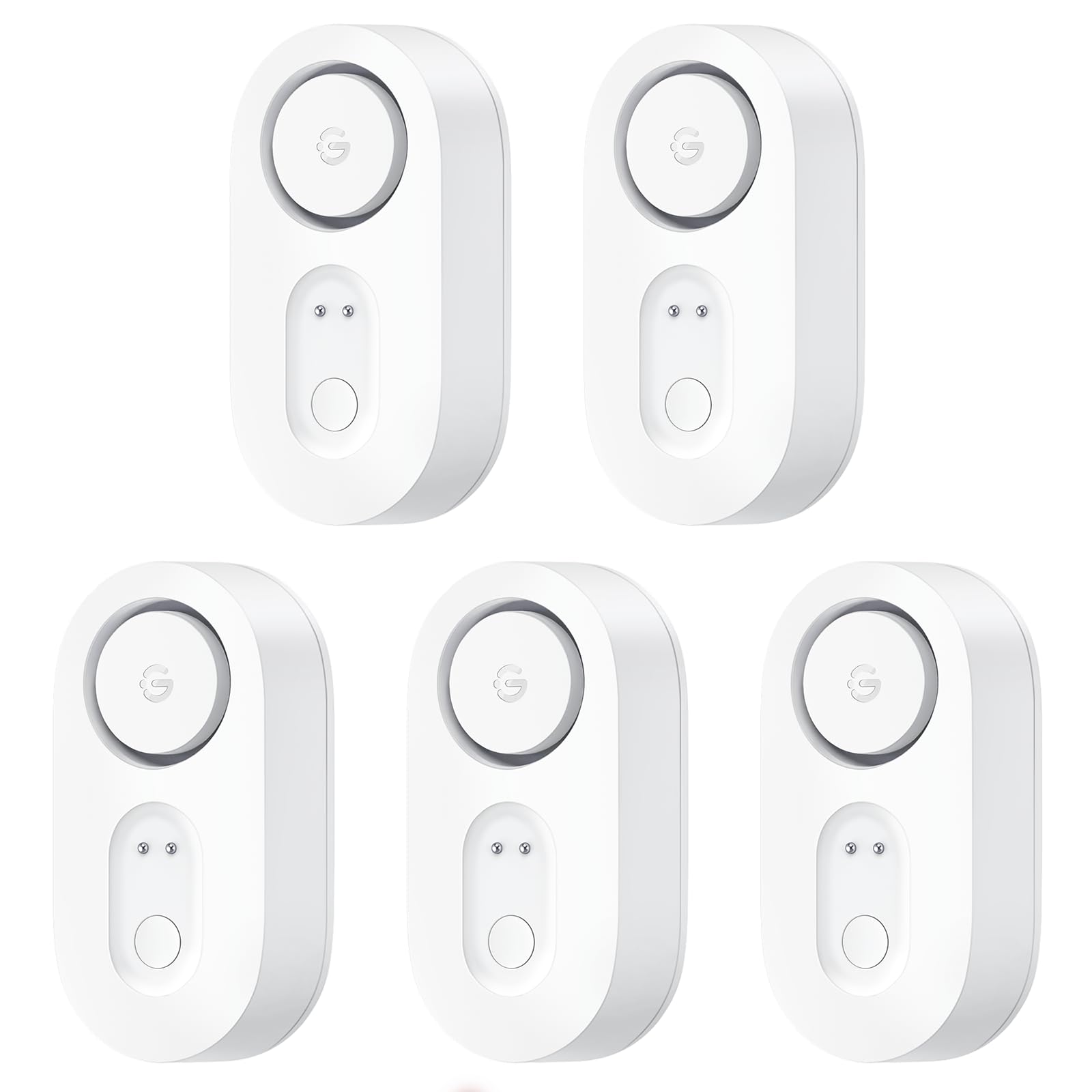
Type: Battery water leak detector
Sensors: Dual probes
Alarm: 105dB adjustable
Rating: IP67
Battery life: 5 years
Connectivity: Cannot connect to WiFi directly
Pack size: Five units
Price tier: Mid-range
Dual probes widen the detection area compared with a single contact point, which helps on an uneven bathroom floor where water pools unpredictably. The 105dB adjustable alarm is loud enough to carry through a closed door, a real advantage in a downstairs toilet far from living space. IP67 sealing means splashes and damp floors are not an immediate threat to the electronics. A five-year battery claim keeps maintenance off the list for a long stretch.
This is the pick for buyers who want fit-and-forget protection without wiring in an outlet. It is not for buyers who expect app alerts, since the unit cannot connect to WiFi directly. Trade-off: The sealed, long-life build pushes the price above basic pucks, so a buyer covering five rooms pays for durability they may not need everywhere.
5 Pack Water Leak Detectors for Home

Type: Battery water sensor alarm
Alarm: 100dB
Pack size: Five units
Intended use: Pipe, drain, sink, faucet drip, floor flooding
Rooms: Bathroom, kitchen, toilet, laundry, basement
Price tier: Budget
This five-pack targets drip and flood alerts across the wet rooms of a house, with a 100dB alarm that carries well in a small enclosed toilet. The listed uses cover pipe, drain, sink, faucet drip, and floor flooding, so one box handles several failure points. Five units let a buyer place one behind the toilet, one under the sink, and still have spares for the laundry or basement. It is the lowest-cost route to multi-point coverage.
The pick suits budget-conscious buyers covering a whole floor rather than a single fixture. It is not for buyers who need remote monitoring or a adjustable volume, since the design is a straightforward local siren. Trade-off: At this price the build is functional rather than rugged, so units placed where they may be kicked or soaked repeatedly are worth checking periodically.
Before You Buy
- Power source: Confirm the detector runs on batteries, since a downstairs toilet with no socket rules out mains-powered units entirely.
- Coverage: Decide whether the goal is one toilet or the whole room; single-purpose units and floor sensors solve different problems.
- Alarm volume: A louder siren matters in a closed downstairs room, while a quiet reusable puck suits a spot checked daily.
- Placement space: Measure the gap behind the toilet base, as small-format alarms fit where larger sensors will not.
- Diagnosis vs. monitoring: Dye tablets confirm a suspected leak; alarms watch for new ones, so some buyers need both.
- Connectivity: Check whether WiFi or app alerts are expected, because several battery models work locally only.
- Pack size: Buying a multi-pack usually costs less per unit than repeated single purchases for a whole house.
Frequently Asked Questions
-
What is the best leak detector for a downstairs toilet with no socket?
A battery-powered floor alarm is the practical answer, and the GoveeLife five-pack offers the strongest feature set with dual probes, a loud adjustable alarm, and a sealed build. -
Can a leak detector work without an electrical outlet?
Yes. Battery-operated alarms and dye tablets both need no mains power, which is why they dominate in rooms without a socket. -
Are dye tablets enough on their own?
They confirm a silent tank leak quickly and cheaply, but they do not monitor continuously, so a permanent alarm is the better long-term choice. -
How many detectors does one bathroom need?
One behind the toilet base covers the main risk, with a second under a nearby sink if the room has one. -
Do these alarms send alerts to a phone?
The battery models listed here sound a local siren only; the GoveeLife unit explicitly cannot connect to WiFi directly. -
Where should a detector sit for best results?
Flat on the floor near the toilet base, on the side where water would first pool, and clear of spots that get routinely splashed.
Bottom Line
For a downstairs toilet with no socket, the GoveeLife Upgraded Water Leak Detector, 5 Pack is the strongest single buy: dual probes, a 105dB adjustable alarm, IP67 sealing, and a long battery life cover the room without any wiring. Buyers who first need to confirm a suspected silent leak should add a pack of dye tablets alongside it.
