Why there are Amazon links here: Brave Review is paid a commission for qualifying Amazon purchases made through the links below. Your price does not change, and using our links is entirely optional. How this works
Best Plug In Heat Alarm for a Utility Room: 5 Hardwired and Backup Picks
A utility room is a tough place to protect: dust, lint, damp, and the occasional puff of steam from a washer or water heater can trip a standard smoke alarm, while a real fire can smolder for minutes before anyone notices. The five alarms here are heat-based or gas-sensing units built for exactly that kind of space, and each one earns its place for a different buyer — the budget-minded installer, the family that wants interconnected coverage, or the homeowner who also worries about a gas leak. The overview table below puts every pick side by side so a decision can be made in under a minute, and each review that follows explains the trade-offs in plain terms.
Overview of the Picks
| Product | Key Spec | Best Use | Price Tier |
|---|---|---|---|
| First Alert BRK HD6135FB | Hardwired heat alarm with 9V battery backup | Best budget hardwired pick | Budget |
| Kidde Heat Detector (Hardwired) | Hardwired with battery backup and 2 LEDs | Best for garages and utility rooms | Mid-range |
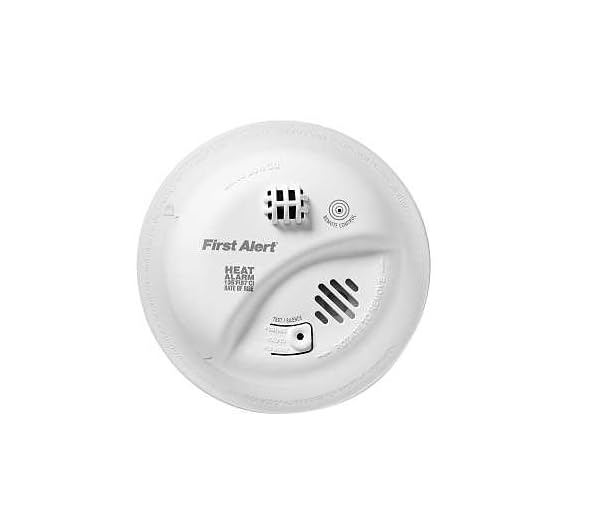
| First Alert Heat Alarm 120V | Thermistor sensor, 50 ft detection, 85 dB | Best wide-coverage pick | Mid-range |
| Kidde HD135F | Hardwire interconnectable, 135-degree rating | Best for whole-home linking | Premium |
| Kidde Carbon Monoxide + Explosive Gas Alarm | Plug-in with 9V backup and digital display | Best for gas-leak protection | Premium |
1. First Alert BRK HD6135FB Hardwired Heat Alarm
Type: Hardwired heat alarm
Power Source: 120V wiring with 9V battery backup
Sensor: Heat detection
Alarm: Audible horn
Best For: Budget-conscious utility room upgrades

HD6135FB, 9V Battery Backup First Alert BRK Hardwired Heat Alarm with Battery Backup, HD6135FB
Check the current price on Amazon
This is the entry point into hardwired heat protection, and it does the core job without extras. The unit wires into a standard household circuit and keeps a 9V battery on standby so it still works during a power cut — a real concern in a utility room where the breaker panel often lives. Because it responds to heat rather than smoke, it shrugs off the dust and humidity that make ionization smoke alarms a nuisance in laundry and mechanical spaces. Buyers replacing an old hardwired alarm will find the wiring familiar, and the battery backup means no chirping silence after a storm knocks out power.
Trade-off: The budget price shows up in the finish and the lack of interconnect wiring, so this unit protects its own corner of the room and nothing beyond it.
Who it suits: Renters-by-proxy, landlords, and anyone refreshing an existing hardwired point on a tight budget. It is not for a buyer who wants every alarm in the house to sound together.
2. Kidde Heat Detector, Hardwired with Battery Backup
Type: Hardwired heat detector
Power Source: 120V wiring with battery backup
Indicators: Two LEDs
Interconnect: Capable of linking with compatible alarms
Best For: Garages and utility rooms

Check the current price on Amazon
Kidde positions this unit squarely at garages, and the same logic applies to a utility room: it watches temperature rise instead of smoke, so a dusty furnace closet will not set it off. The two LEDs give a quick visual check that the unit has power and is communicating, which matters in a room that is easy to forget. Interconnect capability means it can be tied into a compatible Kidde network, so a heat event in the utility room can trigger alarms elsewhere in the house. The hardwired body with battery backup keeps it running through an outage.
Trade-off: Interconnect only works with matching compatible alarms, so a home already wired with another brand may not be able to link this unit without extra work.
Who it suits: Homeowners with a Kidde ecosystem or a garage-to-utility-room layout who want a known brand at a fair mid-range price. It is not for someone who needs a plug-in unit with no wiring at all.
3. First Alert Heat Alarm 120V Thermistor Sensor
Type: Hardwired heat alarm
Power Source: 120V with battery backup
Sensor: Thermistor
Coverage: 50 ft detection
Alarm: 85 dB
Best For: Large or open utility spaces
Check the current price on Amazon
The headline here is coverage: a 50 ft detection range suits a long utility room, a combined laundry-and-mechanical space, or a basement corridor where one alarm has to see a lot of floor. The thermistor sensor is a solid-state design that responds to rapid temperature rise, and the 85 dB horn is loud enough to carry through a closed door and over the spin cycle of a washer. Battery backup keeps it live during outages, and the hardwired 120V connection means no cord to trip over or unplug. For a space that is bigger than a closet, this is the pick that covers the square footage.
Trade-off: A wider detection footprint can mean more nuisance triggering in a room that sees big temperature swings, such as one with a dryer vent or an uninsulated exterior wall.
Who it suits: Owners of large, open, or oddly shaped utility rooms who need one alarm to cover the whole area. It is not for a small enclosed closet where a compact unit would do the same job for less.
4. Kidde HD135F Hardwire Interconnectable Heat Alarm
Type: Hardwired heat alarm
Power Source: 120V hardwired
Rating: 135-degree heat threshold
Interconnect: Interconnectable with compatible alarms
Best For: Whole-home linked protection

Kidde Hardwire Interconnectable 135-Degree Heat Alarm HD135F
Check the current price on Amazon
The 135-degree rating is the story: this alarm is built to sit above the ordinary temperature range of a working utility room and only sound when things are genuinely hot, which cuts down on false alarms from a dryer or a hot water pipe. The interconnectable design lets it join a wired network of compatible Kidde alarms so the whole house hears the warning, not just the person standing next to the furnace. It is a hardwired unit, so it draws constant power and needs no battery swaps for its main supply. For a homeowner already running Kidde alarms, this is the natural addition to the system.
Trade-off: The premium price buys the higher heat threshold and linking, not a battery backup, so a power cut takes this alarm offline unless the home has a backup circuit.
Who it suits: Households with an existing interconnected Kidde system and a utility room that runs hot. It is not for a buyer on a strict budget or one who needs outage protection without extra wiring.
5. Kidde Carbon Monoxide + Explosive Gas Alarm, Plug-in
Type: Plug-in gas and carbon monoxide alarm
Power Source: AC plug with 9V battery backup
Display: Digital readout
Alarm: 85 dB
Targets: Carbon monoxide, natural gas, propane
Best For: Utility rooms with gas appliances

Check the current price on Amazon
This is the pick for the utility room that houses a gas water heater, furnace, or dryer, because it watches for the threats a heat alarm cannot see. It plugs into a standard outlet, so installation takes seconds, and the 9V backup keeps it working when the power fails — exactly when a gas appliance can misbehave. The digital display shows readings at a glance, and the LED status indicators make it obvious whether the unit is doing its job. It covers carbon monoxide plus natural gas and propane, which is the right combination for most residential mechanical rooms.
Trade-off: This is a gas and CO alarm, not a heat alarm, so it will not respond to a fire that produces heat but no gas leak — a utility room with a gas appliance still needs a heat alarm alongside it.
Who it suits: Homes with gas-fired appliances in the utility room who want leak detection plus outage backup in one plug-in unit. It is not a replacement for heat or smoke protection on its own.
Before You Buy
- Power source: Hardwired units need an existing 120V circuit; plug-in models need only an outlet but can be unplugged or blocked by furniture. Battery backup matters in every case.
- Sensor type: Heat alarms are the right call for dusty, steamy utility rooms. Gas and CO alarms cover a different threat and complement rather than replace heat detection.
- Interconnect compatibility: Linking only works within the same brand family. Check what is already installed before buying a networked unit.
- Heat threshold: A higher temperature rating reduces nuisance alarms in rooms that run warm, but it also means the alarm waits longer to sound.
- Coverage area: Match the detection range to the size and shape of the room; a single unit may not reach both ends of a long basement.
- Placement: Keep alarms away from direct dryer exhaust, steam, and the immediate vicinity of a furnace flue, which can cause false triggering.
- Maintenance: Battery backup still needs periodic testing and replacement, and dust buildup on the sensor should be cleaned off on a regular schedule.
Frequently Asked Questions
-
Can a heat alarm be used instead of a smoke alarm in a utility room?
In many utility rooms, yes — heat alarms are specifically suited to spaces with dust, lint, or steam that would trip a smoke alarm. Check local code requirements, since some areas require smoke detection as well. -
Do these alarms work during a power outage?
The hardwired models with battery backup and the plug-in gas alarm all keep running on their backup battery. The Kidde HD135F is hardwired only and does not list a battery backup. -
What does interconnectable mean?
It means the alarm can be wired to compatible alarms so that when one sounds, they all sound. This is valuable in a utility room that is far from the bedrooms. -
Why choose a 135-degree heat alarm?
A higher threshold means the alarm ignores the normal heat of a working utility room and only triggers when temperatures climb well beyond normal, which reduces false alarms. -
Is a plug-in gas alarm enough on its own?
No. A gas and CO alarm detects leaks and carbon monoxide, not fire. A utility room with a gas appliance should have both a heat alarm and a gas alarm. -
How often should the backup battery be replaced?
Follow the manufacturer’s schedule and test the unit monthly. Backup batteries typically need replacing at least once a year, and the alarm itself has a limited service life.
Bottom Line
For most utility rooms, the Kidde Heat Detector with battery backup and interconnect capability is the best plug in heat alarm for a utility room in this lineup — it balances a fair price, outage protection, and the ability to link into a wider system. Buyers on a tight budget can step down to the First Alert BRK HD6135FB, while homes with gas appliances should add the Kidde plug-in gas alarm for coverage a heat sensor cannot provide.
