Why there are Amazon links here: Brave Review is paid a commission for qualifying Amazon purchases made through the links below. Your price does not change, and using our links is entirely optional. How this works
Best Smoke Alarm for a Narrow Landing with a Sloped Ceiling
A narrow landing with a sloped ceiling is one of the harder spots in a house to protect: there is little wall space, the headroom drops fast, and a bulky alarm can end up either knocked or mounted in the wrong place. The five alarms below cover that job from different angles — a compact budget unit, a sealed 10-year battery model, a multi-pack for a whole staircase, a value single pack, and a hardwired interconnected set for a full-house upgrade. Buyers fitting out one tight landing, landlords covering several properties, and homeowners replacing an old wired system will each find a match. The overview table below is the fastest way to choose.
The Picks at a Glance
| Product | Key Spec | Best Use | Price Tier |
|---|---|---|---|
| Kidde Compact Smoke Detector 10SDR | 4-inch body, AA battery, 85 dB alarm | Tightest landings and small spaces | Budget |
| First Alert SMI100 1-Pack | Battery smoke alarm, single unit | Simple one-for-one replacement | Budget |
| X-Sense SC06 Smoke & CO Alarm | Sealed 10-year battery, smoke plus CO | One unit covering two hazards | Mid-range |
| X-Sense SD2J0AX 3-Pack | Photoelectric, 10-year battery, 3 units | Staircase plus landing coverage | Mid-range |
| First Alert SMI105-AC 6-Pack | Hardwired, interconnected, 10-year backup | Whole-home wired systems | Premium |
1. Kidde Compact Smoke Detector 10SDR — Best for the Tightest Landings
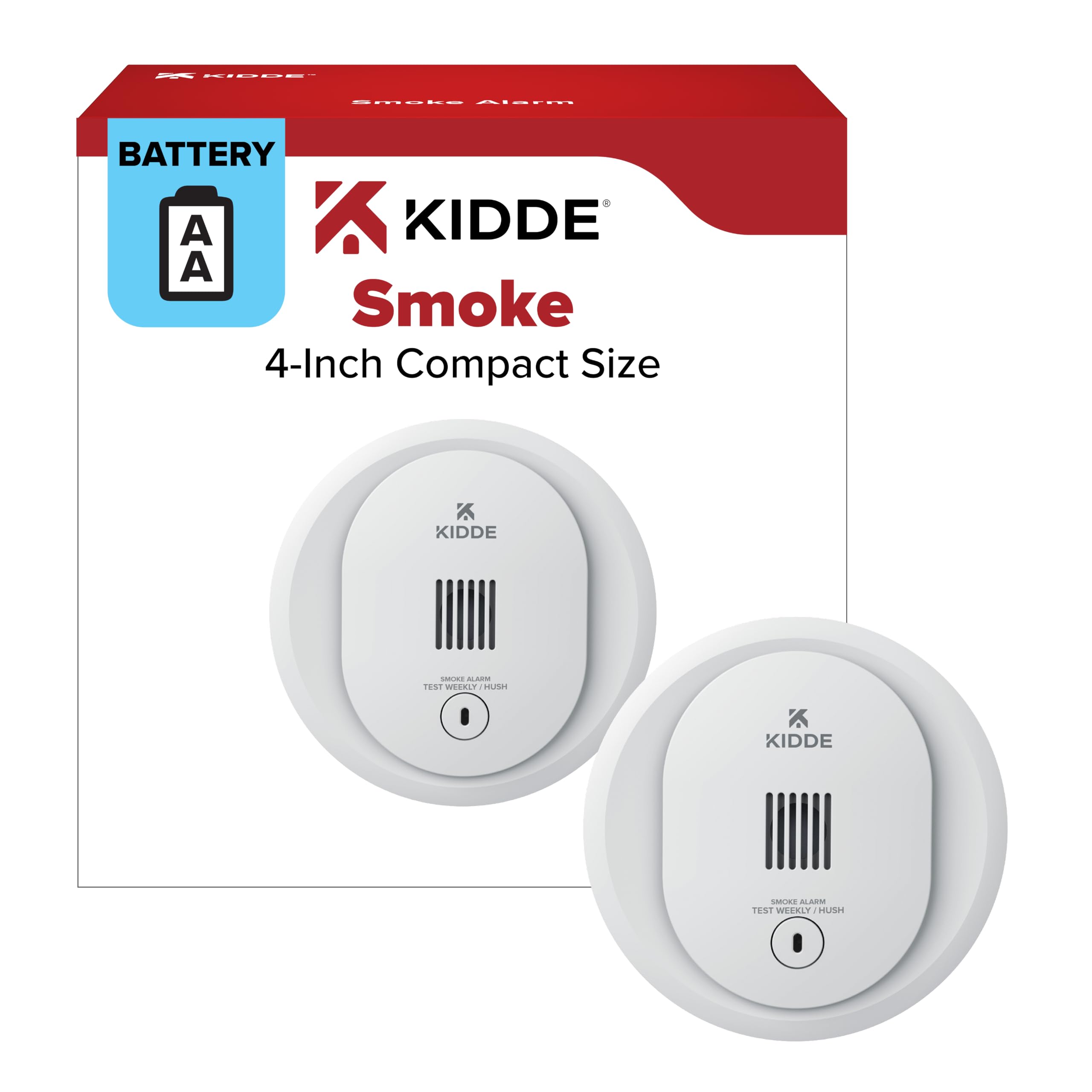
Type: Battery-powered smoke alarm
Power source: AA batteries
Alarm sound: 85 dB
Body size: 4-inch footprint
Status lights: LED indicators
Intended use: Homes and small spaces
The Kidde 10SDR is built around a 4-inch body, which is the whole point on a narrow landing — it takes up noticeably less ceiling or wall area than a full-size detector and leaves more clearance where the sloped ceiling cuts down headroom. The 85 dB alarm is loud enough to carry down a stairwell, and the LED status lights give a quick visual check without climbing up to press a test button. AA batteries mean no wiring and no electrician, so it can go up in minutes.
This is the pick for a landing so tight that a standard round alarm feels intrusive, and for anyone who wants the lowest-cost way to put protection in a small space. The trade-off is the battery type: AA cells need periodic replacement rather than the decade-long sealed packs found further up this list, so it suits buyers who will actually remember to check it.
Trade-off: AA batteries need replacing on a regular schedule, which is easy to forget in a spot that is rarely looked at.
2. First Alert SMI100 1-Pack — Best Budget Single Replacement
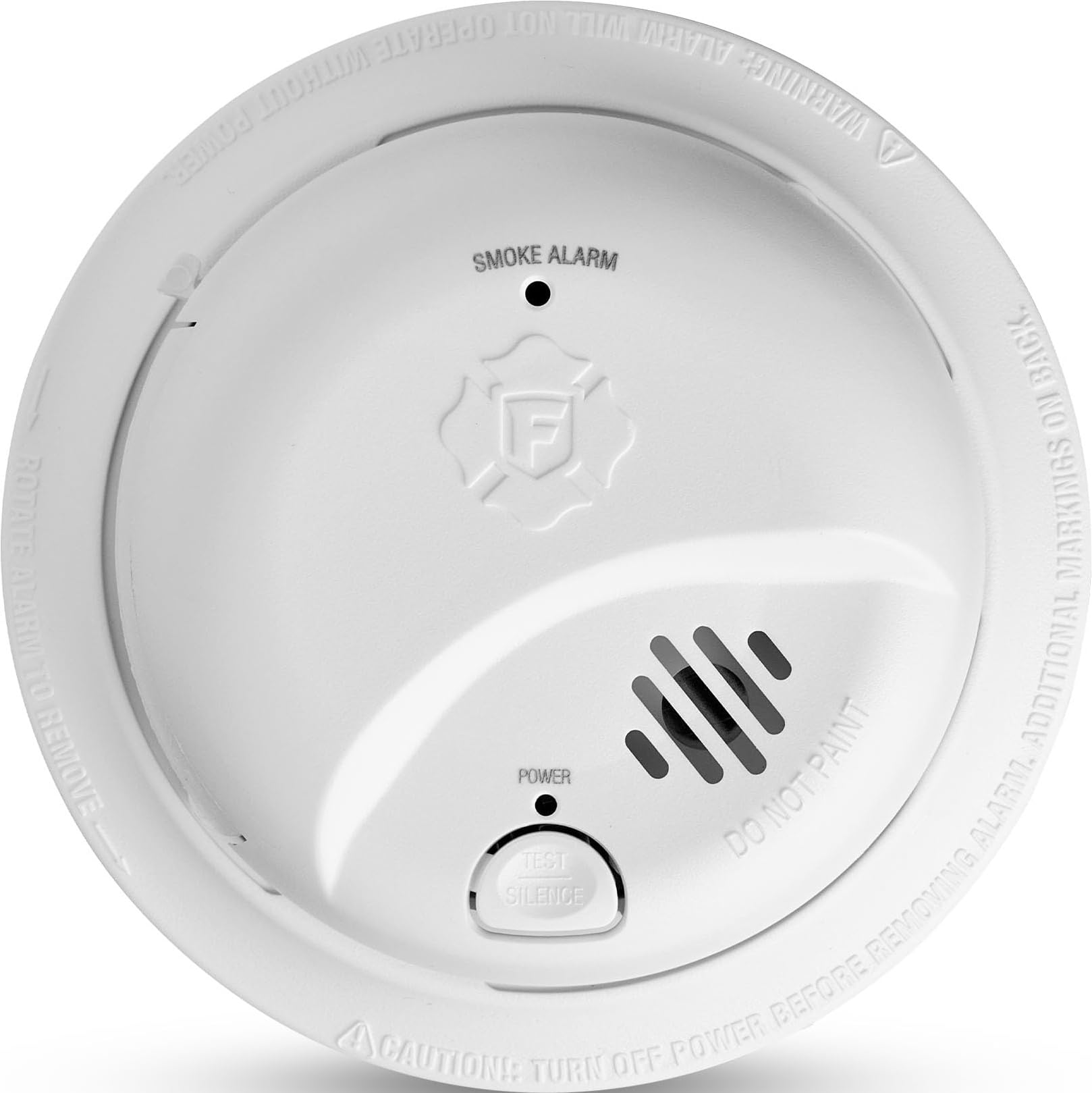
Type: Battery smoke alarm
Power source: Battery
Pack size: 1 unit
Brand family: First Alert / BRK
Intended use: Standard residential replacement
The SMI100 is the straightforward option: a single battery-powered smoke alarm from a brand most households already have on their ceilings. It is the unit to reach for when an old alarm on the landing has expired and the goal is a like-for-like swap without changing wiring, mounting style or the rest of the system. Installation is a screw-and-battery job, and the single pack keeps the cost down when only one location needs covering.
It earns its place as the value pick for a single tight spot — a rental turnover, a dated landing, or a replacement after a chirping unit finally gives out. Buyers protecting a whole staircase should look at the multi-packs instead, since buying singles one at a time costs more overall.
Trade-off: A single unit covers one location only, and a battery-only alarm depends entirely on the cell inside it.
3. X-Sense SC06 Smoke & CO Alarm — Best Two-in-One for a Small Landing
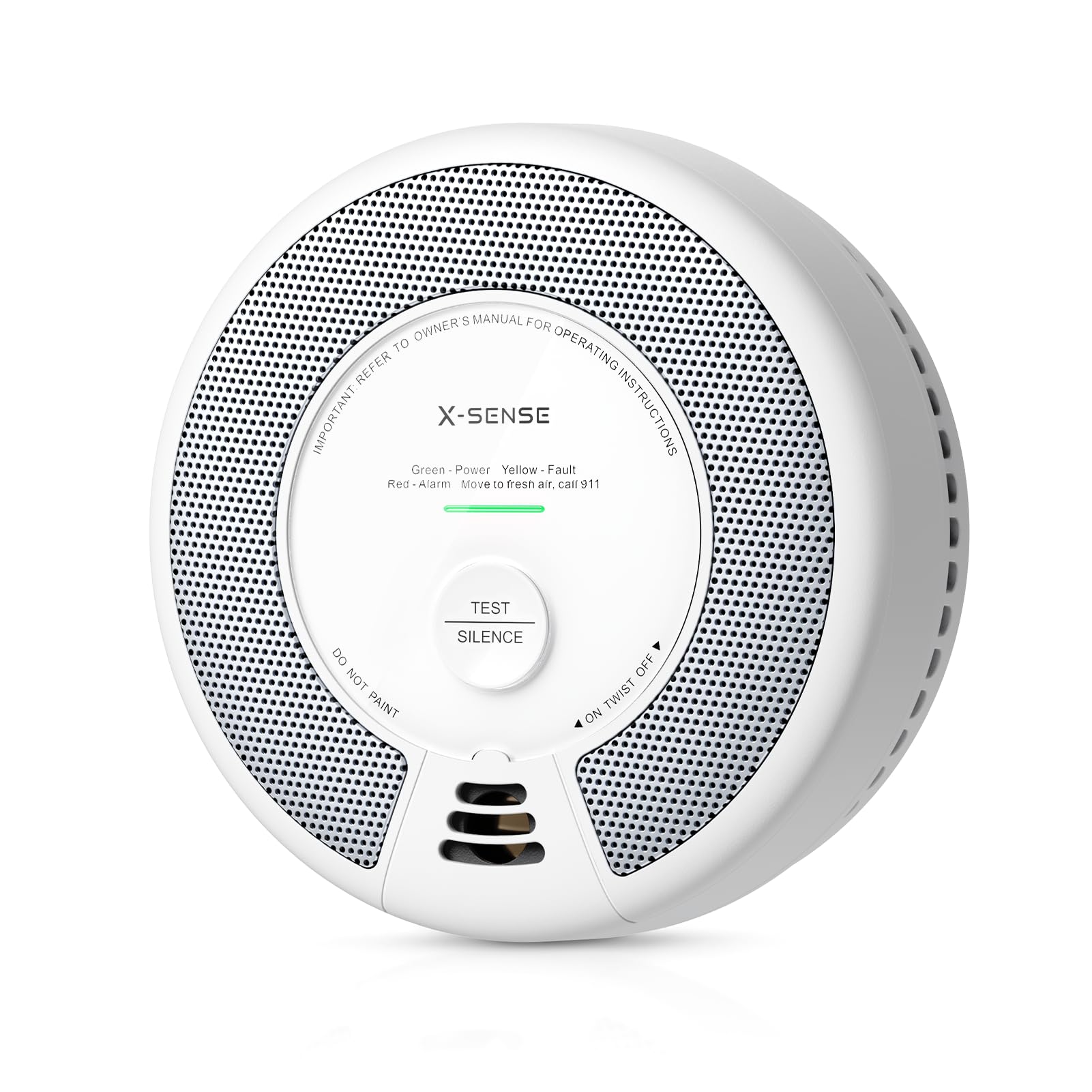
Type: Combination smoke and carbon monoxide alarm
Power source: Sealed 10-year battery, not hardwired
Certification: UL 217 and UL 2034
Installation: No wiring required
Pack size: 1 unit
The SC06 combines smoke and carbon monoxide detection in one housing, which matters on a landing where ceiling space is scarce — one unit does the job of two. The battery is sealed and rated for ten years, so there is no annual cell swap and no wiring to run down a stairwell. Both UL 217 and UL 2034 certifications are stated in the product name, covering the smoke and CO sides respectively, and installation is screw-and-go.
This is the strongest choice for a landing near a boiler, a garage door or any fuel-burning appliance, where carbon monoxide is a realistic concern alongside smoke. The sealed battery also suits landlords and forgetful households. The trade-off is that a sealed pack means the whole unit is replaced at end of life rather than refreshed with a new battery, and the combined sensor package costs more than a smoke-only alarm.
Trade-off: When the sealed battery reaches the end of its life the entire alarm is retired, so the upfront cost is higher than a battery-swap model.
4. X-Sense SD2J0AX 3-Pack — Best for a Full Staircase
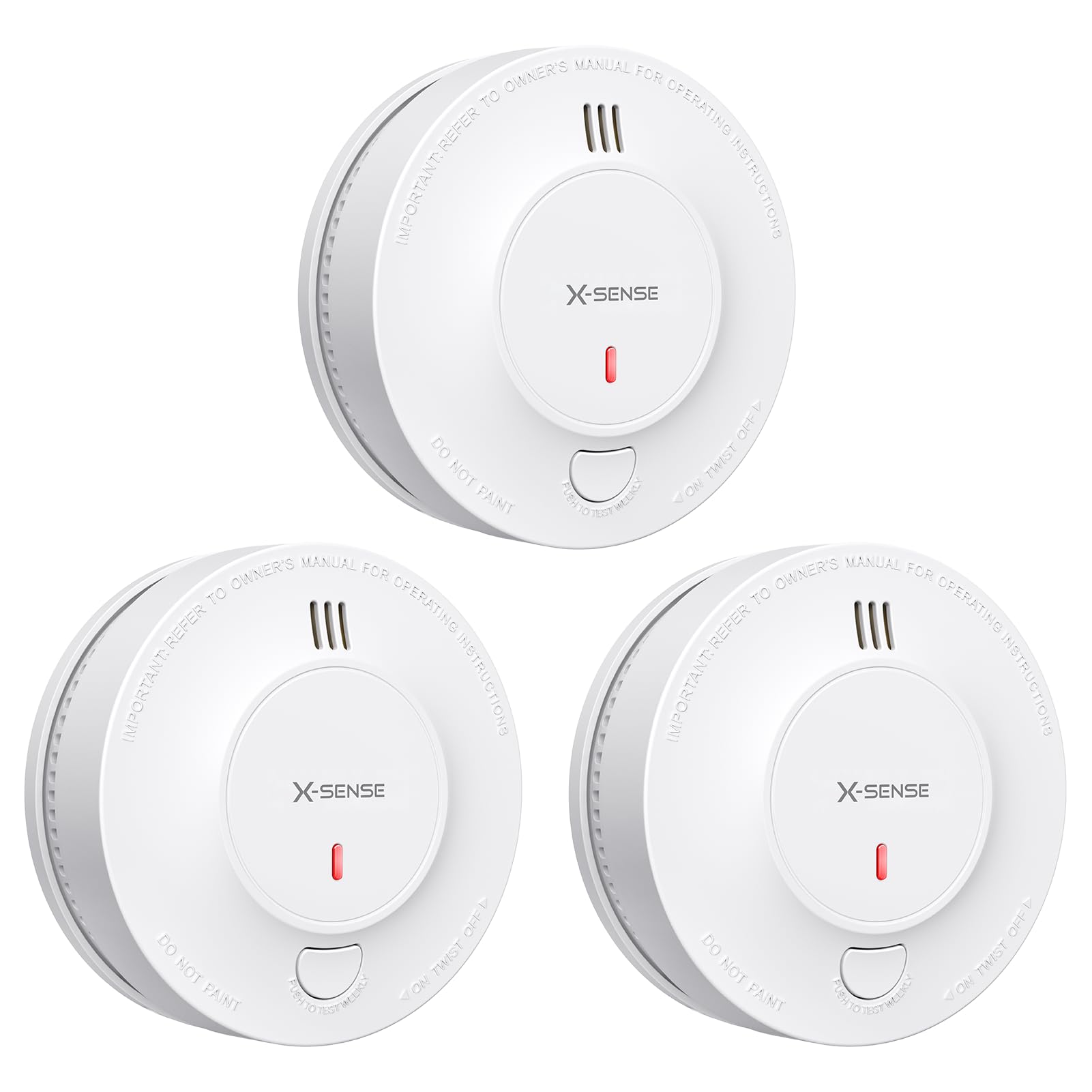
Type: Photoelectric smoke alarm
Power source: 10-year battery
Certification: UL 217
Features: One-button hush, self-test
Pack size: 3 units
Installation: No-wire
The SD2J0AX is a photoelectric alarm, the sensor type generally favoured for detecting smouldering fires, and the product name highlights fewer cooking nuisance alarms — useful when the landing sits near a kitchen doorway. The one-button hush and self-test keep maintenance simple from a step ladder, and the 10-year battery removes annual cell changes. Three units in one box cover a landing plus the top and bottom of the stairs.
This is the pick for a household that wants consistent protection across a whole staircase rather than a single point. Matching units on every level also make it easier to hear an alarm from any floor. The trade-off is that the pack commits the buyer to three units, which is more than a single narrow landing needs unless the stairs are included.
Trade-off: The three-pack is only good value if all three units get used; a single-landing job leaves spares sitting in a drawer.
5. First Alert SMI105-AC 6-Pack — Best Hardwired Interconnected Set
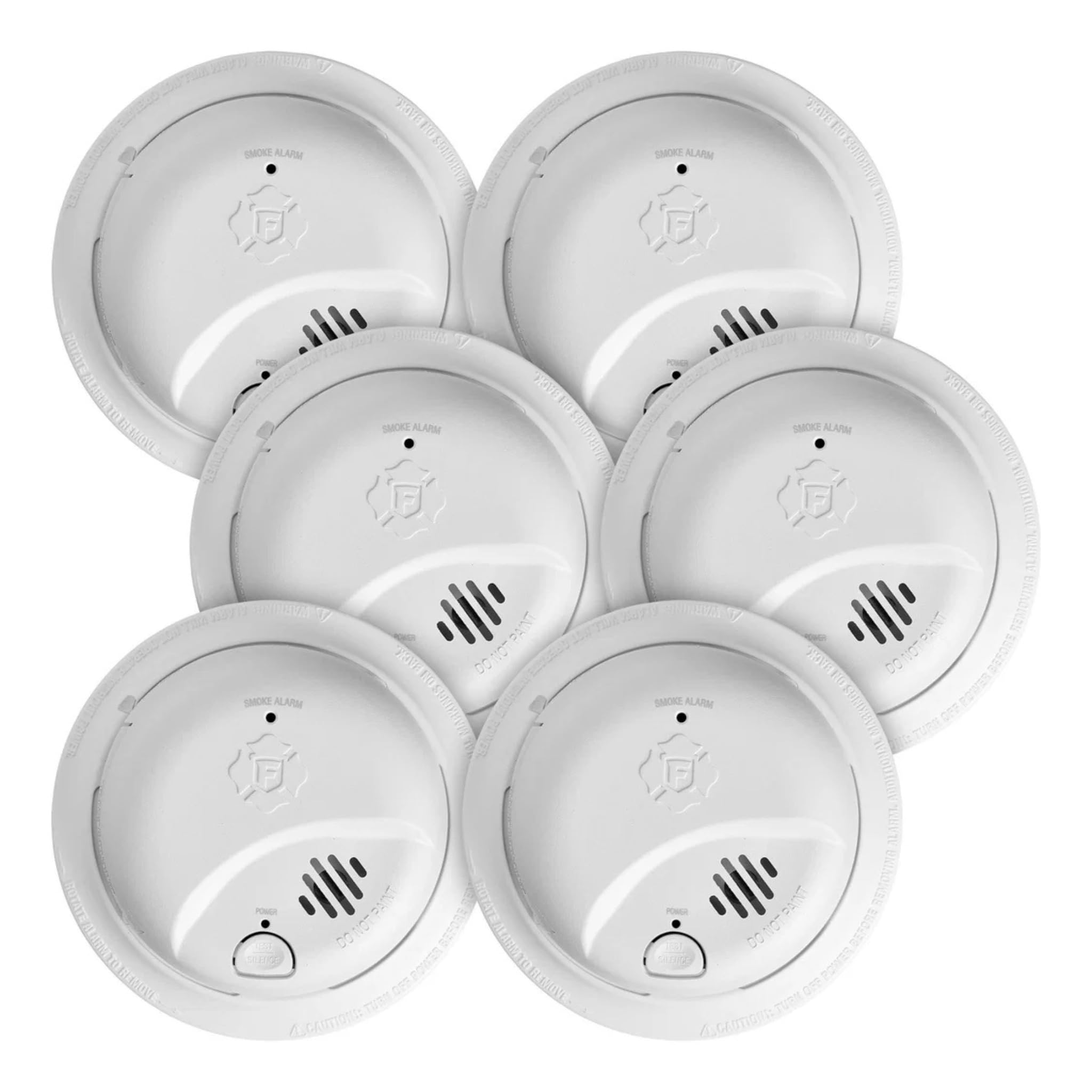
Type: Hardwired smoke alarm, interconnected
Power source: Hardwired with 10-year battery backup
Pack size: 6 units
Brand family: First Alert / BRK
Intended use: Whole-home wired systems
The SMI105-AC is a hardwired alarm with a 10-year battery backup, sold in a six-pack for whole-house coverage. Interconnection is the key feature: when one alarm sounds, the others follow, so a fire detected on the landing is heard in bedrooms and the reverse. The battery backup keeps the system live through a power cut, and the six-pack matches a typical house’s device count.
This is the right buy for a homeowner replacing an ageing wired system or wiring a property during renovation, and for anyone who wants every alarm on the same circuit. The landing unit benefits most, since an interconnected alarm there can trigger the whole house. The trade-off is the installation: hardwired units need existing wiring or an electrician, so this is not a screwdriver job for most buyers.
Trade-off: Hardwired interconnection requires mains wiring at every location, which rules it out for anyone unwilling to hire an electrician.
Before You Buy
- Mounting position: On a sloped ceiling, keep the alarm away from the very peak and away from the sloping surface itself; a spot on the flat ceiling section or high on the wall below the slope is the usual compromise.
- Size and clearance: Measure the usable flat area first — a 4-inch compact unit fits landings where a full-size alarm would be knocked or crowded.
- Power source: Sealed 10-year batteries suit low-maintenance and rental use, AA batteries suit cheap single replacements, and hardwired units suit existing wiring.
- Interconnection: A hardwired interconnected system links every alarm; standalone battery units do not, so a landing alarm must be loud enough to be heard through doors.
- Hazard coverage: A combination smoke and CO unit is worth the extra cost on a landing near a boiler, flue or attached garage.
- Nuisance alarms: Photoelectric sensors and a hush button reduce false triggers on a landing close to a kitchen or bathroom door.
- Pack size: Match the number of units to the number of locations; multi-packs only save money when every alarm gets installed.
Frequently Asked Questions
- Where exactly should a smoke alarm go on a sloped ceiling? Keep it at least a short distance from the peak and off the steep slope, mounting on the flat section or the wall just below the slope so smoke reaches the sensor quickly.
- Will a compact alarm cover a narrow landing? A 4-inch unit detects smoke just as a larger one does; the smaller body simply fits tight spaces with less clearance lost.
- Is a smoke and CO combination alarm worth it for a landing? It is when the landing is near a boiler, flue or garage, since one unit then covers both hazards without a second device on a cramped ceiling.
- Do battery alarms need to be interconnected? Standalone battery units are not linked, so a landing alarm must be loud enough — 85 dB or similar — to be heard through closed bedroom doors.
- How long do these alarms last? Sealed 10-year battery models are designed to be replaced at the end of that period, while AA models depend on the cells inside and the unit’s own service life.
- Can a hardwired alarm go on a landing without existing wiring? Not without running new cable; buyers without wiring should choose a sealed-battery or AA model instead.
Bottom Line
For most narrow landings with a sloped ceiling, the X-Sense SC06 is the pick to beat: a sealed 10-year battery, no wiring, and combined smoke and carbon monoxide detection in a single unit that does not crowd a tight ceiling. Buyers who only need the smallest possible footprint should take the Kidde 10SDR, and anyone replacing a wired system should go straight to the First Alert SMI105-AC six-pack.
