Why there are Amazon links here: Brave Review is paid a commission for qualifying Amazon purchases made through the links below. Your price does not change, and using our links is entirely optional. How this works
Best Carbon Monoxide Alarm for a Room With a Solid Fuel Stove
A solid fuel stove gives a room real warmth, but it also makes carbon monoxide the one risk that cannot be seen, smelled or tasted. The right alarm for that room needs to be close to the stove, easy to hear from the next room, and simple enough that it never gets switched off out of annoyance. This roundup covers five CO alarms that suit three kinds of buyers: the plug-in household that wants a permanent install, the battery-only household with no free outlet, and the traveler who wants a portable unit for a cabin or caravan.
The overview below puts every pick side by side so a decision can be made in under a minute.
Overview of the Picks
| Product | Key Spec | Best Use | Price Tier |
|---|---|---|---|
| Kidde Plug-in CO Detector with AA Battery Backup | Plug-in with AA battery backup, 85 dB alarm | Primary alarm in the stove room | Mid |
| Kidde AA Battery Powered CO Alarm | AA battery powered, portable | Outlet-free rooms and rentals | Budget |
| Kidde CO + Explosive Gas Alarm with 9V Backup | CO plus natural gas and propane, digital display | Stove rooms that also have gas appliances | Premium |
| First Alert CO400 Battery Carbon Monoxide Alarm | Battery powered, compact body | Simple low-cost backup coverage | Budget |
| Kidde AA Battery CO Detector, 5th Edition | AA battery powered, lightweight, 85 dB alarm | Travel, cabins and second homes | Budget |
Kidde Carbon Monoxide Detector, Plug-in with AA Battery Backup
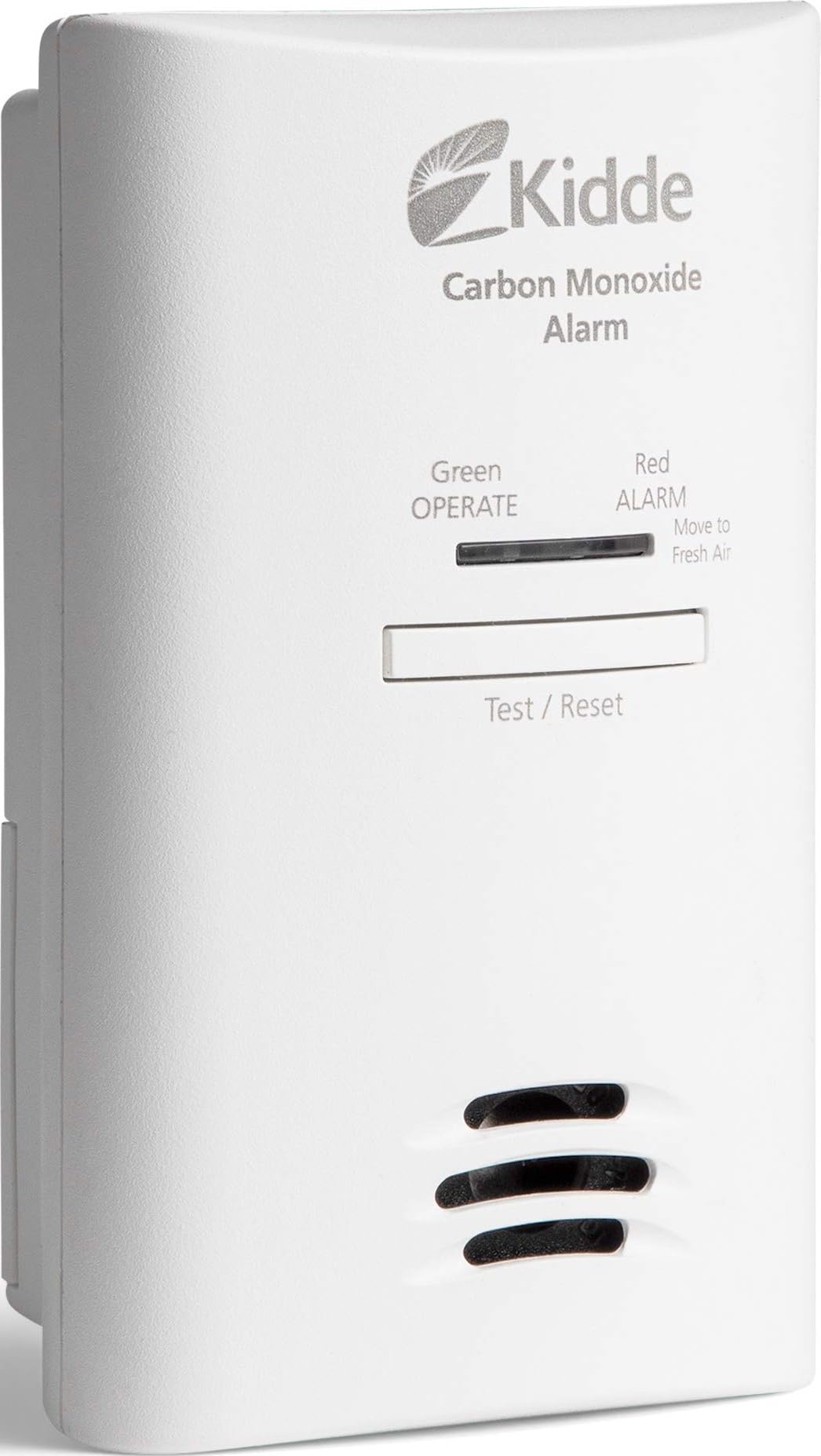
Power Source: Plug-in with AA battery backup
Alarm Volume: 85 dB
Status Indicators: LED status lights
Edition: 3rd Edition
Best For: Permanent coverage in the stove room
This Kidde unit runs from a wall outlet, so it never depends on a battery for day-to-day operation, and the AA backup keeps it live through a power cut. That matters in a stove room: a blackout is exactly when a household is most likely to light the fire and close the doors. The 85 dB alarm is loud enough to carry through a doorway, and the LED status lights give a quick visual check that the unit is powered and working.
The plug-in format suits a household that wants one alarm to stay put and be forgotten about. It is not the right pick for a room with no free outlet, or for anyone who wants a unit to move between rooms.
Trade-off: The plug-in design ties the alarm to a single outlet position, so placement is limited by where the socket sits rather than where the stove is.
Kidde Carbon Monoxide Detector, AA Battery Powered CO Alarm

Power Source: AA batteries
Indicators: LED lights
Controls: Test-reset button
Alert: Low battery indicator
Best For: Rooms without a free outlet
Battery-only operation removes the outlet problem entirely, which makes this Kidde a practical choice for an older room where sockets are scarce or awkwardly placed. The test-reset button allows a manual check without tools, and the low battery indicator flags when the cells need swapping before the unit goes quiet. The portable body means it can move with the seasons, from the stove room in winter to a garage or loft space later in the year.
This is the pick for a household that wants reliable coverage without rewiring or hunting for a spare socket. It is a weaker choice for anyone who wants the alarm to be self-monitoring, since a drained battery is the one failure mode that has to be caught by the occupant.
Trade-off: All protection rests on the batteries, so a unit that is not checked regularly can fall silent without the household noticing.
Kidde Carbon Monoxide + Explosive Gas, Natural Gas & Propane Alarm

Power Source: Plug-in with 9V battery backup
Detection: Carbon monoxide, natural gas and propane
Display: Digital display
Alarm Volume: 85 dB
Edition: 3rd Edition
This is the most capable unit in the roundup: it watches for carbon monoxide and also for explosive gases such as natural gas and propane. A stove room in a home with a gas hob, a gas fire or a propane cylinder nearby gets two safety jobs from one device. The digital display adds a readable layer that a plain LED unit cannot offer, and the 9V backup keeps the alarm live if the outlet loses power.
It suits a household that already has gas appliances near the stove and wants one alarm to cover both risks. The extra capability is wasted on a room with no gas supply at all, where a simpler CO-only unit does the same job for less.
Trade-off: The dual-gas feature adds cost and setup complexity, so a household with no gas appliances pays for protection it will never use.
CO400 First Alert Battery Carbon Monoxide Alarm

Power Source: Battery
Type: Carbon monoxide alarm
Format: Compact standalone unit
Best For: Low-cost backup coverage
The CO400 is the straightforward option: a battery-powered CO alarm with a compact body that fits on a shelf, a wall bracket or a bedside table. Its appeal is simplicity — no outlet, no display to configure, no second gas type to think about. For a stove room that already has a primary alarm, it makes a sensible second unit near a bedroom door or at the far end of the room.
This is a budget pick for buyers who want a recognised CO alarm brand without spending much. It is not the right choice for a household that wants a permanent, self-powered install or a digital readout.
Trade-off: A basic battery unit offers no display and no backup power path, so battery upkeep is the whole safety margin.
Kidde Carbon Monoxide Detector, AA Battery-Powered, 5th Edition
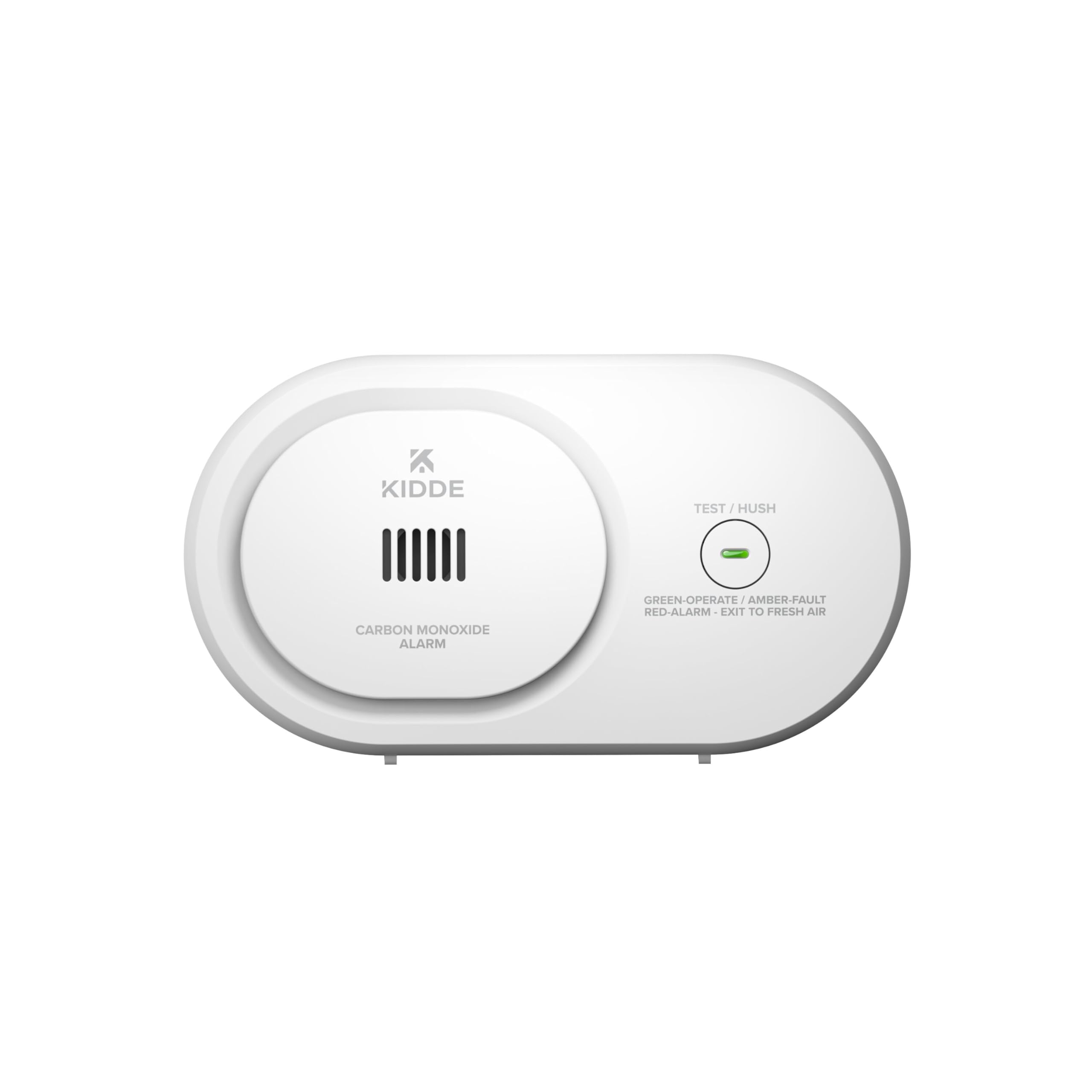
Power Source: AA batteries
Alarm Volume: 85 dB
Indicators: LED status lights
Format: Lightweight and portable
Edition: 5th Edition
This Kidde is built for movement: lightweight, AA-powered and loud enough at 85 dB to wake a sleeper in a small room. It suits a cabin, a caravan, a guest room or a second home where a stove is used occasionally and a fixed alarm would be overkill. The LED status lights make a quick check easy before a fire is lit.
It is the pick for a buyer who wants one alarm to travel between properties. It is less suitable as the only alarm in a main home, where a fixed plug-in unit is harder to misplace.
Trade-off: The portable format invites the unit being left behind or packed away, so a permanent home needs a second alarm as backup.
Before You Buy
- Placement: Mount the alarm near the stove room’s breathing zone, not directly above the stove where heat and smoke can trigger false alerts.
- Power source: A plug-in unit with battery backup suits a permanent install; a battery-only unit suits rooms without a free outlet.
- Gas coverage: A CO-only alarm covers the stove; a combined CO and explosive gas unit is worth the extra if a gas hob or propane cylinder shares the room.
- Alarm volume: An 85 dB alarm is the practical baseline for a room that may be slept in or separated by a door.
- Maintenance: Battery units need a scheduled test and replacement; a low battery indicator is a feature worth having.
- Portability: A lightweight unit suits cabins and rentals, while a fixed unit is harder to lose.
- Second unit: A stove room benefits from one alarm near the appliance and one near the sleeping area.
Frequently Asked Questions
-
Where should a CO alarm go in a room with a solid fuel stove?
Place it at breathing height on a wall or shelf a few feet from the stove, not directly above it, so heat and smoke do not cause false alarms. -
Is a plug-in or battery alarm better for a stove room?
A plug-in unit with battery backup is the stronger choice for a permanent install, while a battery-only unit suits rooms without a usable outlet. -
Does a CO alarm also detect gas leaks from a stove?
Only a combined carbon monoxide and explosive gas alarm detects natural gas or propane; a CO-only unit will not respond to a gas leak. -
How loud should a stove-room CO alarm be?
An 85 dB alarm is loud enough to be heard through a doorway and to wake a sleeper in an adjacent room. -
Can one portable alarm cover a cabin and a home?
A portable unit can travel, but a permanent home is better served by a fixed alarm that cannot be left behind. -
How often should a battery CO alarm be tested?
A monthly test with the unit’s test button is the practical routine, with batteries replaced at the interval the manufacturer states.
Bottom Line
For a room with a solid fuel stove, the Kidde plug-in detector with AA battery backup is the strongest single pick: it stays powered through an outage and sits permanently where the stove is. Households with gas appliances nearby should step up to the combined CO and explosive gas model, while cabin and rental users are best served by the portable 5th Edition unit.
