Why there are Amazon links here: Brave Review is paid a commission for qualifying Amazon purchases made through the links below. Your price does not change, and using our links is entirely optional. How this works
Best Smoke Alarm for a Room With a Log Burner: 5 Top Picks
A log burner adds warmth and atmosphere, but it also adds smoke, soot, and the occasional puff of back-draft — exactly the conditions that make a badly chosen alarm chirp at midnight. The best smoke alarm for a room with a log burner balances fast fire detection against resistance to cooking and wood-smoke nuisance triggers.
This roundup covers five alarms for three kinds of buyer: the budget household that wants a simple battery unit, the wood-burner owner who needs nuisance-alarm control, and the safety-focused buyer who wants carbon monoxide coverage in the same device. The overview below compares every pick at a glance; detailed reviews and a buyer’s checklist follow.
The Picks at a Glance
| Product | Key Spec | Best Use | Price Tier |
|---|---|---|---|
| First Alert SMI100 | Battery-powered, 1-pack | Simple budget replacement | Budget |
| X-Sense SD2J0AX | Photoelectric, 10-year battery, hush button | Nuisance-alarm control near a stove | Budget |
| X-Sense SC07 | 2-in-1 smoke and CO, LCD display | Whole-room safety in one unit | Mid-range |
| SITERWELL Hardwired | Interconnected, 9V backup | Homes wired for linked alarms | Mid-range |
| Kidde 10SDR | 4-inch compact, 85 dB, AA battery | Small or tight spaces | Budget |
1. First Alert SMI100 Battery Smoke Alarm

Type: Battery smoke alarm
Pack Size: 1-pack
Power Source: Battery
Brand: First Alert
Best For: Budget replacement or a spare unit
SMI100, 1-Pack First Alert Battery Smoke Alarm
The SMI100 is the straightforward option: a single battery-powered smoke alarm from a brand most households already recognize. It installs without wiring, which suits a log-burner room where running cable to a ceiling point may not be practical. The one-pack format makes it a natural replacement for an ageing alarm or a first unit for a room that has none.
This pick earns its place on price and simplicity. A buyer who wants a working alarm in the room without spending on features will find it does the core job. The trade-off is that a basic battery unit at this price offers no hush control or interconnected networking, so a smoky fire-lighting session may mean reaching for the test button or a broom handle.
Trade-off: A budget battery alarm gives no nuisance-alarm hush or linking to other units, so it suits a spare or secondary room rather than a whole-home plan.
Check the current price on Amazon
2. X-Sense SD2J0AX Photoelectric Smoke Alarm

Type: Photoelectric smoke alarm
Power Source: 10-year sealed battery
Certification: UL 217
Features: One-button hush, self-test, no-wire installation
Pack Size: 1-pack
Best For: Rooms where nuisance alarms are a concern
This X-Sense unit is built around photoelectric sensing, the technology the name itself flags as producing fewer cooking nuisance alarms — a meaningful claim in a room where a log burner can smoulder before it catches. The one-button hush silences a false trigger without removing the alarm from the ceiling, and the self-test gives a quick confidence check. The sealed 10-year battery means no annual battery swap.
For a log-burner room, this is arguably the most sensible match of the five: it targets exactly the nuisance-alarm problem wood smoke creates, and the sealed battery removes a common maintenance chore. It suits a buyer who wants set-and-forget protection. The trade-off is that a sealed battery cannot be replaced — when the unit’s life ends, the whole alarm is replaced.
Trade-off: The sealed 10-year battery cannot be swapped, so the entire unit is retired at end of life rather than refreshed with a cheap battery.
Check the current price on Amazon
3. X-Sense SC07 Smoke and Carbon Monoxide Detector
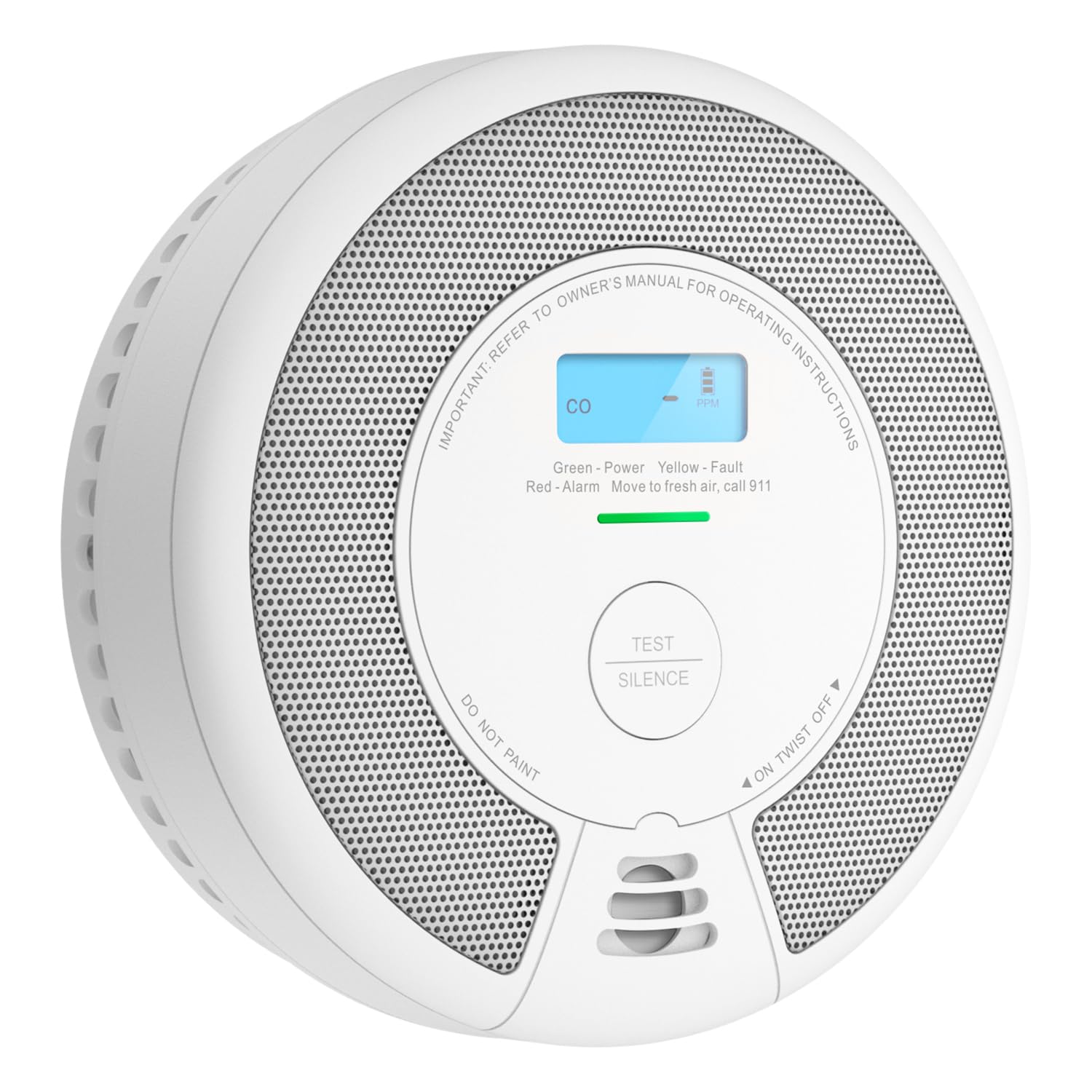
Type: 2-in-1 smoke and carbon monoxide detector
Power Source: 10-year sealed battery (not hardwired)
Certification: UL 217 and UL 2034
Display: LCD
Pack Size: 1-pack
Best For: Combined fire and CO protection in one unit
A log burner is a combustion appliance, so carbon monoxide is a genuine concern alongside fire. This X-Sense combo covers both in a single ceiling unit, with an LCD display that reports status at a glance. It carries both UL 217 and UL 2034 certification, and the sealed battery keeps installation wire-free.
This is the pick for buyers who want one device doing two jobs and are willing to pay a little more for it. The LCD display adds a readable status panel that basic alarms lack. The trade-off is that a combined unit is more expensive to replace than a plain smoke alarm, and the added CO sensor is one more component with a finite service life.
Trade-off: A combo unit costs more up front and must be replaced as a whole, so buyers who only need smoke detection pay for capability they may not use.
Check the current price on Amazon
4. SITERWELL Hardwired Interconnected Smoke Alarm
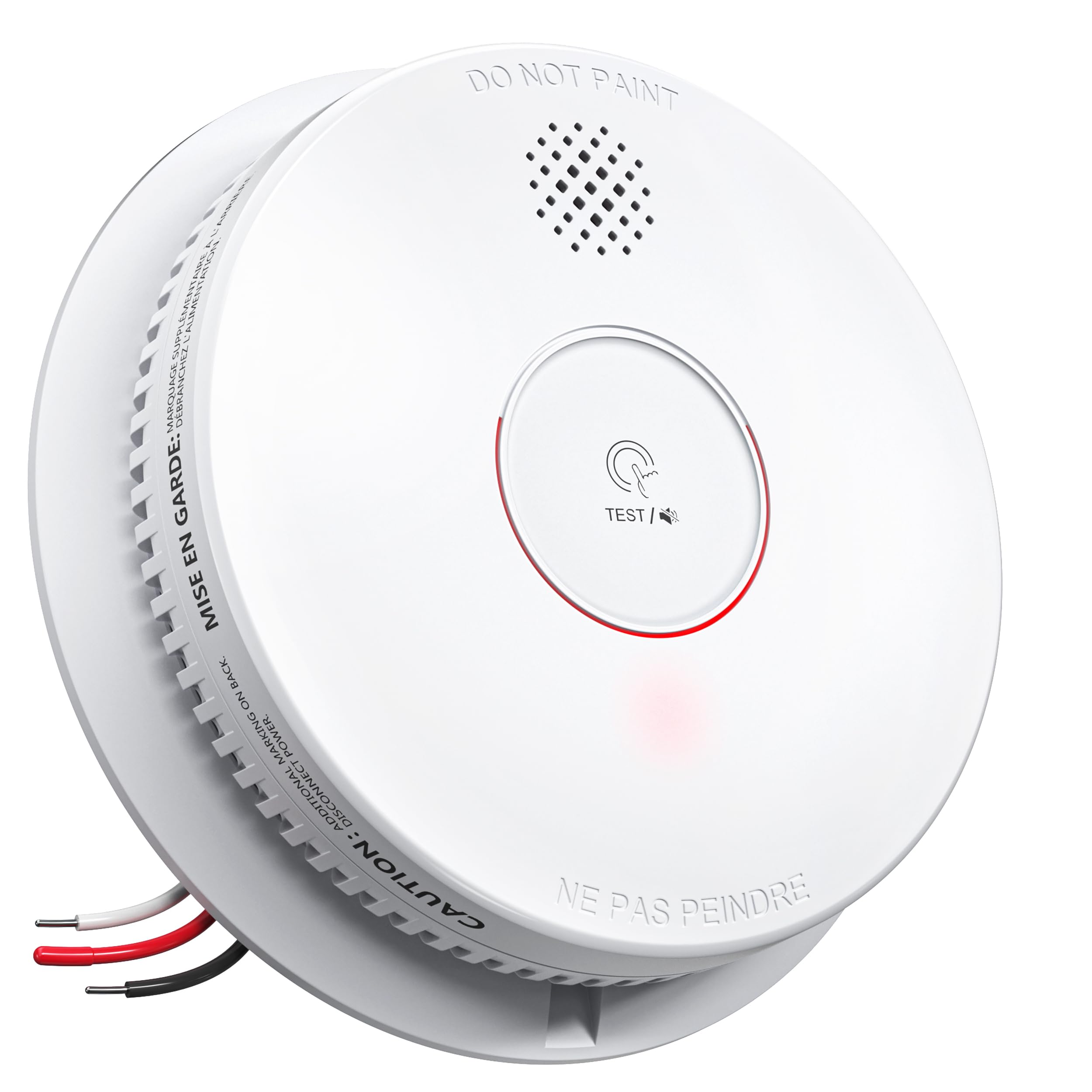
Type: Hardwired photoelectric smoke alarm
Power Source: Hardwired with 9V backup battery
Features: Interconnected, test/silence button
Pack Size: 1-pack
Best For: Homes already wired for linked alarms
The SITERWELL is the odd one out because it is hardwired and interconnected: it links to other compatible alarms so a trigger in the log-burner room sounds throughout the home. Photoelectric sensing and a test/silence button round out the feature set, and the 9V backup keeps it live during a power cut.
This pick earns its place for households already wired for mains alarms, where adding a linked unit to the burner room extends coverage rather than starting a separate system. The trade-off is the installation: hardwiring is a job for someone comfortable with electrical work, and interconnection only pays off if the rest of the home runs a compatible system.
Trade-off: Hardwired installation is not a plug-and-play job, and the linked benefit disappears if the existing alarms are not compatible.
Check the current price on Amazon
5. Kidde 10SDR Compact Smoke Detector
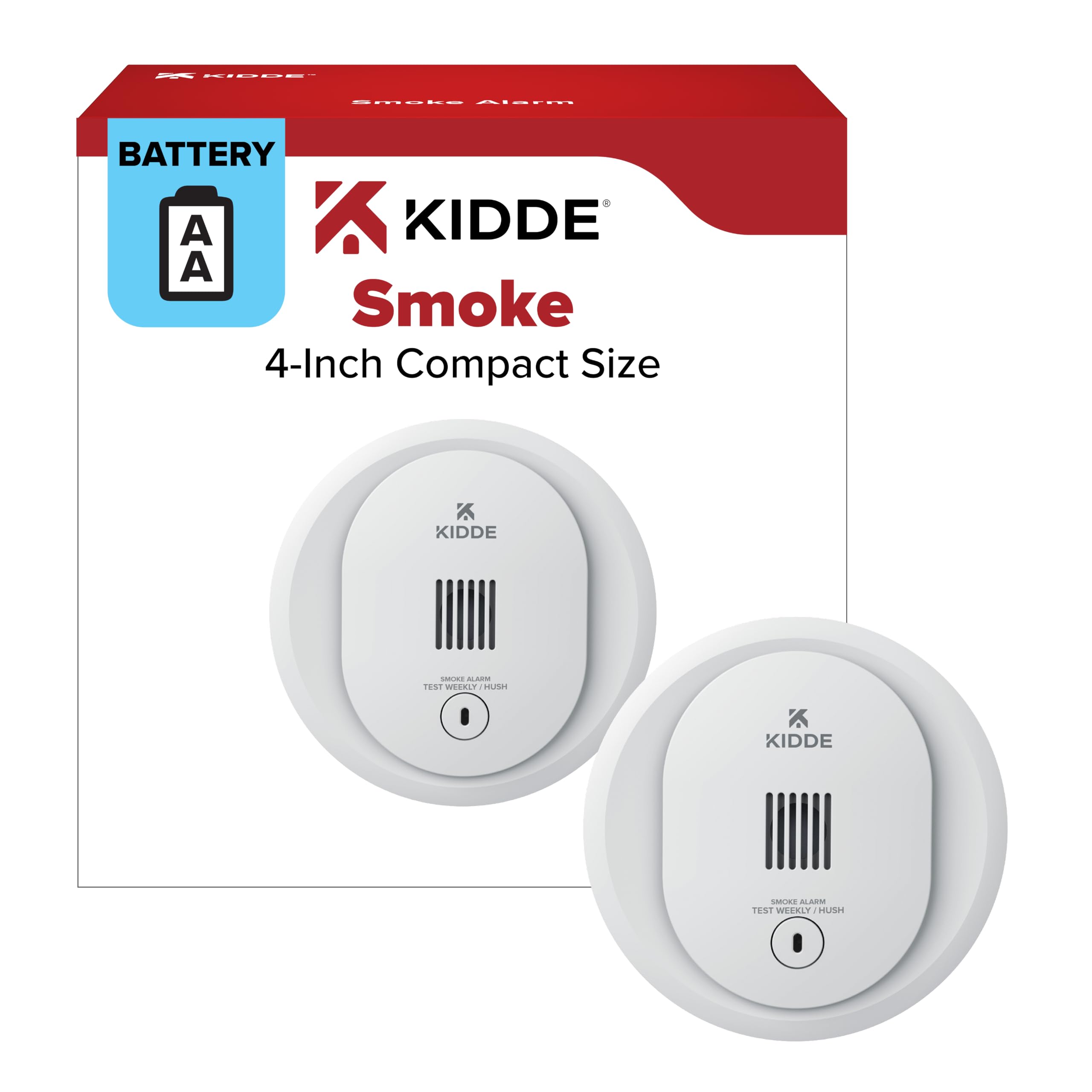
Type: Compact battery smoke alarm
Power Source: AA battery
Alarm: 85 dB
Features: LED status lights
Size: 4-inch
Best For: Small or tight spaces
The Kidde 10SDR is a 4-inch compact alarm with an 85 dB sounder and LED status lights, designed for homes and small spaces. AA battery power keeps it wire-free, and the small footprint suits a ceiling spot where a full-size unit would look or fit awkwardly.
This pick suits a compact room or a tight ceiling position where a standard alarm is a poor fit. The 85 dB output is loud enough to be noticed, and the LED indicators give a quick visual check. The trade-off is that a compact unit trades coverage for size, so it is best treated as supplementary protection rather than the sole alarm for a large open-plan space.
Trade-off: The compact 4-inch body covers less area than a full-size alarm, so it works best as a supplementary unit rather than the only alarm in a large room.
Check the current price on Amazon
Before You Buy
- Sensor Type: Photoelectric alarms are the better match for a log-burner room because they are less prone to nuisance triggers from smouldering wood and cooking.
- Nuisance Control: A hush or silence button is worth prioritizing — it lets a false alarm be quieted without removing the unit from the ceiling.
- Power Source: Sealed 10-year batteries mean no annual swap; AA or 9V units need regular battery changes; hardwired units need an electrician and suit homes already wired for alarms.
- Coverage: Match the unit to the room — a compact alarm suits a small space, while a larger room benefits from a full-size or interconnected unit.
- Carbon Monoxide: A log burner is a combustion appliance, so a combined smoke and CO unit adds protection a smoke-only alarm cannot provide.
- Linking: Interconnected alarms sound throughout the home; standalone units only alert the room they are in, which matters if the burner room is far from bedrooms.
Frequently Asked Questions
-
Will a log burner set off a smoke alarm?
A well-drawn stove usually will not, but smoke from fire-lighting, back-draft, or a door left open can trigger one. A photoelectric alarm with a hush button is the most forgiving choice. -
Where should a smoke alarm go in a room with a log burner?
Follow the manufacturer’s ceiling guidance and keep the alarm a reasonable distance from the stove so rising heat and smoke do not trigger it constantly. The instruction leaflet is the authority here. -
Is photoelectric or ionization better near a wood burner?
Photoelectric alarms are generally the better fit because they are less prone to nuisance alarms from smouldering fires and cooking — exactly the conditions a log burner creates. -
Do I need a carbon monoxide alarm with a log burner?
A log burner is a combustion appliance, so a CO alarm is a sensible addition. A combo unit covers both fire and CO in one device. -
Can I hardwire a smoke alarm near a log burner?
Yes, if the home is already wired for mains alarms. A hardwired interconnected unit links to the rest of the system, but installation needs someone comfortable with electrical work. -
How often should the alarm be tested?
Test on the schedule in the manufacturer’s instructions, and use the self-test or test button regularly. A sealed battery removes the annual battery swap but not the need to test.
Bottom Line
For most log-burner rooms, the X-Sense SD2J0AX is the strongest single pick: its photoelectric sensor and one-button hush target the nuisance-alarm problem directly, and the sealed 10-year battery keeps maintenance low. Buyers who want carbon monoxide coverage in the same unit should step up to the X-Sense SC07, while households already wired for linked alarms will get the most from the SITERWELL. The budget-minded can start with the First Alert SMI100 or the compact Kidde 10SDR. Check current prices before deciding — they move quickly.
