Why there are Amazon links here: Brave Review is paid a commission for qualifying Amazon purchases made through the links below. Your price does not change, and using our links is entirely optional. How this works
Best Carbon Monoxide Alarm for a Holiday Let Changeover
A holiday let changeover leaves little time, so the best carbon monoxide alarm for a holiday let changeover is one that installs fast, resets simply and keeps guests protected between visits. This shortlist covers plug-in units that power up the moment they are seated, battery models that need no socket, and a combined smoke and CO alarm for hosts who want fewer devices on the wall. Three buyer profiles are served here: the host fitting a gas-heated cottage, the owner of a small flat with limited outlets, and the manager who wants one alarm type across several properties. The overview table below points to the right pick in seconds.
The Picks at a Glance
| Product | Key Spec | Best Use | Price Tier |
|---|---|---|---|
| Kidde Carbon Monoxide + Explosive Gas Alarm | Plug-in with 9V backup, digital display | Gas appliances and LPG | Mid |
| Kidde 5th Edition CO Detector | Rotating plug, AA backup | Awkward sockets | Mid |
| Kidde Battery CO Alarm | AA battery, portable | Sheds and off-grid rooms | Budget |
| First Alert CO400 | Battery CO alarm | Simple low-cost coverage | Budget |
| First Alert SMCO100 | Battery smoke + CO combo | One-device hallways | Mid |
1. Kidde Carbon Monoxide + Explosive Gas Alarm
Type: Plug-in CO and explosive gas alarm
Power Source: Mains plug with 9V battery backup
Display: Digital
Alarm: 85 dB
Status: LED indicators
Edition: 3rd Edition

Check the Current Price on Amazon
This is the only pick that watches for explosive gas as well as carbon monoxide, which matters in a holiday let running on natural gas or propane. The digital display gives a changeover cleaner a visible readout during a walkthrough, and the LED indicators show status at a glance without pressing anything. A 9V battery backup keeps it live through a power cut, so protection does not lapse when the mains drops. The 85 dB alarm is loud enough to carry through a hallway into bedrooms.
It earns its place as the pick for gas-heated properties where a leak is as much a risk as CO. The trade-off is the mains socket it occupies and the price: this is the most expensive unit here, and a host with several properties pays that premium each time.
Trade-off: It costs more and needs a free outlet, so it is not the right call for a let with no spare socket near the boiler.
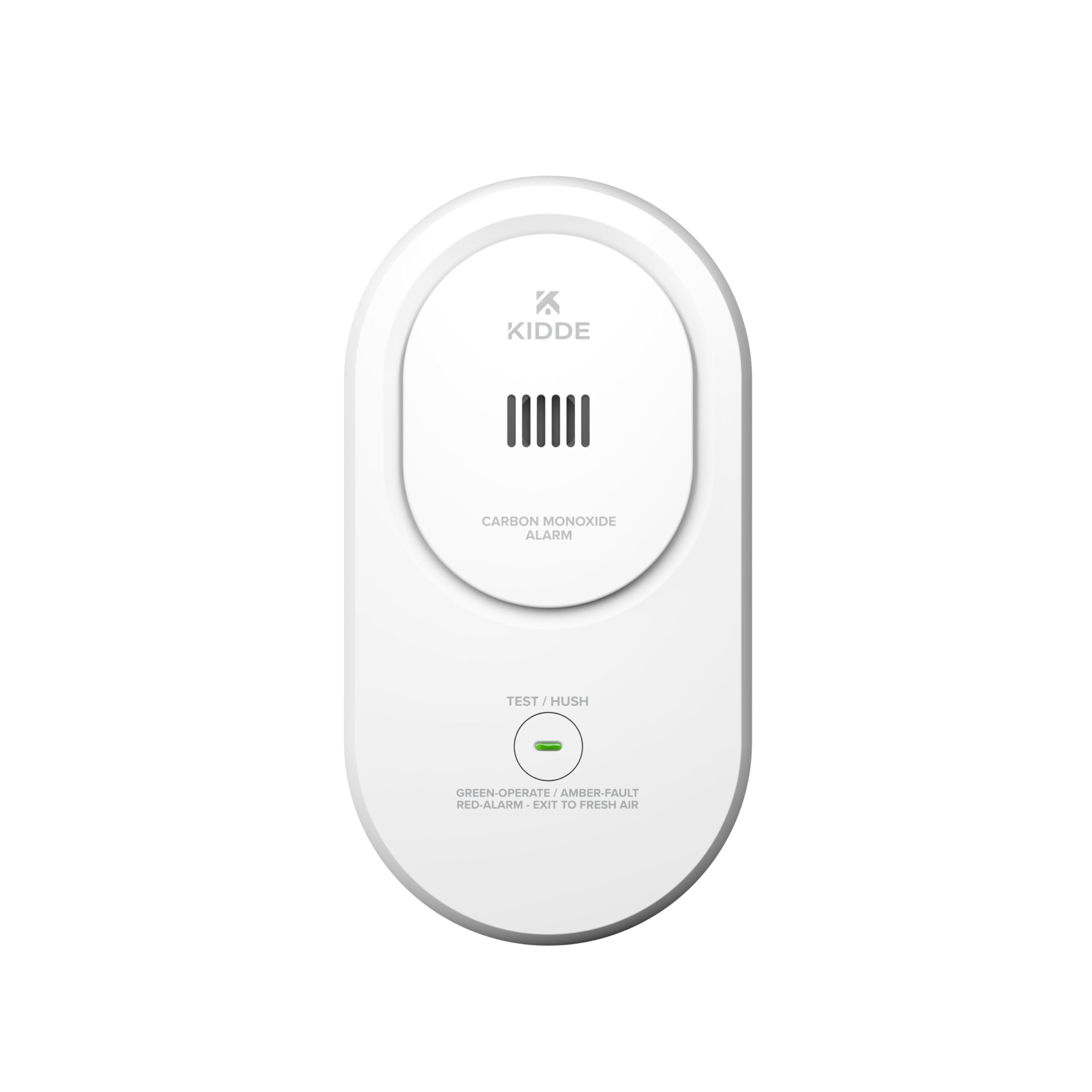
2. Kidde 5th Edition CO Detector
Type: Plug-in CO detector
Power Source: Mains plug with AA battery backup
Plug: Rotating
Alarm: 85 dB
Status: LED lights
Edition: 5th Edition
Check the Current Price on Amazon
The rotating plug is the feature that sets this one apart: the head swivels so the unit sits flush in an awkward socket instead of blocking the second outlet. Power surge immunity protects it from the spikes that older wiring in rental stock can throw out. AA batteries carry it through an outage, and the LED status lights make a quick visual check possible during a changeover. The 85 dB alarm matches the louder units in this roundup.
It suits the host whose lets have awkward socket placement near a hallway or landing. The trade-off is coverage: it monitors carbon monoxide only, so a property without separate smoke detection still needs a second device.
Trade-off: It covers CO alone, so it cannot replace a smoke alarm and hosts need both devices.
3. Kidde Battery CO Alarm
Type: Battery CO alarm
Power Source: AA batteries
Status: LEDs
Controls: Test-reset button
Alert: Low battery indicator

Check the Current Price on Amazon
No socket, no cable, no mains dependency — this unit runs on AA batteries and can be placed wherever CO risk is highest. The test-reset button makes a changeover check a one-button job, and the low battery indicator warns before the cells fail. Because it is portable, it can move between rooms or travel with a host who inspects several lets. LEDs confirm status without a screen.
It suits the let with no free outlet near the boiler, or the owner who wants a unit for a shed or annexe. The trade-off is battery management: unlike a plug-in, this alarm depends entirely on the host remembering to swap cells.
Trade-off: Its protection rests on the batteries, so a host who forgets to replace them leaves the let uncovered.
4. First Alert CO400 Battery Carbon Monoxide Alarm
Type: Battery CO alarm
Power Source: Battery

CO400 First Alert Battery Carbon Monoxide Alarm
Check the Current Price on Amazon
This is the budget entry: a straightforward battery-powered CO alarm with no screen and no mains lead. The simplicity is the point — there is nothing to configure, so a changeover check is quick and a replacement is cheap. It suits a host fitting several small lets on a tight budget, or adding a second alarm as backup to a plug-in unit. The compact body mounts easily in a hallway or bedroom.
It is not the pick for a host who wants a digital readout or gas detection, and the low price means a basic feature set. Coverage is CO only.
Trade-off: The low price buys a basic alarm with no display, so hosts wanting a visible readout should look higher up this list.
5. First Alert SMCO100 Battery Combination Smoke & CO Alarm
Type: Combination smoke and CO alarm
Power Source: Battery

SMCO100 First Alert Battery Combination Smoke & Carbon Monoxide Alarm
Check the Current Price on Amazon
One device covers two risks here: smoke and carbon monoxide in a single battery-powered unit. For a holiday let, that means fewer boxes on the ceiling and one alarm to check at changeover instead of two. It suits the host who wants a tidy hallway or landing installation, and the battery power removes any socket requirement. A single combined unit also simplifies record-keeping for the host managing compliance across several properties.
The trade-off is that a single device serving two jobs must be sited carefully — a spot that suits smoke detection is not always ideal for CO. Hosts with a boiler in a separate room may still need a dedicated CO alarm.
Trade-off: One unit cannot be in two places, so a combined alarm may leave the boiler room without dedicated CO cover.
Before You Buy
- Power source: A plug-in alarm with battery backup survives a power cut; a battery-only unit depends on the cells being fresh.
- Coverage: CO-only alarms leave smoke detection to a separate device; combined units cover both but must be sited for both risks.
- Socket placement: A rotating plug helps in tight or awkward outlets; a battery unit avoids the problem entirely.
- Gas type: Hosts with natural gas or propane should consider a unit that also detects explosive gas.
- Changeover speed: A digital display or clear LED status lets a cleaner confirm the alarm is working in seconds.
- Battery management: Every battery-powered pick needs a replacement routine built into the changeover checklist.
- Portability: A battery unit can move between rooms or properties, which suits hosts inspecting multiple lets.
Frequently Asked Questions
- How many CO alarms does a holiday let need? At least one on each level with a fuel-burning appliance or flue, plus one near sleeping areas, following local rules for rental property.
- Is a plug-in or battery alarm better for changeovers? Plug-in with backup needs no battery routine but requires a socket; battery-only is more flexible but depends on the host replacing cells.
- Can a combined smoke and CO alarm replace both devices? It can cover both risks in one spot, but a boiler room may still need a dedicated CO alarm where smoke detection is not appropriate.
- Why choose an alarm that detects explosive gas? In a let running on natural gas or propane, a unit that watches for explosive gas adds a second layer of protection alongside CO detection.
- How often should alarms be checked between guests? A quick test at every changeover is sensible, with a fuller check and battery review on a set schedule.
- Does a digital display matter? It gives a visible readout during a walkthrough, which makes confirming status faster than a light-only unit.
Bottom Line
For most holiday lets, the Kidde Carbon Monoxide + Explosive Gas Alarm is the strongest single choice: it covers CO and explosive gas, keeps running on a 9V backup through power cuts, and shows status on a digital display for a fast changeover check. Hosts with awkward sockets should look at the rotating-plug Kidde, and budget-conscious owners fitting several small lets can lean on the First Alert CO400. Whichever fits the property, confirm the current price before ordering.
