Why there are Amazon links here: Brave Review is paid a commission for qualifying Amazon purchases made through the links below. Your price does not change, and using our links is entirely optional. How this works
YoLink Wireless Smart Valve Control Kit: Automatic Water Shutoff for the Whole House
The YoLink Wireless Smart Valve Control Kit is a whole-house water shutoff system built around an NSF-certified stainless steel motorized valve. It suits homeowners who want to close the main water line automatically when a leak is detected, or remotely from a phone, without cutting into the wall to install a traditional plumber’s valve. This review covers what the kit includes, how the valve is built, what the wireless control actually does, and where the setup asks more of a buyer than a plug-and-play gadget would.
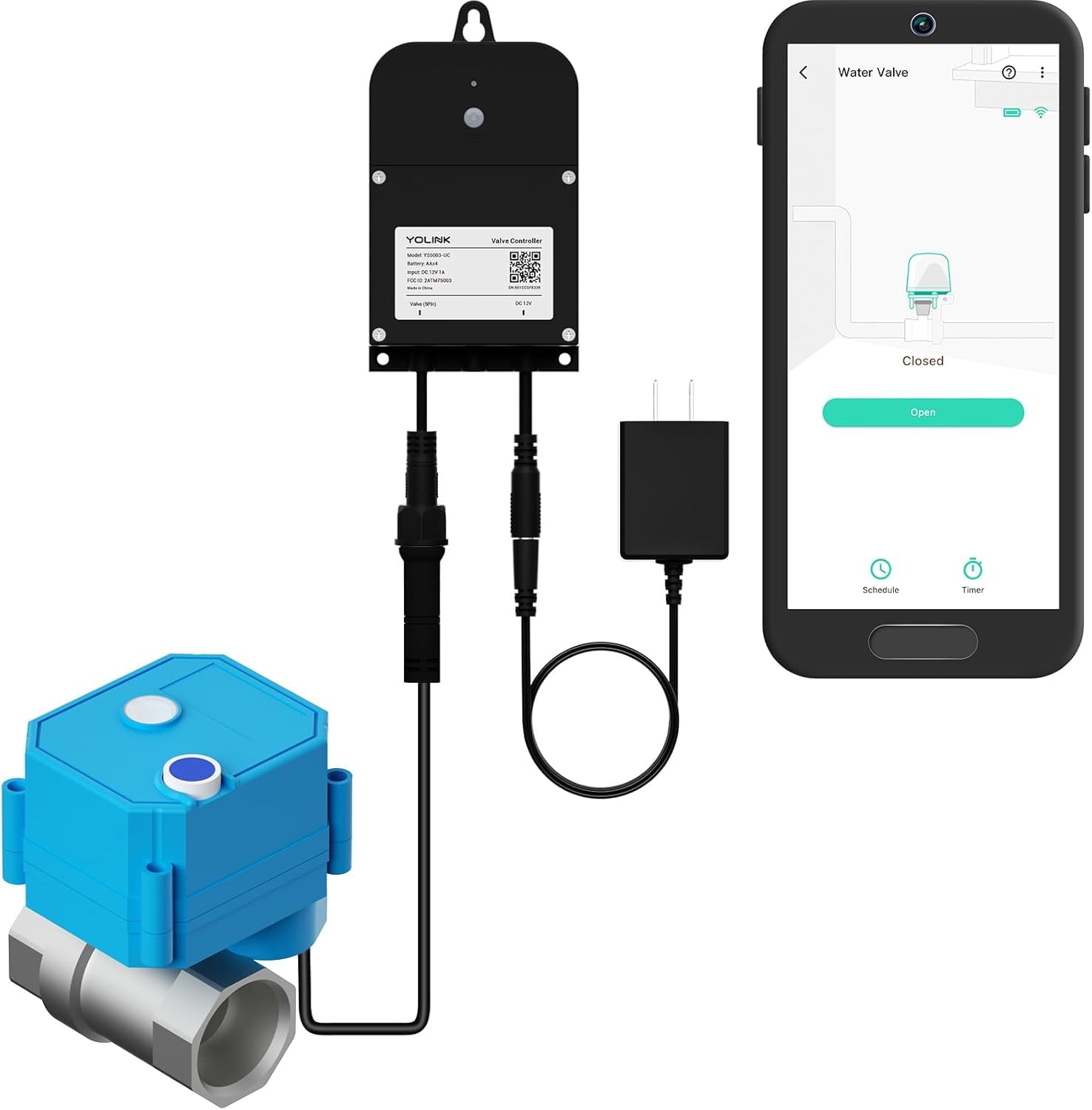
Features and Specifications
Product Type: Wireless smart valve control kit
Valve Size: 1 inch
Valve Material: Stainless steel
Certification: NSF certified
Valve Type: Motorized
Connectivity: Wireless
Intended Use: Whole-house main water line control
The kit centers on a motorized ball valve that mounts on the main water line and opens or closes on command. The 1-inch stainless steel body is the part that matters most, because it sits in the water path year after year and has to resist corrosion and mineral buildup. The NSF certification speaks to the wetted materials being acceptable for potable water, which is the baseline any whole-house valve should clear.
Wireless control is what separates this from a manual shutoff. The valve motor does the turning, so a command from a phone or an automation rule can close the line without anyone home. That is the entire value proposition: the water stops before a slow leak becomes a flooded basement.
Build and Materials
Stainless steel at the valve body is the right call for a part that never gets inspected. Brass valves are common and cheaper, but they can pit and scale in hard water over time; stainless holds up better in that environment and keeps the bore clear. The 1-inch size matches the typical residential main line, so the valve does not create a bottleneck that drops pressure at the fixtures.
The motorized actuator is the wear item. Any motorized valve has a finite number of open-and-close cycles, and a unit that runs on wireless commands depends on that motor working every time. Buyers should think of the actuator as the part most likely to need attention years down the road, not the stainless body.
Trade-off: The kit’s value depends on a wireless hub and a leak-detection ecosystem that are not part of the valve itself, so the real installed cost runs higher than the kit price suggests.
Capacity and Coverage
A 1-inch valve is sized for a single-family main line, which is exactly the job this kit is built for. It is not a zone valve for a manifold or a dedicated line to one appliance; it is the single point where the whole house can be isolated. That makes the placement decision simple — it goes on the main line right after the meter or the entry point.
Coverage is whole-house by design. Once the valve closes, every fixture downstream loses supply, which is the point of an automatic shutoff. The same feature is the limitation: there is no partial shutoff and no way to keep water on at one tap while isolating another. Buyers who want appliance-level control are looking at a different class of product.
Power and Wireless Control
The wireless link is what makes remote and automatic shutoff possible, and it also defines the kit’s dependency. Commands travel over the vendor’s low-power wireless protocol, which is designed for long range and long battery life rather than the Wi-Fi most smart-home gear uses. That is good for reliability through walls and floors, but it means the valve talks to the vendor’s hub, not directly to a phone.
That architecture has a practical consequence: the hub is the brain, and the valve is the muscle. Automation rules, app control and integration with leak sensors all run through that hub. A buyer who does not already own one is buying into an ecosystem, not a standalone valve. The upside is that the same hub can coordinate leak sensors, a water meter and other devices into a single shutoff routine.
Maintenance and Installation
Installation is plumbing work, not a battery swap. The valve has to be fitted into the main line, which means cutting pipe and making connections that hold pressure. Many buyers will want a plumber for that step, and the kit price should be read with that labor in mind. Once installed, the valve needs little routine attention beyond occasional cycling to keep the motor free.
The wireless side needs its own upkeep. Batteries in the actuator and any paired sensors have to be replaced on schedule, and the hub needs power and a network connection. None of that is difficult, but it is a maintenance layer a manual valve never had. A homeowner who travels or rents out the property gets real value from remote shutoff; someone who is home daily may find a manual valve simpler and cheaper.
Who It Suits and Who It Does Not
This kit suits homeowners with a finished basement, a second home, or a rental property where a leak could run for hours before anyone notices. It also fits buyers already inside the vendor’s ecosystem, since the valve slots into existing automation and leak-sensor routines without a second hub. The stainless 1-inch body and NSF certification make it a credible long-term install on a potable main line.
It does not suit renters, anyone unwilling to cut into the main line, or buyers who want a standalone valve that works over Wi-Fi without a hub. It is also a poor fit for someone who only wants to protect a single appliance like a washing machine — a smaller inline shutoff does that job for less.
Check the current price on Amazon
FAQ
-
What is the YoLink Wireless Smart Valve Control Kit used for?
It mounts on the main water line and opens or closes the valve wirelessly, so the water can be shut off remotely or automatically when a leak is detected. -
Does it work without a hub?
No. The valve communicates over the vendor’s low-power wireless protocol, which requires the vendor’s hub to relay commands and run automation rules. -
Is the valve safe for drinking water?
The valve is NSF certified, which covers the wetted materials for potable water use. -
What size water line does it fit?
The motorized valve is 1 inch, which matches a typical residential main line. -
Can it shut off automatically when a leak is detected?
Yes, provided the system includes compatible leak sensors and the automation is configured through the hub. -
Does the stainless steel body resist corrosion?
Stainless steel is chosen for its corrosion resistance, which matters on a part that stays in the water path for years. -
Can a homeowner install it without a plumber?
The valve has to be cut into the main line, so most buyers will want a plumber for the install. -
What part is most likely to wear out?
The motorized actuator, since it carries the moving parts and the cycle count. -
Will it work during a power outage?
The valve runs on its own power source and wireless link, but the hub needs power and a network connection for remote commands. -
Who should skip this kit?
Renters, buyers who do not want to cut into the main line, and anyone who wants a hub-free Wi-Fi valve.
Bottom Line
The YoLink Wireless Smart Valve Control Kit is the right buy for a homeowner who wants whole-house automatic water shutoff on a stainless, NSF-certified 1-inch valve and is prepared to commit to the vendor’s hub ecosystem. The stainless body and potable-water certification make it a sound long-term install, and the wireless control delivers the remote shutoff that justifies the price tier. Buyers who want a standalone valve without a hub, or who only need single-appliance protection, should look elsewhere.